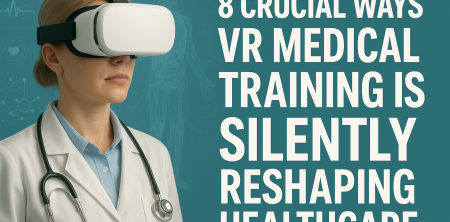
Alright, let's talk about something truly transformative happening in medicine right now. We're not just talking about incremental changes here; we're witnessing a fundamental shift in how medical professionals are trained, how they learn, and ultimately, how they save lives. And it’s all thanks to virtual reality, or VR. For years, VR felt like a niche technology, something for gamers or sci-fi enthusiasts. But today, the data is in, and it’s pretty compelling: VR medical training isn't just a gimmick; it's proving itself to be as effective as, or even superior to, traditional training methods.
Think about it: the stakes in healthcare couldn't be higher. Mistakes can have devastating consequences. So, when a new technology comes along that promises to enhance skill acquisition, boost confidence, and reduce risk in a profound way, you'd better believe the medical community is paying attention. Indeed, the global VR in healthcare market is on an astronomical trajectory, projected to hit a staggering $7.58 billion by the end of 2026. This isn't just about cool tech; it's about a widespread adoption that's fundamentally improving patient outcomes and preparing the next generation of doctors, nurses, and specialists like never before. Let's dig into the crucial ways VR medical training is reshaping the very fabric of healthcare.
1. Unprecedented Engagement and Confidence Boosting: The VR Difference
One of the most immediate and striking benefits of VR medical training is its ability to utterly immerse learners. Unlike poring over textbooks or watching a didactic video, VR places you directly into a simulated environment. You're not just observing; you're doing. This hands-on, experiential learning goes beyond rote memorization, fostering a deeper understanding and retention of complex procedures and protocols. When you're virtually scrubbing in for a simulated surgery, your brain processes it much differently than if you were simply reading about it.
Recent randomized controlled trials (RCTs) from 2024 and 2025 have consistently highlighted this. These studies aren't just saying VR is 'good'; they're demonstrating that it performs as well as, or even better than, conventional training methods when it comes to both knowledge acquisition and the development of practical skills. But here's where it really shines: engagement and confidence. When a medical student can repeatedly perform a delicate procedure in a risk-free VR environment, they build muscle memory, reduce anxiety, and develop a level of self-assurance that's hard to achieve through traditional means. Imagine a new resident walking into an operating room for the first time, not with trepidation, but with the quiet confidence born from dozens of virtual practice runs. That's the power of immersive VR medical training.
2. Risk-Free Simulation of Complex Scenarios: Learning Without Consequences
Let's be blunt: you can't learn to perform a complex surgical procedure or manage a life-threatening emergency by practicing on actual patients. That's just not how it works, nor should it be. Traditional methods often involve cadavers, expensive mannequins, or observing experienced practitioners, all of which have their limitations. Cadavers lack the physiological responses of living tissue, and mannequins, while advanced, can still feel somewhat artificial. Observing is helpful, but it doesn't give you the tactile feedback or decision-making pressure of being in charge.
This is where VR medical training becomes an absolute game-changer. It allows for the repeated, hands-on simulation of incredibly complex emergency scenarios, intricate surgical procedures, and even nuanced patient communication in an environment where mistakes are learning opportunities, not tragedies. You can practice intubating a critically ill patient, repairing a fractured bone, or even delivering difficult news to a virtual family – all without any actual risk to a real human being. This capability significantly improves clinical readiness, shortening the learning curve and ensuring that when trainees encounter these situations in the real world, they're already well-versed and prepared.
3. Standardized Training Across Institutions: Raising the Bar Everywhere
One of the quiet challenges in medical education has always been standardization. While curricula are generally similar, the quality and consistency of practical training can vary significantly from one institution to another, or even from one instructor to the next. This can lead to disparities in skill sets among graduating medical professionals, which, frankly, isn't ideal when lives are on the line.
VR medical training offers a powerful solution to this problem. A well-designed VR module ensures that every single student, regardless of their location or the specific teaching hospital they're affiliated with, receives the exact same high-quality, standardized training experience. They encounter the same scenarios, practice the same techniques, and are evaluated against the same objective metrics. This levels the playing field, ensuring a consistent baseline of proficiency across the board. Hospitals and universities can deploy these modules, knowing that their trainees are all benefiting from a uniform and rigorously tested learning pathway, which ultimately raises the overall standard of care.
4. Cost-Effectiveness and Scalability: Smart Investment for the Future
At first glance, the initial investment in VR hardware and software might seem substantial. But let's look at the bigger picture. Traditional medical training often involves significant ongoing costs: maintaining expensive equipment, purchasing cadavers or high-fidelity mannequins, paying for instructor time, and the logistical nightmare of scheduling practical sessions. These costs add up, especially for institutions looking to train a large number of students or provide continuous professional development. (See: Virtual reality in medical training.)
VR medical training, while having an upfront cost, offers remarkable long-term cost-effectiveness and scalability. Once a VR module is developed, it can be replicated and deployed across countless devices and locations with minimal additional expense. It reduces the need for physical space, perishable supplies, and can even free up valuable instructor time, allowing educators to focus on more personalized mentorship rather than repetitive basic instruction. For a global healthcare market projected to reach nearly $7.6 billion, these economic efficiencies aren't just minor perks; they're fundamental drivers of adoption, making advanced training accessible to more people than ever before.
5. Personalized Learning Pathways: Tailoring Education to Each Student
No two students learn at the exact same pace or in the exact same way. Some grasp concepts quickly, while others need more repetition. Some excel at visual learning, while others thrive with hands-on practice. Traditional education, especially in larger groups, often struggles to accommodate these individual differences, leading to some students feeling left behind or others being held back. For more context, see DepEd Teacher Training Programs.
VR medical training inherently supports personalized learning. Students can progress through modules at their own speed, repeating difficult sections as many times as needed without feeling rushed or embarrassed. The VR system can often track performance, identify areas of weakness, and even adapt scenarios to challenge students precisely where they need it most. For example, if a student consistently struggles with a particular step in a surgical procedure, the VR simulation can provide targeted feedback and additional practice specific to that step. This tailored approach maximizes learning efficiency and ensures that each trainee achieves mastery before moving on, a level of individualization that's incredibly difficult to achieve with conventional methods.
6. Enhanced Teamwork and Communication Skills: Beyond Individual Proficiency
Medicine isn't just about individual brilliance; it's profoundly about teamwork. A successful outcome in a complex surgery or an emergency room often hinges on seamless communication, clear roles, and effective collaboration among a diverse team of professionals. Training these 'soft skills' – vital as they are – can be challenging to replicate in a controlled, repeatable environment.
Many VR medical training platforms are now designed to facilitate multi-user experiences, allowing entire teams to train together in a shared virtual space. Imagine a virtual emergency room where a doctor, a nurse, and a respiratory therapist can all interact with a simulated patient, communicate with each other, and coordinate their actions in real-time. This kind of training is invaluable for developing critical team dynamics, improving communication under pressure, and understanding how different roles intersect during a crisis. It's about building cohesive, high-performing medical teams, not just skilled individuals, which is a crucial step towards better patient care.
7. Preparing for Rare and High-Stakes Events: Experience the Unpredictable
Some medical emergencies are incredibly rare, but when they do occur, they demand immediate, precise action. Think about mass casualty incidents, exotic disease outbreaks, or highly unusual surgical complications. It's simply not feasible, or ethical, to wait for these events to happen in real life for medical professionals to gain experience. Yet, without some form of practice, response times and effectiveness can suffer.
VR medical training provides the perfect solution for preparing for these infrequent yet high-stakes scenarios. It allows practitioners to repeatedly experience and respond to situations they might only encounter once or twice in their entire careers, if at all. This kind of exposure builds confidence, hones decision-making under extreme pressure, and ensures that when these rare events inevitably arise, medical teams can react with the calm competence of having 'been there, done that' – even if 'there' was a virtual reality simulation. This capability alone makes VR an indispensable tool in modern medical preparedness.
8. Bridging the Gap Between Academia and Clinical Practice: Real-World Readiness
For too long, there's often been a significant gap between what students learn in a classroom or lecture hall and the chaotic, unpredictable realities of clinical practice. Textbooks and theoretical knowledge are essential, but they can't fully prepare someone for the emotional intensity, the rapid decision-making, and the sheer unpredictability of treating real patients. This 'theory-practice gap' can be a source of anxiety for new graduates and a challenge for healthcare systems.
VR medical training effectively bridges this gap. By immersing students in highly realistic, interactive simulations, it allows them to apply their theoretical knowledge in a practical context long before they ever touch a real patient. They encounter virtual patients with diverse conditions, practice procedures with haptic feedback that mimics real tissue, and even experience the pressure of time-sensitive decisions. This pre-clinical experience significantly enhances clinical readiness, making the transition from student to practicing professional much smoother and more effective. It means new doctors and nurses are hitting the ground running, feeling more prepared and capable from day one, which is a win for everyone involved.
9. The Role of Haptic Feedback: Feeling the Virtual World
We've touched on haptic feedback a bit, but it really deserves its own moment in the spotlight. In VR medical training, haptic technology is what separates a truly immersive, effective experience from just a visual one. Imagine practicing a delicate surgical incision. Without haptic feedback, you're just moving your hands in the air, seeing a visual representation on a screen. With haptics, you actually feel the resistance of the virtual tissue, the give of the muscle, the distinct sensation of cutting through different layers. It's like feeling the pulse of a virtual patient or the resistance of a needle piercing simulated skin. (See: CDC on virtual reality in healthcare.)
This tactile dimension is absolutely critical for developing fine motor skills and procedural memory. Surgeons, for instance, don't just rely on their eyes; they rely heavily on their sense of touch to gauge tissue density, identify structures, and perform precise movements. Haptic devices, ranging from specialized gloves to full-body suits, are becoming increasingly sophisticated, offering nuanced feedback that mirrors real-world sensations. This means trainees aren't just learning *what* to do, they're learning *how it feels* to do it correctly. Studies have shown that training with haptic feedback significantly reduces the learning curve for complex manual tasks, leading to faster skill acquisition and a higher degree of proficiency when transitioning to real-world scenarios. It’s a game-changer for anything from laparoscopic surgery to dental procedures.
10. Data-Driven Performance Analytics: Objective Assessment and Improvement
One of the limitations of traditional, observation-based medical training is the subjectivity involved in assessment. An instructor might observe a student performing a procedure and offer feedback, but it's often qualitative and can vary from one instructor to the next. How do you objectively measure subtle improvements or identify precise areas of weakness across a large cohort of students? For more context, see DepEd Online Learning Platforms.
VR medical training systems are inherently data-rich. Every movement, every decision, every reaction within the simulation can be tracked and analyzed. This means we're talking about incredibly detailed performance analytics. The system can record:
- Time to completion: How quickly was the task performed?
- Accuracy of movements: Were the incisions precise? Was the needle inserted at the correct angle?
- Decision-making pathways: What choices did the trainee make at critical junctures?
- Efficiency: Were there unnecessary steps or wasted motions?
- Error rates: How many mistakes were made, and at what points?
This objective data allows for highly targeted feedback. Instead of a general "you need to improve your suturing," a VR system can tell a student, "Your knot-tying technique was inconsistent on the second and fifth sutures, and you applied too much tension at the start of the third." This level of detail empowers students to understand their exact deficiencies and work on them with precision. It also provides educators with robust data to track progress, ensure competency, and even compare performance across different training methodologies. This data-driven approach elevates the rigor and effectiveness of medical education significantly.
11. Specialized Training for Niche Fields: Expanding Expertise
While general medical training is critical, many medical fields require highly specialized skills that are difficult and expensive to train for. Think about neurosurgery, interventional cardiology, or even certain aspects of veterinary medicine. The patient populations for some rare conditions are small, and the equipment is often extraordinarily expensive and complex. This makes hands-on training opportunities scarce and often reserved for only the most senior trainees.
VR medical training opens up entirely new avenues for specialized expertise. It can simulate procedures that are rarely performed in real life, allowing specialists to maintain and refine their skills. For instance, a VR module could replicate a complex congenital heart defect repair that a pediatric cardiac surgeon might only encounter a few times in their career. Or, it could train emergency responders on handling specific chemical spills or biohazard situations that are incredibly rare but require precise, protocol-driven action. This capability ensures that even in highly specialized, low-frequency, high-risk fields, medical professionals can achieve and maintain a high level of proficiency, ultimately expanding the reach and quality of expert care across the board.
12. The Future of VR Medical Training: AI Integration and Adaptive Learning
What we're seeing now with VR medical training is just the beginning. The next wave of innovation will undoubtedly come from the deep integration of artificial intelligence (AI) and machine learning (ML). Imagine a VR training scenario where the virtual patient doesn't just follow a script but reacts dynamically and realistically to every action a trainee takes. This is where AI comes in.
AI-powered VR systems will be able to:
- Adaptive Scenarios: The difficulty and complexity of a simulation could adapt in real-time based on the trainee's performance. If you're struggling, the AI might simplify a step or offer more explicit guidance. If you're excelling, it might introduce unexpected complications or increase the time pressure.
- Intelligent Feedback: Beyond just data analytics, AI could provide nuanced, personalized coaching. It might identify patterns in a trainee's mistakes that a human observer might miss and offer specific strategies for improvement.
- Predictive Analytics: AI could analyze a trainee's historical performance data to predict future areas of difficulty and proactively recommend targeted training modules.
- Natural Language Processing (NLP): Trainees could verbally interact with virtual patients or team members, and the AI would process their speech, understand intent, and respond appropriately, further enhancing realism and communication training.
This kind of adaptive, intelligent VR environment will create an unparalleled learning experience, pushing medical education beyond static simulations into truly dynamic, responsive, and personalized training pathways. The synergy between VR's immersive power and AI's analytical and adaptive capabilities promises a future where medical professionals are not just trained, but truly optimized for performance.
Frequently Asked Questions About VR Medical Training
It's natural to have questions when a new technology is shaking up established practices. Here are some common queries I hear about VR medical training:
Q1: Is VR medical training truly as effective as traditional methods?
Absolutely. Numerous randomized controlled trials and meta-analyses, especially those published in the last few years, consistently show that VR medical training is as effective as, and in many cases superior to, traditional methods for acquiring both knowledge and practical skills. The immersive, hands-on nature of VR, combined with the ability to practice repeatedly in a risk-free environment, leads to higher retention, greater confidence, and improved performance. (See: ScienceDirect on VR training outcomes.)
Q2: What medical specialties are currently using VR training?
The beauty of VR is its versatility. It's being adopted across a wide range of specialties. We're seeing it in surgery (laparoscopic, orthopedic, neurosurgery), emergency medicine, nursing, dentistry, physical therapy, ophthalmology, cardiology, and even psychiatry for empathy training and exposure therapy. Essentially, any field that benefits from hands-on practice, procedural repetition, or complex scenario management can leverage VR.
Q3: What are the main challenges in implementing VR medical training?
While the benefits are clear, there are some hurdles. The initial upfront cost of VR hardware and software development can be significant for institutions. There's also the challenge of developing high-quality, clinically accurate content that meets the specific needs of various training programs. Ensuring that the VR experience is comfortable and doesn't cause motion sickness for some users is another consideration. Finally, integrating VR seamlessly into existing curricula and getting faculty buy-in requires careful planning and support.
Q4: How does VR handle the "human element" of medicine, like bedside manner and empathy?
This is a great question. While VR excels at technical skills, it's also making strides in teaching softer skills. VR simulations can include virtual patients with realistic emotional responses, allowing trainees to practice difficult conversations, deliver bad news, or manage patient expectations. Some platforms even use AI to analyze a trainee's vocal tone and body language, providing feedback on their communication style. While it can't fully replace real patient interaction, it provides a valuable, safe space to practice and refine these crucial human elements before engaging with actual patients.
Q5: Is VR training accessible to everyone, or is it only for large institutions?
The accessibility of VR training is rapidly expanding. While large universities and hospitals are certainly early adopters, the decreasing cost of hardware and the rise of subscription-based software models mean that smaller clinics, individual practitioners for continuing education, and even remote learners can access high-quality VR modules. The scalability of VR is one of its biggest advantages, allowing for widespread deployment beyond just elite institutions.
Q6: What about the safety and hygiene of VR headsets in a medical training environment?
Hygiene is a valid concern, especially in a shared training environment. Manufacturers are addressing this with easily cleanable materials, disposable sanitary covers for headsets, and robust cleaning protocols. Institutions typically implement strict guidelines for headset sanitization between users to ensure a safe and hygienic experience for everyone.
The evidence is clear, and the trajectory is undeniable: VR medical training isn't just a fleeting trend; it's a foundational shift in how we approach medical education and professional development. From boosting confidence and standardizing skills to offering risk-free practice for rare events, VR is proving its worth on multiple fronts. We're moving towards a future where every medical professional, regardless of their specialty or location, will have access to unparalleled training opportunities, ultimately leading to a healthier, safer world for all of us.
Trending Now
Frequently Asked Questions
How is virtual reality used in medical training?
Virtual reality (VR) is used in medical training by immersing learners in simulated environments where they can practice procedures hands-on. This experiential learning enhances skill acquisition, boosts confidence, and helps medical professionals retain complex information more effectively compared to traditional methods.
What are the benefits of VR in healthcare training?
The benefits of VR in healthcare training include improved engagement, enhanced retention of information, reduced risk of mistakes during real procedures, and increased confidence among trainees. VR allows for realistic practice scenarios without jeopardizing patient safety.
Is VR training more effective than traditional methods?
Yes, studies suggest that VR training can be as effective or even superior to traditional training methods. It offers immersive experiences that facilitate deeper understanding and skill retention, which is crucial in high-stakes medical environments.
What is the market growth for VR in healthcare?
The global VR in healthcare market is projected to reach approximately $7.58 billion by the end of 2026. This growth reflects the increasing adoption of VR technologies in medical training and their impact on improving patient outcomes.
How does VR improve patient outcomes in healthcare?
VR improves patient outcomes by enhancing the training of medical professionals, allowing them to practice and perfect their skills in a risk-free environment. This leads to better-prepared healthcare providers, fewer errors, and ultimately safer patient care.
What did we miss? Let us know in the comments and join the conversation.

