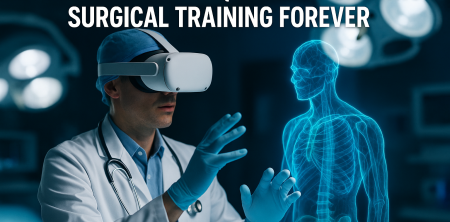
I've spent years in education, from K-12 classrooms to university deanships, and I can tell you that genuine innovation in teaching doesn't come along every day. We see trends, sure, but true transformation? That's rare. So, when I look at the rapid advancements in virtual reality (VR) for medical training, especially for surgeons, I don't just see a trend; I see a fundamental shift in how we prepare our medical professionals. It's truly groundbreaking, and frankly, it's about time. We've moved beyond the realm of novelty; VR is now a proven, indispensable tool, backed by hard data.
Think about it: traditional surgical training, while effective, has inherent limitations. There's only so much cadaver work, limited access to live surgeries, and the high-stakes environment of an operating room doesn't exactly lend itself to unlimited practice for novices. This is where VR steps in, offering a safe, repeatable, and incredibly realistic environment for surgeons to hone their craft. It's not just about practicing procedures; it's about building confidence, refining decision-making under pressure, and experiencing scenarios that might be rare in real life but critical to master.
The numbers don't lie. Randomized controlled trials conducted in 2024 and 2025 have consistently demonstrated that VR training performs just as well as, if not better than, traditional methods when it comes to acquiring knowledge and skills. What's particularly striking is the boost in engagement and confidence reported by trainees using VR. We're talking about a global VR in healthcare market projected to hit a staggering $7.58 billion by the end of 2026. This isn't just growth; it's an explosion, signaling a widespread recognition of VR's immense value. For anyone in medical education, understanding the best VR medical training platforms for surgeons isn't just beneficial; it's becoming absolutely essential.
1. Osso VR: Immersive Surgical Simulation with Haptics
When you talk about the best VR medical training platforms for surgeons, Osso VR is almost always at the top of the conversation, and for good reason. They've really pushed the envelope in creating an incredibly immersive and realistic surgical training experience. What sets Osso VR apart isn't just the visual fidelity – which is excellent, by the way – but their deep integration of haptic feedback. This isn't a minor detail; it's a game-changer. Haptics allow trainees to actually feel the resistance of tissue, the click of an instrument, or the tension of a suture. This tactile feedback bridges a huge gap between purely visual simulation and the physical reality of surgery.
Their platform offers a vast library of modules covering everything from orthopedic procedures to intricate cardiovascular surgeries. It's designed to be intuitive, allowing surgeons to quickly get up to speed and focus on the procedure itself rather than wrestling with the technology. The learning curve is surprisingly gentle for such sophisticated tech. I've seen firsthand how platforms like Osso VR can transform a hesitant resident into a confident practitioner, simply by providing a safe space to fail, learn, and repeat.
Osso VR has also focused heavily on data analytics, providing surgeons and educators with detailed performance metrics. This isn't just about pass/fail; it's about identifying specific areas for improvement, tracking progress over time, and even benchmarking against peers. This objective feedback is invaluable in a field where subjective assessment has traditionally played a large role. It allows for personalized learning paths and ensures that every minute spent in VR is optimized for skill development.
2. FundamentalVR: Combining VR with Haptics for Real-World Feel
FundamentalVR is another powerhouse in the surgical simulation space, often mentioned in the same breath as Osso VR when discussing the best VR medical training platforms for surgeons. Their approach, known as 'HapticVR,' is particularly impressive because it allows users to experience authentic haptic feedback using off-the-shelf haptic devices. This flexibility makes their solution more accessible and scalable for institutions that might not have the budget for highly specialized, proprietary haptic hardware. They've essentially democratized high-fidelity haptic simulation, which is a big win for wider adoption.
What I find most compelling about FundamentalVR is their commitment to clinical validity. They're not just building cool tech; they're collaborating with leading medical institutions and surgical societies to ensure their modules accurately reflect real-world surgical workflows and challenges. This means that when a surgeon trains on FundamentalVR, they're not just learning a virtual procedure; they're internalizing best practices and protocols that translate directly to the operating room. Their platform covers a broad spectrum of specialties, from neurosurgery to general surgery, offering a comprehensive training solution. (See: Virtual Reality in Surgical Training.)
Beyond the technical prowess, FundamentalVR also emphasizes collaborative learning. Their platform supports multi-user sessions, allowing surgeons to train together, observe each other, and receive real-time feedback from instructors, regardless of their physical location. This mirrors the collaborative nature of a real surgical team and adds another layer of realism and educational value. It's about building not just individual skills, but also teamwork and communication, which are absolutely critical in surgery.
3. Surgical Science (LapSim & ArthroSim): The Gold Standard in Scope-Based Simulation
Surgical Science has been a long-standing leader in medical simulation, and their platforms like LapSim and ArthroSim are undeniably among the best VR medical training platforms for surgeons, particularly those specializing in laparoscopic and arthroscopic procedures. While some of the newer VR platforms focus on fully immersive headset experiences, Surgical Science has perfected the art of scope-based simulation, which is incredibly relevant for minimally invasive surgery. Their simulators often combine physical hardware that mimics surgical instruments with detailed virtual environments, providing a highly realistic training experience. For more context, see DepEd Teacher Training Programs.
The key strength of Surgical Science's offerings lies in their incredible fidelity to the actual surgical instruments and visual field. When you're training on a LapSim, you're holding instruments that feel like the real thing, manipulating them through ports, and viewing the procedure on a screen as if you were looking through an endoscope. This direct correlation to real-world equipment and visual perception is crucial for developing the nuanced hand-eye coordination and fine motor skills required for minimally invasive techniques. They’ve been refining this for decades, and it shows in the quality and realism.
Furthermore, Surgical Science platforms are renowned for their comprehensive curriculum and objective performance feedback. They track every movement, every force applied, and every decision made, providing detailed reports that highlight areas for improvement. This data-driven approach allows trainees to practice specific tasks repeatedly until mastery, and educators to monitor progress with precision. For surgical residents needing to build proficiency in laparoscopic or arthroscopic skills, these platforms are often the go-to choice, deeply integrated into residency programs worldwide.
4. ImmersiveTouch: Personalized Surgical Planning and Training
ImmersiveTouch brings a unique angle to the discussion of the best VR medical training platforms for surgeons by focusing heavily on personalized surgical planning derived from patient-specific data. This isn't just about practicing generic procedures; it's about preparing for *a specific patient's* surgery. They leverage medical imaging data (like CT and MRI scans) to create highly accurate, patient-specific 3D anatomical models that surgeons can interact with in VR. This takes pre-operative planning to a whole new level, allowing surgeons to virtually 'rehearse' complex cases before they even step into the operating room.
Their platform allows surgeons to visualize and manipulate patient anatomy in a 3D, immersive environment, identifying potential challenges, determining optimal approaches, and even performing virtual resections or reconstructions. This capability is particularly invaluable for highly complex cases in specialties like neurosurgery, craniofacial surgery, and oncology, where every millimeter matters and anatomical variations are significant. It's about reducing surprises and increasing precision, which ultimately leads to better patient outcomes.
Beyond planning, ImmersiveTouch also offers training modules that can be customized to specific anatomical variations. This means a resident can not only practice a standard procedure but also practice that procedure on a virtual patient model that mirrors the unique challenges they might face in an upcoming live case. This blend of planning and training, driven by actual patient data, makes ImmersiveTouch a powerful tool for advanced surgical education and preparation, moving beyond generalized simulation to highly targeted, individualized practice.
5. Touch Surgery (Medtronic): Accessible Mobile and VR Training
Touch Surgery, now part of Medtronic, stands out among the best VR medical training platforms for surgeons due primarily to its incredible accessibility and widespread adoption. While they offer sophisticated VR experiences, their roots are in high-fidelity mobile simulations that have reached millions of users globally. This means surgeons can literally have a detailed surgical simulator in their pocket, allowing for learning and practice anytime, anywhere. This democratized access to surgical education is a massive benefit, especially for those in underserved regions or with limited access to expensive simulators.
Their platform features an extensive library of surgical procedures across various specialties, broken down into step-by-step interactive modules. Each step is meticulously detailed, often with accompanying anatomical illustrations, procedural videos, and decision-making points. This modular approach makes complex surgeries digestible and allows trainees to focus on specific segments of a procedure, practicing them repeatedly until proficiency is achieved. It's a fantastic tool for reinforcing knowledge and rehearsing procedural steps.
While their mobile app is widely known, Touch Surgery has also expanded into full VR simulation, offering even more immersive experiences. The integration with Medtronic, a global leader in medical technology, means that their training modules often align with the use of specific Medtronic devices and instruments. This provides a valuable bridge between simulated training and the practical application of medical technology, ensuring surgeons are not only skilled in the procedure but also proficient with the tools they’ll use in the operating room. It's a holistic approach to surgical readiness that's hard to beat for sheer reach and practical utility. (See: Virtual Reality Applications in Healthcare.)
6. Precision OS: Orthopedic-Specific VR Training
When we talk about specialized VR platforms, Precision OS absolutely deserves a spotlight as one of the best VR medical training platforms for surgeons focusing on orthopedics. They've honed in on the unique challenges and requirements of orthopedic surgery, creating a suite of modules that are incredibly detailed and clinically relevant. Orthopedic procedures often involve precise bone manipulation, implant placement, and a deep understanding of biomechanics, all of which Precision OS addresses with impressive accuracy within their VR environment. For more context, see DepEd Online Learning Platforms.
What sets Precision OS apart is their meticulous attention to the subtle nuances of orthopedic surgery. Trainees can practice everything from fracture repair and arthroplasty to complex spinal procedures, experiencing realistic tissue handling, bone drilling, and implant insertion. The platform provides immediate, objective feedback on performance, including metrics on accuracy of cuts, alignment of implants, and efficiency of surgical steps. This instant critique is invaluable for refining technique and building muscle memory specific to orthopedic tasks.
They also place a strong emphasis on decision-making scenarios within their modules. It’s not just about executing steps; it’s about understanding *why* certain steps are taken and how to react to unexpected challenges. This cognitive training is just as vital as motor skill development in surgery. For orthopedic residents and even seasoned surgeons looking to master new techniques or refresh their skills, Precision OS offers an unparalleled, specialized training ground that directly translates to improved patient care.
7. Body Interact (Take The Wind): Enhancing Clinical Reasoning and Emergency Response
While many of the platforms we've discussed focus on the technical aspects of surgery, Body Interact by Take The Wind offers a different, yet equally critical, dimension to surgical training: enhancing clinical reasoning and emergency response. While not a purely surgical 'procedure' simulator in the traditional sense, its value for surgeons, especially those in trauma or critical care, cannot be overstated. It's an interactive, virtual patient simulator that puts trainees in the hot seat, forcing them to diagnose, treat, and manage complex medical scenarios in real-time.
This platform excels at simulating a wide range of patient conditions, from cardiac arrest and stroke to severe trauma. Surgeons often find themselves in situations where they need to quickly assess a patient's condition, make rapid diagnostic decisions, and initiate life-saving interventions before or during a surgical procedure. Body Interact provides a safe environment to practice these high-stakes decision-making processes, allowing users to experience the consequences of their choices without any real-world risk.
The feedback mechanism is incredibly sophisticated, analyzing every decision, every medication administered, and every diagnostic test ordered. It highlights areas where clinical reasoning might be flawed or where critical steps were missed. For surgeons, particularly those involved in emergency medicine or surgical critical care, honing these diagnostic and management skills is paramount. Body Interact complements purely procedural simulators by ensuring that the surgeon not only knows how to operate but also when and why to operate, and how to manage the patient holistically.
8. Medical Augmented Reality (MAR): Blending Realism with Digital Insights
Medical Augmented Reality (MAR) takes a slightly different approach, often incorporating augmented reality (AR) alongside or in conjunction with VR, to offer truly innovative training solutions. While VR immerses you entirely in a virtual world, AR overlays digital information onto the real world. For surgical training, this often means superimposing anatomical structures, surgical guides, or patient data onto a physical model or even a live patient (in a training context, of course). This blending of realities offers a powerful new way to learn and practice. (See: How VR is changing medical training.)
The strength of MAR lies in its ability to provide contextual information and guidance right where and when it's needed. Imagine a surgeon practicing a complex procedure on a cadaver, but through an AR headset, they can see a real-time overlay of nerve pathways, vascular structures, or optimal incision lines. This enhances understanding of spatial relationships and provides immediate feedback on accuracy without fully detaching from the physical environment. It bridges the gap between purely digital simulation and hands-on physical practice in a truly unique way.
Furthermore, MAR platforms are proving incredibly useful for visualizing patient-specific anatomy in 3D during pre-operative planning, similar to ImmersiveTouch, but often with the added benefit of being able to 'place' that 3D model onto a physical space or even the patient themselves (again, in a training or planning context). For specialties requiring extreme precision and a deep understanding of complex 3D anatomy, MAR offers a compelling vision for the future of surgical education, combining the best of virtual and real-world learning.
The Future is Now: Why VR Medical Training Platforms for Surgeons Are Non-Negotiable
The landscape of medical education is evolving at an exhilarating pace, and VR isn't just a fancy add-on anymore; it's a foundational component. The best VR medical training platforms for surgeons aren't just improving skills; they're fundamentally changing how we approach competence, confidence, and patient safety. We're moving away from a model where learning happens solely through observation and limited hands-on experience, to one where deliberate, repeatable, and data-driven practice is the norm.
Consider the benefits: reduced training costs, no risk to actual patients, the ability to practice rare or high-stakes scenarios repeatedly, and objective performance metrics that inform personalized learning. These aren't minor advantages; they're transformative. The randomized controlled trials from 2024 and 2025 have unequivocally demonstrated that VR training is either on par with or superior to traditional methods. This isn't just about efficiency; it's about raising the bar for surgical proficiency across the board.
As the global VR in healthcare market barrels towards that $7.58 billion projection by the end of 2026, it's clear that hospitals, universities, and individual surgeons are recognizing the profound impact these technologies have. From developing fine motor skills with haptic feedback to refining complex decision-making in trauma scenarios, VR is providing a comprehensive, risk-free environment for surgical excellence. For educators like myself, it's incredibly exciting to witness this shift, knowing that the next generation of surgeons will be better prepared, more confident, and ultimately, save more lives because of these incredible virtual tools.
We're not just talking about simulating surgery; we're talking about simulating mastery. The platforms I've highlighted here are at the vanguard of this revolution, and their continued development will undoubtedly shape the future of medicine for decades to come. Any institution serious about surgical education needs to be investing in and integrating these technologies now, not later. The future of surgical training isn't coming; it's already here, and it's in virtual reality.
Trending Now
Frequently Asked Questions
How is virtual reality changing surgical training?
Virtual reality (VR) is revolutionizing surgical training by providing a safe and repeatable environment for practice. It allows surgeons to enhance their skills, build confidence, and refine decision-making under pressure, all while experiencing realistic scenarios that may be rare in actual operating rooms.
What are the benefits of VR in medical training?
The benefits of VR in medical training include improved engagement, increased confidence among trainees, and the ability to practice complex procedures in a controlled setting. Studies have shown that VR training can match or exceed traditional methods in skill acquisition and knowledge retention.
Is VR training as effective as traditional methods?
Yes, randomized controlled trials have demonstrated that VR training is as effective as, if not better than, traditional surgical training methods. Trainees using VR report higher engagement and confidence levels, making it a valuable tool in medical education.
What is the future of VR in healthcare?
The future of VR in healthcare looks promising, with the global VR in healthcare market projected to reach $7.58 billion by 2026. This growth indicates a strong recognition of VR's value in medical training and education, signaling a shift towards more innovative teaching methods.
What are the top VR platforms for surgical training?
Some of the top VR platforms for surgical training include Osso VR, which offers immersive surgical simulations with haptics. These platforms provide realistic training experiences that are crucial for developing surgical skills and confidence in a safe environment.
Have you experienced this yourself? We'd love to hear your story in the comments.

