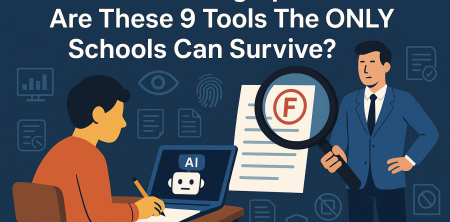
Alright, let's talk about the elephant in the classroom. You've heard the buzz, you've seen the headlines: AI is here, and it's shaking up everything we thought we knew about education. From New York City to Los Angeles, major school districts are scrambling, throwing down bans and moratoriums on generative AI, especially for younger students in K-8. The concerns are real, and frankly, they’re pretty valid: worries about critical thinking skills, excessive screen time, and, of course, the ever-present specter of plagiarism. It's a wild west out there, and educators are caught in the crossfire. We're seeing a significant chunk of teachers – about 69%, according to some surveys – who acknowledge AI's potential to actually improve teaching. Yet, an even larger number, a whopping 71%, feel absolutely burdened by the new responsibility of policing student AI use. It’s a tough spot to be in, isn't it? As a former Dean of Education, I can tell you, this isn’t just a passing fad; it’s a seismic shift. That’s why finding the best AI detection software for schools isn't just a good idea; it's becoming an essential component of maintaining academic integrity. Let's dive into some of the leading tools designed to help schools navigate this brave new world.
1. Turnitin's AI Writing Detection: The Industry Standard's Next Evolution
When you think about plagiarism detection in academia, Turnitin is probably the first name that comes to mind. For years, it's been the go-to for institutions worldwide, and they haven't been sitting idle as AI has exploded onto the scene. Turnitin's AI Writing Detection tool is their direct answer to the challenge of generative AI. They've integrated AI detection capabilities directly into their existing platform, which is a massive advantage for schools already familiar with their ecosystem.
What makes Turnitin so compelling for schools looking for the best AI detection software? For starters, its ubiquity means many students and teachers already know how to use it. The company leverages a vast database of academic content, and their AI detection model is trained on a massive amount of AI-generated text. This gives them a significant edge in identifying patterns indicative of AI authorship. They provide an 'AI writing score' alongside their traditional similarity report, giving educators a comprehensive view of potential academic misconduct. It's not perfect, no tool is, but Turnitin's commitment to continuous improvement and its deep roots in educational integrity make it a formidable contender.
2. GPTZero: The Educator-Developed Solution
Now, if you're looking for a tool born directly from the academic world's immediate response to ChatGPT, GPTZero should be on your radar. Developed by Princeton student Edward Tian, GPTZero gained rapid traction because it was one of the first widely available tools specifically designed to detect text generated by large language models like GPT-3 and GPT-4. Tian created it after seeing the immediate impact of AI on his own classes, and that grassroots origin gives it a certain appeal.
GPTZero focuses on identifying two key characteristics of AI-generated text: 'perplexity' and 'burstiness.' Perplexity measures how complex a text is for the model to predict the next word – human writing tends to have higher perplexity. Burstiness refers to the variation in sentence length and structure; human writing often has a more varied burstiness, while AI can be more uniform. While these metrics can sometimes lead to false positives or negatives, GPTZero provides a clear, understandable analysis that can be a valuable first line of defense for teachers feeling overwhelmed. It's user-friendly, and its rapid adoption by educators speaks volumes about its perceived utility in the quest for the best AI detection software for schools.
3. Copyleaks AI Content Detector: Comprehensive and Multilingual
When you're dealing with academic integrity, you need a tool that's not just good, but thorough. Copyleaks has long been a player in the plagiarism detection space, and their AI Content Detector is a robust expansion of their offerings. What sets Copyleaks apart is its focus on being comprehensive, not just for English, but for a multitude of languages. This is crucial for schools with diverse student populations or those offering international baccalaureate programs.
Copyleaks boasts high accuracy rates, claiming to detect AI-generated content with a significant degree of certainty. They also offer integration with various Learning Management Systems (LMS) like Canvas and Moodle, making it easier for educators to incorporate the detection process into their existing workflows. Beyond just flagging AI content, Copyleaks provides detailed reports that highlight specific sentences or phrases likely generated by AI, which can be incredibly helpful for teachers discussing potential academic honesty violations with students. For a holistic approach to academic integrity, including AI detection, Copyleaks certainly positions itself as one of the best AI detection software for schools.
4. Writer's AI Content Detector: Focus on Business and Education
You might know Writer from its enterprise-level writing assistance tools, but their AI Content Detector is a powerful standalone feature that has significant implications for education. While many tools focus solely on identifying AI, Writer often leans into helping users improve their writing, which gives their detection tool a slightly different flavor. They understand the nuances of human vs. machine writing and apply that understanding to their detection algorithms.
Writer's detector is known for its speed and its ability to distinguish between human-written and AI-generated text with a high degree of confidence. It's particularly good at identifying content from popular models like ChatGPT and GPT-4. For schools, this means a reliable and quick check for student submissions. While it might not have the deep academic integration of a Turnitin, its accuracy and ease of use make it a strong contender, especially for quick spot checks or for integrating into a broader suite of writing tools. When you're assessing the best AI detection software for schools, you'll find Writer's offering brings a professional-grade precision to the table.
5. Sapling AI Detector: Granular Feedback and Language Models
Sapling is another interesting entry into the AI detection landscape, often recognized for its broader suite of writing assistance tools. Its AI Detector leverages advanced natural language processing (NLP) models to identify patterns that are characteristic of AI-generated content. What's particularly useful about Sapling is its ability to provide more granular feedback, often highlighting specific sections or even sentences that are likely AI-generated. (See: U.S. Department of Education resources.)
The tool is designed to be user-friendly, allowing educators to quickly paste text and get an analysis. It’s not just about a simple 'yes' or 'no' answer; Sapling aims to give a nuanced perspective on the likelihood of AI involvement. This can be incredibly valuable for teachers who want to understand *why* a piece of text is flagged, helping them engage in more productive conversations with students about academic integrity and the responsible use of technology. For schools prioritizing clear, actionable insights alongside detection, Sapling offers a compelling package among the best AI detection software for schools.
6. Crossplag AI Detector: Blending Plagiarism and AI Detection
Crossplag has carved out its niche by offering comprehensive plagiarism detection, and they've smartly expanded into AI content detection. Their approach is to provide a unified platform where educators can check for both traditional plagiarism and AI-generated content simultaneously. This integrated approach can save time and streamline the academic integrity process for busy teachers and administrators. For more context, see EU Kids Act Could Finally Make the Internet Safe for Your Children.
The Crossplag AI Detector is designed to identify text generated by various large language models, providing a percentage score indicating the likelihood of AI authorship. They emphasize accuracy and speed, understanding that educators need quick, reliable results. For institutions that are looking to consolidate their academic integrity tools, or those who want a single solution for both forms of digital cheating, Crossplag presents a strong case. It’s certainly worth considering when you're evaluating the best AI detection software for schools, especially if a combined solution is a priority.
7. Content at Scale AI Detector: From Content Marketing to Classrooms
While Content at Scale primarily serves the content marketing industry, their AI Detector is a powerful tool that can be repurposed effectively for educational settings. These tools, designed to ensure that marketing content is seen as authentic and not flagged by search engines, often employ very sophisticated AI detection algorithms. This enterprise-level precision can be a significant advantage for schools.
The Content at Scale detector excels at identifying the subtle linguistic fingerprints left by generative AI models. It looks for patterns in sentence structure, vocabulary choice, and even the 'flow' of the text that are characteristic of machines, rather than humans. For educators, this means a high-accuracy tool that can help differentiate genuine student work from AI-assisted submissions. While it might not integrate directly into an LMS like some other education-specific tools, its robust detection capabilities make it a strong contender for those willing to use a standalone solution for the best AI detection software for schools.
8. Originality.ai: AI Detection with a Focus on Originality
Originality.ai is another tool that started with a strong focus on web content and SEO, but its capabilities are incredibly relevant for academic integrity. As its name suggests, the core mission of Originality.ai is to verify the originality of content, whether it's human-written or AI-generated. This makes it a natural fit for schools grappling with the challenge of ensuring students are submitting their own, authentic work.
This platform prides itself on its high accuracy and its ability to detect content from the latest AI models. It provides a clear percentage score, indicating the likelihood of AI content. Beyond just detection, Originality.ai often provides a detailed report that can help educators understand *why* certain sections are flagged. For schools that are serious about maintaining academic rigor and need a highly reliable tool to ensure student originality, Originality.ai offers a sophisticated solution among the best AI detection software for schools.
9. ZeroGPT: The Free and Accessible Option
Let's be real, not every school district has an unlimited budget for every piece of software. That's where tools like ZeroGPT come in. It's one of the more popular free AI detection tools available, and while free tools always come with caveats, ZeroGPT can be a valuable resource for individual teachers or smaller schools just beginning to grapple with AI detection. Its accessibility is its biggest strength, making it a low-barrier-to-entry option.
ZeroGPT operates on a straightforward principle: paste your text, click a button, and get a percentage indicating the likelihood of AI authorship. It's quick, simple, and doesn't require any complex integrations or subscriptions. While its accuracy might not match the enterprise-level solutions on this list, it can certainly serve as a useful first check or a supplementary tool. For educators who need a quick, no-cost way to get a preliminary assessment, ZeroGPT is a decent option, demonstrating that even free tools can play a role in the broader landscape of the best AI detection software for schools.
The Evolving Landscape of AI in Education: Beyond Detection
It's vital to recognize that AI detection isn't a silver bullet. The AI landscape is shifting constantly, with new models and techniques emerging almost daily. What works today might be less effective tomorrow. This means schools need to adopt a dynamic approach, regularly evaluating their chosen tools and staying informed about the latest developments in generative AI. It's not just about catching students; it's about educating them on responsible AI use. We're seeing a push to integrate AI literacy into curricula, teaching students how to use these powerful tools ethically, attribute sources correctly, and understand the limitations and biases inherent in AI-generated content. This preventative education is arguably as important as the detection tools themselves.
Think about it: just like we teach students about citing sources for traditional research, we now need to teach them how to cite or acknowledge AI assistance. This involves a fundamental shift in how we view academic work. Is AI a co-pilot, a research assistant, or a complete replacement for human thought? The answer, for now, is somewhere in the middle. The best AI detection software for schools helps us police the boundaries, but the real work lies in shaping the next generation's understanding of intellectual property in a digital, AI-driven world. (See: CDC on technology and youth.)
Challenges and Limitations of AI Detection Software
As promising as these tools are, they aren't without their challenges. One of the biggest hurdles is the potential for false positives. Imagine a student who genuinely writes an excellent essay, only for an AI detector to flag it as machine-generated due to its clarity, conciseness, or adherence to a specific academic style. This can create significant stress for students and undermine trust between students and teachers. Conversely, false negatives are also a concern – sophisticated AI models can sometimes produce text that bypasses current detectors, leaving educators in the dark.
Another limitation is the "arms race" phenomenon. As detection software gets better, AI models also become more sophisticated at mimicking human writing, making detection harder. This constant back-and-forth means schools are investing in tools that might require frequent updates or even complete overhauls. Furthermore, privacy concerns arise, especially when submitting student work to third-party services. Schools must carefully review the terms of service and data privacy policies of any AI detection software to ensure compliance with regulations like FERPA and to protect student data. For more context, see Elite Private School's Radical New Method.
Finally, the nuance of AI use is often missed. A student who uses AI to brainstorm ideas is very different from one who submits an entirely AI-generated paper. Current detection tools often give a single score, which doesn't always reflect the degree or type of AI assistance. This calls for educators to use these tools as a guide, not a definitive judgment, and to couple them with critical human review and deeper conversations with students.
Best Practices for Implementing AI Detection in Schools
Implementing AI detection software effectively requires more than just purchasing a license; it demands a thoughtful strategy. Here are some best practices schools should consider:
- Clear Policies and Communication: Establish clear, school-wide policies on AI use, specifying what's permissible and what constitutes academic misconduct. Communicate these policies transparently to students, parents, and staff.
- Educate Educators: Provide comprehensive training for teachers on how AI detection tools work, their limitations, and how to interpret reports. Equip them with strategies for discussing AI use with students productively.
- Student AI Literacy: Integrate lessons on AI literacy into the curriculum. Teach students about generative AI, its capabilities, ethical considerations, and responsible usage. This fosters understanding rather than just fear of detection.
- Holistic Assessment: Don't rely solely on AI detection scores. Combine them with other assessment methods like oral presentations, in-class writing, process-based assignments (showing drafts and outlines), and discussions to get a full picture of student learning.
- Pilot Programs: Before a full-scale rollout, consider piloting AI detection software with a smaller group of teachers and students to gather feedback and refine implementation strategies.
- Regular Review: The AI landscape changes rapidly. Regularly review and update your AI policies and chosen detection tools to ensure they remain effective and relevant.
- Focus on Learning, Not Just Policing: Position AI detection as a tool to support academic integrity and learning, rather than just a disciplinary measure. The goal should be to guide students toward genuine understanding and original thought.
The Future of Academic Integrity in an AI World
The conversation around AI in education is just beginning. As large language models become even more sophisticated and integrated into everyday tools, the distinction between human and machine-generated content will blur further. This will necessitate a rethinking of what "originality" truly means in an academic context. Will future assessments focus less on written essays and more on creative problem-solving, collaborative projects, or live demonstrations of understanding?
Expert perspectives suggest a move towards "AI-proof" assignments – tasks that require critical thinking, personal reflection, real-world application, and synthesis of complex ideas that current AI models struggle to replicate authentically. This could involve students analyzing current events, conducting interviews, performing experiments, or creating multimedia presentations that require human ingenuity and experience. The best AI detection software for schools will remain an important part of the toolkit, but it will be complemented by innovative pedagogical approaches that challenge students to engage with material in ways that transcend simple text generation.
Ultimately, the goal isn't to ban AI, but to harness its potential while safeguarding the integrity of the learning process. This means fostering an environment where students see AI as a powerful tool to augment their abilities, not replace their thinking. It's a delicate balance, but one that educators are uniquely positioned to navigate, guiding students toward a future where human intelligence and artificial intelligence can coexist productively.
Frequently Asked Questions About AI Detection Software for Schools
Navigating the world of AI detection can be tricky, so let's tackle some common questions educators and administrators might have.
Q1: How accurate are AI detection tools really?
A: The accuracy of AI detection tools varies significantly. No tool is 100% accurate, and they all face challenges with false positives (flagging human text as AI) and false negatives (missing AI-generated text). Accuracy rates are constantly improving as the technology evolves, but it's crucial to use these tools as indicators, not definitive proof. Always combine a detection tool's report with human judgment and context.
Q2: Can students bypass AI detection software?
A: Yes, sophisticated students using advanced techniques can sometimes bypass current AI detection software. Methods like "humanizing" AI text (making minor edits, adding personal anecdotes, or intentionally introducing errors) or using less common AI models can make detection harder. This is part of the ongoing "arms race" between AI generation and detection, highlighting the need for a multi-faceted approach to academic integrity. For more context, see Education Department Probes District Accused of Transing Teen. (See: Associated Press news on education.)
Q3: Are free AI detection tools reliable enough for schools?
A: Free tools like ZeroGPT can be useful for quick, preliminary checks or for individual teachers on a tight budget. However, they generally don't offer the same level of accuracy, features, or support as paid, enterprise-level solutions designed specifically for educational institutions. For school-wide implementation and robust academic integrity programs, investing in a more comprehensive paid solution is usually recommended.
Q4: How do AI detection tools handle multilingual content?
A: Some AI detection tools, like Copyleaks, specifically advertise multilingual capabilities, meaning they are trained to detect AI-generated content in various languages. This is a critical feature for schools with diverse student populations or those offering programs in multiple languages. When evaluating tools, always check their specific language support if this is a requirement for your institution.
Q5: What should we do if an AI detection tool flags a student's work?
A: If a student's work is flagged, it should trigger a conversation, not an immediate accusation. Use the detection report as a starting point. Talk to the student, ask them about their writing process, and consider other evidence like drafts, outlines, or their performance on in-class assignments. This approach supports due process and focuses on educating students about responsible AI use rather than just punishing them.
Q6: Can AI detection software be integrated with our existing Learning Management System (LMS)?
A: Many of the leading AI detection software options, such as Turnitin and Copyleaks, offer direct integrations with popular LMS platforms like Canvas, Moodle, Blackboard, and Google Classroom. These integrations streamline the submission and detection process for both students and educators, making it easier to incorporate AI checks into existing workflows. Always verify compatibility with your specific LMS when choosing a tool.
Q7: How can schools encourage responsible AI use instead of just banning it?
A: Encouraging responsible AI use involves a proactive educational approach. Schools can integrate AI literacy into the curriculum, teach students how to use AI for brainstorming and research ethically, and emphasize proper attribution and critical evaluation of AI-generated content. Designing assignments that require human creativity, critical thinking, and personal reflection also helps guide students toward productive and ethical AI engagement.
Q8: What are the privacy implications of using AI detection software?
A: Privacy is a significant concern. When student work is submitted to third-party AI detection services, schools must ensure that these services comply with relevant data privacy regulations like FERPA (Family Educational Rights and Privacy Act) in the United States. It's essential to review the vendor's data handling policies, understand how student data is stored and used, and ensure that personal identifiable information is protected.
The rapid rise of generative AI has undoubtedly presented a perplexing challenge for educators and school administrators. We're in uncharted territory, and the debate over critical thinking, screen time, and plagiarism is only intensifying. While some states, like California, are looking into legislative measures for AI accountability, the immediate burden falls on schools to adapt. The truth is, AI isn't going away, and as educators, we have to find ways to integrate it responsibly while upholding the core values of academic integrity. The tools we've discussed today represent the vanguard in this effort, offering different strengths and approaches to help schools navigate this complex, ever-evolving landscape. Choosing the best AI detection software for schools isn't about eliminating AI; it's about fostering an environment where students learn to use it ethically and effectively, ensuring that their learning remains genuinely their own.
Trending Now
Frequently Asked Questions
What is the AI cheating epidemic in schools?
The AI cheating epidemic refers to the increasing concerns around students using generative AI tools to complete assignments, leading to issues such as plagiarism, diminished critical thinking skills, and the challenge of maintaining academic integrity in education.
How are schools responding to AI in education?
Schools are reacting by implementing bans and moratoriums on generative AI, particularly for younger students in K-8, while also exploring AI detection tools to ensure academic integrity and support teaching practices amidst these changes.
What tools can help detect AI-generated content in schools?
Tools like Turnitin's AI Writing Detection are designed to help schools identify AI-generated content. These tools integrate AI detection capabilities into existing plagiarism detection systems, making them essential for maintaining academic standards.
What concerns do teachers have about AI in the classroom?
Teachers express concerns about the impact of AI on critical thinking skills, excessive screen time, and the added responsibility of monitoring student use of AI tools. Many recognize AI's potential benefits but feel overwhelmed by these challenges.
Is AI in education just a passing trend?
No, educators believe that AI represents a significant shift in the educational landscape. As noted by experts, the integration of AI tools in teaching and assessment is likely to continue evolving, making it vital for schools to adapt.
What did we miss? Let us know in the comments and join the conversation.

