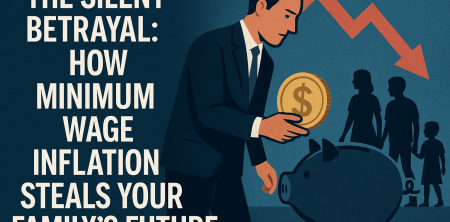
It’s a conversation I've had countless times with struggling parents, both in my years as a K-12 teacher and now as an education consultant: the crushing weight of trying to make ends meet when the goalposts keep moving. You work hard, you earn your paycheck, maybe you even get a raise, but somehow, you still feel like you’re falling further behind. This isn't just a feeling; it's a stark reality for millions of American families, and it's largely due to a phenomenon I call the silent betrayal: how minimum wage inflation relentlessly erodes your purchasing power. A recent report, dated September 24, 2026, laid bare just how devastating this erosion has become, shining a spotlight on the financial stress pushing hardworking families to the brink.
As of August 2026, the average U.S. household has had to shell out over $4,200 more annually on everyday goods and services under the current administration. Think about that for a moment. That’s not a small adjustment; that’s a significant chunk of change, enough to cover several months of groceries, a family vacation, or a substantial emergency fund contribution. For families living paycheck to paycheck, this isn't just an inconvenience; it's a crisis. It forces impossible choices: do you pay for groceries or the electric bill? Do you fix the car or put money aside for your child's education? This isn't just about economic numbers; it's about the very quality of life for families across the nation, and it's a topic that demands our urgent attention.
The Staggering Cost of Living: Beyond the Headlines
When we talk about inflation, it often feels abstract, a concept discussed by economists in ivory towers. But for the average family, it’s anything but abstract. It’s the higher price tag on milk, the shocking cost of gasoline, and the ever-increasing rent notice. The $4,200 figure isn't just a statistic; it represents countless skipped dinners out, delayed medical appointments, and foregone opportunities for children. It’s a direct hit to the household budget, making it harder to save, harder to plan, and harder to dream.
What's particularly insidious about this kind of inflation is how it disproportionately affects those at the lower end of the income spectrum, including many minimum wage earners. While a high-income earner might absorb a $4,200 increase with some discomfort, for someone making minimum wage, that amount can represent several months of their take-home pay. It's not just about spending more; it's about the diminishing value of their hard-earned dollars. Every hour worked buys less than it did before, making the concept of a 'guaranteed minimum wage' feel increasingly like a cruel joke.
Housing: The Unbearable Burden of Minimum Wage Inflation
Perhaps no single category illustrates the devastating impact of inflation quite like housing. The report highlights that housing costs alone have surged by an alarming $833 for the average U.S. household. Let’s be clear: this isn't a minor uptick. For many, $833 is more than a month’s rent or mortgage payment. It means families are dedicating an ever-larger portion of their income just to keep a roof over their heads, leaving less for everything else.
The situation is compounded by soaring mortgage rates, which, in September 2026, have climbed towards a daunting 7.0%. For prospective homebuyers, this is a nightmare. A 7.0% mortgage rate significantly increases monthly payments, pricing countless families out of the market entirely. Even for those looking to refinance or renew existing mortgages, the sticker shock can be immense. This isn't just about buying a house; it's about building equity, stability, and a future. When housing becomes unaffordable, the ripple effects spread throughout society, impacting everything from school enrollment to local economic development. It’s a direct consequence of minimum wage inflation eroding purchasing power.
The Deceptive Lure of a Minimum Wage Hike
Often, when we discuss the struggles of low-income workers, the immediate solution proposed is to raise the minimum wage. On the surface, it sounds like a straightforward fix: if people aren't earning enough, pay them more. And in some contexts, a responsible, well-thought-out increase can certainly help. However, the problem of minimum wage inflation is far more complex than simply increasing the hourly rate.
Imagine this scenario: the minimum wage is raised from $7.25 to $15.00 an hour. Workers rejoice, seeing a significant bump in their paychecks. But what happens next? Businesses, facing higher labor costs, often pass those costs on to consumers through higher prices. Suddenly, the gallon of milk, the cost of childcare, and the rent all go up. The initial gain in purchasing power is quickly eroded by the increased cost of living. It's a frustrating cycle, and it's why simply hiking the minimum wage without addressing the underlying inflationary pressures can be like trying to fill a bucket with a hole in the bottom – you might pour more water in, but it keeps leaking out.
The Political Football: Why Minimum Wage Inflation is So Contentious
It's no surprise that discussions around minimum wage inflation and its impact are highly viral and emotionally charged. This isn't just an economic debate; it's a deeply personal one for millions of families. When people feel their financial security is threatened, they look for answers, and often, they look to their political leaders. This makes economic policies, particularly those related to inflation and wages, a perpetual political football. (See: economic stress and family health.)
On one side, you have arguments for stronger social safety nets, higher minimum wages, and government intervention to control prices. The sentiment is often rooted in a desire to protect the vulnerable and ensure a basic standard of living. On the other side, you hear calls for fiscal conservatism, reduced government spending, and policies that favor business growth, with the argument that a strong economy will naturally create better opportunities and wages. Both sides genuinely believe their approach is the right one, but in the heat of political rhetoric, the nuanced understanding of how inflation truly impacts families can get lost. What’s clear is that families are experiencing real pain, and they want solutions, not just talking points.
Beyond the Paycheck: The Broader Economic Impact
The effects of minimum wage inflation extend far beyond individual household budgets. When families struggle to afford necessities, it has a ripple effect throughout the entire economy. Consumer spending, a major driver of economic growth, can slow down. Businesses that rely on discretionary spending might see a decrease in sales. Furthermore, persistent inflation can lead to a wage-price spiral, where workers demand higher wages to keep up with rising costs, which in turn leads businesses to raise prices even further. For more context, see the truth about parents quitting the rat race.
Consider the impact on small businesses. Many small business owners operate on thin margins. When labor costs rise due to minimum wage increases, and the cost of supplies also increases due to inflation, they face immense pressure. They might be forced to raise their prices, reduce staff, or even close their doors. This isn't theoretical; it's a daily reality for entrepreneurs trying to keep their dreams alive while navigating an unpredictable economic landscape. It’s a complex web, and pulling one thread – like minimum wage policy – can have unintended consequences across the entire fabric.
The Role of Government Policy in Combating Inflation
When we talk about minimum wage inflation, it's impossible to ignore the role of government policy. Central banks, like the Federal Reserve in the U.S., use monetary policy tools to manage inflation. Raising interest rates, for example, is a common strategy to cool down an overheating economy. The idea is to make borrowing more expensive, which can slow down spending and investment, thereby reducing demand and, hopefully, prices. However, these actions aren't without consequences. Higher interest rates can also make it harder for businesses to expand and for individuals to buy homes or cars, potentially leading to slower economic growth or even a recession. It's a delicate balancing act, and getting it wrong can have severe repercussions for everyday Americans.
Fiscal policy, which involves government spending and taxation, also plays a significant part. Large government spending programs, especially if not offset by increased revenue, can inject more money into the economy, potentially fueling inflation. On the other hand, targeted tax breaks or subsidies can sometimes help alleviate the burden of rising costs for certain sectors or income groups. The challenge is finding policies that address the root causes of inflation without stifling economic activity or creating new problems. This often involves difficult trade-offs and intense political debate, as different factions prioritize different outcomes.
International Perspectives: Minimum Wage and Inflation Around the Globe
It's helpful to remember that minimum wage inflation isn't solely an American phenomenon. Countries worldwide grapple with similar challenges, though their approaches and experiences vary widely. In some European nations, for instance, minimum wages are often set through collective bargaining agreements between unions and employers, rather than direct government mandates. This can sometimes lead to more gradual and consensus-driven adjustments, potentially mitigating some of the immediate inflationary shock.
Conversely, some developing economies face even more volatile inflation rates, making the concept of a "livable wage" incredibly fluid and challenging to maintain. Observing these different models can offer valuable insights. For example, countries that couple minimum wage adjustments with strong social safety nets, robust public services (like affordable healthcare and childcare), and policies aimed at boosting productivity might be better equipped to absorb inflationary pressures without disproportionately burdening low-wage earners. Learning from these international experiences can inform our own domestic policy discussions, helping us understand what works and what doesn't in various economic contexts.
The Psychological Impact: Stress and Uncertainty
Beyond the raw numbers, the constant pressure of minimum wage inflation takes a significant psychological toll on families. The stress of feeling like you're always falling behind, even when you're working harder, can lead to anxiety, depression, and a general sense of hopelessness. Parents often worry about their children's futures, their ability to afford basic necessities, and the increasing difficulty of saving for important milestones like education or retirement. This isn't just about financial health; it's about mental and emotional well-being.
The uncertainty that comes with unpredictable price increases also makes long-term planning incredibly difficult. How do you budget for a child's college fund when the cost of tuition is rising faster than your income? How do you save for a down payment on a house when housing prices seem to climb daily? This constant state of flux can erode trust in economic institutions and political leaders, leading to broader societal discontent. It's a silent stressor that impacts millions, affecting everything from family dynamics to community cohesion.
Strategies for Families: Navigating the Inflationary Storm
So, what can families do to protect themselves against the silent erosion of minimum wage inflation? While systemic changes are needed, there are also practical steps individuals can take to build greater financial resilience. This isn't about magical solutions, but rather about smart, consistent effort. (See: impact of inflation on families.)
Budgeting Tools and Financial Advisory Services
One of the most crucial steps is to gain absolute clarity on where your money is going. Budgeting tools, whether a simple spreadsheet or a sophisticated app, can help you track every dollar. Seeing your income and expenses laid out can reveal areas where you can cut back, even slightly. For those feeling overwhelmed, engaging with a financial advisor, even for a few sessions, can provide invaluable guidance. They can help you create a personalized plan, identify savings opportunities, and set realistic financial goals. Sometimes, an outside perspective is exactly what you need to see your finances clearly.
Comparison Shopping for Mortgages and Refinancing
With mortgage rates climbing, anyone buying a home or considering refinancing needs to be incredibly diligent. Don't just accept the first rate you're offered. Shop around, compare rates from multiple lenders, and understand all the associated fees. Even a quarter of a percentage point difference can save you thousands of dollars over the life of a loan. Tools that compare mortgage rates are readily available online, and they are absolutely worth your time. If you're a homeowner with an existing mortgage, regularly review your options. While current rates might make refinancing less attractive than it once was, it's always worth understanding your position and potential alternatives. For more context, see the unseen crisis draining parents' wallets.
Protecting Your Family: Insurance as a Shield
In an unpredictable economic climate, protecting your family against unforeseen circumstances becomes even more critical. Life insurance, for example, can provide a financial safety net for your loved ones if something were to happen to you. Disability insurance can replace a portion of your income if you become unable to work due to illness or injury. These aren't luxuries; they are essential components of a robust financial plan, especially when economic pressures are high. Think of them as shock absorbers for your family's financial well-being, helping to mitigate the impact of life's inevitable curveballs.
The Long-Term View: Why Education and Skills Matter
While we grapple with the immediate challenges of minimum wage inflation, it's also important to consider long-term strategies for economic advancement. Education and continuous skill development remain powerful tools against the erosion of purchasing power. The more valuable your skills are in the marketplace, the greater your earning potential, and the better equipped you are to demand wages that keep pace with or even outstrip inflation.
This is something I’ve championed throughout my career in education. Whether it’s pursuing a higher degree, acquiring vocational certifications, or simply staying current with industry trends, investing in yourself is one of the best financial decisions you can make. For parents, this also means fostering a love of learning in your children and exploring educational pathways that lead to in-demand careers. In a constantly evolving economy, adaptability and a commitment to lifelong learning are not just admirable traits; they are economic necessities.
Expert Perspectives on Minimum Wage Inflation
When we talk about minimum wage inflation, you'll find a wide spectrum of opinions from economists and policy experts. Some, like those from the Economic Policy Institute, argue that moderate increases in the minimum wage have a minimal impact on inflation and can significantly improve the lives of low-wage workers. They often point to studies suggesting that businesses can absorb these costs through slightly higher productivity, reduced employee turnover, or marginal price adjustments that don't trigger widespread inflation. Their perspective emphasizes the moral imperative of ensuring a living wage and reducing income inequality.
On the other side, economists from organizations like the Heritage Foundation often express concerns that significant minimum wage hikes can indeed fuel inflation, especially in service-based industries. They argue that businesses, particularly small ones, have limited options other than raising prices or reducing staff to offset increased labor costs. They might also highlight the potential for job losses or reduced hiring, particularly for entry-level positions. This viewpoint often prioritizes free market principles and warns against government interventions that could distort labor markets. Understanding these different perspectives is key to appreciating the complexity of the debate and why there's no easy, universally accepted answer.
Frequently Asked Questions About Minimum Wage Inflation
What exactly is minimum wage inflation?
Minimum wage inflation refers to the phenomenon where increases in the minimum wage are quickly offset by rising prices for goods and services. This means that while a worker's hourly pay might go up, their actual purchasing power doesn't improve much, or can even decrease, because everything else costs more. It's like getting a bigger paycheck but finding that a loaf of bread costs twice as much.
Does raising the minimum wage always cause inflation?
Not necessarily always, but it can contribute to it, especially if the increase is substantial or happens during a period of already high inflation. Economic studies offer mixed results, with some suggesting a minimal impact and others showing a more significant effect, particularly on the prices of goods and services produced by minimum wage workers. The impact depends on many factors: the size of the increase, the overall economic climate, how businesses react, and consumer demand. For more context, see why young adults living with parents will reshape society. (See: minimum wage increase effects.)
Who is most affected by minimum wage inflation?
Those at the lower end of the income spectrum are disproportionately affected. While higher earners might feel some pinch from rising prices, minimum wage workers often see their entire pay raise eaten up by increased costs for essentials like food, housing, and transportation. This makes it incredibly difficult for them to save money, pay down debt, or improve their financial situation.
What are some alternatives to simply raising the minimum wage to help low-income workers?
There are several proposed alternatives and complementary policies. These include expanding the Earned Income Tax Credit (EITC), which provides a refundable tax credit to low-to-moderate-income working individuals and families; investing in education and job training programs to increase workers' skills and earning potential; implementing policies that reduce the cost of living, such as affordable housing initiatives or universal healthcare; and fostering competition to keep prices down. Some also advocate for stronger unionization to help workers negotiate better wages and benefits.
How can consumers protect themselves from the effects of inflation?
While systemic solutions are needed, individuals can take steps like creating and sticking to a detailed budget, aggressively comparison shopping for major purchases, reducing discretionary spending, building an emergency savings fund, and investing in education or skills training to increase their earning capacity. For homeowners, carefully reviewing mortgage rates and refinancing options is also crucial. Diversifying investments to include inflation-protected securities can also be a strategy for those with investment portfolios.
What is the "wage-price spiral" and how does it relate to minimum wage inflation?
A wage-price spiral is a macroeconomic concept where rising wages lead to higher production costs, which then cause businesses to raise prices. These higher prices, in turn, prompt workers to demand even higher wages to maintain their purchasing power, creating a continuous cycle of wage and price increases. Minimum wage inflation can feed into this spiral if significant wage hikes trigger widespread price adjustments that then lead to further demands for higher pay.
Looking Ahead: A Call for Balanced Economic Policy
Ultimately, addressing the silent corruption of minimum wage inflation requires a multi-faceted approach. It's not just about raising wages or cutting taxes; it's about creating a stable economic environment where hard work genuinely pays off and families can build a secure future. This means a balanced approach to monetary policy, responsible fiscal spending, and policies that encourage productivity and innovation.
For policymakers, it means moving beyond soundbites and engaging in serious, evidence-based discussions about how to mitigate inflationary pressures while simultaneously supporting workers and fostering economic growth. For all of us, it means staying informed, advocating for policies that prioritize long-term stability over short-term political gains, and continuing to build personal financial resilience. The battle against inflation is ongoing, but with understanding and strategic action, we can work towards a future where a guaranteed minimum wage truly provides a dignified living, free from silent erosion.
Trending Now
Frequently Asked Questions
How does minimum wage inflation affect families?
Minimum wage inflation erodes purchasing power, making it increasingly difficult for families to afford everyday essentials. As prices rise, even earning more can feel inadequate, leading to tough choices between basic needs like groceries and bills.
What is the impact of rising living costs on households?
Rising living costs have forced many households to spend over $4,200 more annually on essentials, resulting in skipped meals, delayed medical care, and a diminished quality of life, especially for those living paycheck to paycheck.
Why is inflation considered a crisis for working families?
Inflation is a crisis for working families because it creates financial stress and uncertainty. Families must often choose between necessities, leading to a decline in overall well-being and stability as costs continue to outpace wages.
What are the consequences of inflation on children's education?
Inflation can lead to difficult financial decisions for parents, including delaying savings for their children's education. With rising costs, families may struggle to allocate funds for tuition and educational opportunities.
How can families cope with rising expenses due to inflation?
Families can cope with rising expenses by budgeting carefully, prioritizing essential spending, and seeking additional income sources. Community resources and support networks can also provide assistance during challenging financial times.
What did we miss? Let us know in the comments and join the conversation.

