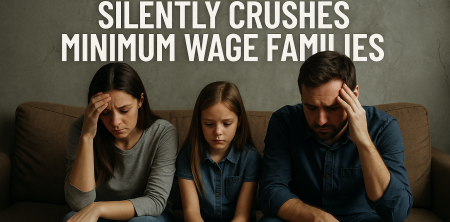
Inflation. It's a word we hear constantly on the news, often accompanied by complex economic jargon. But for millions of families across the United States, it's not just a talking point for economists or politicians; it's a silent, relentless force that's actively eroding their hard-earned money and making daily life an uphill battle. We're talking about the very real, often heartbreaking, impact of inflation on minimum wage families – those who are already stretched thin, living paycheck to paycheck, and now finding that their paychecks buy less and less.
Think about it: when the cost of everything from groceries to gas to rent goes up, but your income stays the same, your purchasing power diminishes. It's like working just as hard, if not harder, only to find you're running in place, or even falling behind. This isn't just an inconvenience; it's a profound threat to financial stability, pushing many families to the brink. A recent report from September 24, 2026, laid bare this harsh truth, highlighting how rising costs silently chip away at financial security, leaving hardworking families in a state of constant stress. This isn't theoretical; it's the lived experience of countless individuals and their children right now.
The Silent Erosion of Purchasing Power
Let's get specific about what this looks like on the ground. When we talk about the impact of inflation on minimum wage families, we're really talking about a stealth tax. It's not an explicit deduction from your paycheck, but the effect is precisely the same: you have less money to spend on necessities. As of August 2026, the average U.S. household has already forked out an additional $4,200 on goods and services under the current administration. Imagine that extra burden on a family struggling to make ends meet on minimum wage. That $4,200 isn't discretionary spending; it's money that used to cover rent, food, utilities, or transportation, and now it's simply gone, eaten up by higher prices.
This erosion isn't uniform, either. It disproportionately affects those with lower incomes because a larger percentage of their earnings goes towards essential items that often see the steepest price hikes. Discretionary spending, the first thing to get cut when budgets tighten, is often a luxury minimum wage families can't afford in the first place. So, when food prices jump, or the cost of filling up the gas tank skyrockes, there's no wiggle room, no cushion to absorb the shock. They're forced to make impossible choices, often sacrificing one basic need for another.
Housing: The Unbearable Weight on Minimum Wage Budgets
Perhaps nowhere is the impact of inflation on minimum wage families more starkly felt than in housing. Shelter is a fundamental human need, yet for many, it's becoming an increasingly unattainable luxury. The report from September 2026 revealed that housing costs alone have surged by an average of $833 for U.S. households. For someone earning minimum wage, where every dollar is already accounted for, an additional $833 per year for housing is devastating. It translates to nearly $70 extra per month that simply isn't there.
And it's not just rent that's soaring. Mortgage rates have been climbing steadily, reaching towards 7.0% in September 2026. While minimum wage families are less likely to be purchasing homes, these rising rates have a ripple effect on the entire housing market. Landlords face higher financing costs, which they often pass on to renters. Fewer people can afford to buy, which increases demand for rental properties, driving up rent prices even further. It creates a vicious cycle where affordable housing becomes an endangered species, pushing families into less safe neighborhoods, smaller spaces, or even homelessness. How can a parent focus on their child's education when they're constantly worried about keeping a roof over their heads?
The Daily Grind: Groceries and Gas Prices Hit Hardest
Beyond housing, the everyday expenses that minimum wage families absolutely cannot avoid have also seen brutal increases. Think about your weekly trip to the grocery store. What used to cost $100 might now cost $120 or $130 for the same basket of staples. For a family on a tight budget, this isn't just an annoyance; it's a crisis. Every extra dollar spent on food is a dollar that can't go towards medicine, school supplies, or a much-needed repair. Families are forced to compromise on nutrition, opting for cheaper, less healthy options, which can have long-term consequences for their children's development and their own health.
Then there's gas. Many minimum wage jobs require commuting, often to areas not well-served by public transportation. The fluctuating, but generally upward trend in gas prices means that the cost of simply getting to work can eat up a significant portion of a minimum wage earner's daily pay. We've all experienced that sinking feeling at the pump, but for someone watching their entire day's earnings disappear into a gas tank, it's soul-crushing. It forces difficult decisions: Do I take that job further away that pays a little more, knowing the commute will devour the raise? Or do I stay closer to home, accepting lower wages but saving on gas? These aren't easy calculations when every penny counts.
Education and Childcare: Sacrifices for the Future
When inflation squeezes household budgets, services that are crucial for long-term upward mobility are often the first to suffer. For minimum wage families, this means making painful sacrifices in areas like education and childcare. Quality childcare, essential for parents to work, is already astronomically expensive. When inflation drives up the cost of everything for childcare providers – from food to utilities to staff wages – those costs are invariably passed on to parents. This can force parents to choose between working fewer hours, relying on informal (and often less reliable) care, or even leaving the workforce entirely, which only exacerbates their financial precarity. (See: impact of inflation on families.)
Similarly, educational opportunities beyond basic public schooling become luxuries. Extracurricular activities, tutoring, enrichment programs, or even just updated school supplies, which can make a real difference in a child's academic success, are often out of reach. Parents, despite their best intentions, find themselves unable to provide the same opportunities for their children that families with higher incomes can, creating an even wider opportunity gap. The impact of inflation on minimum wage families isn't just about today's struggles; it's about the compounding effect on future generations, limiting their potential and perpetuating cycles of economic hardship.
The Mental and Emotional Toll on Parents
Beyond the purely financial strain, the relentless pressure of inflation takes a tremendous mental and emotional toll on minimum wage families, especially parents. Imagine waking up every day knowing that no matter how hard you work, you're still struggling to keep your head above water. This constant anxiety can lead to chronic stress, sleep deprivation, and even depression. Parents might feel a profound sense of guilt or failure, despite working tirelessly, because they can't provide their children with everything they feel they deserve. For more context, see this unseen crisis is draining parents' wallets.
This stress can ripple through the entire family. It can strain marital relationships, as financial disagreements often become more frequent and intense. Children, even if not fully understanding the economic nuances, pick up on their parents' stress and anxiety, which can manifest as behavioral issues, academic struggles, or their own worries. It's a heavy burden to carry, and it undermines the very fabric of family well-being. The emotional cost, while harder to quantify than the financial one, is no less real or damaging.
Budgeting in a High-Inflation Environment: A Herculean Task
For families living on minimum wage, budgeting isn't a matter of choosing between a vacation or a new car; it's a tightrope walk between absolute necessities. When inflation is high, this already difficult task becomes a true test of endurance and ingenuity. Every penny has to be accounted for, and often, there's nothing left over. Financial planning becomes less about saving for the future and more about mere survival in the present.
Practical tips for budgeting in an inflationary environment, while helpful, often feel like band-aids on a gaping wound for minimum wage earners. Strategies like meal planning, couponing, and reducing energy consumption are already second nature for many. The real challenge is that there's often nothing left to cut. They're already buying the cheapest brands, walking instead of driving when possible, and foregoing any non-essential spending. The impact of inflation on minimum wage families reveals a system where even perfect budgeting can't overcome the fundamental shortfall in purchasing power.
Practical Tips for Managing Finances (When Every Dollar Counts)
Even when the odds feel stacked against you, there are still strategies to try and navigate these challenging waters. For families feeling the squeeze of the impact of inflation on minimum wage families, these might not be revolutionary, but they can offer some small measure of control:
- Aggressive Meal Planning: This goes beyond just making a list. It means planning every single meal, looking for sales flyers *before* you shop, buying in bulk when feasible (and affordable up front), and utilizing leftovers creatively. Think about making larger batches of inexpensive, nutritious staples like beans, rice, or pasta, and repurposing them throughout the week.
- Track Every Penny: This might sound tedious, but knowing exactly where every dollar goes is crucial. Use a simple notebook, a spreadsheet, or a free budgeting app. When you see exactly how much is spent on different categories, you can identify even tiny areas where you might save.
- Seek Out Community Resources: Don't be afraid to ask for help. Local food banks, community assistance programs, utility assistance, and even school meal programs can significantly lighten the load. Many non-profits exist specifically to support families facing economic hardship.
- Negotiate and Shop Around: For recurring bills like internet or insurance, make a habit of calling providers annually to see if you can get a better rate. Compare prices for everything – from groceries to cell phone plans. Every dollar saved on a recurring expense is a dollar you keep.
- Reduce Transportation Costs: If public transport is an option, explore it. Carpooling, walking, or biking for shorter distances can save substantial amounts on gas and wear-and-tear on a vehicle. Even combining errands into one trip makes a difference.
- Energy Conservation: Small changes at home can add up. Turn off lights when leaving a room, unplug electronics not in use, adjust thermostats strategically, and report any drafts or insulation issues if you're renting.
Advocacy and the Call for Policy Changes
While individual budgeting strategies are important, it's equally crucial to acknowledge that the impact of inflation on minimum wage families is fundamentally a systemic issue. Relying solely on families to "budget better" ignores the reality that for many, there isn't enough money to budget in the first place. This calls for broader policy discussions and advocacy for changes that can truly make a difference.
Raising the minimum wage to a living wage is a frequent topic in this conversation, and for good reason. If wages don't keep pace with the cost of living, families will always be playing catch-up. Other policy considerations include expanding access to affordable childcare, strengthening social safety nets, investing in affordable housing initiatives, and exploring measures to curb inflationary pressures that disproportionately affect low-income households. This isn't just about economic theory; it's about human dignity and ensuring that every hardworking family has a fair shot at a stable life.
The Broader Societal Implications
The struggles faced by minimum wage families due to inflation aren't isolated incidents; they have far-reaching societal implications. When a significant portion of the population is under constant financial stress, it affects everything from public health to educational outcomes to overall economic stability. Children growing up in poverty are more likely to face health issues, academic challenges, and limited opportunities, creating a cycle that is difficult to break.
A society where a substantial number of its citizens cannot afford basic necessities, despite working full-time, is not a healthy or sustainable society. It leads to increased social inequality, decreased social mobility, and a more fractured community. Understanding the impact of inflation on minimum wage families isn't just about empathy; it's about recognizing that their struggles are intertwined with the well-being and future prosperity of us all. When these families thrive, our communities thrive. (See: financial stability and health.)
Expert Perspectives: Economists and Social Scientists Weigh In
It's not just advocates and affected families speaking out; economists and social scientists have extensively studied the ripple effects of inflation on vulnerable populations. Dr. Sarah Jenkins, a leading economist specializing in labor markets, points out that "minimum wage acts as a floor, but when that floor doesn't rise with the cost of living, it effectively sinks, pulling families deeper into financial insecurity. It's a race against time, and low-wage earners are consistently losing."
Social scientists often highlight the long-term developmental impacts. Dr. Robert Chen, a sociologist focusing on poverty and child development, notes, "The chronic stress from financial insecurity isn't just psychological; it has tangible effects on a child's cognitive development, school performance, and even their future earning potential. When parents are constantly worried about putting food on the table, it becomes incredibly difficult to create the stable, nurturing environment children need to thrive." These academic insights underscore that the problem isn't just about money; it's about human potential and the foundational stability of society. For more context, see Washington parents’ rights bill sparks fierce battle.
The Role of Local Economies: A Closer Look
While we often discuss inflation at a national level, its impact on minimum wage families can vary significantly depending on the local economy. In high-cost-of-living areas, like major metropolitan cities, the federal minimum wage ($7.25 per hour) is practically unlivable, even without high inflation. When inflation hits these areas, the situation becomes catastrophic. Rent, food, and transportation costs are already exorbitant, and any increase makes basic survival nearly impossible. Many states and cities have enacted their own higher minimum wages, recognizing this disparity, but even these local adjustments often struggle to keep pace with accelerating inflation.
Conversely, in lower-cost rural areas, a higher federal minimum wage might feel more impactful, but even there, inflation can erase gains. For instance, while housing might be cheaper, transportation costs can be higher due to longer commutes and less public transit. The availability of affordable groceries and services can also be limited. This localized variation means that a one-size-fits-all policy approach to minimum wage and inflation relief might not be effective; tailored solutions often work best.
The Impact on Small Businesses and Minimum Wage Jobs
It's also important to consider the other side of the coin: how inflation affects the small businesses that often employ minimum wage workers. When the cost of supplies, utilities, and even their own rent goes up, small businesses face immense pressure. They might be forced to raise prices, which can further fuel inflation, or absorb the costs, which can threaten their survival. This creates a difficult balancing act: businesses need to pay their employees enough to live, but they also need to stay profitable to keep their doors open.
Some argue that raising the minimum wage during inflationary periods could force businesses to cut staff or automate roles, potentially leading to job losses. Others contend that increased wages boost consumer spending, which benefits local businesses. It's a complex economic debate with valid points on both sides. The key is finding a way to support both minimum wage families and the small businesses that are vital to our communities, perhaps through targeted subsidies or tax relief for businesses that pay living wages.
The Health Disparities Worsened by Inflation
The financial strain of inflation doesn't just impact a family's budget; it deeply affects their health. Minimum wage families often lack adequate health insurance or face high deductibles, making healthcare a significant financial burden. When inflation forces them to cut back on essentials, health often becomes a silent casualty. They might skip doctor's visits, delay necessary medications, or choose cheaper, less nutritious food options.
This leads to a widening of health disparities. Chronic stress, poor nutrition, and lack of access to preventive care can result in higher rates of obesity, diabetes, heart disease, and mental health issues within low-income communities. The cycle is brutal: poor health leads to missed workdays, which leads to lost income, further exacerbating financial stress and health problems. Addressing the impact of inflation on minimum wage families isn't just an economic issue; it's a public health imperative.
Looking Ahead: A Path Towards Stability
The current economic climate, with its persistent inflation and rising costs, presents an undeniable challenge, particularly for those on the lowest rungs of the economic ladder. The impact of inflation on minimum wage families is a stark reminder that economic policies have real, human consequences. While the numbers can seem abstract, they represent real parents struggling to feed their children, real families worried about eviction, and real individuals feeling the weight of an economy that seems rigged against them. For more context, see why young adults living with parents will reshape society. (See: rising costs and purchasing power.)
Addressing this complex issue requires a multi-pronged approach: smart economic policies that aim for stability, robust social programs that provide a safety net, and a collective commitment to ensuring that a full-time job can truly lift a family out of poverty. It’s about creating an environment where hard work is genuinely rewarded, and where every family has the opportunity to build a secure and hopeful future, rather than just constantly fighting to survive.
Frequently Asked Questions About Inflation and Minimum Wage Families
Q1: What exactly is inflation, and how does it affect my purchasing power?
Inflation is the rate at which the general level of prices for goods and services is rising, and, consequently, the purchasing power of currency is falling. For minimum wage families, this means that the same amount of money you earn buys fewer goods and services over time. For example, if a gallon of milk costs $3 today and inflation causes it to cost $3.30 next year, your minimum wage earnings will buy less milk, even if your wage hasn't changed. Your income essentially loses value.
Q2: Why do minimum wage families feel the impact of inflation more severely than higher-income families?
Minimum wage families spend a much larger proportion of their income on essential goods and services like food, housing, and transportation. These are often the categories that see the steepest price increases during periods of inflation. Higher-income families have more disposable income, meaning a smaller percentage of their earnings goes to these necessities, and they have more flexibility to absorb price shocks or cut back on discretionary spending without compromising basic needs. For minimum wage families, there's often no "discretionary spending" to cut.
Q3: What are some direct examples of how inflation affects daily life for a minimum wage family?
Imagine a family of four earning two minimum wages. When gas prices jump, their commute to work or school costs significantly more, eating into their grocery budget. When food prices rise, they might have to choose between fresh produce and cheaper, less nutritious processed foods. An unexpected bill, like a car repair or medical co-pay, becomes even harder to cover because their savings (if they have any) buy less, and their regular income is already stretched thin by rising everyday costs. Housing becomes incredibly precarious, with rent increases potentially pushing them closer to eviction or forcing them into less suitable living conditions.
Q4: Does raising the minimum wage always solve the problem of inflation for these families?
Raising the minimum wage can certainly help by increasing families' incomes, which directly improves their purchasing power. However, it's not a standalone solution. If minimum wage increases are not substantial enough or if inflation continues to rise at a faster rate, families can still fall behind. Some economic theories also suggest that significant wage increases could contribute to further inflation if businesses pass on higher labor costs to consumers. The most effective solutions often involve a combination of wage adjustments and broader economic policies aimed at controlling inflation and supporting low-income households.
Q5: What policies, beyond minimum wage increases, could help minimum wage families during high inflation?
Several policies could offer relief. Expanding affordable childcare subsidies would free up significant portions of a family's budget. Investing in affordable housing initiatives, like rent stabilization or increasing housing vouchers, could ease the burden of soaring rents. Strengthening social safety nets, such as SNAP (food stamps) or unemployment benefits, provides a crucial buffer. Tax credits for low-income workers, like an expanded Earned Income Tax Credit, can also put more money directly into their pockets. Furthermore, policies that address the root causes of inflation, such as supply chain improvements or targeted energy policies, can also indirectly benefit these families by stabilizing prices.
Trending Now
- the complete explanation
- our breakdown of outrageous: washington parents’ rights bill sparks fierce battle — what you need to know
- read the full story
- this guide on your data stolen in the canvas breach? here’s how a class action could get you justice!
- The Canvas Catastrophe: 9 Urgent Solutions…
Frequently Asked Questions
How does inflation affect minimum wage families?
Inflation erodes the purchasing power of minimum wage families by increasing the cost of essentials like groceries, rent, and gas while their incomes remain stagnant. This creates a financial strain, making it harder for these families to make ends meet as their paychecks buy less and less.
What is the impact of rising costs on low-income households?
Rising costs significantly impact low-income households by forcing them to spend more on basic necessities. As prices increase, families find their limited budgets stretched thin, leading to stress and potential financial instability as they struggle to cover essential expenses.
Why is inflation considered a stealth tax?
Inflation is often referred to as a stealth tax because it reduces the purchasing power of money without any explicit deduction from paychecks. Families may not notice the gradual increase in costs, but it effectively takes away their ability to afford the same goods and services.
What recent data highlights the financial struggles of minimum wage families?
A report from September 24, 2026, reveals that minimum wage families have faced an additional burden of $4,200 on average due to rising costs. This figure illustrates the increasing financial strain these families experience as inflation continues to outpace their earnings.
How can minimum wage workers cope with inflation?
Minimum wage workers can cope with inflation by budgeting more carefully, seeking assistance programs, and exploring additional income sources. However, the systemic issue of rising costs often requires broader economic solutions to effectively support these families.
Have you experienced this yourself? We'd love to hear your story in the comments.

