```html
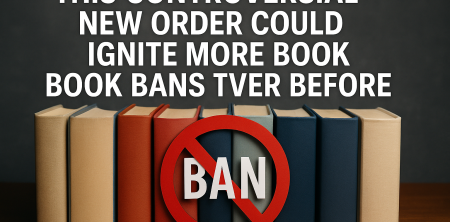
You've probably seen the headlines, scrolled past the viral social media posts, or maybe even debated it at your own kitchen table: the contentious issue of book bans in schools. It's a debate that reliably ignites passions, pitting parents against educators, free speech advocates against those concerned about "age appropriateness." Now, a new directive from education officials is poised to pour gasoline on an already smoldering fire, raising alarms among free speech groups who fear it will dramatically expand the scope and frequency of book bans across our school systems.
This isn't just about a few controversial titles here and there. This new order mandates that superintendents and charter school leaders conduct continuous audits of their library collections for "sexually explicit material." The language itself, as we'll explore, is broad enough to be interpreted in wildly different ways, leaving a massive grey area that could see a wide array of books, from literary classics to contemporary young adult novels, pulled from shelves. It’s a move that sits squarely at the intersection of parental rights, censorship, school governance, and student access to reading materials, creating a potent cocktail for controversy.
The Mandate: Continuous Audits and "Sexually Explicit Material"
Let's get specific about what this new directive entails. Education officials have issued orders that aren't a one-time clean-up, but rather a perpetual task. School leaders, from district superintendents to those running individual charter schools, are now responsible for an ongoing, systematic review of every book in their libraries. The stated goal is to identify and remove "sexually explicit material." On the surface, this might sound reasonable to many parents who want to ensure their children are exposed to appropriate content.
However, the devil, as always, is in the details – or rather, the lack thereof. What exactly constitutes "sexually explicit material" in the context of a school library, especially one serving a diverse student body ranging from elementary schoolers to high school seniors? Is it purely anatomical descriptions? Is it implied sexual themes? Does it include discussions of gender identity or sexual orientation, which some conservative groups increasingly conflate with "sexual content"? This ambiguity is precisely what has free speech organizations so worried. Without clear, universally accepted definitions, individual schools and districts are left to interpret the mandate, opening the door to highly subjective decisions and, inevitably, more book bans.
The Alarming Silence on Definitional Clarity
Perhaps one of the most concerning aspects of this new policy is the apparent lack of clear, universally applicable definitions for what constitutes "sexually explicit material" in a school library context. When a mandate is issued that requires continuous audits, you'd expect a robust framework for implementation. Instead, what we have is a broad directive that leaves enormous discretion to local school officials, many of whom may not have backgrounds in literature, library science, or even legal interpretation.
Think about the practical implications. A superintendent in one district might interpret "sexually explicit" to mean only graphic depictions of sexual acts. Another, perhaps under pressure from a vocal parent group, might cast a much wider net, including any mention of sex, gender fluidity, or LGBTQ+ relationships. This creates a patchwork of policies across the state or region where these orders are being implemented. What's considered appropriate in one school might lead to a book being banned just a few miles down the road. This inconsistency is not only confusing for educators and librarians but also for students and parents trying to understand the rules.
Free Speech Advocates Sound the Alarm on Book Bans
It's no surprise that organizations dedicated to free speech and intellectual freedom are up in arms. Groups like the American Library Association (ALA), PEN America, and the National Coalition Against Censorship (NCAC) have been vocal critics of the rising tide of book bans over the past few years. They see this new directive as a significant escalation, a governmental stamp of approval on a trend they view as deeply damaging to education and democratic values.
These organizations argue that the vague wording of the mandate creates a chilling effect. Librarians, already often underfunded and overworked, may err on the side of caution, preemptively removing books they fear might be challenged, rather than risking their jobs or facing public backlash. This self-censorship can be even more insidious than direct book bans, as it quietly shrinks the intellectual landscape available to students without a formal challenge process. They contend that school libraries should offer a diverse range of perspectives and experiences, preparing students to engage with a complex world, not shield them from it.
The Emotional Core: Parental Rights vs. Intellectual Freedom
At its heart, this debate around book bans is an emotionally charged one because it touches on deeply held beliefs. On one side, you have parents who genuinely believe they have a fundamental right to guide their children's education and protect them from what they perceive as harmful or inappropriate content. They often feel that schools are overstepping their bounds or exposing children to ideas that conflict with their family's values. This perspective often emphasizes the role of parents as the primary educators and moral compass for their children.
On the other side are those who champion intellectual freedom, arguing that students, especially as they mature, need access to a wide variety of ideas, even challenging ones, to develop critical thinking skills and a nuanced understanding of the world. Educators and librarians often see themselves as professionals trained to curate collections that are age-appropriate, diverse, and supportive of educational goals. They argue that a parent's right to guide their own child's reading does not extend to dictating what all other children in a school can read, nor to undermining the professional judgment of educators. (See: Associated Press on book bans.)
The "Culture War" Aspect and Social Media Amplification
This issue of book bans isn't happening in a vacuum; it's a prominent battleground in what's often referred to as the "culture war." It encapsulates broader societal disagreements about values, morality, and the role of public institutions like schools. For many, it's not just about a specific book; it's about a perceived ideological struggle over the direction of society and the minds of the next generation. This makes the debate incredibly potent and prone to rapid virality on social media platforms.
Book bans reliably provoke strong reactions. Educators feel their professional integrity is being questioned. Parents on both sides feel their children's well-being is at stake. Authors see their work dismissed or vilified. Political activists, eager to mobilize their bases, quickly amplify these stories, turning local school board meetings into national news items. A single book challenge in a small town can quickly become a trending topic, drawing national attention and further polarizing the discussion. Social media's ability to quickly disseminate information, often without nuance, ensures that these controversies spread like wildfire, making it harder to find common ground or local solutions.
Who Are the Winners and Losers in the Fight Over Book Bans?
When the dust settles on these book challenges and new policies like the continuous audit mandate are implemented, it's worth asking: who truly wins and who loses? From the perspective of groups pushing for bans, a win is achieved when a book deemed "inappropriate" is removed from shelves. They see this as protecting children and upholding community standards. For them, the moral stakes are clear: safeguarding innocence and traditional values.
However, free speech advocates and many educators see significant losses. Students, particularly those from marginalized backgrounds, may lose access to books that reflect their experiences or help them understand themselves and the world. Consider a LGBTQ+ teenager in a conservative area; a book featuring a character like them might be their only window into a sense of belonging or understanding. When such books are removed, these students can feel isolated, invalidated, and that their stories are deemed unworthy or even dangerous. Moreover, the broader student body loses exposure to diverse perspectives, which is crucial for developing empathy, critical thinking, and a comprehensive understanding of human experience. The "winners" might feel a temporary victory, but the long-term cost to intellectual curiosity and inclusivity can be substantial.
The Role of Librarians: Caught in the Crossfire
Perhaps no group is more directly impacted by these policies and debates than school librarians. These dedicated professionals are often the first line of defense against book challenges, and they are now tasked with the unenviable job of continuously auditing their collections under a vague mandate. Librarians are trained to curate diverse, age-appropriate collections that support curriculum goals and foster a love of reading. They follow professional ethical guidelines that prioritize intellectual freedom and access to information.
Now, many find themselves caught between conflicting demands: the professional imperative to provide a rich and varied collection, and the administrative pressure to comply with directives that could lead to widespread book bans. This situation creates immense stress, potential burnout, and even fear of reprisal. Some librarians may feel compelled to self-censor, selecting fewer potentially controversial titles to avoid future challenges, thus impoverishing the library for all students. Their expertise, which should be valued in collection development, is often overlooked or actively undermined in the current climate.
Looking Ahead: Potential Outcomes and Future Challenges
So, what does this new directive mean for the future of school libraries and education? It's highly probable that we will see a significant increase in book challenges and, consequently, book bans. The continuous audit requirement means that the process of reviewing books won't be reactive to a specific complaint, but an ongoing, proactive search for "sexually explicit material." This institutionalizes the process, making it a regular part of school administration rather than an occasional event.
We can also anticipate more legal challenges. Free speech groups and civil liberties organizations are likely to contest these policies in court, arguing that they violate students' First Amendment rights or are unconstitutionally vague. These legal battles will be costly, time-consuming, and further draw resources away from actual educational initiatives. Furthermore, this situation could exacerbate the already severe shortage of school librarians, as qualified professionals may choose to leave a profession that feels increasingly constrained and under attack. Ultimately, the biggest loser in this scenario might be the students themselves, who are denied access to the very tools – diverse books and open inquiry – that help them grow into well-rounded, critical thinkers.
The Historical Context of Book Bans in the U.S.
While the current wave of book bans feels particularly intense, it's important to remember that this isn't a brand new phenomenon in American history. Book banning has a long, complicated past, often reflecting broader societal anxieties and shifts in cultural values. Back in the 19th and early 20th centuries, challenges frequently targeted books deemed morally corrupting, often related to religious objections or perceived obscenity. Think about classics like Mark Twain's "The Adventures of Huckleberry Finn," which faced bans for its language and themes, or Walt Whitman's "Leaves of Grass" for its sensuality.
The Cold War era saw a different kind of ban, with books challenged for allegedly promoting communism or un-American ideas. Later, in the 1970s and 80s, the focus shifted to concerns about secular humanism and explicit content in literature, often mirroring the rise of conservative social movements. What's different now is the sheer volume and coordinated nature of the challenges, often driven by national organizations rather than isolated local concerns. We're seeing a return to broad-brush categorizations like "sexually explicit" or "divisive concepts" that echo past moral panics but with a modern, social media-fueled intensity. Understanding this history helps us recognize patterns and see that these battles over ideas in schools are cyclical, even if the specific targets and tactics evolve.
The Impact on Curriculum and Teacher Autonomy
Beyond the library shelves, these book ban directives cast a long shadow over the entire curriculum and the professional autonomy of teachers. When librarians are under pressure to remove books, it naturally affects what resources are available for classroom use. Teachers rely on a diverse collection to supplement lessons, provide different perspectives, and engage students with various reading levels and interests. If key texts are removed or inaccessible, it limits their ability to create comprehensive and engaging learning experiences.
Even more concerning is the chilling effect on teacher autonomy. Knowing that any book or topic could be deemed "controversial" and lead to a challenge, teachers might self-censor their lesson plans. They might avoid certain literary works, historical topics, or discussions about current events for fear of parental complaints or administrative scrutiny. This isn't just about what's on the shelf; it's about what's being taught in the classroom, potentially narrowing the scope of education and stifling critical inquiry. When teachers feel they can't address complex or sensitive topics, students lose out on opportunities to develop nuanced understanding and discussion skills essential for citizenship. (See: CDC on youth mental health.)
Beyond "Sexually Explicit": The Expanding Scope of Challenges
While the current mandate specifically targets "sexually explicit material," it's crucial to recognize that the broader movement behind book bans often extends far beyond this narrow definition. Many challenges today also target books that address themes of race, racism, LGBTQ+ identities, mental health, and historical injustices. These books are often labeled as "divisive," "indoctrinating," or promoting "critical race theory," even when the content is simply reflective of diverse human experiences or historical facts.
For example, books featuring protagonists of color or discussing systemic racism, like "The Hate U Give" by Angie Thomas or "Stamped: Racism, Antiracism, and You" by Jason Reynolds and Ibram X. Kendi, frequently appear on challenged lists. Similarly, stories with LGBTQ+ characters, such as "Gender Queer" by Maia Kobabe or "All Boys Aren't Blue" by George M. Johnson, are disproportionately targeted. This expansion of targets suggests that the underlying motivation isn't solely about protecting children from explicit content, but also about controlling narratives and limiting exposure to ideas that challenge certain worldviews or promote inclusivity. The "sexually explicit" label, in many cases, becomes a convenient umbrella for a much wider range of ideological objections.
The Economic and Resource Cost of Book Bans
The fight over book bans isn't just an ideological battle; it carries significant economic and resource costs for school districts. First, there's the cost of the continuous audit itself. Librarians and other school staff will need to dedicate countless hours to reviewing thousands of books, diverting time from their primary responsibilities of supporting students and curriculum. If districts need to hire external reviewers or additional staff to meet the mandate, that's another budget line item.
Then there are the costs associated with formal challenge processes. Each challenged book often triggers a committee review, involving administrators, teachers, parents, and sometimes even legal counsel. These meetings require staff time, documentation, and sometimes legal fees if the challenge escalates. If books are ultimately removed, there's the cost of replacing them (if allowed) or simply the loss of investment in the original collection. Furthermore, legal battles over book bans, which are becoming more common, can drain significant financial resources from already stretched school budgets. These funds could otherwise be used for improving facilities, purchasing new educational technologies, or increasing teacher salaries, showing how the culture war directly impacts school funding and student services.
Expert Perspectives: What Librarians and Educators Say
When you talk to professional librarians and educators, a consistent message emerges: they are deeply concerned about the professional implications and the harm to students. The American Library Association (ALA) consistently highlights that librarians are trained professionals who follow rigorous selection criteria, including age appropriateness, educational value, literary merit, and diversity. They emphasize that library collections are not static; they evolve to meet the needs of a diverse student body and a changing world.
Librarians often describe the feeling of being devalued and distrusted, even though their goal is to foster literacy and critical thinking. Many report increased stress, fear of job loss, and a sense of isolation. Educators often echo these sentiments, stressing that access to a wide range of books is fundamental to a well-rounded education. They point out that challenging ideas, even uncomfortable ones, are vital for developing students' ability to analyze, synthesize, and form their own opinions. Expert consensus among these professionals is that broad, vague mandates for book removal undermine educational goals and can create an environment of fear and intellectual stagnation in schools.
Finding Common Ground: A Path Forward?
Is there a way out of this contentious cycle, or are we doomed to an endless battle over book bans? It's incredibly difficult to find common ground when the debate is framed as a zero-sum game with clear winners and losers, especially when it's fueled by intense emotions and ideological divides. However, if we are to move forward constructively, several things need to happen.
First, there needs to be a serious effort to define terms like "sexually explicit material" with clarity and nuance, developed by educators, librarians, parents, and legal experts, rather than leaving it open to broad, subjective interpretations. Second, school districts need to reaffirm the value of professional librarians and their expertise in collection development, ensuring transparent and fair challenge processes that prioritize educational value and age appropriateness over knee-jerk reactions. Finally, open dialogue, respectful of differing viewpoints but grounded in facts and educational best practices, is crucial. This means moving beyond soundbites and social media outrage to genuine conversations about what we want for our children's education and how libraries can best serve those goals without resorting to censorship. It's a tall order, but the intellectual well-being of our students depends on it.
Frequently Asked Questions About Book Bans
What exactly is a "book ban"?
A book ban isn't just a parent choosing what their own child reads. It refers to the removal of a book from a school library, classroom, or curriculum, making it inaccessible to all students. This happens after formal challenges, often initiated by individuals or groups, arguing the book is inappropriate for various reasons.
Who usually initiates book challenges and bans?
While individual parents sometimes initiate challenges, recent trends show a significant increase in challenges from organized groups, often with specific political or ideological agendas. These groups frequently provide lists of books they deem objectionable, leading to coordinated efforts across multiple school districts. (See: New York Times coverage of censorship.)
What kinds of books are most frequently challenged or banned?
Historically, challenges focused on "obscenity" or "profanity." Today, while "sexually explicit" remains a common label, books dealing with LGBTQ+ themes, race and racism (especially those discussing systemic racism or critical race theory), and mental health are disproportionately targeted. Books that offer diverse perspectives or challenge traditional norms often face the most scrutiny.
Do book bans violate students' First Amendment rights?
Many legal experts and free speech advocates argue that they do. While schools have some discretion in selecting materials, the Supreme Court case Island Trees School District v. Pico (1982) established that school boards cannot remove books from library shelves simply because they dislike the ideas contained in those books. Removing books based on viewpoint is often seen as a violation of students' First Amendment rights to receive information.
What's the difference between a book challenge and a ban?
A book challenge is a formal complaint filed against a book, requesting its removal or restriction. A book ban is the successful outcome of a challenge, where the book is actually removed from circulation or access is restricted for all students. Not all challenges result in bans.
How do librarians decide what books to include in a school library?
Librarians are trained professionals who use established selection criteria. These criteria include literary merit, educational relevance, age appropriateness, positive reviews from professional journals, curriculum support, and the need for a diverse collection that reflects the student body and offers a wide range of perspectives. They aim to balance these factors to create a well-rounded and valuable resource for students.
What can parents do if they object to a book in their child's school library?
Most school districts have a formal reconsideration process for library materials. Parents can typically submit a written complaint, which then triggers a review by a committee (often including librarians, teachers, administrators, and other parents). It's important for parents to engage with this process respectfully and understand the established procedures.
What are the potential negative consequences of book bans for students?
Book bans can limit students' access to diverse ideas and perspectives, hinder the development of critical thinking skills, make some students (especially those from marginalized groups) feel unseen or invalidated, and create an environment where intellectual curiosity is stifled. They can also prevent students from finding books that help them understand themselves or the world around them.
Are book bans just about protecting children?
While many proponents of book bans genuinely believe they are protecting children, critics argue that the motivation often extends beyond age appropriateness to ideological objections. The broad targeting of books on race, LGBTQ+ themes, or history suggests a desire to control narratives and limit exposure to ideas that challenge specific viewpoints, rather than solely safeguarding against explicit content.
```
Trending Now
Frequently Asked Questions
What is the new directive regarding book bans in schools?
The new directive mandates continuous audits of library collections by superintendents and charter school leaders to identify and remove 'sexually explicit material.' This ongoing review aims to ensure age-appropriate content but raises concerns about potential widespread book bans.
How does the new order affect book access in schools?
The order could significantly limit access to various books, including literary classics and contemporary young adult novels, as the broad definition of 'sexually explicit material' may lead to frequent removals from school libraries.
Why are free speech advocates concerned about this new mandate?
Free speech advocates worry that the vague language of the directive could lead to censorship and an increase in book bans, undermining students' access to diverse reading materials and limiting educational opportunities.
What are the implications of continuous audits in schools?
Continuous audits require school leaders to systematically review library collections, which could create a chilling effect on the availability of books, as educators may err on the side of caution and remove titles that could be deemed controversial.
How are parents reacting to the new book ban directive?
Reactions among parents are mixed; some support the idea of ensuring age-appropriate content, while others fear that the broad interpretation of 'sexually explicit material' could lead to unnecessary censorship and limit their children’s access to valuable literature.
What's your take on this? Share your thoughts in the comments below — we read every one.


0 Responses