```json
{
"title": "This Crucial Shift Will Mend Broken Trust in AI-Era Classrooms",
"content": "
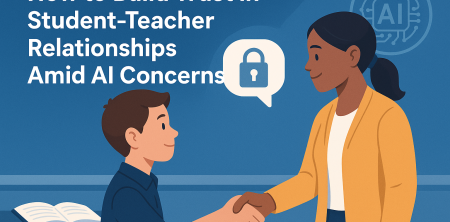
Alright, let's be real for a moment. The classroom has always been a space built on a certain level of trust, right? Teachers trust students to engage honestly, and students trust teachers to guide them fairly. It's a fundamental pillar of effective learning. But something's happening, something that's quietly, yet profoundly, eroding that foundation: the rise of artificial intelligence. Specifically, the intense, almost panicked, focus on AI cheating.
\n\n
I've seen it firsthand, both in my years as a K-12 teacher and in my work with educators across the P-20 spectrum. There's a palpable anxiety among teachers about students leveraging AI to bypass genuine learning, to plagiarize, or to submit work that isn't their own. And honestly, it’s understandable. The tools are powerful, and they’re evolving at a dizzying pace. But what’s less understandable, and far more damaging, is the \'cat-and-mouse game\' that’s emerging. Teachers are struggling to definitively prove AI use, while students, often innocent, find themselves in the impossible position of trying to disprove false accusations. This cycle isn't just inefficient; it's actively tearing at the fabric of student-teacher relationships, making it incredibly difficult to know how to build trust in student-teacher relationships AI has complicated.
\n\n
A recent report from the Center for Digital Thriving at the Harvard Graduate School of Education really hit the nail on the head, highlighting just how much this fear of AI cheating is fracturing trust in K-12 classrooms. It’s a wake-up call, urging schools to pivot their approach – to build AI policies with trust as the cornerstone, not suspicion. We need open, honest conversations about ethical AI use, and we absolutely need to integrate AI literacy into our curriculum. It's not about banning AI; it's about understanding it, guiding its use, and ultimately, restoring that essential trust. Let's dig into how we can actually do that.
\n\n
1. Embrace Open Dialogue, Not Accusation: Shifting the Classroom Culture
\n\n
The first, and arguably most critical, step in rebuilding trust is to fundamentally change how we talk about AI in the classroom. When the default position is suspicion, and every AI-generated sentence is a potential act of deceit, we're setting ourselves up for failure. Instead, educators need to foster an environment where open dialogue is not just tolerated, but actively encouraged. This means moving away from a punitive, accusatory stance and towards one of curiosity and shared understanding.
\n\n
Think about it: if a student knows that admitting to using AI, even incorrectly, will lead to immediate punishment or distrust, they're far less likely to be honest. But what if the conversation starts with, \"How did you approach this assignment? Did you use any tools to help? Let's discuss the ethical implications of using those tools for this task.\" This subtle shift in language and intent can make all the difference. It signals to students that their teachers are partners in learning, not just digital detectives. This is foundational to knowing how to build trust in student-teacher relationships AI has impacted.
\n\n
This open dialogue isn't just about catching cheaters; it's about education. Many students, especially younger ones, might not fully grasp the ethical nuances of AI. They might see it as just another tool, like a calculator or a spell-checker, without understanding the implications for originality, critical thinking, or academic integrity. By opening a space for discussion, we can guide them through these complex issues, helping them develop a more sophisticated understanding of responsible AI use. This proactive approach cultivates a culture of integrity, rather than simply enforcing compliance through fear.
\n\n
2. Integrate AI Literacy into the Curriculum: Empowering Students and Teachers
\n\n
It's no longer enough to just teach students how to use traditional research methods. In an age where AI is becoming ubiquitous, we have a responsibility to teach them about AI itself. This isn't just a tech class topic; it's a cross-curricular imperative. AI literacy means understanding what AI is, how it works (at a basic level), its capabilities, its limitations, and crucially, its ethical implications. It’s about teaching students to be discerning consumers and ethical producers of information in an AI-powered world.
\n\n
Imagine lessons where students analyze AI-generated text for bias, identify where AI might be helpful in their learning process, or even learn to prompt AI effectively for brainstorming while understanding the boundaries of its application for original work. This isn't about teaching them to cheat; it's about teaching them to navigate a new landscape. When students understand the \'why\' behind ethical AI use, they're more likely to internalize those principles. This also equips them with critical skills for their future, regardless of their chosen path. (See: Harvard University on educational trust.)
\n\n
For teachers, this means professional development isn't just a nice-to-have; it's essential. We can't expect educators to teach AI literacy if they don't possess it themselves. Schools need to invest in training that helps teachers understand AI tools, recognize AI-generated content (without relying on fallible detectors), and develop pedagogical strategies that embrace AI as a learning tool while upholding academic integrity. This shared understanding between students and teachers about AI’s role is absolutely vital for how to build trust in student-teacher relationships AI has influenced.
\n\n
3. Design Assignments That AI Can't Easily Cheat: Reimagining Assessment
\n\n
Let's be honest: if an assignment can be perfectly completed by a simple AI prompt, then perhaps the assignment itself needs a redesign. The fear of AI cheating often stems from traditional assignments that are highly susceptible to AI generation, like basic essays, summaries, or factual recall tasks. Instead of focusing solely on detection, we should shift our energy to creating assessments that require genuine human insight, critical thinking, creativity, and personal experience – qualities AI struggles to replicate authentically. For more context, see Microsoft's Bold Move on AI Safety in Education.
\n\n
Think about projects that demand original thought, synthesis of multiple, varied sources, real-world application, or even personal reflection. Oral presentations, debates, collaborative projects, case studies requiring nuanced analysis, or assignments that necessitate fieldwork or interviews are far harder for AI to fake. Requiring students to integrate their unique perspectives, local context, or lived experiences into their work makes it virtually impossible for generic AI to produce a credible result. This approach doesn't just deter cheating; it also promotes deeper learning and engagement.
\n\n
Furthermore, consider process-oriented assessments. Instead of just grading the final product, incorporate checkpoints where students demonstrate their understanding of the process – outlines, drafts, annotated bibliographies, or even short video reflections on their research journey. This not only makes it harder to use AI for the entire task but also provides valuable insights into a student's learning trajectory, fostering a more robust understanding of their capabilities and areas for growth. It’s a powerful way to build trust, showing that we value their journey as much as their destination.
\n\n
4. Clarify AI Usage Policies with Student Input: Collaborative Policy Making
\n\n
Top-down policies, especially on emotionally charged topics like AI, rarely foster trust. When rules are imposed without input from those they affect, they often breed resentment and a sense of being unfairly targeted. Instead, schools and individual teachers should engage students in the creation of AI usage policies. This doesn't mean letting students dictate the rules entirely, but it does mean involving them in the discussion, listening to their perspectives, and explaining the rationale behind decisions.
\n\n
Imagine a classroom discussion where students help brainstorm what constitutes ethical AI use for a specific assignment, or what the consequences should be for misusing AI. This collaborative approach not only makes the policies clearer and more understandable for students but also gives them a sense of ownership. When students feel heard and involved in the policy-making process, they are far more likely to adhere to those policies and to trust that the rules are fair and reasonable.
\n\n
These policies should be clear, concise, and specific. Vague prohibitions only create confusion and anxiety. Instead, differentiate between using AI for brainstorming (potentially acceptable with citation) versus generating entire essays (generally unacceptable). Be explicit about when AI tools are permitted, for what purpose, and how they should be cited. This clarity reduces ambiguity and builds a framework for responsible use, which is essential for how to build trust in student-teacher relationships AI has inevitably complicated.
\n\n
5. Focus on the Learning Process, Not Just the Product: Valuing Growth
\n\n
In the rush to evaluate final outcomes, we sometimes lose sight of the journey. The obsession with AI cheating often hyper-focuses on the final submitted product, trying to determine its authenticity. This narrow focus can inadvertently signal to students that only the end result matters, rather than the effort, critical thinking, and growth that went into creating it. To rebuild trust, we need to shift our emphasis back to the learning process itself.
\n\n
This means incorporating formative assessments more frequently, providing feedback on drafts, and encouraging revisions. When students know that their progress, their struggles, and their attempts at improvement are valued, they are less likely to feel the pressure to resort to AI for a perfect final product. It creates a low-stakes environment where experimentation and even failure are seen as part of learning, rather than something to be hidden or feared.
\n\n
Moreover, asking students to reflect on their learning process, to articulate their challenges and breakthroughs, reinforces the idea that the journey is as important as the destination. This could involve journaling, short oral presentations on their research methods, or even peer review sessions where they discuss their approaches. By valuing and assessing the process, we encourage genuine engagement and reduce the perceived need to cut corners, thereby strengthening the bond of trust between students and teachers. This is a critical component of how to build trust in student-teacher relationships AI has made us re-evaluate. (See: CDC Youth Risk Behavior Surveillance.)
\n\n
6. Educate on the Limitations and Biases of AI: Critical Consumption
\n\n
Part of AI literacy isn't just about using it; it's about understanding its inherent flaws. Many students, and even some adults, view AI as an infallible oracle, capable of generating perfectly accurate and unbiased information. This misconception can lead to both over-reliance and a lack of critical engagement with AI-generated content. As educators, we have a responsibility to demystify AI and highlight its limitations and potential biases. For more context, see AI Detection Failures and Student Trust.
\n\n
This means teaching students that AI models are trained on vast datasets, and these datasets often reflect existing societal biases, inaccuracies, or incomplete information. Consequently, AI outputs can perpetuate stereotypes, generate factual errors, or present a narrow, uncritical perspective. Engaging students in activities where they identify bias in AI-generated text, fact-check AI responses, or compare AI output with human-researched information can be incredibly illuminating. It transforms AI from a magic black box into a tool that requires critical evaluation.
\n\n
When students understand that AI is a tool, not a perfect authority, they are better equipped to use it responsibly and to appreciate the unique value of human intellect, critical thinking, and ethical judgment. This nuanced understanding not only discourages blind reliance on AI for academic tasks but also empowers students to become more sophisticated digital citizens. It's a key part of creating an environment where we can effectively address how to build trust in student-teacher relationships AI has brought into question.
\n\n
7. Foster Human Connection and Empathy: The Irreplaceable Element
\n\n
In our understandable preoccupation with technology, it’s easy to forget the most fundamental aspect of education: human connection. Trust between students and teachers isn't built on algorithms or detection software; it's built on relationships, empathy, and mutual respect. When teachers approach students with genuine care, understanding, and a willingness to listen, it creates a psychological safety net that AI can never replicate.
\n\n
This means taking the time to get to know students as individuals, understanding their struggles, and recognizing that academic challenges often stem from broader life circumstances. A student who feels seen and valued by their teacher is far less likely to resort to cheating, whether with AI or by other means. Empathy isn't a weakness; it's a superpower in the classroom. It allows us to differentiate between genuine struggle and intentional deceit, and to respond appropriately.
\n\n
Simple acts like checking in with students, offering flexible support, or creating opportunities for one-on-one conversations can go a long way. When students perceive their teachers as allies rather than adversaries, the entire dynamic of the classroom shifts for the better. This foundational human connection is the bedrock upon which any successful strategy for how to build trust in student-teacher relationships AI-era must be built.
\n\n
8. Redefine Academic Integrity in the AI Age: A Living Document
\n\n
The traditional definitions of academic integrity, largely crafted in a pre-AI world, need a serious update. What constitutes plagiarism when AI can generate original-sounding text? What counts as collaboration when an AI tool assists in brainstorming? These are not trivial questions, and attempting to force new technologies into old frameworks will only lead to confusion, frustration, and a further erosion of trust. (See: Associated Press on AI in education.)
\n\n
Schools and educators need to engage in a thoughtful, ongoing process of redefining academic integrity. This isn't a one-time task; it's an iterative process that will evolve as AI technology advances. It requires careful consideration of what skills we truly want students to develop – critical thinking, synthesis, original argumentation – and how AI can either support or hinder those goals. It means differentiating between legitimate use of AI as a learning aid and unethical use for academic dishonesty.
\n\n
This redefinition should be a collaborative effort involving teachers, students, administrators, and even parents. The goal isn't just to create a new rulebook, but to foster a shared understanding of what ethical scholarship looks like in the 21st century. When everyone is on the same page about the principles guiding academic honesty in an AI context, it creates a far more transparent and trustworthy educational environment. This clarity is paramount for how to build trust in student-teacher relationships AI has complicated.
\n\n
9. Empower Students to Use AI Responsibly for Learning: From Cheating to Tool-Use
\n\n
Instead of viewing AI solely as a threat, we need to reframe it as a powerful, albeit complex, tool that students can learn to wield responsibly for their own learning. Prohibiting AI outright is often an exercise in futility and misses an opportunity to teach valuable future-ready skills. The key lies in demonstrating and guiding students on how AI can be a legitimate support, not a substitute for their own intellect.
\n\n
This means teaching students how to use AI for tasks like generating ideas, summarizing complex texts (which they then critically analyze), creating study guides, practicing foreign language skills, or even receiving basic feedback on their writing before human eyes see it. The crucial distinction is that the student remains the primary driver of their learning, with AI serving as an assistant. We should encourage them to see AI as a sophisticated calculator for ideas, something to augment their thinking, not replace it.
\n\n
By actively teaching responsible AI usage, we move away from the 'gotcha' mentality and towards a partnership in learning. When students understand that their teachers want them to succeed and are willing to equip them with advanced tools, provided they use them ethically, it fosters a profound sense of trust. It signals that we are preparing them for a world where AI will be omnipresent, and that our goal is to empower them, not to police them. This shift in perspective is perhaps the most powerful way to address how to build trust in student-teacher relationships AI has undeniably altered.
\n\n
The integration of AI into education is a profound shift, and it’s one we can’t ignore or simply wish away. The anxieties around AI cheating are real, but allowing them to corrode the fundamental trust between students and teachers would be a far greater loss. By embracing open dialogue, fostering AI literacy, redesigning our assessments, and focusing on human connection, we can not only navigate this new landscape but thrive within it. It’s about adapting, educating, and ultimately, reaffirming that the core of education remains a deeply human endeavor built on mutual respect and genuine learning.
"
}
```
Trending Now
- this guide on this controversial move just changed title ix lgbtq student protections — what parents need to know
- this guide on this controversial texas education policy just got even more extreme
- This Unprecedented Global Crackdown on Homeschooling Rights Will Make You Furious
- our breakdown of outrageous: parents sue netflix over autoplay and kids’ data — is your child at risk?
- the complete explanation
Frequently Asked Questions
How can teachers build trust with students in the age of AI?
Teachers can build trust by engaging in open dialogues about AI's role in education, fostering an environment of ethical AI use, and integrating AI literacy into the curriculum. This promotes understanding rather than suspicion, allowing both teachers and students to navigate concerns together.
What are the effects of AI on student-teacher relationships?
The rise of AI has created anxiety regarding cheating and plagiarism, which can fracture trust in student-teacher relationships. Teachers may feel compelled to monitor students closely, while students may feel unjustly accused, leading to a breakdown in communication and mutual respect.
Why is trust important in the classroom?
Trust is fundamental in the classroom as it fosters a safe learning environment where students feel comfortable engaging honestly. It enhances collaboration, encourages risk-taking in learning, and ultimately leads to more effective educational outcomes.
What strategies can schools implement to address AI concerns?
Schools can establish clear AI policies centered on trust, promote ethical discussions about AI use, and include AI literacy in their curricula. This proactive approach helps mitigate fears and builds a collaborative atmosphere between students and teachers.
How can students demonstrate honesty in their work with AI tools?
Students can demonstrate honesty by openly discussing their use of AI tools, seeking guidance from teachers on ethical practices, and focusing on learning outcomes rather than merely completing assignments. This transparency fosters trust and encourages responsible AI use.
What's your take on this? Share your thoughts in the comments below — we read every one.

