```html
In today's educational landscape, fostering creativity and critical thinking is essential for preparing students for the challenges of the future. With an increasing emphasis on higher-order thinking skills, educators are turning to frameworks like Bloom's Revised Taxonomy to guide their teaching methods. This article will explore how to leverage this taxonomy to transition students from mere knowledge acquisition to creative application, enabling them to become active participants in their learning journey.
1. Understanding Bloom's Revised Taxonomy
Originally developed in 1956 by Benjamin Bloom and his colleagues, Bloom's Taxonomy provided a framework for categorizing educational goals. However, it underwent significant revisions in the late 1990s, leading to what we now refer to as Bloom's Revised Taxonomy. The revised version, spearheaded by Anderson and Krathwohl, introduced a two-dimensional structure that emphasizes the cognitive processes involved in learning alongside the knowledge types.
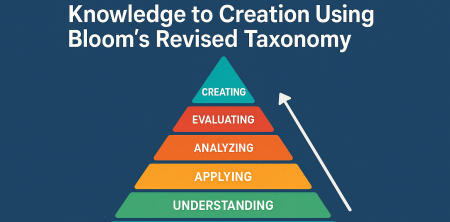
At the core of the revised taxonomy are six cognitive levels: Remember, Understand, Apply, Analyze, Evaluate, and Create. These levels encourage educators to design learning experiences that foster higher-order thinking and creativity. By understanding these levels, teachers can effectively scaffold their instruction, helping students progress from basic recall of information to the synthesis of new ideas and concepts.
2. Moving from Knowledge to Higher-Order Thinking
One of the fundamental shifts in Bloom's Revised Taxonomy is the movement from simple knowledge acquisition to complex understanding and creation. Teachers can facilitate this shift by using a variety of instructional strategies that promote engagement and critical thinking. For instance, rather than just asking students to memorize facts, educators can encourage them to explore concepts through discussions, projects, and real-world applications.
For example, when teaching a historical event, instead of merely having students memorize dates and names, teachers can ask them to analyze the causes and effects of the event, fostering a deeper understanding. This method aligns with the Analyze level of the taxonomy, where students dissect information and make connections, laying the groundwork for higher-order thinking.
3. Practical Strategies for Implementation
Incorporating Bloom's Revised Taxonomy into classroom practices requires intentional planning. Here are some practical strategies that educators can apply to facilitate students' progression from knowledge to creation:
- Questioning Techniques: Use open-ended questions that require students to think critically. For example, instead of asking, "What happened during the American Revolution?", consider posing a question like, "How might the outcome of the American Revolution have been different if key figures had made different choices?" This invites analysis and evaluation.
- Project-Based Learning: Implement projects that require students to apply their knowledge creatively. For instance, a science class could task students with designing an experiment to test a hypothesis, encouraging them to synthesize their understanding and present their findings.
- Collaborative Learning: Foster collaboration by having students work in groups to tackle complex problems. This approach not only enhances critical thinking but also allows them to learn from each other, promoting a deeper understanding of the material.
4. The Role of Technology in Enhancing Learning
In today's digital age, technology plays a crucial role in transforming education. Tools like interactive simulations, educational apps, and online collaboration platforms can significantly enhance the teaching and learning process. Utilizing technology aligns with the Bloom's Revised Taxonomy framework by allowing students to engage with content in innovative ways.
For example, virtual labs can provide students with hands-on experience in scientific inquiry, while digital storytelling platforms allow them to express their understanding through creative narratives. By integrating technology into lessons, teachers can create an engaging learning environment that encourages students to move beyond rote memorization to higher levels of cognitive engagement.
5. Assessment Techniques that Foster Creativity
Assessment methods greatly influence how students engage with their learning. Traditional testing often emphasizes knowledge recall, but using assessment strategies aligned with Bloom's Revised Taxonomy can encourage students to demonstrate their understanding creatively.
Consider utilizing formative assessments that require students to analyze case studies or create presentations on a topic. Such assessments not only gauge their understanding but also promote critical thinking and creativity. Additionally, incorporating self-assessments and peer assessments can foster a culture of reflection and collaboration, further enhancing students' learning experiences. (See: Bloom's Taxonomy overview.)
6. Differentiating Instruction for Diverse Learners
Every classroom is a mix of learners, each with unique needs. Differentiating instruction is key to ensuring that all students can progress through the levels of Bloom's Revised Taxonomy. Educators can tailor their teaching methods to accommodate diverse learning styles and abilities.
For instance, providing varied resources—such as videos, texts, and hands-on materials—enables students to engage with content in ways that resonate with them. Additionally, offering choices in how they demonstrate their learning—whether through presentations, creative projects, or written reports—can empower students and foster a deeper connection to the material.
7. Encouraging a Growth Mindset
A growth mindset—the belief that abilities and intelligence can be developed through dedication and hard work—aligns closely with the objectives of Bloom's Revised Taxonomy. Encouraging students to adopt a growth mindset can significantly impact their motivation and engagement.
Teachers can promote this mindset by praising effort rather than innate ability, emphasizing the importance of perseverance in learning. By framing challenges as opportunities for growth, educators can inspire students to embrace creativity and critical thinking, essential elements of the higher-order levels of the taxonomy.
8. Real-World Application of Knowledge
Connecting classroom learning to real-world contexts is vital for meaningful education. When students see how their knowledge applies outside the classroom, they're more likely to engage with the material and move toward creation. The application of Bloom's Revised Taxonomy can be instrumental in this process. teacher strategies for creativity offers useful background here.
For example, service-learning projects can help students apply what they've learned to address real community issues. By analyzing local problems and creating solutions, students can synthesize their knowledge in practical ways. This not only reinforces their learning but also empowers them to make a difference in their communities.
9. The Importance of Reflection in Learning
Reflection is a powerful tool in the learning process, allowing students to think critically about what they’ve learned and how they can apply that knowledge. It is closely tied to the Evaluate level of Bloom's Revised Taxonomy, where students assess their understanding and the effectiveness of their learning strategies.
Incorporating reflection into lessons can take many forms, including journals, discussions, or portfolio assessments. For instance, after completing a project, students could write about what strategies worked well, what challenges they faced, and how they overcame them. This process helps reinforce learning and encourages students to take ownership of their educational journey.
10. The Role of Educators as Facilitators
In a classroom where Bloom's Revised Taxonomy is embraced, educators shift from traditional authoritative roles to facilitators of learning. This role requires educators to create an environment that encourages exploration and inquiry rather than simply delivering information.
Facilitators guide discussions, pose challenging questions, and provide feedback that encourages deeper thinking. For example, during a project, an educator might ask probing questions that encourage students to consider different perspectives or alternative solutions. Such interactions not only deepen students’ understanding but also encourage them to take intellectual risks, which is essential for creative thinking.
11. Engaging Parents and the Community
Engaging parents and community members in the learning process can provide students with additional perspectives and resources that enhance their understanding and application of knowledge. This engagement supports the principles of Bloom's Revised Taxonomy by providing real-world contexts for learning.
Schools can organize events like science fairs, art shows, or community service projects where students showcase their learning and creativity. When parents and community members participate, they can offer feedback and support that enriches students’ learning experiences. Additionally, this collaboration can help students see the value of their education in a broader context, motivating them to apply their knowledge creatively. (See: Harvard University's educational research.)
12. Future Trends in Education and Bloom's Revised Taxonomy
As education continues to evolve, the principles of Bloom's Revised Taxonomy remain relevant in addressing new challenges. Trends such as personalized learning, competency-based education, and the integration of artificial intelligence in the classroom align well with the framework’s emphasis on higher-order thinking skills.
For instance, personalized learning allows students to progress through their education at their own pace, ensuring that they master foundational knowledge before moving on to more complex concepts. This customization encourages deeper engagement and supports students in reaching the Create level of the taxonomy. Similarly, AI tools can provide tailored feedback and resources, helping students to think critically and creatively about their learning.
13. Frequently Asked Questions (FAQs)
What is Bloom's Revised Taxonomy?
Bloom's Revised Taxonomy is a framework that classifies educational goals into six categories: Remember, Understand, Apply, Analyze, Evaluate, and Create. It helps educators design instructional strategies that promote higher-order thinking.
How can I apply Bloom's Revised Taxonomy in my classroom?
You can apply Bloom's Revised Taxonomy by designing lessons that encourage students to progress through the cognitive levels. Use open-ended questions, project-based learning, and collaborative activities to facilitate deeper thinking and creativity.
How does technology enhance Bloom's Revised Taxonomy?
Technology enhances learning by providing interactive and engaging tools that allow students to explore content creatively. For example, virtual simulations and collaborative platforms enable students to apply their knowledge in innovative ways aligned with higher-order thinking.
What are some effective assessment techniques using Bloom's Revised Taxonomy?
Effective assessment techniques include formative assessments that require analysis and creativity, such as case studies, presentations, and peer assessments. These methods encourage students to demonstrate their understanding and promote critical thinking.
How can I differentiate instruction using Bloom's Revised Taxonomy?
To differentiate instruction, provide varied resources and allow students to choose how they demonstrate their learning. Tailoring lessons to meet diverse learning styles helps ensure that all students can progress through the levels of Bloom's Revised Taxonomy.
What is the significance of the Create level in Bloom's Revised Taxonomy?
The Create level is the highest cognitive level in Bloom's Revised Taxonomy, focusing on the ability to generate new ideas and products. It encourages students to synthesize information, think critically, and innovate. Activities at this level might include designing a new product, writing a story, or developing a business plan, all of which foster deep engagement and creativity.
The Future of Learning with Bloom's Revised Taxonomy
As educators strive to prepare students for a rapidly changing world, Bloom's Revised Taxonomy offers a robust framework for fostering higher-order thinking and creativity. By moving students from knowledge acquisition to creation, teachers can cultivate essential skills that will serve students throughout their lives.
Incorporating the strategies discussed in this article will help educators create dynamic learning environments that encourage critical thinking, collaboration, and creativity. Ultimately, by embracing the principles of Bloom's Revised Taxonomy, we can empower students to not only understand the world but also to shape it through their innovative contributions.
14. Case Studies of Successful Implementation
Real-world examples are a powerful way to illustrate the effectiveness of Bloom's Revised Taxonomy. Schools that have embraced this framework have reported significant improvements in student engagement and achievement. For instance, a middle school in California redesigned its curriculum around the taxonomy, focusing on project-based learning. Students engaged in interdisciplinary projects that required them to analyze data, evaluate sources, and create presentations. As a result, the school saw a 20% increase in student performance on standardized tests.
Another example comes from a high school in New York, where teachers implemented a "learning by teaching" model. Students were responsible for teaching a concept to their peers, which required them to fully understand the material. This method, rooted in the Analyze and Create levels of the taxonomy, led to a noticeable increase in student confidence and collaboration. End-of-year surveys indicated that 85% of students felt more prepared for college as a result of this approach.
15. The Impact of Teacher Training on Taxonomy Implementation
Effective implementation of Bloom's Revised Taxonomy hinges on teacher preparedness. Professional development programs that focus on taxonomy principles can equip educators with the necessary tools to create engaging, higher-order learning experiences. Training can include workshops on designing assessments, incorporating technology, and facilitating collaborative learning. Data from a recent study showed that teachers who received specialized training were 30% more likely to implement higher-order questioning techniques in their classrooms.
Furthermore, ongoing support and mentorship can reinforce these practices. When new teachers are paired with experienced educators who have successfully integrated the taxonomy into their teaching, both groups benefit. Experienced teachers can provide insights and strategies, while new teachers bring fresh perspectives and enthusiasm. This collaborative approach fosters a school culture that values continuous improvement and innovation.
16. Global Perspectives on Bloom's Revised Taxonomy
The influence of Bloom's Revised Taxonomy extends beyond the borders of the United States. Educators around the globe are adopting its principles, adapting it to fit their cultural contexts. For instance, schools in Finland have incorporated the taxonomy into their unique educational philosophy, which emphasizes student independence and critical thinking. The Finnish education system is known for its focus on creativity and problem-solving, aligning perfectly with the higher-order thinking skills advocated by Bloom's framework.
In Asia, countries like Singapore have integrated Bloom's Revised Taxonomy into their national curriculum, promoting deeper learning through inquiry-based education. Educators are encouraged to use the taxonomy as a guide to develop resources that push students to analyze and create, rather than just remember. This global adaptation shows the taxonomy's versatility and relevance in diverse educational settings.
17. Conclusion: Embracing Bloom's Revised Taxonomy
As we move forward in an increasingly complex educational landscape, Bloom's Revised Taxonomy provides a valuable framework for promoting higher-order thinking. By embracing its principles, educators can create a rich, engaging learning environment that prepares students not just to absorb information but to apply it creatively in their lives. The future of education depends on our ability to inspire students to think critically, collaborate effectively, and innovate boldly. There's a fuller look at Lakeshore College achievements.
```
Trending Now
- this guide on emotional regulation activities for elementary school classrooms
- Mindfulness Practices for Improving Emotional Regulation
- our breakdown of building self-esteem in students with learning disabilities
- Teaching Emotional Regulation to Preschool and…
- our breakdown of how nonverbal communication affects social success in middle school
Frequently Asked Questions
What is Bloom's Revised Taxonomy?
Bloom's Revised Taxonomy is a framework for categorizing educational goals, developed in the late 1990s. It emphasizes six cognitive levels: Remember, Understand, Apply, Analyze, Evaluate, and Create, guiding educators to foster higher-order thinking and creativity in students.
How can teachers use Bloom's Taxonomy to promote creativity?
Teachers can use Bloom's Taxonomy by designing learning experiences that encourage students to move from basic recall to higher-order thinking. This can include discussions, projects, and real-world applications that allow students to analyze, evaluate, and create new ideas.
What are the cognitive levels in Bloom's Revised Taxonomy?
The cognitive levels in Bloom's Revised Taxonomy are Remember, Understand, Apply, Analyze, Evaluate, and Create. These levels represent a progression from basic knowledge acquisition to complex thinking and creativity, helping educators structure their teaching methods.
Why is higher-order thinking important in education?
Higher-order thinking is crucial because it prepares students for real-world challenges by fostering critical thinking and creativity. It enables students to not only understand information but also to apply, analyze, and create, making them active participants in their learning.
What strategies can teachers use to encourage higher-order thinking?
Teachers can encourage higher-order thinking by using instructional strategies such as collaborative discussions, project-based learning, and real-life problem-solving tasks. These approaches promote engagement and help students transition from knowledge acquisition to creative application.
Have you experienced this yourself? We'd love to hear your story in the comments.


0 Responses