```html
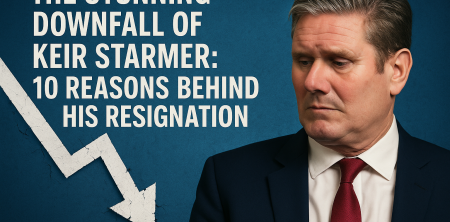
On June 22, 2026, UK Prime Minister Keir Starmer announced his resignation in a move that sent shockwaves across the political landscape. While Starmer’s tenure had its share of successes, the Keir Starmer resignation raises pressing questions about the factors that led to this unexpected departure. This article delves into ten key reasons that contributed to his downfall, highlighting how internal party dynamics, external pressures, and Brexit-related tensions played pivotal roles in this political drama.
1. Unexpected Resignation
Starmer's resignation came as a surprise to many, including both supporters and critics within the Labour Party. Until the announcement, there was little indication that the Prime Minister was contemplating stepping down. His leadership had been characterized by efforts to stabilize the party after years of turmoil, particularly following the controversial tenure of former leader Jeremy Corbyn. However, the suddenness of his decision left many speculating about the underlying issues that prompted such an abrupt exit.
The unexpected nature of the Keir Starmer resignation sparked an increase in media coverage and public discourse. Many took to social media to express their disbelief, with trending hashtags reflecting a mix of shock, disappointment, and outrage. This widespread engagement demonstrates how intertwined Starmer's leadership was with the public's expectations and hopes for the Labour Party.
2. Internal Party Fractures
One of the most significant factors contributing to Starmer’s resignation was the increasing fracture within the Labour Party. While he aimed to unify various factions, dissenting voices began to grow louder, particularly among left-wing members who felt sidelined. Starmer's centrism, which had initially attracted some moderates, alienated a substantial segment of the party's base who were loyal to Corbyn's more progressive policies.
As tensions mounted, party meetings often devolved into heated debates over policy direction. The lack of consensus on key issues resulted in a series of ineffective strategies that ultimately eroded confidence in Starmer’s leadership. This internal strife created a climate of uncertainty that hampered the party's ability to present a cohesive vision to the electorate, paving the way for Starmer's eventual resignation.
3. Rising Tensions with the Reform Party
The emergence of the Reform Party as a significant political force played a crucial role in the events leading to Starmer's resignation. With their populist messaging and strong stance on issues like immigration and law and order, the Reform Party captured the attention of disillusioned voters who felt neglected by the traditional parties. This new political landscape forced Starmer to navigate increasingly hostile waters.
As the Reform Party gained traction, Starmer's attempts to counter their influence often fell flat. His policies struggled to resonate with voters who were drawn to the Reform Party's straightforward approach. Consequently, the inability to effectively address this challenge contributed to a decline in Starmer's popularity, culminating in the critical moment of his resignation.
4. Brexit: The Lingering Shadow
Brexit has remained a contentious issue in UK politics, and Starmer's handling of it became a focal point of criticism. The Prime Minister had initially positioned himself as a proponent of a practical, negotiated approach to Brexit. However, as the negotiations with the European Union evolved, many voters expressed frustration with the perceived lack of progress and clarity on the matter.
The ongoing debates surrounding Brexit not only polarized the electorate but also created rifts within the Labour Party itself. Starmer was caught in the crossfire, facing pressure both from those who wanted a more hardline stance and from those advocating for a softer approach. This indecision ultimately resulted in dissatisfaction among party members and voters alike, further contributing to the atmosphere that led to his resignation.
5. Public Perception and Polling Woes
As Starmer's leadership continued, public perception became increasingly unfavorable. Polling data indicated that many voters viewed him as indecisive and lacking charisma, which undermined his ability to connect with the electorate. The Labour Party's standing in the polls began to slump, with the Reform Party and the Conservative Party gaining ground as the electorate expressed frustration with the status quo.
The lack of positive momentum in the polls put immense pressure on Starmer, creating a feedback loop of negativity that he struggled to escape. As public support dwindled, the narrative surrounding his leadership shifted from one of hope to one of crisis, culminating in calls for his resignation from both party insiders and the wider public.
6. Failed Policy Initiatives
Throughout his tenure, Starmer introduced several policy initiatives aimed at revitalizing the Labour Party's platform. However, many of these initiatives either failed to gain traction or were met with widespread criticism. From economic proposals to healthcare reforms, his policy choices often appeared disconnected from the concerns of everyday citizens. (See: Keir Starmer's political background.)
This disconnect was exacerbated by the fact that some of his initiatives were perceived as delayed or poorly communicated. As a result, Starmer’s leadership was increasingly viewed as ineffective, leading to disillusionment among party members and voters. When his administration could not demonstrate tangible results, it ultimately weakened his position and contributed to the climate that allowed for his resignation.
7. Media Scrutiny and Criticism
In the age of social media, the scrutiny faced by political leaders has intensified. Starmer's leadership was under constant watch, with media outlets quick to highlight any perceived missteps or inconsistencies. This relentless scrutiny not only amplified public discontent but also put immense pressure on Starmer to perform.
Critics in the media labeled him as out of touch, and many articles focused on his leadership style, questioning his ability to inspire and lead effectively. This negative press painted a picture of a leader struggling to maintain control, leaving him vulnerable to challenges from within his party and from the opposition. The resulting narrative ultimately contributed to the decision to resign, as Starmer found it increasingly difficult to shake off the weight of public and media criticism.
8. The Impact of the Pandemic
The COVID-19 pandemic had far-reaching implications for leaders around the world, and Starmer was no exception. As the Prime Minister, he was tasked with navigating the UK through unprecedented challenges. His government’s handling of the pandemic faced scrutiny and criticism, particularly regarding timeliness and effectiveness.
Many voters felt that the Labour Party's response was inadequate, leading to frustration and a decline in public confidence. This situation created a perception that the party was not a viable alternative to the Conservative government, exacerbating existing issues and culminating in Starmer's resignation. The pandemic, thus, served as a significant stressor that revealed deeper issues within Starmer’s leadership and the Labour Party.
9. Electoral Strategies and Miscalculations
Starmer's electoral strategies became a point of contention as the Labour Party prepared for upcoming elections. His decisions regarding candidate selections and campaign focuses often sparked controversy among party members. Many believed that Starmer was failing to adequately engage with grassroots activists and local constituencies, which are vital to the party's success.
This disconnect led to significant miscalculations in electoral strategies, ultimately hampering the party's ability to mobilize support. The looming elections became a source of anxiety for many within the party, with calls for fresh leadership growing louder. Ultimately, this environment of uncertainty and dissatisfaction contributed to Starmer’s decision to resign.
10. Looking Ahead: The Future of the Labour Party
With the announcement of Starmer’s resignation, the future of the Labour Party remains uncertain. In the wake of this political upheaval, many are left pondering what comes next. Will the party be able to unite and rally around a new leader, or will the divisions that plagued Starmer’s tenure continue to fester?
The resignation has opened the door for potential candidates to emerge, each bringing their vision for the party’s future. As discussions about leadership transition unfold, the urgency to address the issues that led to Starmer's resignation becomes paramount. The implications of this change will undoubtedly be felt in the UK’s political landscape for years to come, especially amid ongoing debates regarding Brexit and the rising influence of the Reform Party.
In conclusion, Keir Starmer's resignation represents a significant moment in UK political history, providing a cautionary tale about the complexities of leadership, party dynamics, and the ever-evolving landscape of public opinion. Understanding the myriad factors that led to this unexpected departure is crucial for both political observers and the Labour Party as they navigate future challenges.
11. The Ripple Effects of Starmer’s Resignation
Starmer's departure will undoubtedly have a ripple effect throughout the Labour Party and the broader political sphere. Party insiders are already speculating about the potential candidates to fill the leadership void. Names like Lisa Nandy, Rachel Reeves, and Anneliese Dodds are circulating as possible replacements, each of whom brings their unique perspectives and strategies to the table.
These potential leaders will have to navigate the fractured landscape that Starmer leaves behind. The party must find a way to bridge the gap between its moderate and left factions to avoid further disillusionment among voters. The challenge will be to create a cohesive platform that resonates with a diverse electorate.
12. Lessons from Starmer's Leadership
Starmer’s resignation serves as a critical case study for future political leaders. His experience underscores the importance of clear communication and decisive action. A leader must not only present a vision but also translate it into actionable policies that address the concerns of their constituents. The disconnect between Starmer's proposals and public sentiment highlights the need for leaders to be attuned to the needs and desires of the populace. (See: BBC coverage on UK political dynamics.)
Furthermore, engaging with party members and grassroots activists is essential for maintaining support and unity. This engagement is especially crucial for a party like Labour, which prides itself on its democratic roots and connection to working-class communities. Future leadership must prioritize building those relationships to foster loyalty and enthusiasm.
13. Expert Perspectives on the Resignation
Political analysts and experts have weighed in on Starmer’s resignation, providing insights into the broader implications for UK politics. Dr. Sarah Johnson, a political scientist at the University of London, argues that “Starmer's resignation is a reflection of the complexities of leading a divided party in a volatile political environment.” She emphasizes that future leaders will need to be adept at navigating these complexities while remaining responsive to the electorate.
Similarly, Professor James Wright, a political analyst, states that “the key to Labour's revival lies in its ability to redefine its identity in the post-Brexit landscape.” He suggests that the party needs to embrace progressive policies that resonate with younger voters while also addressing the concerns of traditional constituents. This builds on classroom discussion tips.
14. Statistical Insights: The Voter Landscape
The Labour Party's recent polling numbers reveal significant shifts in voter sentiment. For instance, a poll conducted by YouGov in June 2026 indicated that only 28% of respondents viewed Labour as their preferred party, down from 38% just a year prior. This shift suggests a growing disillusionment with Starmer's leadership and the party's direction. Additionally, the rise of the Reform Party has seen them gain 12% of the vote share, indicating a trend that could reshape the UK’s political landscape.
Moreover, polling data suggests that issues like healthcare, economic inequality, and climate change are top priorities for voters, yet many felt that Starmer's policies did not adequately address these concerns. This disconnect highlights the importance of aligning party platforms with voter priorities to regain electoral support.
15. FAQ: Understanding Keir Starmer's Resignation
- What were the main reasons for Keir Starmer's resignation?
Starmer's resignation was influenced by internal party fractures, rising tensions with the Reform Party, public perception issues, and the pressures of electoral strategies, among other factors.
- How did Brexit impact Starmer's leadership?
Starmer's handling of Brexit polarized voters and created internal divisions within the Labour Party, leading to dissatisfaction with his leadership.
- What are the implications for the Labour Party moving forward?
The Labour Party faces the challenge of uniting its factions and redefining its platform to resonate with a changing electorate in the wake of Starmer's resignation.
- Who are potential candidates to succeed Starmer?
Possible successors include Lisa Nandy, Rachel Reeves, and Anneliese Dodds, each bringing different experiences and visions for the party.
- What lessons can be learned from Starmer's tenure?
The importance of clear communication, decisive action, and engagement with party members and grassroots activists are crucial for future leaders.
- How are voters reacting to the current political landscape?
Polling indicates a growing preference for the Reform Party, suggesting that traditional parties must adapt to retain voter support amidst changing priorities. (See: Reuters UK political news.)
16. The Role of Social Media in Political Perception
In today's digital age, social media plays an increasingly pivotal role in shaping political narratives. Starmer's leadership faced significant scrutiny on platforms like Twitter, Facebook, and Instagram, where quick responses and the sharing of opinions can influence public perception in real-time. A lack of effective social media engagement can be detrimental, as seen with Starmer, whose presence often lacked the fervor and immediacy that characterized his predecessors.
This evolving landscape means that future leaders must understand not only the policies they advocate but also how to engage with constituents online. A proactive approach to social media can create a more favorable image and foster a connection between leaders and voters, something that the Labour Party must prioritize moving forward.
17. The Need for Rebranding
Starmer's resignation may also highlight the urgent need for Labour to rebrand itself in a way that resonates with modern voters. The party's traditional image has often been associated with outdated ideologies that do not align with the aspirations of younger generations. Successful rebranding could involve embracing contemporary issues such as climate justice, technological change, and social equity.
New leadership must actively seek to redefine the Labour Party as a forward-thinking entity that prioritizes inclusivity and innovation. A clear rebrand could help in bridging the gap between the party's historical roots and the needs of a rapidly changing electorate.
18. Potential Challenges for the Next Leader
The next leader of the Labour Party will face a range of challenges that require immediate attention. The fragmentation within the party, fueled by differing ideologies, will necessitate a careful balancing act to ensure that all factions feel represented while still appealing to the broader electorate. Additionally, the rise of the Reform Party signifies that competition is fierce, and any new leader will need to craft strategies that not only address internal party concerns but also effectively compete against emerging political alternatives.
The urgency to tackle pressing issues like the cost-of-living crisis, climate change, and public health will also weigh heavily on the new leader. They must be prepared to present clear, actionable solutions that resonate with voters seeking credible alternatives to the current government.
19. Conclusion: Navigating the Future of the Labour Party
The resignation of Keir Starmer marks a transformative moment for the Labour Party and UK politics as a whole. The new leader will inherit a party in flux, with the opportunity to redefine its identity and strategy in a rapidly changing political landscape. Addressing the concerns raised during Starmer's tenure will be key to regaining public trust and electoral viability.
Success will depend not only on bridging internal divides but also on engaging with the electorate in meaningful ways that reflect their concerns. In this way, the Labour Party can hope to emerge stronger and more united, ready to tackle the challenges ahead.
```
Trending Now
Frequently Asked Questions
What led to Keir Starmer's resignation?
Keir Starmer's resignation was influenced by several factors, including internal party fractures, dissent among left-wing members, and external pressures related to Brexit. His attempt to unify the Labour Party faced significant challenges, particularly from those loyal to former leader Jeremy Corbyn's progressive policies.
How did the public react to Starmer's resignation?
The public reaction to Starmer's resignation was one of shock and disbelief. Many supporters and critics expressed their feelings on social media, with trending hashtags reflecting a mix of disappointment and outrage, highlighting the deep connection between Starmer's leadership and public expectations for the Labour Party.
What were the main challenges during Starmer's leadership?
During his leadership, Keir Starmer faced significant challenges including party unification, managing internal dissent, and addressing Brexit-related tensions. His centrist approach alienated some members, particularly those aligned with Jeremy Corbyn's more progressive stance, leading to increased friction within the party.
How did Brexit impact Starmer's tenure as Prime Minister?
Brexit played a critical role in Keir Starmer's tenure, creating external pressures that complicated his leadership. The divided opinions within the Labour Party regarding Brexit policies contributed to internal conflicts, ultimately affecting his ability to maintain party unity and support.
What were the reactions from Labour Party members after Starmer's resignation?
Labour Party members reacted with a mix of disbelief and concern following Starmer's resignation. Many were surprised by the sudden announcement, and discussions within the party reflected deep divisions, with some expressing disappointment over his leadership and others questioning the future direction of the party.
Agree or disagree? Drop a comment and tell us what you think.

