```html
The rapid advancement of artificial intelligence (AI) has unlocked a myriad of opportunities across various sectors, from healthcare to marketing. However, there's a dark undercurrent to this technological evolution: the profound and growing AI bias against women. As the world becomes increasingly reliant on AI systems, the risks associated with these biases are transforming into real-world consequences, threatening gender equality and the rights of women and girls.
Understanding AI Bias Against Women
AI bias isn't just a technical glitch; it is a reflection of the societal prejudices that permeate our data and algorithms. Generated by the data they are trained on, AI systems can inadvertently perpetuate stereotypes and reinforce discrimination. This is especially concerning when it comes to representations and roles assigned to women. For example, AI systems involved in recruitment may prioritize male candidates based on historical data, marginalizing qualified women applicants.
Moreover, marketing strategies employing generative AI have shown alarming trends where women are frequently underrepresented or misrepresented. This bias not only affects individual opportunities but can deepen societal inequalities as well. The failure to address these biases not only risks the integrity of the technology but also the social fabric of our communities.
UN Women’s Urgent Call to Action
In June 2026, UN Women issued an urgent call for integrating gender equality and women's rights into every stage of the AI lifecycle. This includes everything from development and deployment to governance. As generative AI continues to evolve, it is crucial to address the biases that are increasingly embedded in these systems.
The organization emphasizes that ignoring these issues now could lead to devastating long-term effects on women globally. By advocating for gender considerations in AI, UN Women aims to foster a future where technology uplifts rather than disenfranchises women.
The Unstereotype Alliance Playbook: A Tool for Change
Alongside its advocacy, UN Women introduced the Unstereotype Alliance playbook in June 2026. This pivotal resource is designed to help marketers and developers identify and mitigate bias before their AI products go to market. By providing guidelines for recognizing harmful stereotypes and promoting responsible AI use, the playbook aims to ensure that generative AI contributes to a more equitable representation of women.
This move has garnered attention not only because of its potential to improve marketing outcomes but also because it addresses a broader social imperative. With rising awareness of the implications of AI on gender equality, those in the marketing and technology sectors are increasingly realizing their responsibility in shaping a fairer narrative.
The Growing Social and Economic Costs
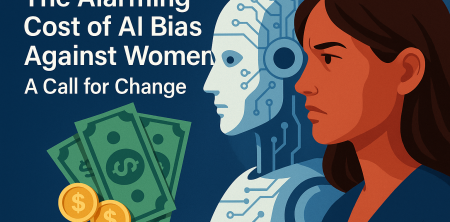
The ramifications of AI bias against women are not merely theoretical; they have tangible social and economic costs. As AI systems continue to misrepresent or overlook women, the potential for lost opportunities skyrockets. In a world where economic success increasingly hinges on digital platforms, leaving women behind can stymie progress not just for individuals but for entire economies.
According to reports, gender bias in AI can have a direct impact on women’s employability and earning potential. When algorithms favor male candidates or promote male-dominated content, they reinforce existing disparities in wealth and power. This compounded effect threatens to persist for generations, trapping women in cycles of disadvantage.
The Public Response: Activism and Awareness
The conversation surrounding AI bias against women has taken off on social media, sparking significant activism and public discourse. Women's rights groups and activists are increasingly vocal about holding tech companies accountable for their discriminatory practices. The emotional weight of this topic resonates deeply, as many recognize the urgency in addressing these biases. (See: Gender bias in artificial intelligence.)
Social media platforms have become hotbeds for advocacy, with campaigns aimed at raising awareness and demanding change. Hashtags related to AI bias and gender equality are trending, reflecting a growing public consciousness about the issues at hand. This grassroots movement has the potential to influence policymakers and corporate leaders alike, pushing for an agenda that prioritizes gender equity.
The Role of Education and Training
Addressing AI bias against women starts with education and training. Developers, data scientists, and marketers must be equipped with the knowledge and tools to recognize and combat bias in AI systems. Comprehensive training programs that focus on gender sensitivity and ethical AI practices are essential to creating an inclusive tech environment.
Educational institutions and organizations are beginning to recognize the need for such initiatives. Courses on ethical AI, diversity in tech, and the social implications of machine learning are gaining traction. This shift in education is crucial for cultivating a new generation of tech leaders who prioritize social responsibility alongside innovation.
Building Inclusive AI Technologies
The path to mitigating AI bias against women lies in building inclusive AI technologies from the ground up. It’s no longer enough to integrate gender considerations as an afterthought; they must be embedded in the very architecture of AI systems. This entails diverse teams working on AI projects, ensuring that different perspectives are considered throughout the development process.
Furthermore, engaging with women’s organizations and communities can provide invaluable insights into the unique challenges faced by women and girls in relation to AI. Collaboration between tech companies and advocacy groups can lead to more nuanced and effective solutions that truly represent women's needs and aspirations.
Measuring Progress: Accountability and Governance
To combat AI bias against women, it's vital to establish accountability measures that track progress toward gender equity in AI. This includes developing metrics for assessing the impact of AI systems on women's lives, as well as ensuring that companies are held responsible for their outputs.
Governance frameworks must evolve to include provisions for gender equality and anti-bias strategies. As AI continues to mature, regulatory bodies should consider implementing standards that enforce gender inclusivity in AI technologies. Such measures will not only protect individual rights but also contribute to a healthier technological environment.
Future Implications: The Global Landscape
The implications of AI bias against women extend well beyond individual experiences; they have global consequences. In developing countries, where women already face significant barriers to economic participation, biased AI systems can exacerbate inequalities. Addressing these biases is not just a matter of fairness; it’s essential for sustainable development and social progress worldwide.
As nations grapple with the challenges posed by AI technologies, prioritizing gender equity will be crucial. Global partnerships and initiatives aimed at fostering inclusive AI can serve as a model for overcoming bias and achieving more equitable outcomes for all.
The Complexity of Data Sources
One of the core challenges of addressing AI bias against women lies in the sources of data used to train AI models. These datasets often reflect historical inequalities and biases present in society. For instance, if a dataset primarily comprises male input, whether in job applications, market preferences, or social media interactions, then the AI's output is skewed to favor male perspectives and needs. The disparity in data representation can lead to distorted outcomes, which, when scaled, reinforce systemic issues.
To combat this, there is a growing need to diversify data sources. This means collecting data that accurately reflects the demographics of the population, including women from various backgrounds, ethnicities, and socioeconomic statuses. However, diversifying datasets is not simply about numbers; it requires careful consideration of context, intention, and ethical implications. For example, it’s critical to ensure that the data collection process respects privacy and consent, especially when dealing with sensitive information.
Case Studies: AI Bias in Practice
Examining real-world case studies can highlight the existence and impact of AI bias against women more clearly. One notable example is the use of AI in hiring processes, where algorithms have been shown to favor male candidates. Companies like Amazon faced backlash after it was discovered that their AI recruitment tool was biased against women. The algorithm was trained on resumes submitted over the previous decade, which were predominantly from male candidates, leading to a system that learned to favor men over equally qualified women. (See: The impact of AI bias on women.)
This incident underscores the importance of scrutinizing AI systems and the data they utilize. It prompts a broader discussion on how companies can implement ethical guidelines and auditing processes to ensure fairness in AI applications. Another case involves facial recognition technology, which has been criticized for its inability to accurately identify women and people of color. In many instances, these technologies have significantly higher error rates for women than for men, often due to imbalanced training datasets.
These case studies serve as a reminder of the high stakes involved and the need for accountability in AI development processes. They emphasize the necessity for rigorous testing and validation to ensure that AI tools work equitably across all demographics. See also breaking stereotypes in education.
Expert Perspectives on Gender Bias in AI
Experts in the field of AI and gender studies emphasize the need for a more intersectional approach to understanding bias. Dr. Safiya Noble, a prominent scholar and author of "Algorithms of Oppression," argues that AI biases are reflective of broader societal inequalities and that without addressing these root issues, technology will continue to exacerbate discrimination. She stresses that simply increasing the number of women in tech is not enough; systemic changes must be implemented to address the biases inherent in both the technology and the data.
Additionally, Dr. Kate Crawford, a leading researcher at Microsoft Research, highlights the importance of transparency in AI systems. She advocates for open approaches to AI development, where the decision-making processes are made explicit, allowing for public scrutiny and accountability. According to her, technologies that lack transparency can perpetuate bias unchecked, making it imperative for organizations to adopt practices that foster openness.
These expert insights point to the complexities of addressing AI bias and underscore the importance of collaborative efforts between technologists, ethicists, and gender advocates. By working together, these groups can develop more effective strategies for combating bias and ensuring that AI technology serves all members of society fairly.
FAQs about AI Bias Against Women
What is AI bias against women?
AI bias against women refers to the prejudiced outcomes produced by AI systems that disadvantage women based on gender. This bias often stems from the data used to train these systems, which may reflect existing societal stereotypes and inequalities.
How does AI bias affect women in the workplace?
AI bias can impact recruitment processes, promotions, and performance evaluations, often leading to women being overlooked for opportunities compared to their male counterparts. Algorithms may prioritize resumes and profiles that align with historical male-dominated data, limiting diversity in hiring.
What are some examples of AI bias against women?
Examples include biased hiring algorithms that favor male applicants, facial recognition technology with higher error rates for women, and marketing AI that underrepresents women's perspectives and needs. These biases can result in significant social and economic repercussions for women.
What can be done to reduce AI bias against women?
Reducing AI bias requires diverse data collection, gender-sensitive training for AI developers, and the implementation of regulatory frameworks that prioritize gender equity. Collaboration between technologists, advocacy groups, and policymakers is essential to create effective solutions.
Why is it important to address AI bias now?
Addressing AI bias is crucial as AI technologies are increasingly integrated into everyday life, shaping decisions that affect women's rights and opportunities. Failing to confront these biases risks perpetuating existing gender inequalities and hindering progress toward equality.
New Developments and Future Directions in AI Bias Mitigation
As discussions around AI bias against women evolve, new methodologies and frameworks are being developed to mitigate these biases. One promising approach is the use of bias detection tools that can identify and flag potential biases in AI algorithms before they are deployed. These tools utilize advanced analytics and machine learning techniques to analyze datasets and algorithm outputs, helping organizations pinpoint areas where biases may exist.
For instance, platforms like IBM’s Watson and Google’s AI have introduced features that allow users to audit their algorithms. These features can examine how algorithms perform across different demographics, offering insights into potential disparities in treatment or outcomes. Such proactive measures not only help in rectifying existing biases but also serve as an educational tool for developers to understand the implications of their work.
Statistics that Highlight the Scope of AI Bias
Statistics provide a stark illustration of how pervasive AI bias against women can be. A study by the World Economic Forum indicated that women are 27% less likely than men to be recommended for a job when AI is used in the hiring process. Additionally, research from the Gender Shades project has shown that facial recognition systems are 34% more likely to misidentify women than men. These statistics highlight the urgent need for change and underscore the importance of addressing biases in technology.
Moreover, a report from McKinsey & Company found that AI could contribute up to $13 trillion to the global economy by 2030. However, if women are systematically excluded from the benefits of this technology, the economic gains will not be equitably distributed, further entrenching gender disparities.
Industry Initiatives to Address AI Bias
In response to the growing awareness of AI bias against women, numerous initiatives are emerging within industries to address these challenges. Companies like Microsoft and Accenture are leading the way in establishing guidelines for ethical AI usage, ensuring that gender bias is a key consideration in their AI development processes. These guidelines often include the formation of diverse teams that reflect the communities served by the technology, ensuring multiple perspectives are included in the design and deployment of AI systems.
Additionally, organizations are forming partnerships with advocacy groups to promote gender equity in tech. For example, the partnership between the tech company Salesforce and the nonprofit organization Women Who Code aims to provide women with the skills and resources necessary to succeed in the AI and tech industries, helping to create a more diverse workforce.
Conclusion: A Collective Responsibility
The challenge of AI bias against women is complex, but it is one that we can tackle collectively. It requires a multi-faceted approach involving activists, educators, technologists, and policymakers. As the conversation around AI continues to evolve, we must ensure that women’s voices are included in the dialogue. Only by working together can we create an equitable future where technology serves to uplift women rather than hinder their progress.
```
Trending Now
Frequently Asked Questions
What is AI bias against women?
AI bias against women refers to the prejudices embedded in artificial intelligence systems due to biased data and algorithms. These biases can lead to discrimination in areas like hiring and marketing, often marginalizing qualified women and perpetuating harmful stereotypes.
How does AI bias affect women's opportunities?
AI bias can significantly affect women's opportunities by prioritizing male candidates in hiring processes and misrepresenting women in marketing. This can lead to fewer job offers and reinforce societal inequalities, ultimately limiting women's access to resources and advancement. This builds on Bay Path's impressive funding.
What actions is UN Women taking regarding AI bias?
UN Women has called for integrating gender equality and women's rights at every stage of the AI lifecycle. Their urgent call to action emphasizes the need to address embedded biases to prevent long-term negative impacts on women globally as AI technology evolves.
Why is it important to address AI bias?
Addressing AI bias is crucial to ensure fairness and equality in technology. Ignoring these biases risks perpetuating discrimination and inequality, which can harm the social fabric and limit opportunities for women and marginalized groups in society.
What are the consequences of ignoring AI bias?
Ignoring AI bias can lead to devastating long-term effects on gender equality and women's rights. It can perpetuate stereotypes, deepen societal inequalities, and undermine the integrity of technology, putting vulnerable groups at further risk.
Have you experienced this yourself? We'd love to hear your story in the comments.

