```html
When it comes to early childhood education, the debate between play-based and academic-focused curricula is more than just a matter of preference. It's a pivotal discussion that affects the way young children learn, grow, and develop foundational skills. In this article, we'll explore the principles of developmentally appropriate practice (DAP), compare play-based and academic curricula, and understand why the former is increasingly recognized as the best approach for preschoolers.
1. Understanding Developmentally Appropriate Practice (DAP)
Developmentally appropriate practice refers to an educational framework that aligns with the age, individual needs, and cultural contexts of children. According to the National Association for the Education of Young Children (NAEYC), DAP is grounded in the understanding of child development and learning. It emphasizes active learning, where children learn through exploration and interaction with their environment.
DAP seeks to create learning experiences that are tailored to the developmental stage of each child. For instance, preschoolers, who typically range from 3 to 5 years old, are in a phase of rapid cognitive, social, and physical growth. Therefore, their learning experiences should foster curiosity, creativity, and a sense of competence, rather than simply focusing on rote memorization or standardized tests.
2. The Role of Play in Learning
Play is often referred to as the "work of children." It is through play that preschoolers make sense of their world, develop social skills, and practice problem-solving. Play-based learning involves activities that are engaging and meaningful, allowing children to explore concepts in a natural context. This approach aligns perfectly with the principles of DAP.
Research consistently supports the notion that play enhances cognitive development. According to a study published in the journal Child Development, children who engage in guided play show significant advances in language and cognitive skills compared to those who participate in more structured learning activities. Play provides not only enjoyment but also a context for learning that is rich and multifaceted.
3. What is Play-Based Learning?
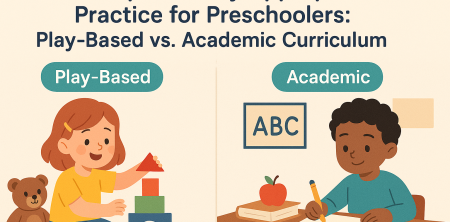
At its core, play-based learning prioritizes the child’s interests and encourages exploration. It includes various activities such as pretend play, games, arts and crafts, and outdoor exploration. Rather than following a strict curriculum, educators observe children's interests and provide opportunities for them to engage in self-directed play.
In play-based settings, teachers act as facilitators. They guide children’s play while providing resources and materials that stimulate learning. For instance, during a construction play activity, a teacher might introduce concepts of balance and gravity without overtly teaching them. This subtle guidance allows children to experiment and learn through trial and error, fostering a deeper understanding of the concepts at hand.
4. Academic Curriculum: A Different Approach
In contrast to play-based learning, an academic curriculum often emphasizes structured activities, direct instruction, and skill acquisition. This approach typically focuses on pre-reading, mathematics, and writing skills at an early age. While there is a place for these skills in preschool, an overly academic curriculum can stifle a child's natural desire to learn and explore.
Many proponents of academic curricula argue that early exposure to these skills prepares children for future education. However, studies suggest that children in play-based environments often achieve better long-term academic outcomes, including higher test scores in later years. The emphasis on play allows children to develop a love for learning, making them more engaged and motivated students.
5. Comparative Outcomes: Play-Based vs. Academic
Research comparing the outcomes of play-based and academic curricula yields compelling results. A study by the University of Virginia found that children who experienced play-based learning were better at problem-solving and had higher levels of creativity compared to their peers in academic settings. Furthermore, they displayed greater emotional resilience and social skills.
Moreover, children in play-based settings often show enhanced language development. Through interactions with peers during play, children learn to express themselves, negotiate roles, and share resources, which are critical communication skills. This social interaction is sometimes less prevalent in more traditional academic structures, where the focus is primarily on individual work and assessments.
6. Addressing Concerns About Play-Based Learning
Despite the robust findings supporting play-based learning, some parents and educators express concerns about its efficacy. They worry that children may not be adequately prepared for the academic rigors of later schooling. However, experts argue that play does not mean neglecting academic skills; rather, it integrates learning into a context that makes sense for young children. (See: CDC on child development.)
Additionally, proponents of play-based learning maintain that the skills gained through this approach—such as critical thinking, collaboration, and adaptability—are essential for success in the 21st century. In a rapidly changing world, creativity and the ability to work well with others are just as important as traditional academic knowledge.
7. Implementing Developmentally Appropriate Practices
To effectively implement developmentally appropriate practices, educators and programs must prioritize flexibility and responsiveness to children's needs. A balanced curriculum should incorporate both play-based and academic elements while keeping the focus on the child’s interests and developmental readiness.
One effective strategy is to create a learning environment that encourages exploration and discovery. Classrooms can be designed with various learning centers that cater to different developmental areas—art, science, literacy, and math—inviting children to engage in hands-on experiences. Educators can also use observation to fine-tune their approaches, responding to children’s emerging interests and developmental stages.
8. The Impact of Family and Community
Family involvement is crucial in promoting a developmentally appropriate practice. Parents and caregivers should be informed about the benefits of play and encouraged to participate in their child’s learning experiences. Workshops and resources can help families understand how to support play-based learning at home, reinforcing the skills children are developing in preschool.
Community support is also vital. Early childhood programs should work with local organizations to provide resources and advocacy for play-based approaches in education. Collaborating with community stakeholders can lead to a more significant understanding of DAP and its implementation, enriching the overall educational experience for children.
9. Current Trends in Early Childhood Education
The landscape of early childhood education is continually evolving, with an increasing recognition of the importance of play-based learning. As more research highlights the long-term benefits of developmentally appropriate practices, many schools are shifting their curricula to reflect these philosophies. This shift is not without challenges, as educators must advocate for play in a system often dominated by standardized assessments.
Furthermore, the pandemic's impact on education has led to a renewed focus on social-emotional learning and the importance of play in fostering resilience among young learners. Educators are beginning to understand that nurturing a child’s overall well-being is just as critical as academic achievement, leading to a more holistic approach to learning. For more on this, see foundations for lifelong learning.
10. The Importance of Social-Emotional Learning
Social-emotional learning (SEL) has gained traction as an essential component of early childhood education. Integrating SEL into the curriculum aligns with the principles of developmentally appropriate practice, as it recognizes the importance of emotional intelligence alongside cognitive development.
Children who engage in play-based learning often find themselves in scenarios requiring emotional regulation, empathy, and social skills. For example, during cooperative games, children must navigate conflicts, collaborate on shared goals, and understand differing perspectives. These experiences contribute to building strong social-emotional competencies, which are vital for success in all areas of life.
A report by the Collaborative for Academic, Social, and Emotional Learning (CASEL) states that strong SEL programs can significantly improve students' academic performance, reduce behavioral problems, and enhance attitudes toward school. This further reinforces the necessity of incorporating play-based learning within the framework of DAP.
11. The Role of Technology in Early Childhood Education
As technology continues to advance, its role in early childhood education is becoming more prominent. The integration of technology in developmentally appropriate practice is a topic of ongoing debate. While some argue that screen time can detract from traditional play experiences, others see potential benefits when technology is used thoughtfully.
For instance, educational apps and digital storytelling can enhance children's learning experiences, offering interactive ways to explore concepts and ideas. A careful balance is essential; technology should complement play-based learning rather than replace it. Educators are encouraged to choose quality digital tools that support creativity and critical thinking, aligning with the goals of DAP.
12. Research and Evidence Supporting DAP
Extensive research supports the efficacy of developmentally appropriate practices in early childhood education. Studies across various contexts have demonstrated that children who engage in DAP environments show improved academic outcomes, social skills, and emotional well-being.
A meta-analysis conducted by the Department of Education indicated that children who participated in programs grounded in DAP outperformed their peers in standardized assessments. Furthermore, they exhibited higher levels of engagement and motivation in learning activities.
Moreover, longitudinal studies reveal that children who experienced play-based learning tend to maintain a positive attitude toward school long-term, which is linked to lifelong learning habits and a greater likelihood of academic success.
13. Real-World Examples of DAP in Action
Many early childhood education programs worldwide have successfully implemented developmentally appropriate practices, showcasing the benefits of play-based learning. Programs like Reggio Emilia in Italy prioritize child-led learning, emphasizing exploration and collaborative play. This approach has drawn international attention for its effectiveness in developing critical thinking and problem-solving abilities in young children.
In the United States, HighScope is another well-regarded program emphasizing active participatory learning. Through its "Plan-Do-Review" process, children are encouraged to make choices, engage in tasks, and reflect on their experiences, all essential aspects of DAP.
These programs provide valuable case studies that demonstrate how DAP can lead to positive outcomes in children's learning, reinforcing the necessity of prioritizing play in early education.
14. Frequently Asked Questions (FAQ)
What is developmentally appropriate practice (DAP)?
Developmentally appropriate practice (DAP) refers to an educational approach that considers the age, individual needs, and cultural context of children, creating a tailored learning environment that fosters their growth and development.
How does play-based learning differ from traditional academic curricula?
Play-based learning focuses on child-led exploration and engagement, prioritizing creativity and critical thinking. Traditional academic curricula often emphasize direct instruction and pre-determined skill acquisition, which may limit children's natural curiosity and desire to learn.
Can play-based learning prepare children for academic success?
Yes, research indicates that children in play-based learning environments often achieve better long-term academic outcomes, including higher test scores and greater engagement in learning. The skills developed through play—such as social skills, problem-solving, and creativity—are crucial for academic and life success.
What role do families play in supporting DAP?
Families play a vital role by engaging in their child's learning experiences, understanding the importance of play, and reinforcing these practices at home. Family involvement can enhance the effectiveness of developmentally appropriate practices.
How can educators implement DAP in their classrooms?
Educators can implement DAP by observing children's interests, creating flexible learning environments, integrating play-based strategies, and ensuring a balance between structured activities and child-led exploration.
Is technology beneficial in developmentally appropriate practice?
Technology can be beneficial when used thoughtfully and in moderation. Quality educational tools can enhance learning experiences and support creativity. However, it's essential to ensure that technology complements, rather than replaces, hands-on play experiences.
15. The Future of Developmentally Appropriate Practice
The future of developmentally appropriate practices in early childhood education looks promising as awareness continues to grow regarding its significance. Increasingly, educators, parents, and policymakers are recognizing that play-based learning is not just a trend but a foundational aspect of fostering lifelong learners.
As we move forward, it will be essential to advocate for policies that support play in education and resist pressures to conform to overly structured academic standards for preschoolers. Professional development for educators focused on DAP principles will be crucial in shaping the next generation of teachers who understand the importance of nurturing children's innate curiosity and love for learning.
By working together—educators, families, and communities—we can create learning environments that align with developmentally appropriate practice principles, ensuring children receive a rich, engaging foundation that prepares them for success in school and beyond.
16. Final Thoughts
As we consider the ongoing evolution of early childhood education, it's clear that embracing developmentally appropriate practices is essential for fostering a generation of curious, creative, and capable learners. Through play-based learning, we can equip children with the skills they need to thrive in an ever-changing world, nurturing not only their academic abilities but their social-emotional growth as well.
17. Challenges in Implementing DAP
Implementing developmentally appropriate practices is not without challenges. Educators often face pressure from parents and school districts to meet standardized testing benchmarks, which can lead to a focus on rote memorization rather than holistic development. This pressure can undermine the very principles of DAP that aim to nurture a child's natural curiosity and desire to learn.
Another challenge is the varying levels of understanding and acceptance of DAP principles among educators. Continuous professional development and training are essential to ensure that all educators are equipped with the knowledge and tools to implement these practices effectively. Without this support, inconsistencies can arise in how DAP is applied across different classrooms and programs.
18. Collaboration Among Educators
Collaboration among educators can enhance the implementation of developmentally appropriate practice. By sharing experiences, strategies, and resources, teachers can create a more unified approach to early childhood education. Professional learning communities (PLCs) can be particularly effective. These groups allow educators to come together regularly to discuss challenges, successes, and innovations in their teaching practices.
In addition, mentoring programs that pair experienced teachers with newer educators can help foster a deeper understanding of DAP principles. This collaboration not only strengthens the educators' skills but ultimately enhances the learning experiences for children.
19. Success Stories from DAP Implementation
There are many success stories from early childhood programs that have embraced developmentally appropriate practices. For example, a preschool in California transformed its curriculum by shifting from an entirely structured academic approach to a balanced one that includes ample play-based learning. The result was a noticeable increase in children's enthusiasm for learning, as well as improved social interactions among peers.
Another success story comes from a kindergarten program in New York City that integrated DAP principles into its curriculum. Teachers observed that children were not only excelling in literacy and numeracy but were also developing stronger emotional and social skills. Parents reported that their children were more excited about school and were showing greater resilience when faced with challenges.
20. Conclusion: Embracing DAP as a Standard
The conversation surrounding developmentally appropriate practice is critical for the future of early childhood education. As research continues to validate the benefits of play-based learning, it is crucial for educators, parents, and policymakers to embrace DAP as a standard rather than an exception. This collective effort will create a nurturing environment where children can thrive, develop essential skills, and grow into engaged, lifelong learners.
```
Trending Now
Frequently Asked Questions
What is developmentally appropriate practice (DAP) for preschoolers?
Developmentally appropriate practice (DAP) is an educational framework that considers the age, individual needs, and cultural contexts of children. It emphasizes active learning through exploration and interaction, tailoring experiences to match the developmental stage of each child, particularly for preschoolers aged 3 to 5.
Why is play-based learning important for preschoolers?
Play-based learning is crucial for preschoolers as it allows them to make sense of their world, develop social skills, and enhance problem-solving abilities. This approach fosters curiosity and creativity, aligning with the principles of developmentally appropriate practice (DAP) by providing engaging, meaningful activities.
How does play enhance cognitive development in young children?
Research indicates that play enhances cognitive development by allowing children to engage in guided play, which promotes exploration and interaction. Through play, preschoolers develop critical thinking skills, creativity, and a sense of competence, essential for their overall growth and learning. This builds on impact of digital upbringing.
What are the differences between play-based and academic curricula?
Play-based curricula focus on experiential learning through play, fostering creativity and social skills, while academic curricula often emphasize rote memorization and standardized testing. The former aligns with developmentally appropriate practices that cater to the developmental needs of preschoolers.
What are the benefits of a play-based curriculum in early childhood education?
A play-based curriculum benefits early childhood education by promoting active engagement, enhancing social interactions, and supporting cognitive development. It allows children to explore concepts naturally, fostering a love for learning and building foundational skills essential for future academic success.
Agree or disagree? Drop a comment and tell us what you think.

