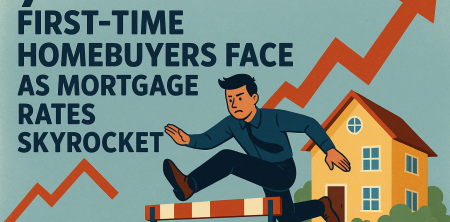
I've spent years in education, both in the classroom and in administration, and one thing I've learned is that big, systemic shifts always have a ripple effect. They don't just touch one area; they influence everything connected to it. Right now, we're seeing a profound example of this in the housing market, particularly for those hopeful individuals dreaming of buying their very first home. The current economic climate, marked by rising inflation and global uncertainties, has pushed mortgage rates to levels we haven't seen in quite a while. We're talking about 30-year fixed-rate mortgages hovering near 7% – specifically, 6.95% as of September 2026, which is the highest since January 2025. This isn't just a number; it's a monumental barrier, creating widespread despondency among prospective buyers. The impact of rising mortgage rates on first-time homebuyers is, frankly, devastating for many, turning what was already a challenging aspiration into an almost insurmountable climb.
Think about it: owning a home isn't just a financial transaction; it's a cornerstone of the American dream for countless families. It represents stability, a place to raise children, build equity, and create a legacy. When that dream becomes increasingly out of reach due to economic forces beyond their control, it creates not just financial stress but deep emotional turmoil. For first-time homebuyers, who are often younger, have less established savings, and are already stretching their budgets to the limit, these surging rates are a brutal blow. It forces a re-evaluation of everything – from their desired neighborhood to the size and type of home they can afford, or even whether homeownership is feasible at all in the near future. Let's dig into the layers of this complex issue and explore how these rates are reshaping the landscape for those eager to plant roots.
The Crushing Blow of Higher Monthly Payments
Let's start with the most immediate and tangible effect: the monthly payment. It's simple math, really, but the implications are far from simple. When mortgage rates jump from, say, 3% to nearly 7%, the principal loan amount you can afford for the same monthly payment shrinks dramatically. Or, conversely, if you're set on a particular home price, your monthly outlay skyrockets. For a family budgeting every dollar, even a few hundred extra dollars a month can be the difference between making ends meet and falling into financial strain. This isn't hypothetical; it's the lived reality for many. Imagine a couple who had diligently saved for a down payment, pre-approved for a loan at a lower rate, only to see that same loan now demand hundreds more per month. Their carefully constructed budget, which might have accounted for daycare, groceries, and student loan payments, suddenly has a gaping hole.
This isn't just about comfort; it's about qualification. Lenders look at your debt-to-income (DTI) ratio. If your monthly housing payment, combined with other debts like car loans or credit cards, exceeds a certain percentage of your gross monthly income (often around 43%), you simply won't qualify for the loan. Higher mortgage rates inherently inflate that housing payment, pushing more and more otherwise creditworthy applicants past that critical threshold. So, even if you have a stable job and a good credit score, the impact of rising mortgage rates on first-time homebuyers can mean you're suddenly deemed too risky, not because your income or debt has changed, but because the cost of borrowing money has. This is a particularly frustrating scenario for those who've done everything 'right' – saved, managed their finances, and prepared for this significant life step, only to have the goalpost moved.
The 'Lock-In Effect': A Supply Shortage Multiplier
Another significant, albeit less direct, consequence of these high rates is what economists call the 'lock-in effect.' It's a phenomenon that's severely exacerbating the already tight housing supply. Here's how it works: many existing homeowners, particularly those who purchased or refinanced in the last few years, are sitting on mortgage rates that are incredibly low – perhaps in the 2s or 3s. Why would they ever want to sell their home and take on a new mortgage at nearly 7%?
They wouldn't, unless absolutely necessary. This creates a significant disincentive for existing homeowners to move. If they need to relocate for a job, upsize for a growing family, or downsize for retirement, the financial penalty of giving up their low rate is immense. It's a cost that often outweighs the benefits of moving, leading to fewer homes being listed on the market. Consequently, the supply of available homes for sale dwindles even further. For first-time homebuyers, who are already competing in a tough market, this means even less inventory to choose from, driving up prices on the few homes that do become available. It's a vicious cycle where high rates reduce supply, which in turn can keep prices elevated despite affordability challenges, making the dream of homeownership feel even more distant.
Emotional Toll: Despondency and Deferred Dreams
Beyond the spreadsheets and interest calculations, there's a profound human element at play. The source material accurately uses the word "despondency," and I think that captures the sentiment perfectly. For many first-time homebuyers, the journey towards homeownership is a long one, filled with sacrifices – foregoing vacations, eating out less, budgeting meticulously. It's an emotional investment as much as a financial one. To see that goal, which felt within reach, suddenly recede into the distance is incredibly disheartening.
I've seen similar patterns in education, where students work tirelessly for a degree, only to face an uncertain job market. The feeling of effort not yielding its expected reward can be crushing. For prospective homeowners, this often translates into deferred dreams. Maybe they put off starting a family, or they continue to live in cramped apartments longer than planned, or they move back in with parents. These aren't just minor inconveniences; they are significant life adjustments that impact mental well-being and long-term planning. The constant monitoring of rates, the hope that they might drop, and the repeated disappointment can be emotionally exhausting. This emotional burden is a critical, though often unquantified, aspect of the impact of rising mortgage rates on first-time homebuyers. (See: CDC on homeownership statistics.)
The Search for Less Expensive Homes: Compromises and Trade-offs
When the math no longer works for the homes they initially envisioned, first-time homebuyers are forced to make tough choices. This often means adjusting their expectations downward, sometimes significantly. They might have to look for homes in less desirable neighborhoods, further away from work or good school districts, or settle for a smaller property with fewer amenities. The dream home becomes the 'good enough' home, or even just 'a home.' This isn't just about aesthetics; it has practical implications. For more context, see impact on education and housing market.
Consider a young family hoping for a home with a yard for their children, or one close to their parents for support. Higher rates might push them into an area where such features are unaffordable, or where the commute adds hours to their day. These trade-offs aren't made lightly. They can impact quality of life, access to resources, and overall family well-being. It's a stark reminder that the cost of borrowing money directly translates into the quality and location of the life you can afford to build. This constant recalibration of expectations, the feeling of having to settle, adds to the emotional strain and can make the home-buying process feel more like a concession than a celebration.
Navigating the Current Market: Strategies for First-Time Buyers
So, what's a hopeful first-time homebuyer to do in this challenging environment? While the news can feel bleak, there are strategies to consider, though they often require patience, flexibility, and a willingness to think outside the traditional box. One immediate step is to meticulously assess your finances. This isn't just about knowing your income and expenses; it's about scrutinizing every line item to identify areas where you can save more aggressively or cut discretionary spending. This might mean delaying other financial goals, like a new car or a big vacation, to prioritize the down payment and closing costs. The more you can put down, the less you'll need to borrow, which directly mitigates the impact of rising mortgage rates on first-time homebuyers.
Another strategy involves exploring different loan products. While the 30-year fixed-rate mortgage is the standard, adjustable-rate mortgages (ARMs) can sometimes offer a lower initial interest rate. However, this comes with the inherent risk that the rate could increase significantly after an initial fixed period. It's a gamble, and one that requires a thorough understanding of your financial stability and future earning potential. Government-backed loans like FHA, VA, or USDA loans also have specific eligibility requirements but can offer lower down payments and more flexible lending standards, which might be a lifeline for some. Consulting with an experienced mortgage broker who understands these various options and can genuinely explain the pros and cons for your specific situation is absolutely critical. They can help you understand what you might qualify for, even if it's not the conventional path.
The Role of Inflation and Geopolitical Tensions
It's easy to point fingers at the Federal Reserve, and certainly, their actions play a significant role. But the underlying drivers of these high rates are complex and far-reaching. Inflation, which has been stubbornly high, is a major culprit. When the cost of goods and services rises, the value of money decreases. Central banks, like the U.S. Federal Reserve, typically respond by raising benchmark interest rates to cool down the economy and bring inflation under control. These benchmark rates directly influence the rates offered on various loans, including mortgages. It's a delicate balancing act; too much tightening can tip the economy into recession, while too little allows inflation to spiral.
Beyond domestic economic policy, global events also cast a long shadow. The source mentions the Iran war, and indeed, geopolitical tensions and conflicts inject uncertainty into global markets. This uncertainty can lead investors to seek safer assets, often U.S. Treasury bonds. When demand for bonds rises, their yields (which tend to move in tandem with mortgage rates) can increase. Furthermore, disruptions to global supply chains caused by conflicts or political instability can exacerbate inflationary pressures, creating a feedback loop. So, while you might be focused on your local housing market, the price you pay for your mortgage is influenced by events happening thousands of miles away, highlighting the interconnectedness of our global economy. Understanding these macro forces helps put the immediate challenges for first-time homebuyers into a broader perspective, even if it doesn't make the situation any easier.
Optimizing Your Housing Budget: Beyond the Mortgage Payment
For those determined to make homeownership a reality, it's not enough to just focus on the mortgage rate. A comprehensive approach to optimizing your overall housing budget is essential. This means looking at every single cost associated with owning a home, not just the monthly principal and interest payment. Property taxes, for example, can vary wildly by location and can add hundreds, if not thousands, of dollars to your annual housing costs. Homeowner's insurance is another non-negotiable expense, and premiums can differ based on your location, the age and construction of the home, and your chosen coverage. Don't forget about potential HOA fees if you're looking at condos or certain planned communities – these can be substantial and are often non-negotiable.
Then there are the less obvious, but equally important, costs: utilities. Older homes, for instance, might have less efficient heating and cooling systems, leading to higher energy bills. Maintenance and repairs are an inevitable part of homeownership; a good rule of thumb is to budget 1-3% of the home's value annually for these unexpected expenses. For first-time buyers, especially, it's crucial to factor in these 'hidden' costs. Getting pre-approved for a mortgage is important, but a true pre-approval process should involve your lender helping you understand the full scope of monthly housing expenses, not just the loan payment. Creating a detailed spreadsheet that accounts for every potential cost will give you a far more realistic picture of what you can truly afford, helping to mitigate the impact of rising mortgage rates on first-time homebuyers by ensuring no financial surprises down the line. (See: HUD mortgage loan limits.)
The Long Game: Patience and Persistence
For many first-time homebuyers, the current market demands a level of patience that can feel excruciating. It might mean delaying homeownership for a year or two, continuing to save, and waiting for market conditions to potentially improve. While no one has a crystal ball, economic cycles are just that – cycles. Rates won't stay high indefinitely, nor will they necessarily plummet overnight. The key is to use this time strategically. Maximize your savings, work on improving your credit score even further, and pay down any existing high-interest debt. These actions will put you in a stronger financial position whenever the market shifts.
Consider also exploring rent-to-own options, if available and carefully vetted, or even co-buying with a trusted family member or friend, though these arrangements come with their own complexities and legal considerations. The most important thing is to stay informed, continue educating yourself about the market, and refine your financial plan. The dream of homeownership, while perhaps delayed, doesn't have to be entirely derailed. It just requires a different approach, a longer timeline, and a resilient spirit in the face of these significant financial headwinds. The current impact of rising mortgage rates on first-time homebuyers is undeniably tough, but with persistence and smart planning, the goal remains achievable for many. For more context, see economic shifts affecting career paths.
The Echoes in Other Markets: Rent and Workforce Implications
The impact of rising mortgage rates on first-time homebuyers doesn't just stay within the housing market; it sends ripples into other sectors too, particularly the rental market and even the broader workforce. When homeownership becomes less accessible, more people remain renters for longer. This increased demand for rental properties can, and often does, push rental prices higher. For individuals already struggling to save for a down payment, an escalating rent bill makes that goal even harder to achieve. It creates a cycle where the very economic forces preventing homeownership also make it more difficult to save for it.
From a workforce perspective, these housing challenges can also impact employee mobility and retention. If employees are 'locked in' to their current low mortgage rates, or if they simply can't afford to buy in a new city due to high rates, they might be less willing to relocate for job opportunities. This can make it harder for businesses to attract talent to certain areas, especially those with already expensive housing markets. For younger professionals, the pressure of housing costs can influence career choices, pushing them towards higher-paying, often more stressful, jobs just to keep pace with basic living expenses. As an educator, I see how foundational stable housing is to a person's ability to focus, thrive, and contribute to their community and workplace. When that foundation is shaken, the effects spread far and wide.
Expert Perspectives: What Economists and Housing Analysts Are Saying
It's always helpful to consider what the experts are saying, as they often have a bird's-eye view of these complex economic systems. Many economists are in agreement that the current housing market, particularly for first-time buyers, is facing a significant affordability crisis. Dr. Lawrence Yun, Chief Economist for the National Association of Realtors (NAR), has repeatedly highlighted the drastic decline in housing affordability, noting that the typical monthly mortgage payment has roughly doubled compared to just a few years ago. He points to both high home prices and elevated mortgage rates as the twin culprits making homeownership unattainable for many.
Housing analysts from institutions like Fannie Mae and Freddie Mac often release forecasts that, while sometimes differing in specifics, generally concur on the challenges. They frequently discuss the need for a significant increase in housing supply to alleviate price pressures, alongside the hope for a moderation in inflation that would allow the Federal Reserve to ease interest rates. Some experts also emphasize the role of local government policies, such as zoning regulations and permitting processes, which can hinder new construction and exacerbate the supply shortage. The consensus is clear: without a fundamental shift in either supply, demand, or borrowing costs, first-time homebuyers will continue to face an uphill battle.
Case Studies: Real-World Scenarios
Numbers and analyses are important, but sometimes real-world examples really drive the point home. Let's consider Sarah and Mark, a couple in their late 20s, both teachers in a medium-sized city. They diligently saved $40,000 for a down payment on a $300,000 home. A few years ago, at a 3% rate, their monthly payment would have been around $1,265 (P&I). Now, with rates at 7%, that same $300,000 home would cost them about $1,730 per month – a difference of nearly $500. This increase pushes their debt-to-income ratio too high for many lenders, or simply makes their budget unsustainable with their current salaries and student loan payments. They're now looking at homes closer to $220,000, which are often smaller, older, and in neighborhoods requiring longer commutes.
Or take David, a single nurse in his early 30s. He's approved for a certain monthly payment based on his income. When rates rise, his maximum affordable home price shrinks considerably. He might have been looking at a small condo or townhouse, but now he finds even those options are out of reach, forcing him to consider staying in his cramped apartment for several more years. These aren't isolated incidents; they represent the daily struggles of countless individuals and families across the country trying to achieve the dream of homeownership in a market that feels increasingly hostile to new entrants. For more context, see systemic changes in policies and their effects. (See: New York Times on mortgage rates.)
FAQ: Understanding the Impact of Rising Mortgage Rates
Q1: What exactly causes mortgage rates to rise?
Mortgage rates are influenced by several factors. The biggest one often is the Federal Reserve's monetary policy, which raises or lowers its benchmark interest rate to control inflation. When the Fed raises rates, it makes borrowing more expensive across the board, including for mortgages. Other factors include the bond market (specifically the yield on 10-year Treasury bonds), inflation expectations, and the overall economic outlook, including geopolitical stability. Lenders also factor in their own risk assessments and profit margins.
Q2: How much does a 1% increase in mortgage rates affect a monthly payment?
The exact impact depends on the loan amount and term. However, a rough rule of thumb is that for every $100,000 borrowed on a 30-year fixed mortgage, a 1% increase in the interest rate can add anywhere from $50 to $70 to your monthly payment. So, on a $300,000 loan, a 1% rate hike could mean an extra $150 to $210 per month. These increases add up quickly, making a significant difference in affordability.
Q3: Are there any programs specifically designed to help first-time homebuyers when rates are high?
Absolutely. Government-backed loans like FHA (Federal Housing Administration), VA (Department of Veterans Affairs), and USDA (United States Department of Agriculture) loans can be a lifeline. FHA loans, for instance, allow for lower down payments (as little as 3.5%) and have more flexible credit requirements. VA loans offer 0% down for eligible veterans and service members. USDA loans also offer 0% down for homes in eligible rural areas. Many states and local municipalities also have their own first-time homebuyer assistance programs, which might include down payment assistance, closing cost grants, or tax credits. It's crucial to research what's available in your specific area.
Q4: Should I wait for mortgage rates to drop before buying a home?
That's the million-dollar question, and there's no easy answer. Trying to time the market is incredibly difficult. While rates may drop in the future, they could also stay elevated or even increase further. Waiting also means you're continuing to pay rent, which often increases, and home prices themselves might continue to rise in some areas. A common strategy is to buy when you're financially ready and consider refinancing if rates drop significantly later. The most important thing is to make a decision based on your personal financial situation and comfort level, rather than solely on speculation about future rates.
Q5: What's the difference between a fixed-rate and an adjustable-rate mortgage (ARM) in a high-rate environment?
A fixed-rate mortgage means your interest rate, and therefore your principal and interest payment, stays the same for the entire life of the loan (typically 15 or 30 years). An Adjustable-Rate Mortgage (ARM) starts with a lower interest rate for an initial period (e.g., 5, 7, or 10 years), after which the rate adjusts periodically based on a market index. In a high-rate environment, an ARM might offer a lower initial payment, making a home more affordable upfront. However, the risk is that after the fixed period, if market rates have risen further, your monthly payments could increase significantly. ARMs are generally riskier if you plan to stay in the home for a long time or if you're uncomfortable with payment uncertainty.
Trending Now
- This Crucial Statistic About Your Teen’s…
- the complete explanation
- ‘It’s a huge concern’: Families of…
- our breakdown of schools don’t have to tell parents about student gender identity — unless they ask, judge rules – la times
- This Elite Private School’s Radical New…
Frequently Asked Questions
What are the main challenges first-time homebuyers face today?
First-time homebuyers today face a range of challenges, including skyrocketing mortgage rates, which are currently around 7%. This surge in rates leads to higher monthly payments, forcing buyers to reassess their budgets, desired neighborhoods, and even the feasibility of homeownership.
How do rising mortgage rates affect home affordability?
Rising mortgage rates significantly impact home affordability by increasing monthly payments. As rates climb, buyers may find themselves priced out of their desired homes, leading to a reevaluation of their housing options and financial capabilities.
Why are mortgage rates rising so rapidly?
Mortgage rates are rising due to factors like inflation and global economic uncertainties. These systemic shifts create a ripple effect in the housing market, pushing rates to levels not seen in years, which negatively impacts prospective homebuyers.
What emotional impact do higher mortgage rates have on buyers?
Higher mortgage rates create not just financial stress but also emotional turmoil for buyers. The dream of homeownership, often seen as a cornerstone of stability, becomes increasingly out of reach, leading to feelings of disappointment and anxiety among first-time buyers.
How can first-time homebuyers cope with the current market conditions?
First-time homebuyers can cope with the current market conditions by reassessing their budgets, considering different neighborhoods, and being flexible about the size and type of home they want. Additionally, exploring alternative financing options or waiting for more favorable market conditions may also be beneficial.
What's your take on this? Share your thoughts in the comments below — we read every one.

