```html
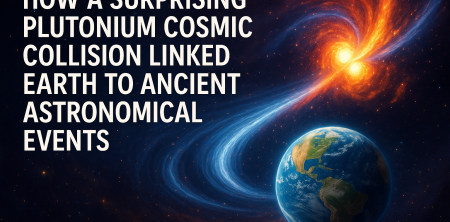
In a stunning revelation that blends Earth geology with the tumultuous history of our solar system, researchers have discovered traces of plutonium embedded in ancient rocks, hinting at a cosmic collision that took place long ago. This finding is not just an intriguing geological anomaly; it suggests that our planet may hold direct evidence of catastrophic space events that shaped its evolution. The implications of this discovery are vast, inviting us to reconsider the history of Earth in the context of cosmic violence.
Understanding Plutonium in Earth Rocks
Plutonium is a radioactive element not typically found in nature in significant quantities, especially on Earth. It is primarily a result of human activity, produced through the fission of uranium in nuclear reactors and during the development of atomic weapons. However, recent studies indicate that small amounts of plutonium can also originate from cosmic events, specifically from supernovae and other violent stellar explosions.
Researchers examining rock samples have found traces of this element in deposits dating back millions of years. This discovery raises questions about how plutonium came to be in these rocks and what that signals about Earth's geological history. The most compelling explanation points to a cosmic collision—a meeting of celestial bodies that unleashed enough energy to scatter plutonium across space, which eventually found its way to our planet.
The Link to Cosmic Collisions
Cosmic collisions have been a common occurrence throughout the history of our solar system. The formation of planets, moons, and even the creation of rings around planets has often involved violent impacts. These collisions can eject material into space, allowing elements like plutonium to drift through the cosmos, only to settle on planets like Earth.
The specific cosmic collisions that may have contributed to the presence of plutonium on Earth could involve either supernovae—explosive deaths of stars—or collisions between neutron stars, which are incredibly dense remnants of supernova explosions themselves. When these massive stars explode, they can produce a variety of heavy elements, including plutonium, which can then spread across the galaxy.
Geological Implications of the Findings
The presence of plutonium in Earth rocks is a game-changer for geologists and astronomers alike. It suggests that Earth is not just a passive observer of cosmic events but an active participant in a much larger narrative of the universe. The research indicates that Earth may serve as a repository of ancient cosmic history.
Many rocks on Earth are far older than human civilization, dating back billions of years. Finding isotopes like plutonium in these rocks could offer insights into the conditions in which they formed and the cosmic events that influenced their development. By studying these isotopes, scientists can piece together the timeline of cosmic collisions and their impact on our planet.
The Role of Cosmic Events in Earth’s Evolution
Cosmic events have played a crucial role in the evolution of Earth. The bombardment of asteroids and comets in the early solar system likely delivered not only water but also essential organic materials. In much the same way, the collision that deposited plutonium could have had significant consequences for Earth's geology and its biological evolution.
By connecting this plutonium finding with previous studies of cosmic impacts, researchers can begin to understand how such events may have influenced Earth’s atmosphere, climate, and even the development of life. The study of plutonium and similar elements in rock can shed light on the broader patterns of cosmic interaction and help reconstruct the early solar system's environment.
How Scientists Detected Plutonium in Rocks
The detection of plutonium in Earth rocks is no small feat. Researchers employ a range of advanced techniques, including mass spectrometry and radiochemical analysis, to identify and measure trace amounts of plutonium. These methods allow for the precise determination of the isotopic composition of plutonium found in rock samples. (See: NASA on supernova events.)
The process starts with careful collection of rock samples from ancient geological formations believed to have formed during the time of the purported cosmic collision. After preparation, the samples undergo rigorous testing to isolate and analyze the plutonium isotopes. The results enable scientists to date the plutonium and understand its origins, linking it to cosmic events.
Potential Questions and Debates
This groundbreaking discovery raises several questions that scientists are eager to explore. For instance, how did these plutonium isotopes survive the journey through space and their eventual incorporation into Earth? What does this mean for our understanding of the timeline of cosmic events? And how can this knowledge inform our understanding of planetary formation in the universe?
These questions are not merely academic; they have implications for how we understand Earth's place in the cosmos. Scientists debate the potential origins of these isotopes, weighing the evidence for different cosmic events and their likelihood of contributing to Earth's geology.
Broader Cosmic Context
The discovery also invites us to consider the broader cosmic picture. If plutonium can be found in Earth's rocks, what else might be lurking within our planet's geological record? Cosmic rays, meteoritic impacts, and other celestial phenomena may have left their mark in ways we are only beginning to understand.
This discovery underscores the interconnectedness of space and Earth, revealing that the two are not separate but part of a larger cosmic system. Our planet is a living archive of cosmic history, and as we continue to uncover its secrets, we may find that many more surprises await us.
Implications for Future Research
The implications of this discovery extend beyond our understanding of Earth's history. It opens avenues for future research into cosmic collisions and their effects on planetary bodies throughout the universe. Other celestial bodies, such as Mars and the moons of Jupiter and Saturn, could harbor similar records of cosmic events.
Future missions to these locations could search for evidence of plutonium or other heavy elements that may have originated from cosmic collisions. Such findings would enrich our understanding of planetary formation and inform our search for extraterrestrial life by examining how cosmic events influence habitability.
Cosmic Collision Events: A Historical Perspective
Looking at cosmic collisions through a historical lens reveals many significant events that have shaped not just Earth, but also other celestial bodies. For example, the collision believed to have formed the Moon—a Mars-sized body known as Theia—occurred around 4.5 billion years ago. This cataclysmic impact not only formed our natural satellite but also influenced Earth's tilt and rotation, ultimately shaping our climate and biological evolution.
In addition to the Moon-forming impact, the Late Heavy Bombardment around 4 billion years ago involved numerous impacts from asteroids and comets, potentially delivering water and organic compounds necessary for life. Each of these collisions serves as a reminder of the dynamic and sometimes violent nature of our solar system's history.
Understanding these historical cosmic collisions allows scientists to build models of planetary formation and evolution, paving the way for insights about other exoplanets and their potential for life.
Plutonium in Astrophysics: A Broader Overview
While the focus here has been on plutonium's implications for Earth, it’s essential to recognize that plutonium plays a crucial role in astrophysics. As a heavy element, its production requires extreme conditions typically found in supernovae or neutron star collisions. Astrophysicists study these phenomena to examine the processes behind nucleosynthesis—the creation of new atomic nuclei from pre-existing nucleons (protons and neutrons). (See: Nature article on plutonium in geology.)
Understanding how elements like plutonium are formed in stars helps scientists grasp the lifecycle of stars and the evolution of galaxies. This knowledge can also inform the search for life in other parts of the universe by highlighting environments where heavy elements are present, possibly indicating the potential for complex chemistry essential for life.
Statistics on Cosmic Collisions and Their Effects
Statistics provide a fascinating insight into the frequency and impact of cosmic collisions. Research has shown that in the early solar system, it is estimated that impacts from small asteroids occurred frequently—potentially several times per decade on Earth. The consequences of these impacts varied widely, from small craters to major extinction events.
For example, the Chicxulub impact event around 66 million years ago is linked to the extinction of the dinosaurs and possibly 75% of all species on Earth. Studies suggest that impacts of such magnitude were relatively rare, occurring every 50 million years or so. Understanding these statistics is crucial for assessing Earth's geological and biological history and the ongoing risks posed by cosmic events.
Frequently Asked Questions (FAQ)
What caused the presence of plutonium in ancient Earth rocks?
The presence of plutonium in Earth rocks is believed to originate from cosmic collisions, particularly supernovae or neutron star collisions, which spread this heavy element across space. When materials from these cosmic events eventually collided with Earth, they became embedded in the geological record.
How can researchers confirm the origins of plutonium found in rocks?
Researchers use advanced techniques such as mass spectrometry to analyze the isotopic composition of plutonium in rock samples. By determining the isotopes present, they can trace the element back to its cosmic origins and link it to specific stellar events.
What are the potential implications of finding plutonium on other celestial bodies?
Finding plutonium or similar heavy elements on other celestial bodies could reshape our understanding of their geological history and potential for harboring life. It may also indicate past cosmic events that influenced their formation and evolution, providing context for future exploration.
How does this discovery affect the search for extraterrestrial life?
This discovery can inform the search for extraterrestrial life by indicating how cosmic events influence planetary conditions. If heavy elements like plutonium are found on other planets or moons, they might suggest environments that have experienced similar cosmic interactions, potentially leading to conditions suitable for life.
Are there any risks associated with plutonium in the environment?
Plutonium is radioactive and can pose health risks if not contained properly. However, the amounts found in ancient rocks are typically minuscule and not a direct threat. The primary concern arises when plutonium is used in nuclear applications, which requires stringent safety measures.
How do cosmic collisions influence Earth's climate?
Cosmic collisions can influence Earth’s climate by introducing dust and debris into the atmosphere, which can block sunlight, causing temporary cooling. Additionally, large impacts can initiate volcanic activity or trigger other geological processes that affect the climate over long periods.
Case Studies of Cosmic Collisions
To better understand the concept of cosmic collisions, examining specific case studies can shed light on the potential consequences of such events. For example, the Tunguska event in 1908 is one of the most significant cosmic impacts in recent history. A large explosion, likely caused by the airburst of a meteoroid or comet over Siberia, leveled approximately 2,000 square kilometers of forest but left no crater. The event demonstrates how cosmic collisions can have immediate, dramatic effects on Earth without direct contact. (See: ScienceDirect on cosmic origins of plutonium.)
Another notable example is the asteroid impact that is believed to have caused the extinction of the dinosaurs. The impact of a massive asteroid near the Yucatán Peninsula released energy equivalent to millions of atomic bombs, leading to massive fires, tsunamis, and a "nuclear winter" effect that drastically altered climate conditions. It’s clear that cosmic impacts not only affect the geological landscape but can also lead to widespread extinction and biological turnover.
Future Directions in the Study of Cosmic Collisions
The future of research into plutonium and cosmic collisions is bright, with many exciting avenues to explore. One promising area is the ongoing study of asteroid and comet compositions. Missions like NASA's OSIRIS-REx and Japan's Hayabusa2 aim to return samples from near-Earth asteroids, providing firsthand material for analysis. By studying these samples, scientists will gain insights into the building blocks of planets and the materials that may have been delivered to Earth during its formative years.
Additionally, advancements in telescope technology, such as the James Webb Space Telescope, will allow astronomers to observe cosmic events in greater detail. By studying the light emitted from supernovae and other explosive events, researchers can gain a better understanding of the conditions under which heavy elements form. This data could provide critical links between cosmic events and the materials present on Earth.
The Role of Public Awareness in Cosmic Research
Public interest in space and cosmic events plays a significant role in research funding and support. Educating the general public about discoveries like plutonium in Earth rocks can help build enthusiasm for scientific endeavors. Engaging with communities through outreach programs, citizen science projects, and social media initiatives can raise awareness and foster a greater appreciation for the connections between Earth and the cosmos.
Moreover, as the search for extraterrestrial life expands, public engagement becomes crucial. Understanding how cosmic events shape planetary conditions can lead to discussions about the potential for life beyond Earth. Enthusiastic participation in these conversations helps drive interest in space exploration and the sciences, ensuring that future generations continue to explore and understand our universe.
Conclusion: A New Chapter in Earth’s Cosmic Story
The discovery of plutonium in Earth rocks serves as a remarkable reminder of the violent and dynamic universe we inhabit. It suggests that our planet is not an isolated entity but rather part of a cosmic tapestry woven together by the forces of nature. As researchers continue to analyze and interpret these findings, we are likely to uncover new chapters in Earth's story, revealing how cosmic collisions have shaped not just our planet but the very fabric of our existence.
As we stand on this pivotal discovery, one thing is clear: the universe holds mysteries that connect us to our past in ways we’re only beginning to grasp. The plutonium cosmic collision narrative is just one piece of a grand puzzle that encompasses the history of our planet and its place in the cosmos. As we continue our exploration of space and geology, who knows what astonishing revelations await us next? See also magnetar discoveries.
```
Trending Now
Frequently Asked Questions
What is the significance of finding plutonium in ancient rocks?
The discovery of plutonium in ancient rocks suggests a link between Earth and cosmic events, indicating that our planet may have experienced significant astronomical collisions. This finding offers insights into the geological history of Earth and how cosmic violence has shaped its evolution.
How does plutonium end up in Earth's rocks?
Plutonium can find its way into Earth's rocks through cosmic events, particularly from supernovae and other stellar explosions. These violent occurrences can scatter plutonium across space, allowing it to eventually settle on planets like Earth, where it becomes embedded in geological formations.
What are cosmic collisions and their impact on Earth?
Cosmic collisions refer to the violent interactions between celestial bodies, such as asteroids or comets impacting planets. These events can significantly influence planetary formation and geology, ejecting materials like plutonium into space, which may later land on planets, including Earth.
Why is plutonium rarely found in nature?
Plutonium is a radioactive element that is not commonly found in nature due to its rarity and the fact that it is primarily produced through human activities, such as nuclear fission in reactors. However, traces can occasionally result from cosmic events like supernovae.
What implications does the plutonium discovery have for Earth's history?
The discovery of plutonium in ancient rocks prompts a reevaluation of Earth's history, suggesting that catastrophic cosmic events have played a significant role in shaping the planet's geological past. It highlights the interconnectedness of Earth with broader cosmic processes.
Agree or disagree? Drop a comment and tell us what you think.

