```html
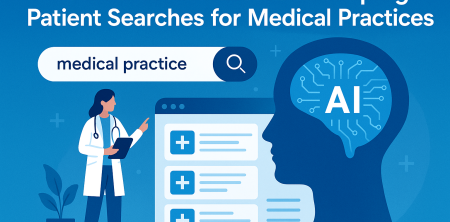
The landscape of healthcare is evolving rapidly, and a significant part of that transformation is the integration of AI in healthcare. In a recent MGMA Stat poll conducted on June 16, 2026, it was unveiled that patients are increasingly turning to AI tools like ChatGPT and Google AI Overviews to locate healthcare providers. This shift not only represents a change in how patients seek care but also emphasizes the urgent need for medical practices to adapt to this new reality.
1. The Rise of AI in Patient Search Behavior
Patients today are more tech-savvy than ever. As they look for healthcare solutions, many are bypassing traditional methods and heading straight to AI-powered platforms. This trend indicates a fundamental shift in patient behavior, where convenience and immediacy take precedence. The MGMA report highlights that traditional search methods may not suffice in an age where AI can provide answers almost instantaneously.
This transformation means practices must be prepared to engage with potential patients at their first point of contact—often through AI. If a patient types in a query like "where can I get a colonoscopy in Denver?", AI tools need accurate and up-to-date information to direct them appropriately. Without this, practices risk losing potential patients simply because their data isn’t visible or current.
2. Understanding the Necessity of Accurate Information
For AI systems to successfully guide patients to specific healthcare providers, there must be a foundation of accurate, current, and specific information. This includes not just the names and locations of clinicians, but also the services offered, appointment availability, and access points. Inaccuracies or outdated information can lead to frustrated patients and missed opportunities for healthcare practices.
Hence, conducting a visibility audit becomes essential. This involves evaluating how your practice appears on various search platforms and AI tools. It’s not just about being visible; it’s about being accurately represented. Practices should verify their listings on platforms such as Google My Business and other health directories to ensure that all information is correct and reflective of their offerings.
3. The Impact of AI on Healthcare Marketing
The integration of AI in healthcare is not just a technological upgrade; it’s also a marketing strategy. As patients increasingly seek care through AI, medical practices must adapt their marketing strategies to align with this trend. Traditional marketing techniques may not be sufficient anymore. Practices need to optimize their online presence to ensure they are a top choice when patients query AI systems.
This shift means that practices should invest in search engine optimization (SEO) that focuses on keywords relevant to their services. For example, if a practice specializes in orthopedic surgery, using terms like "best orthopedic surgeon for knee replacement" should be a priority. By aligning their online content with the questions patients are asking, practices can increase their visibility and attract more patients.
4. Conducting a Visibility Audit
So, how does a practice go about conducting a visibility audit? First, they should check their online listings across various platforms. Are they displaying correct information? Next, practices should test their visibility by prompting AI tools with patient-style queries. This can include questions like "where can I find a family doctor in my area?" and analyzing whether the AI provides accurate responses linked to the practice.
Practices should also scrutinize their websites. Is the information easy to find? Does it include relevant keywords? The easier you make it for AI to comprehend your practice’s offerings, the better positioned you are to be recommended to potential patients.
5. Case Studies: Successful AI Integration
There are numerous examples of healthcare practices successfully integrating AI to enhance patient engagement and visibility. For instance, a primary care clinic in San Francisco implemented an AI chatbot on its website. This tool helps patients find the right services and even schedule appointments directly. The result? Increased patient satisfaction and a noticeable uptick in appointments booked through online interactions. (See: CDC on healthcare technology advancements.)
Similarly, a dermatology practice in New York leveraged AI tools to provide virtual consultations. Patients could ask questions via an AI platform, receive preliminary advice, and then schedule in-person visits as needed. This practice not only improved patient engagement but also streamlined their workflow, allowing them to manage their time more efficiently. We covered AI advancements in healthcare in more detail.
6. Patient Engagement through Personalized Experiences
AI is not just about finding information; it’s also about enhancing the patient experience through personalization. When patients interact with AI systems, they expect recommendations tailored to their specific needs. This could mean suggesting a specialist based on their symptoms or providing location-based recommendations for care.
By leveraging AI technology, practices can offer more personalized care. This can be achieved through data analysis that helps understand patient preferences and behaviors. For example, if a practice notices that many patients are searching for pediatric care, it can invest in more targeted marketing strategies to attract that demographic.
7. Challenges and Considerations for Practices
While the benefits of AI in healthcare are numerous, there are also challenges that practices must navigate. One of the biggest is ensuring data security. With AI systems handling sensitive patient information, practices must prioritize cybersecurity to protect patient data from breaches and unauthorized access.
Additionally, there’s the matter of AI literacy among healthcare providers. Not all providers are familiar with AI technologies or how to effectively utilize them. Therefore, ongoing training and education are essential to ensure that practices can maximize the benefits of AI in healthcare.
8. The Future of AI in Healthcare
As AI continues to evolve, its role in healthcare will only expand further. We can expect innovations that will make patient interactions even more seamless and intuitive. The future may hold AI systems that not only provide information but also predict patient needs based on previous behaviors and preferences.
Healthcare practices willing to adapt and embrace these changes will likely find themselves ahead of the curve. They’ll be better equipped to meet patient demands and provide high-quality care in a competitive landscape. The integration of AI in healthcare represents a transformative shift toward a more efficient and patient-centered approach.
9. Final Thoughts: Don’t Get Left Behind
The message from the MGMA poll is clear: practices that fail to adapt to the growing influence of AI in healthcare risk getting left behind. Accurate information, strategic marketing, and a commitment to embracing new technologies are essential for survival in this rapidly changing environment.
As patients increasingly turn to AI for healthcare information, practices must ensure they are part of that conversation. By auditing their visibility, enhancing their online presence, and focusing on patient engagement, healthcare providers can position themselves to thrive in this new era. The intersection of AI in healthcare and patient search behavior is a critical area for practices to focus on now and in the future.
10. How AI Enhances Diagnostics
AI's impact in healthcare extends far beyond patient search behavior and marketing strategies; it plays a transformative role in diagnostics as well. AI algorithms can analyze complex medical data faster than human practitioners, leading to quicker and often more accurate diagnoses. For instance, AI-powered platforms can review medical imaging, such as X-rays, MRIs, and CT scans, identifying patterns that may elude the human eye.
A recent study from Stanford University showcased an AI model trained to detect pneumonia on chest X-rays with an accuracy that surpassed that of radiologists. Such advancements not only improve patient outcomes but also help to streamline healthcare delivery, allowing physicians to devote their time to treatment rather than diagnosis alone.
11. AI in Treatment Plans and Personalized Medicine
Another significant application of AI in healthcare is in developing personalized treatment plans. By analyzing a patient’s genetic makeup, medical history, and lifestyle factors, AI can recommend tailored treatment strategies that are more likely to succeed. This approach aligns closely with the principles of personalized medicine, which aims to customize healthcare based on individual patient characteristics. (See: NIH AI healthcare initiative.)
For example, AI systems can analyze data from clinical trials and patient records to identify which patients are likely to respond best to a specific drug. This not only enhances the efficacy of treatments but also minimizes adverse effects, reducing the trial-and-error approach often associated with prescribing medications.
12. Real-World Applications of AI Technologies
Several healthcare systems and organizations are already leveraging AI technologies to improve care delivery. For example, the Mayo Clinic has integrated AI into its operations through the use of predictive analytics to identify patients at risk for certain conditions. By proactively intervening, they can improve patient outcomes and reduce overall healthcare costs.
Another example can be seen with Babylon Health, a telehealth service utilizing AI to offer virtual consultations. Patients can input their symptoms into the app, and the AI provides immediate feedback and insights, guiding them towards appropriate care. The integration of such AI technology demonstrates a shift towards more accessible and efficient healthcare solutions.
13. Regulatory Framework and Ethical Considerations
As AI becomes more prevalent in healthcare, regulatory frameworks must evolve to keep pace with these advancements. Ethical considerations related to patient data privacy, consent, and the decision-making processes of AI systems are paramount. Organizations like the FDA are working on establishing guidelines that ensure AI applications in healthcare maintain high standards of safety and efficacy.
Healthcare providers need to stay informed about these regulations and actively participate in discussions around the ethical implications of AI. Ensuring that AI systems are designed to be transparent and accountable will help build trust with patients and practitioners alike. This builds on The EdAdvocate's insights.
14. AI and Telemedicine: A Perfect Match
The rise of telemedicine has been significantly enhanced by AI technologies. AI can facilitate virtual visits by triaging symptoms, scheduling appointments, and offering diagnostic recommendations in real-time. During the COVID-19 pandemic, many healthcare systems adopted telehealth solutions powered by AI to manage patient care remotely while maintaining safety protocols.
The convenience of AI in telemedicine means that patients can receive care from the comfort of their homes, which is particularly beneficial for those with mobility issues or chronic conditions. As this trend continues, we can expect to see further integration of AI tools that enhance remote patient monitoring, medication adherence, and continuous care.
15. Challenges in AI Implementation
Implementing AI in healthcare is not without its challenges. One major issue is the disparity in access to technology. Smaller practices or those in rural areas may not have the resources to invest in advanced AI tools, creating a gap in care quality. This means larger healthcare systems could dominate the market by offering more sophisticated AI solutions, which may lead to inequities in patient care.
Additionally, integrating AI into existing workflows can be complex. Healthcare professionals must adapt to new systems, which can disrupt established routines. Resistance to change is another challenge, as some staff members may be skeptical about the reliability of AI compared to traditional methods.
16. Expert Perspectives on AI in Healthcare
Experts in the field of healthcare technology provide valuable insights into the future of AI. Dr. John Halamka, a prominent figure in health IT, emphasizes that AI should complement, not replace, human decision-making. He believes that while algorithms can assist in diagnostics, the provider's clinical judgment remains irreplaceable. (See: AI in healthcare: a review.)
Another expert, Dr. Eric Topol, advocates for an AI-first approach in medicine. He argues that AI has the potential to democratize healthcare by making it more accessible and personalized. However, he cautions that ethical frameworks must be established to prevent any potential biases in AI algorithms that could adversely affect patient care.
17. FAQs about AI in Healthcare
What is AI in healthcare?
AI in healthcare refers to the application of artificial intelligence technologies to analyze and interpret medical data, improve diagnostics, personalize treatment plans, and enhance patient engagement. It encompasses a wide range of tools, including machine learning algorithms, natural language processing, and robotics.
How does AI improve patient care?
AI improves patient care by providing faster and more accurate diagnoses, personalizing treatment plans, predicting patient outcomes, and enhancing patient engagement through tailored communication and support tools.
What are the risks associated with AI in healthcare?
Risks include data privacy concerns, potential biases in AI algorithms, and the reliance on technology that might not always be accurate. It’s essential for healthcare providers to ensure that AI systems are transparent, accountable, and used in conjunction with human oversight.
How can healthcare practices start using AI?
Healthcare practices can start by evaluating their current processes and identifying areas where AI can add value. This could involve investing in AI tools for patient diagnostics, enhancing marketing strategies, or improving administrative tasks. Training staff on AI technologies and their applications is also crucial for successful integration.
What is the future of AI in healthcare?
The future of AI in healthcare looks promising with advancements expected in predictive analytics, personalized medicine, and enhanced patient engagement. As technology evolves, AI’s ability to facilitate seamless communication between patients and providers will likely transform the healthcare landscape.
In summary, the integration of AI in healthcare is reshaping the industry in countless ways. From enhancing diagnostics and personalizing treatment plans to revolutionizing patient engagement, AI offers substantial improvements to the overall healthcare experience. As practices adapt to these changes, the potential for improved patient outcomes and operational efficiencies becomes increasingly evident.
```
Trending Now
Frequently Asked Questions
How is AI changing patient searches for healthcare providers?
AI is transforming patient searches by enabling users to find healthcare providers through AI-powered platforms like ChatGPT and Google AI. Patients are increasingly opting for these tools due to their convenience and immediacy, making it crucial for medical practices to adapt to this new search behavior.
What do patients look for when using AI to find healthcare services?
Patients using AI to find healthcare services seek accurate and up-to-date information about providers, including their names, locations, services offered, and appointment availability. This information is essential for AI systems to effectively direct patients to the appropriate healthcare options.
Why is accurate information important for AI in healthcare?
Accurate information is vital for AI in healthcare because it ensures that patients receive relevant and timely guidance. Inaccuracies can lead to frustrated patients and missed opportunities for practices, highlighting the need for regular visibility audits of healthcare data across search platforms.
What should healthcare practices do to engage patients through AI?
Healthcare practices should ensure their information is accurate, current, and easily accessible on AI platforms. This includes providing details about services, clinician availability, and locations, which helps practices connect with potential patients at their first point of contact.
What is a visibility audit in the context of healthcare practices?
A visibility audit involves assessing how a healthcare practice appears on various search platforms and AI tools. It helps identify any inaccuracies or outdated information that could hinder patient searches, ensuring that practices maintain a strong online presence.
Agree or disagree? Drop a comment and tell us what you think.

