```html
Imagine a future where multiple telescopes, acting in concert, scour the cosmos for signs of life beyond Earth. This isn't the plot of a science fiction movie; it's a visionary proposal gaining traction among astronomers. A swarm of telescopes for finding life could redefine how we search for extraterrestrial intelligence and biosignatures in exoplanets, addressing the limitations of current large-scale observational strategies.
1. The Quest for Life Beyond Earth
The search for extraterrestrial life remains one of humanity's most profound quests, stirring curiosity since the dawn of civilization. With the detection of thousands of exoplanets in the habitable zones of distant stars, the tantalizing possibility that we are not alone has never seemed more tangible. In recent years, finding biosignatures—chemical indicators of life—has become a focal point of astronomical research.
As scientists harness advanced technologies to explore these distant worlds, they face significant challenges. Current flagship telescopes, like the James Webb Space Telescope, are powerful but limited by their singular focus and strategic location. The need for a more innovative approach has led to the proposal of a distributed network of smaller telescopes, which could revolutionize how we identify potential signs of life.
2. Challenges of Current Telescope Designs
Traditional telescope designs often involve large, complex instruments that can be prohibitively expensive and time-consuming to build. While telescopes such as the Hubble Space Telescope and James Webb have made incredible discoveries, they each have their own limitations. These include narrow observational windows, reliance on precise positioning, and the challenge of gathering data from countless targets across the night sky.
Moreover, flagship telescopes can only focus on a handful of exoplanets at any given time, which constrains the scope of their research. The immense distances and faint light of distant stars make it even more essential to have a robust and flexible observational strategy. A swarm of telescopes could bypass these limitations by enabling a broader survey of multiple targets simultaneously, thus increasing the likelihood of detecting life-signifying emissions.
3. The Concept of a Swarm of Telescopes
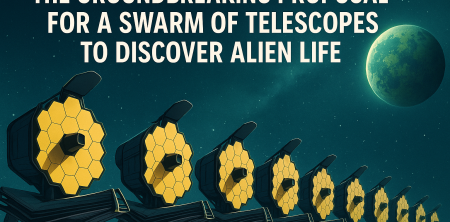
The concept of a swarm of telescopes for finding life involves deploying a network of smaller, agile telescopes that can operate independently or as a cohesive unit. This swarm would be equipped with advanced sensors and imaging technologies to monitor a wider array of exoplanets, capturing data on atmospheric composition and other vital biosignatures.
By utilizing a distributed network, researchers can cover more ground than would be possible with a single, large telescope. Think of it as a fleet of drones surveying an expansive area, gathering insights that can then be synthesized into a cohesive understanding of potential life-harboring planets.
4. Advantages of a Distributed Approach
The primary advantage of a swarm of telescopes lies in its adaptability and efficiency. Smaller telescopes can be built and launched with relative ease compared to their larger counterparts, reducing the cost barrier associated with flagship projects. These telescopes could also be strategically positioned to target different regions of the sky, maximizing observational coverage.
Furthermore, a distributed system would foster collaboration among scientists worldwide. Each telescope could be operated remotely, allowing international teams to engage with the observations, share findings, and analyze results collectively. This democratization of access to astronomical data could inspire a new wave of innovation in the search for extraterrestrial life.
5. Technological Innovations Driving the Proposal
Advancements in technology are a driving force behind the feasibility of a swarm of telescopes. Innovations in materials science and miniaturization have made it possible to create highly sensitive instruments that fit within compact designs. Additionally, improvements in imaging algorithms and artificial intelligence can enhance data analysis, enabling astronomers to discern subtle signals that may indicate life.
These technologies allow for real-time data processing, which is crucial when observing transient events such as planetary transits or potential biosignature emissions. The agility of a swarm means that as soon as a promising signal is detected, additional telescopes can be directed to confirm or investigate the finding in greater detail.
6. Potential Targets for the Swarm
Identifying the right targets is essential for the success of any telescope mission. The swarm's design would allow astronomers to focus on a range of exoplanets within the habitable zone of their respective stars—particularly those which have shown potential for hosting life. (See: NASA's Exoplanet Exploration Program.)
Some of the most intriguing candidates include Proxima Centauri b, an Earth-sized exoplanet located just outside our solar system, and the TRAPPIST-1 system, which contains several Earth-sized planets in a habitable zone. Telescopes within the swarm could analyze atmospheric compositions, looking for gases such as oxygen and methane, which are often considered biosignatures.
7. The Broader Implications of Discovering Alien Life
The potential discovery of life beyond Earth carries profound implications for humanity. It would not only reshape our understanding of biology and evolution but could also challenge philosophical and religious perspectives about our place in the universe. The excitement surrounding this endeavor taps deeply into the human psyche, as the question of whether we are alone has persisted across cultures and generations.
Furthermore, advancements in technology driven by the development of a swarm of telescopes could have applications beyond astronomy. The techniques and technologies pioneered in this search could lead to innovations in remote sensing, data analysis, and even environmental monitoring here on Earth.
8. Public Interest and FOMO: The Next Big Space Adventure
The emotional appeal of searching for extraterrestrial life is undeniable. As discussions about a swarm of telescopes for finding life gain attention, they stir excitement and anticipation in the public domain. This interest reflects a broader desire to be part of a revolutionary moment in human history—where the answers to fundamental questions about our existence may finally be within our grasp.
Social media buzz and public engagement initiatives will help fuel this narrative. As the conversation matures, it holds the potential to draw in funding and support from a broader audience, further enhancing the project's viability and reach.
9. Looking Ahead: The Future of the Search for Life
The proposal for a swarm of telescopes represents a strategic pivot in how astronomers approach the search for alien life. As scientists continue to develop and refine this concept, we may soon witness a new era of discovery. Such an initiative could not only lead us closer to finding life beyond Earth but also inspire generations to dream big and reach for the stars.
In a world increasingly driven by collaboration and technological innovation, the notion of a distributed network of telescopes could become a symbol of unity in humanity's quest for knowledge. The prospect of unraveling the mysteries of the universe through a swarm of telescopes for finding life is more than just a scientific goal—it's a testament to our relentless curiosity and an unwavering hope for the future.
10. Understanding Biosignatures: The Key to Finding Life
One of the most significant aspects of using a swarm of telescopes is the ability to detect biosignatures more effectively. Biosignatures are specific indicators that suggest the presence of life. These can be gases in the atmosphere, surface features, or even patterns of light. For example, the presence of methane and oxygen together in an atmosphere could indicate biological activity. The swarm could enhance our ability to analyze these complex atmospheric compositions across multiple targets simultaneously.
As technology advances, we are getting better at identifying what constitutes a biosignature. Recent studies indicate that there are a variety of gases produced by life processes on Earth that could appear in the atmospheres of exoplanets. The swarm could be programmed with data libraries of known biosignatures, streamlining the identification process for scientists.
11. Collaboration Across Disciplines
The development of a swarm of telescopes will likely require multidisciplinary collaboration. Astrophysicists, engineers, biologists, and data scientists will need to work together to design, build, and operate these telescopes. This collaboration could lead to innovations that extend beyond astronomy, applying findings from one field to another. For instance, engineering techniques used in spacecraft design could influence how telescopes are built to withstand the harsh conditions of space.
This collaborative approach also means that the scientific community will be able to share and interpret data more broadly. By pooling resources and expertise, the potential for groundbreaking discoveries increases exponentially. Imagine the insights that can be gained when experts from different fields come together to interpret the same data set. (recent exoplanet discoveries)
12. Funding and Support: The Role of Governments and Private Sector
Funding will be crucial for the realization of a swarm of telescopes for finding life. Both government agencies, like NASA and ESA, as well as private organizations, will need to collaborate to provide the necessary resources. The investment in such a venture could yield significant returns, not just in the form of technological advancements but also in terms of knowledge and understanding of our universe.
Recent trends have shown an increasing interest from private companies in space exploration. Initiatives like SpaceX and Blue Origin have brought a new dynamic to the field, showing that commercial involvement can spur innovation and reduce costs for major projects. This collaboration could extend to the development and deployment of telescope swarms, making them more feasible than ever.
13. Case Studies of Similar Projects
There are several projects that have laid the groundwork for the idea of a swarm of telescopes. For instance, the European Extremely Large Telescope (E-ELT) will be one of the largest optical and near-infrared telescopes in the world. While it doesn’t embody the swarm concept, it serves as an example of what large-scale efforts can achieve. The E-ELT aims to explore the origins of the universe, including the search for signs of life. (See: Research on biosignatures in exoplanets.)
Another noteworthy project is the Square Kilometre Array (SKA), which is designed to be the world’s largest radio telescope. The SKA will consist of thousands of antennas spread across multiple countries, aiming to answer fundamental questions about the universe. This collaborative effort showcases how a distributed approach can lead to significant advancements in astronomical research, setting a precedent for a swarm of telescopes focused on finding life.
14. Challenges in Implementing a Swarm of Telescopes
Implementing a swarm of telescopes for finding life comes with its own set of challenges. Coordinating multiple telescopes requires sophisticated software and hardware systems capable of managing complex datasets and ensuring synchronized operation across the network. This means developing robust algorithms that can handle data fusion, real-time analysis, and error correction among many other tasks.
Additionally, each telescope in the swarm would need to be equipped with a unique set of instruments designed for specific tasks, leading to potential variability in data quality. Standardizing observations while still allowing for individual telescope specialization could be a delicate balancing act.
Funding allocation and international cooperation may also prove challenging. Negotiating agreements between various space agencies and private firms can be a lengthy process, often hampered by competing interests and disparate goals. Ensuring that all parties are aligned in their objectives is vital for the success of such an ambitious project.
15. Potential Discoveries and Their Impact
When we think about the potential discoveries that could arise from a swarm of telescopes, the mind races with possibilities. Imagine discovering a planet where the atmospheric analysis reveals the presence of phosphine, a gas associated with biological processes on Earth. This could prompt immediate follow-up observations and potentially lead to a groundbreaking revelation about life elsewhere in the universe.
Statistical modeling would play a crucial role here. By assessing the likelihood of finding biosignatures based on current data from the swarm, astronomers can prioritize which planets to observe more closely. This data-driven approach could not only enhance discovery odds but also provide a structured framework for future missions.
The societal impact of such discoveries could be monumental. The excitement surrounding the confirmation of extraterrestrial life could lead to a cultural renaissance, inspiring art, literature, and further scientific inquiry. The questions posed by our newfound knowledge could reshape how we view our existence, societal structures, and even international relations. There's a fuller look at circumbinary planets explained.
16. Ethical Considerations in the Search for Life
As we embark on this ambitious quest, ethical considerations must also be at the forefront. What responsibilities do we have when it comes to potentially contacting extraterrestrial life? Should we send messages or signals into the cosmos, or is it smarter to observe quietly? The implications of interacting with alien life forms can be profound and fraught with uncertainty.
Moreover, how do we ensure that our search does not inadvertently lead to harmful consequences for either humanity or the potential lives we seek? Developing a framework for ethical exploration will be crucial in guiding decision-making processes in the future.
Astrobiologists are already engaging in these discussions, considering both the potential benefits and risks associated with making contact or even influencing alien ecosystems. This consideration is just as crucial as the technological innovations that will drive the swarm of telescopes.
17. FAQ: Swarm of Telescopes for Finding Life
What is a swarm of telescopes?
A swarm of telescopes refers to a network of smaller, agile telescopes that work together to survey the universe for signs of life. This system allows for more flexible and comprehensive observations than traditional, larger telescopes. (See: New insights into the search for alien life.)
How would a swarm of telescopes work?
The telescopes would operate both independently and collaboratively, using advanced imaging technology to monitor multiple exoplanets simultaneously. Data collected could be analyzed in real-time to identify potential biosignatures.
What are biosignatures?
Biosignatures are indicators of life, which could be gases, chemical compounds, or other markers detected in the atmosphere of a planet that suggest biological activity.
Why is this approach more efficient?
This approach allows astronomers to cover a larger area of the sky and observe multiple candidates at once, increasing the chances of detecting life compared to focusing on one target at a time.
What technologies are being developed for this project?
Innovations in miniaturization, materials science, imaging algorithms, and artificial intelligence are crucial for the successful implementation of a swarm of telescopes. These technologies will enable sensitive observation and real-time data analysis.
What implications would finding extraterrestrial life have for humanity?
The discovery of extraterrestrial life could profoundly change our understanding of biology, evolution, and our place in the universe. It could lead to new philosophical and ethical considerations and inspire a new generation of scientific inquiry.
Who would fund the swarm of telescopes?
Funding could come from a combination of government space agencies, private companies, and international collaborations. The potential for groundbreaking discoveries could incentivize investment from various sectors.
What are some potential targets for the swarm of telescopes?
Potential targets include exoplanets in the habitable zones of their stars, such as Proxima Centauri b and the TRAPPIST-1 system. These planets may exhibit conditions suitable for life, making them ideal candidates for observation.
What key challenges does a swarm of telescopes face?
Challenges include coordinating multiple telescopes, ensuring data quality, securing funding, and fostering international collaboration. Addressing these issues will be essential for the success of the project.
How can public interest influence this project?
Public interest can drive funding, inspire new generations of scientists, and foster a collaborative atmosphere. Engaging the public through outreach initiatives can help create a sense of shared purpose in the search for life.
```
Trending Now
Frequently Asked Questions
What is the proposal for a swarm of telescopes?
The proposal for a swarm of telescopes involves a network of smaller instruments working together to search for signs of extraterrestrial life. This innovative approach aims to overcome the limitations of current flagship telescopes by allowing for broader and more efficient observation of exoplanets, enhancing our ability to detect biosignatures.
How could a swarm of telescopes change the search for alien life?
A swarm of telescopes could revolutionize the search for alien life by providing a distributed observational strategy. This would enable astronomers to monitor multiple targets simultaneously, increasing the chances of detecting biosignatures and other indicators of life across the vastness of space.
What are the limitations of current telescopes like Hubble and James Webb?
Current telescopes, such as Hubble and James Webb, face limitations including narrow observational windows, reliance on precise positioning, and the inability to monitor many exoplanets at once. These constraints hinder the comprehensive search for extraterrestrial life, which a swarm of smaller telescopes aims to address.
Why is finding biosignatures important in astronomy?
Finding biosignatures is crucial in astronomy as it provides chemical indicators of life on other planets. Detecting these signs can help answer humanity's age-old question of whether we are alone in the universe and guide future explorations of habitable exoplanets.
What challenges do scientists face in the search for extraterrestrial life?
Scientists face several challenges in the search for extraterrestrial life, including the vast distances involved, the faint light from distant exoplanets, and the limitations of current telescopes. These factors complicate the detection of biosignatures and necessitate innovative approaches like the proposed swarm of telescopes.
Agree or disagree? Drop a comment and tell us what you think.

