```html
In the world of education, understanding how to meet the diverse needs of learners is a persistent challenge. Educators, in their quest to foster an enriching environment, often turn to frameworks that facilitate effective instruction. One such framework is Bloom's Taxonomy in education, a vital tool that provides a structured approach to differentiating instruction for both gifted and struggling learners. This article explores the fundamental aspects of Bloom's Taxonomy, its applications in diverse educational settings, and practical strategies for implementation.
A Brief Overview of Bloom's Taxonomy
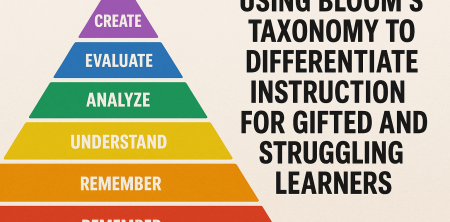
Initially developed by Benjamin Bloom and his colleagues in 1956, Bloom's Taxonomy is a hierarchical model that classifies educational objectives. It has undergone revisions, the most notable of which occurred in 2001, transforming the original six categories—knowledge, comprehension, application, analysis, synthesis, and evaluation—into a more dynamic framework: remembering, understanding, applying, analyzing, evaluating, and creating.
The essence of this taxonomy is to facilitate higher-order thinking skills among students. It provides a roadmap for educators, guiding the development of curriculum and assessments. By categorizing learning objectives, Bloom's Taxonomy allows teachers to tailor their instruction to meet various learners' needs.
Understanding Differentiation in Instruction
Differentiation in instruction refers to the practice of modifying teaching strategies and learning experiences to accommodate the diverse needs of students. This approach acknowledges that learners differ in their readiness levels, interests, and learning profiles. In a typical classroom, you may have gifted students who require additional challenges, as well as struggling learners who need extra support to grasp fundamental concepts.
Employing Bloom's Taxonomy as a guide, educators can effectively differentiate instruction. For instance, while teaching a concept, teachers can design tasks that address multiple levels of Bloom's framework, ensuring that all students, regardless of their abilities, are engaged and learning at their own pace.
The Importance of Bloom's Taxonomy for Gifted Learners
Gifted learners often demonstrate advanced cognitive abilities and a high capacity for creativity. However, without appropriate challenges, these students can become disengaged. Here’s where Bloom's Taxonomy comes into play. By providing tasks that push students to higher levels—such as analyzing, evaluating, and creating—teachers can stimulate their intellectual curiosity and drive.
For instance, if a teacher is covering the topic of ecosystems, instead of simply asking students to recall facts (the lowest level of the taxonomy), they might challenge gifted learners to design an ecosystem model or evaluate the impact of human activity on biodiversity. This approach not only engages gifted students but also fosters critical thinking and problem-solving skills essential for their growth.
Supporting Struggling Learners with Bloom's Taxonomy
Struggling learners often require more support and scaffolding to access the curriculum. When using Bloom's Taxonomy, educators can tailor their instruction to ensure these students have a solid understanding before moving on to higher-order tasks. This can involve breaking down complex concepts into manageable parts. For more on this, see classroom differentiation examples.
For example, when introducing a new mathematical concept, a teacher might start with simple recall questions to assess prior knowledge (remembering), followed by hands-on activities that allow students to understand and apply the concept (understanding and applying). By gradually increasing the complexity of tasks, teachers can help struggling learners build confidence and competence.
Creating Engaging Activities Aligned with Bloom's Taxonomy
Designing activities that cater to the various levels of Bloom's Taxonomy can be a rewarding experience for educators. Here are some actionable strategies to create engaging activities for both gifted and struggling learners:
- For Remembering: Create flashcards or quizzes that encourage students to recall information.
- For Understanding: Utilize graphic organizers to help students illustrate relationships between concepts.
- For Applying: Develop real-world projects where students can apply their knowledge, such as conducting simple experiments or community surveys.
- For Analyzing: Use case studies or scenarios that require students to break down information and discuss it.
- For Evaluating: Have students critique a piece of literature or a scientific hypothesis, presenting their findings to the class.
- For Creating: Encourage students to design their own experiments or compose original pieces of art or music based on what they have learned.
By offering a variety of tasks that align with Bloom's Taxonomy, educators can ensure that all learners, regardless of their starting point, are engaged in meaningful ways. (See: Bloom's Taxonomy overview.)
Assessment Strategies Using Bloom's Taxonomy
Assessment is a crucial component of education, as it helps educators gauge student learning and adapt their instruction accordingly. Bloom's Taxonomy can guide assessment practices, ensuring that tasks require students to demonstrate knowledge at different levels.
For instance, formative assessments like exit tickets can be designed to address various levels of the taxonomy. A teacher could ask students to list three facts about a topic (remembering), explain the significance of those facts (understanding), and suggest how they might apply this knowledge in a new situation (applying).
Moreover, summative assessments can also be diversified. Instead of a traditional test, a teacher might assign a project that requires students to analyze a problem, evaluate different solutions, and create a comprehensive report. This allows for a more authentic assessment of student learning.
Bloom's Taxonomy and Collaborative Learning
Collaboration can significantly enhance learning experiences, particularly when differentiated instruction is required. Using Bloom's Taxonomy, educators can create collaborative tasks that empower students to work together at different cognitive levels.
For example, in a group project, gifted learners might take on roles that require them to analyze data or evaluate group findings, while struggling learners could focus on understanding the concepts and applying basic skills. This not only fosters a sense of community but also allows students to learn from one another.
Effective group dynamics also encourage peer teaching, where students explain concepts to their classmates. This reciprocal learning can help reinforce understanding and build confidence, especially for struggling learners who may benefit from additional support.
Challenges of Implementing Bloom's Taxonomy in Education
While Bloom's Taxonomy is a powerful tool, educators may face challenges when implementing it. One common issue is the tendency to focus primarily on lower-order thinking skills, particularly in standard assessments that prioritize recall and comprehension over analysis and creation.
Another hurdle is limited resources or time constraints. Teachers often juggle multiple responsibilities, making it difficult to create and implement differentiated tasks that address all levels of the taxonomy.
Despite these challenges, educators can overcome obstacles by remaining committed to the principles of Bloom's Taxonomy. Professional development opportunities, collaboration with colleagues, and utilizing technology can help teachers develop innovative strategies that align with their instructional goals.
The Future of Bloom's Taxonomy in Education
The relevance of Bloom's Taxonomy in education shows no signs of waning. With the advancement of technology and a growing emphasis on personalized learning, educators are increasingly recognizing the need for frameworks that support diverse learning needs. Bloom's Taxonomy continues to evolve, providing educators with a robust foundation for designing effective instruction.
As educators further refine their understanding of cognitive processes and the nuances of student learning, the application of Bloom's Taxonomy will likely expand. Integrating this framework into modern pedagogical practices can lead to richer, more engaging learning experiences for all students.
Conclusion: Embracing Bloom's Taxonomy for All Learners
Incorporating Bloom's Taxonomy in education is not just about categorizing learning objectives; it’s about fostering a culture of understanding and engagement among all students. By recognizing the distinct needs of gifted and struggling learners, educators can create a more inclusive classroom environment where every student has the opportunity to thrive.
As you consider your instructional practices, think about how you can leverage Bloom's Taxonomy to enhance your teaching. Whether through differentiated activities, collaborative projects, or innovative assessments, there are countless ways to ensure that all students are learning and growing. Ultimately, the goal is to equip every learner with the tools they need to succeed, no matter their starting point. (See: Differentiated Instruction strategies.)
Further Applications of Bloom's Taxonomy
Beyond traditional classroom instruction, Bloom's Taxonomy can also be applied in modern educational contexts such as online learning and blended environments. As education technology evolves, frameworks like Bloom's Taxonomy provide essential guidance for developing online courses and resources that engage students effectively.
For instance, in a fully online course, educators can structure modules that progressively challenge students. Early modules might focus on remembering and understanding key concepts through video lectures and readings. As students advance, they could be tasked with applying their knowledge through interactive simulations or case study analyses, leading up to creating their own content in the final project.
Statistics and Trends in Education Using Bloom's Taxonomy
Recent studies indicate a growing recognition of Bloom's Taxonomy in educational practices. A survey conducted by the Association for Supervision and Curriculum Development (ASCD) found that over 80% of educators believe that Bloom's Taxonomy is an effective tool for promoting higher-order thinking skills in their classrooms. Additionally, 70% of teachers reported using the taxonomy to guide their lesson planning.
Moreover, research from the International Society for Technology in Education (ISTE) indicates that the integration of Bloom’s framework in digital learning environments significantly increases student engagement, particularly when it comes to project-based learning activities. In a study involving over 5,000 students, those who participated in project-based learning utilizing Bloom's Taxonomy scored on average 15% higher on assessments compared to their peers.
Expert Perspectives on Bloom's Taxonomy
Educational experts consistently highlight the relevance of Bloom's Taxonomy in current pedagogical practices. Dr. Heidi Hayes Jacobs, an advocate for curriculum mapping, emphasizes that "Bloom's Taxonomy serves as a vital roadmap for educators, enabling them to create an impactful learning journey that meets the needs of every learner." Similarly, Dr. David Conley, an education researcher, argues that the taxonomy "provides a common language for educators to discuss learning objectives and outcomes across disciplines."
These expert perspectives underline the importance of Bloom's Taxonomy not only as a teaching framework but also as a vital tool for professional development and interdisciplinary collaboration among educators.
Comparative Frameworks to Bloom's Taxonomy
While Bloom's Taxonomy is widely recognized, other educational frameworks exist that complement or contrast with its approach. For example, Webb's Depth of Knowledge (DOK) framework focuses on the complexity of thinking required to complete tasks rather than categorizing them by cognitive skill levels. DOK emphasizes the context of learning, which can support educators in creating assessments that measure deeper understanding.
Another framework, Marzano's Taxonomy, revises Bloom's by incorporating elements of the learning process such as learning goals, strategies, and assessments. Marzano's approach places equal importance on the cognitive process and the content, making it a valuable alternative for teachers seeking a more holistic view of student learning. Understanding these frameworks and how they relate to Bloom's Taxonomy can help educators choose the best strategies for their unique classroom contexts.
Frequently Asked Questions About Bloom's Taxonomy
1. What is Bloom's Taxonomy and why is it important?
Bloom's Taxonomy is a hierarchical classification of learning objectives that helps educators design curriculum and assessments. It's important because it promotes higher-order thinking skills, enabling students to engage with content at multiple cognitive levels.
2. How can I effectively implement Bloom's Taxonomy in my classroom?
Start by familiarizing yourself with the different levels of the taxonomy. Create lesson plans that include objectives across various levels, from basic recall to creative projects. Use assessment strategies that align with these levels to gauge student understanding.
3. Can Bloom's Taxonomy be applied in online learning environments?
Absolutely! Bloom's Taxonomy is highly applicable in online learning. Educators can design digital content and assessments that align with the taxonomy’s levels, ensuring that students engage in a variety of cognitive tasks, whether in a fully online or blended classroom. (See: Harvard University education resources.)
4. What are some common challenges teachers face when using Bloom's Taxonomy?
Some challenges include the tendency to focus on lower-order skills, limited resources, and time constraints. Teachers may also find it difficult to create assessments that accurately reflect students' understanding across all levels of the taxonomy.
5. How does Bloom's Taxonomy support differentiated instruction?
Bloom's Taxonomy allows educators to create tasks that cater to various abilities within the classroom. By structuring activities across different cognitive levels, teachers can provide appropriate challenges for both gifted students and those who need additional support.
6. How often should I assess students using Bloom's Taxonomy?
It's beneficial to assess students regularly using varied approaches that align with Bloom's levels. Formative assessments can be conducted frequently to monitor ongoing progress, while summative assessments can be used at the end of units or terms to gauge overall understanding and skills.
Integrating Bloom's Taxonomy with Other Teaching Strategies
While Bloom's Taxonomy serves as a foundational tool, its effectiveness can be enhanced when integrated with other teaching strategies. For instance, project-based learning (PBL) can complement Bloom's Taxonomy by allowing students to work on extended projects that require them to apply various cognitive levels. In a PBL environment, students might start by researching a topic (remembering and understanding), then develop a presentation (applying), analyze their findings (analyzing), and finally create a comprehensive report or artifact (evaluating and creating).
Similarly, the use of inquiry-based learning aligns well with Bloom's Taxonomy. In this model, educators can encourage questions that stimulate curiosity and push students through the levels of the taxonomy as they seek answers. For example, starting with a broad question like "What factors affect climate change?" allows students to explore various aspects, ultimately leading them to formulate their own conclusions.
Real-Life Examples of Bloom's Taxonomy in Action
To better understand how Bloom's Taxonomy can be applied, let's look at a few real-world examples across different subjects:
- Science: In a biology class, students are tasked with studying the effects of pollutants on aquatic life. They begin by recalling facts about aquatic ecosystems (remembering), followed by discussions on the implications of pollution (understanding), applying their knowledge to design a cleaner water initiative (applying), and finally evaluating the effectiveness of various pollution control methods with a class presentation (evaluating and creating).
- History: In a social studies lesson, students learn about the causes of World War I. They first list the major events leading up to the war (remembering), then discuss the impact of these events on international relations (understanding), create a timeline of events (applying), analyze the decisions made by key leaders (analyzing), and produce a persuasive essay arguing for or against a historical figure's decisions (evaluating and creating).
- Literature: In an English class, students read a novel. They start by summarizing key plot points (remembering), discuss themes and character motivations (understanding), write a character analysis (applying), compare and contrast the main character with another character from a different text (analyzing), and finally write a creative extension or alternative ending to the story (evaluating and creating).
Utilizing Technology to Enhance Bloom's Taxonomy
Technology can play a pivotal role in enhancing the application of Bloom's Taxonomy in the classroom. Tools like learning management systems (LMS), interactive simulations, and educational apps can facilitate learning across all taxonomy levels. For example:
- For Remembering: Online quizzes and flashcards make it easy for students to test their recall of facts and terminology.
- For Understanding: Video lectures and animated explainers can simplify complex concepts, aiding comprehension.
- For Applying: Simulation software allows students to apply their knowledge in practical scenarios, such as virtual labs in science.
- For Analyzing: Data analysis tools can help students break down and interpret data sets, fostering analytical skills.
- For Evaluating: Platforms for peer review enable students to critique each other’s work and provide constructive feedback.
- For Creating: Digital storytelling tools allow students to create multimedia projects that reflect their learning.
Wrap-Up: The Lasting Impact of Bloom's Taxonomy
The integration of Bloom's Taxonomy in education represents a fundamental shift towards a more thoughtful and inclusive approach to teaching and learning. By equipping educators with a structured framework, Bloom's Taxonomy not only enhances instructional strategies but also empowers students to reach their full potential. As we continue to evolve in an increasingly complex educational landscape, the principles of Bloom's Taxonomy will remain essential in nurturing critical thinkers and lifelong learners, ensuring that every student can thrive in their educational journey.
```
Trending Now
Frequently Asked Questions
What is Bloom's Taxonomy in education?
Bloom's Taxonomy is a hierarchical framework developed by Benjamin Bloom that classifies educational objectives into levels of complexity. It helps educators create learning goals that promote higher-order thinking, moving from basic knowledge recall to more complex skills like analyzing and creating.
How can Bloom's Taxonomy help struggling learners?
Bloom's Taxonomy aids struggling learners by providing a structured approach to learning. It allows educators to tailor instruction to different levels of understanding, ensuring that these students receive the support they need to grasp fundamental concepts while gradually increasing the complexity of tasks.
How does differentiation in instruction work?
Differentiation in instruction involves modifying teaching strategies to meet the diverse needs of students. This may include adjusting content, processes, or products based on students' readiness levels, interests, and learning profiles, ensuring that both gifted and struggling learners are effectively engaged.
What are the levels of Bloom's Taxonomy?
The revised levels of Bloom's Taxonomy include remembering, understanding, applying, analyzing, evaluating, and creating. These levels represent a progression from basic recall of information to higher-order thinking skills, allowing educators to design lessons that promote deeper learning. tips for enhancing critical thinking offers useful background here.
How can teachers implement Bloom's Taxonomy in the classroom?
Teachers can implement Bloom's Taxonomy by creating learning objectives that align with its levels. They can design activities and assessments that promote higher-order thinking, such as group discussions, projects, and problem-solving tasks, ensuring that all students, regardless of ability, are challenged appropriately.
What did we miss? Let us know in the comments and join the conversation.

