```html
Understanding Bloom's Taxonomy
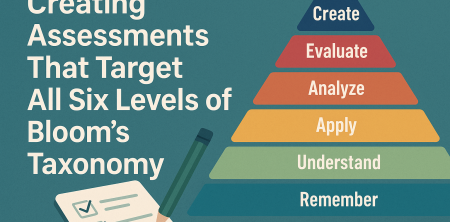
Bloom's Taxonomy is a framework developed in 1956 by a group of educational psychologists led by Benjamin Bloom. It categorizes cognitive skills into six levels, allowing educators to create assessments and objectives that foster deeper learning. The original taxonomy included Knowledge, Comprehension, Application, Analysis, Synthesis, and Evaluation. In 2001, this framework was revised, leading to a more dynamic version that replaced Synthesis with Creating and updated the terminology to reflect active learning processes. Understanding these levels is crucial for designing effective educational assessments.
The Importance of Bloom's Taxonomy Assessments
Creating assessments that align with Bloom's Taxonomy is essential for promoting critical thinking and deep learning among students. By targeting all six levels, educators can ensure that assessments not only evaluate rote memorization but also challenge students to analyze, synthesize, and create information. This alignment helps foster a more comprehensive understanding of material, preparing students for real-world applications of their knowledge.
Level 1: Remembering
The first level of Bloom's Taxonomy focuses on the ability to recall facts and basic concepts. Assessments at this level often include multiple-choice questions, fill-in-the-blank exercises, and short answer questions. For instance, in a science class, a teacher might ask students to list the components of a cell or define key terms like "photosynthesis." The goal here is to ensure that students have acquired foundational knowledge before moving on to more complex tasks.
Level 2: Understanding
Once students can remember information, the next step is to assess their understanding of it. This is where educators can incorporate assessments that require students to demonstrate comprehension. Examples include summarizing a reading, explaining concepts in their own words, or illustrating ideas through visual aids. For example, in a literature class, students might be asked to summarize a chapter and explain its significance within the story. This level challenges students to connect information and articulate it meaningfully.
Level 3: Applying
The third level focuses on applying knowledge in new situations. Assessments at this stage can include case studies, problem-solving exercises, and real-world applications. For instance, a math teacher might present a word problem that requires students to apply formulas learned in class. The aim is to assess whether students can use their knowledge effectively to handle practical situations, reinforcing their ability to transfer learning to real-world scenarios.
Level 4: Analyzing
At the analyzing level, students are encouraged to break down information into components and examine relationships. This requires critical thinking and evaluation skills. Assessments might include comparative essays, data analysis projects, or group discussions where students debate various interpretations of a text. For instance, in a history class, students could analyze the causes and effects of a significant event, drawing connections between different historical contexts. This level fosters deeper engagement with the material and cultivates analytical skills.
Level 5: Evaluating
Evaluation involves making judgments based on criteria and standards. Assessment methods at this level can include peer reviews, self-assessments, and presentations where students must defend their viewpoints. For example, in a business course, students could evaluate a marketing strategy's effectiveness, providing justifications based on research. This level pushes students to not only absorb information but also apply their judgment and reasoning skills to form opinions and conclusions.
Level 6: Creating
The highest level of Bloom's Taxonomy, creating, involves putting elements together to form a coherent or functional whole. Assessments can include project-based assignments, creative writing tasks, and design challenges. For instance, students in an art class might be tasked with creating a multimedia presentation that encapsulates their understanding of a theme. This level encourages innovation, creativity, and the ability to synthesize knowledge in new and meaningful ways. (See: Bloom's Taxonomy overview.) (effective behavior management tips)
Designing Comprehensive Assessments
Creating assessments that target all six levels of Bloom's Taxonomy requires thoughtful planning and intentionality. Educators should start by defining clear learning objectives that align with each level. Incorporating a variety of assessment methods can help ensure that all students' strengths are utilized and that they engage with the material in diverse ways. For example, a unit on ecosystems could involve quizzes (remembering), group discussions (understanding), field experiments (applying), research projects (analyzing), presentations (evaluating), and creative projects (creating).
Current Relevance of Bloom's Taxonomy Assessments
In today's educational landscape, where critical thinking and problem-solving skills are paramount, Bloom's Taxonomy assessments hold significant relevance. With the rise of technology-enhanced learning environments, educators have more tools at their disposal to create engaging assessments that cater to various learning styles. Interactive platforms can allow for instant feedback and adaptive learning, making it easier for teachers to monitor student progress across all levels of the taxonomy.
Practical Tips for Educators
To effectively implement Bloom's Taxonomy assessments in your classroom, consider the following practical tips:
- Start Small: Implement one or two levels at a time to avoid overwhelming students.
- Collaborate: Work with fellow educators to develop interdisciplinary assessments that incorporate multiple levels from different subjects.
- Seek Feedback: Regularly ask students for feedback on assessments to ensure they are engaging and effective.
- Use Technology: Leverage online tools and platforms that facilitate diverse assessment methods, such as quizzes, interactive discussions, and digital portfolios.
By embracing these strategies, educators can create rich, dynamic learning experiences that cater to diverse needs and prepare students for future challenges. Bloom's Taxonomy assessments will not only enhance students' understanding but also empower them to think critically and creatively, equipping them for success in an ever-changing world.
Assessments Aligned to Bloom's Taxonomy: Real-World Examples
To better understand how Bloom's Taxonomy assessments can be applied in various contexts, let's explore some real-world examples across different subjects that illustrate how assessments can effectively target each level of the taxonomy.
Science: Understanding Ecosystems
In a high school biology class, a teacher might utilize Bloom's Taxonomy to explore ecosystems. At the remembering level, students could take a quiz on key terms such as "abiotic" and "biome." For the understanding level, students might create a visual representation of an ecosystem, labeling different components and explaining their interactions. Applying their knowledge could involve a field experiment where students gather data on local flora and fauna. The analysis could take place in a group project where students compare ecosystems from two different regions. Evaluation may come from peer reviewing each other's findings, while creating might involve students designing their own ecosystem model, integrating all they have learned.
Language Arts: Analyzing Literature
In a literature class, teachers can guide students through Bloom's Taxonomy by focusing on a classic novel. At the remembering level, students could list the main characters and plot points. For understanding, they might summarize key chapters and discuss themes. To apply their knowledge, students could write a creative story that parallels the themes of the novel. Analyzing would involve writing an essay comparing the protagonist’s journey with another character's development. Evaluation may require students to present their essays to the class, defending their interpretations. Finally, creating could involve a multimedia project, where students design a trailer for the novel, incorporating visual and audio elements that reflect the storyline.
Mathematics: Problem-Solving with Real-World Applications
In math classrooms, assessments reflecting Bloom's Taxonomy can help students grasp concepts more effectively. Initially, students could complete worksheets recalling formulas and definitions. Understanding would be assessed through group discussions where students explain how to apply specific formulas to solve problems. For applying, a teacher might present a real-life scenario, such as calculating the cost of a shopping trip, requiring students to apply mathematical concepts to find a solution. Analyzing could involve examining various methods to solve a problem and determining which is most efficient. At the evaluation stage, students could critique each method's effectiveness, and for creating, they might develop their own math problems based on real-world situations and share them with peers for solving.
Integrating Technology in Bloom's Taxonomy Assessments
With the integration of technology in education, there are numerous tools available to enhance assessments aligned with Bloom's Taxonomy. Platforms like Kahoot! can be used for interactive quizzes that target the remembering and understanding levels. Google Classroom and Microsoft Teams allow for collaborative projects where students can engage in group work and discussions. For more advanced levels, tools like Padlet can help students analyze and synthesize information visually, and presentation software such as Prezi can facilitate creative projects. Technology not only supports diverse assessment methods but also makes learning more engaging, allowing students to take ownership of their education.
Challenges in Implementing Bloom's Taxonomy Assessments
While Bloom's Taxonomy provides a valuable framework for educators, implementing assessments across all levels can present challenges. One major hurdle is the time required to create diverse assessments that cater to different levels. Educators may feel pressed for time in an already packed curriculum, leading to an over-reliance on simpler assessments focused on remembering and understanding. Additionally, not all students may respond equally to varied assessment methods, requiring educators to be adaptable and responsive to student needs. Lastly, educators might struggle with effectively measuring higher-order thinking skills, as creating and evaluating assessments in these areas can be more subjective and complex. (See: U.S. Department of Education on Bloom's Taxonomy.)
Future Trends in Bloom's Taxonomy Assessments
Looking ahead, Bloom's Taxonomy assessments are likely to evolve alongside advancements in education and technology. With a growing emphasis on personalized learning, assessments may increasingly focus on individual student goals and learning paths, allowing for more tailored approaches. Additionally, the incorporation of artificial intelligence in education could provide new ways to assess students, offering more adaptive and immediate feedback. Educators will need to stay informed about these trends to ensure that assessments continue to foster deep learning and critical thinking in students.
Frequently Asked Questions (FAQ)
What is Bloom's Taxonomy?
Bloom's Taxonomy is a framework for categorizing educational goals and objectives, developed in 1956 by a team of educational psychologists. It consists of six levels of cognitive skills: Remembering, Understanding, Applying, Analyzing, Evaluating, and Creating.
How can I effectively implement Bloom's Taxonomy in my assessments?
Start by defining clear learning objectives for each level. Incorporate a variety of assessment methods that align with these levels. Engage students with diverse activities, and seek feedback to improve your assessments continuously.
Why is it important to cover all levels of Bloom's Taxonomy in assessments?
Covering all levels ensures that assessments promote critical thinking and deeper learning. It challenges students to engage with material at different cognitive levels, fostering a comprehensive understanding and preparing them for real-world applications.
Can technology enhance Bloom's Taxonomy assessments?
Yes, technology can enhance Bloom's Taxonomy assessments by providing interactive tools that cater to various learning styles. Platforms for quizzes, collaborative projects, and creative presentations can make learning more engaging and effective.
What challenges might I face when using Bloom's Taxonomy for assessments?
Challenges may include time constraints in creating diverse assessments, varying student responses to different methods, and difficulties in measuring higher-order thinking skills effectively. Being adaptable and responsive to student needs can help overcome these obstacles.
How can I assess higher-order thinking skills effectively?
To assess higher-order thinking skills, use rubrics that outline clear criteria for evaluation. Incorporate project-based learning, peer assessments, and reflective practices to gauge students’ analytical and creative skills. (See: Harvard's guide on Bloom's Taxonomy.)
Are there any resources available for educators to learn more about Bloom's Taxonomy?
Yes, there are numerous resources available, including books, online courses, and educational websites dedicated to Bloom's Taxonomy. Many professional organizations also offer workshops and conferences focused on effective assessment practices.
The Cultural Relevance of Assessments
When implementing Bloom's Taxonomy assessments, it's essential to consider the cultural backgrounds and experiences of students. Culturally relevant pedagogy emphasizes the importance of including diverse perspectives in learning materials and assessments. For instance, a history lesson can integrate multiple viewpoints from various cultures rather than focusing solely on a Eurocentric perspective. Doing this not only enriches students' understanding but also makes the learning experience more relatable and meaningful.
Assessment Strategies for Diverse Learners
To effectively assess students with varying learning needs, educators can employ differentiated assessment strategies. This approach allows teachers to tailor assessments based on individual strengths and challenges. For instance, some students might express their understanding better through oral presentations, while others may excel in written assignments. By offering various assessment types, such as visual, auditory, and kinesthetic, educators can ensure that each student has the opportunity to showcase their knowledge in a way that aligns with their learning style.
Case Studies: Successful Implementation of Bloom's Taxonomy Assessments
Several schools and educators have successfully implemented Bloom's Taxonomy assessments to enhance student learning outcomes. For example, a middle school in California adopted project-based learning aligned with the taxonomy. They encouraged students to research local environmental issues and present their findings in creative formats, such as videos and digital exhibits. This approach not only engaged students but also resulted in increased retention of knowledge and higher levels of critical thinking.
Statistics on Bloom's Taxonomy Effectiveness
Research has shown that assessments aligned with Bloom's Taxonomy can significantly impact student achievement. A study conducted by the Educational Testing Service found that students who engaged in higher-order thinking assessments performed 30% better on standardized tests compared to those who primarily completed lower-order assessments. Moreover, schools that incorporated Bloom's Taxonomy into their curriculum reported a 20% increase in student engagement and motivation.
Expert Perspectives on Bloom's Taxonomy Assessments
Experts in the field of education often emphasize the need for Bloom's Taxonomy to remain relevant in contemporary classrooms. Dr. Linda Darling-Hammond, an education researcher, notes that "Bloom's Taxonomy provides a necessary framework for educators to build assessments that not only test knowledge but also cultivate essential skills for the 21st century.” Similarly, Dr. Grant Wiggins, co-author of Understanding by Design, believes that “the integration of Bloom's Taxonomy into assessment design encourages teachers to think critically about what they want students to learn and how best to measure that learning." These perspectives highlight the enduring value of Bloom's Taxonomy in shaping effective assessment practices.
```
Trending Now
Frequently Asked Questions
What are the six levels of Bloom's Taxonomy?
The six levels of Bloom's Taxonomy are Remembering, Understanding, Applying, Analyzing, Evaluating, and Creating. This framework helps educators design assessments that encourage deeper learning and critical thinking by targeting each cognitive skill.
How can Bloom's Taxonomy improve assessments?
Bloom's Taxonomy enhances assessments by ensuring they cover all cognitive levels, from basic recall to higher-order thinking. This alignment promotes critical thinking and helps students apply their knowledge in real-world situations.
What types of questions are used for the Remembering level?
At the Remembering level, assessments often include multiple-choice questions, fill-in-the-blank exercises, and short answer questions. These formats help evaluate students' ability to recall facts and basic concepts.
Why is it important to target all levels of Bloom's Taxonomy?
Targeting all levels of Bloom's Taxonomy in assessments is crucial for fostering a comprehensive understanding of material. It challenges students to not only memorize information but also analyze, synthesize, and create, enhancing their overall learning experience. zone of proximal development insights offers useful background here.
What is the revised version of Bloom's Taxonomy?
The revised version of Bloom's Taxonomy, updated in 2001, replaced Synthesis with Creating and adapted the terminology to reflect active learning processes. This dynamic framework emphasizes the importance of higher-order thinking in education.
What's your take on this? Share your thoughts in the comments below — we read every one.

