```html
Understanding a child's cognitive development can be one of the most rewarding aspects of parenting and education. One groundbreaking theory in this area is Jean Piaget's work on cognitive development, particularly his conservation tasks. These tasks are designed to assess how children grasp concepts of quantity, volume, and number despite changes in physical appearance. In this article, we'll explore the essence of Piaget's conservation tasks, how they relate to your preschooler's development, and practical activities you can implement to assess and stimulate cognitive growth.
Who Was Jean Piaget?
Jean Piaget was a Swiss psychologist known for his pioneering work in developmental psychology. His theories have significantly influenced education, child psychology, and our understanding of cognitive development. Born in 1896, Piaget began studying child development in the early 20th century and formulated his theories after observing children and their reasoning processes. He proposed that children move through four distinct stages of cognitive development: the sensorimotor, preoperational, concrete operational, and formal operational stages.
Piaget's most notable work centers around how children perceive the world and the logical structures they develop as they grow. His conservation tasks are particularly crucial during the preoperational stage, which spans ages 2 to 7, where children begin to develop their thinking abilities but are not yet able to perform operations mentally.
What Are Piaget's Conservation Tasks?
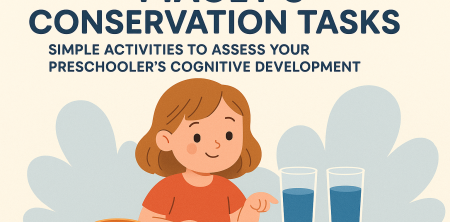
At its core, Piaget's conservation tasks assess a child's understanding that certain properties of objects remain constant despite changes in form or appearance. For instance, when a liquid is poured from a short, wide glass into a tall, narrow glass, a child who understands conservation knows that the amount of liquid remains unchanged despite the different shapes of the containers. Piaget's original tasks often involved the following key types of conservation:
- Conservation of Number: Understanding that the number of objects remains the same even when their arrangement changes.
- Conservation of Length: Recognizing that two equal-length lines remain equal even if one is shifted.
- Conservation of Liquid Volume: Comprehending that the amount of liquid in different-shaped containers is the same.
- Conservation of Mass: Understanding that two equal masses of clay remain equal when one is reshaped.
Why Conservation Tasks Matter in Early Childhood Education
Grasping the concept of conservation marks a significant developmental milestone in children, typically occurring between the ages of 5 and 7, as they transition into the concrete operational stage. By assessing a child's ability to perform conservation tasks, educators and parents can gauge their cognitive development and readiness for more complex logical thinking.
The significance of these tasks extends beyond mere academic performance. They reflect a child's ability to think critically, reason logically, and understand the world around them. As children progress through these tasks, they develop skills that are foundational for problem-solving and analytical thinking in later life.
Activities to Assess Conservation Skills
Now that we understand what Piaget's conservation tasks are and their importance, let’s dive into some simple, engaging activities that you can do at home or in the classroom to assess and promote your preschooler’s cognitive development.
1. The Water Pouring Experiment
This classic experiment is an effective way to assess a child's understanding of liquid volume. You’ll need two containers of different shapes – one tall and skinny and one short and wide.
- Fill both containers with the same amount of water.
- Ask your child which container has more water.
- Pour the water from the short container into the tall one and ask them again.
Observe their reactions and reasoning. If they change their answer after seeing the water poured, they may still be developing their understanding of conservation.
2. The Clay Model Challenge
Using two equal-sized balls of clay, this activity focuses on mass conservation.
- Show your child the two balls of clay and ask if they’re the same.
- Flatten one of the balls and ask if it’s still the same amount of clay.
- Encourage them to explore by reshaping the clay and discuss their thoughts on whether the quantity has changed.
This hands-on approach helps children visualize and manipulate materials, reinforcing their understanding of mass conservation. (See: Jean Piaget's biography and theories.)
3. The Number Line-Up
This activity focuses specifically on the conservation of number.
- Gather a collection of small objects, like blocks or beads.
- Line them up in a row, ensuring that they are evenly spaced.
- Ask your child to count them.
- Then, rearrange them into a different formation (e.g., spread them out or cluster them) and ask them to count again.
This activity tests their understanding of how the number of objects remains constant despite changes in arrangement.
Observing Cognitive Development in Action
As you engage in these activities, take the time to observe your child's responses. Are they confident in their answers, or do they seem unsure? Observing their thought processes can yield valuable insights into their cognitive development. It’s important to remember that some children may struggle with conservation tasks even if they are reaching other developmental milestones.
Understanding the Limitations of Conservation Tasks
While Piaget's conservation tasks provide a valuable framework for assessing cognitive development, it’s crucial to recognize their limitations. For one, children's responses can be influenced by various factors, including their mood, familiarity with the task, and the way questions are posed.
Moreover, some researchers argue that children may grasp concepts of conservation earlier than Piaget suggested, as more recent studies have demonstrated that with the right support and context, younger children can show understanding of conservation principles. Thus, while these tasks are informative, they should not be the sole measure of a child's cognitive abilities.
Current Relevance in Education
Understanding Piaget's conservation tasks remains relevant in today’s educational context. Many early childhood educators use these concepts to develop curricula that foster critical thinking, problem-solving, and hands-on learning experiences. Understanding where a child stands in their cognitive development helps educators tailor their teaching methods to meet the unique needs of each child.
Additionally, the notion of conservation has implications beyond individual assessments; it emphasizes the importance of a play-based learning environment. By allowing children to explore, experiment, and manipulate objects, educators can create a rich learning atmosphere where cognitive skills flourish.
Implementing Play-Based Strategies
To thoroughly assess and enhance your child's understanding of conservation, consider integrating play-based strategies into their daily routine. Here are some practical ideas:
- Building Blocks: Encourage your child to create structures with blocks, asking them to compare the number of blocks used in different constructions.
- Cooking Activities: Involve your child in cooking, where measuring ingredients provides opportunities for hands-on learning about volume and mass.
- Art Projects: Use different shapes and sizes of paper to create collages. Discuss how the same amount of material can take various forms.
These activities not only reinforce the principles of conservation but also cultivate creativity and critical thinking.
Practical Applications in Daily Life
Understanding conservation principles can be woven into everyday activities. Here are some practical applications:
- Shopping: When shopping for groceries, ask your child to help you count items. Discuss how the number of items does not change regardless of their arrangement in the cart.
- Gardening: If you have a garden, demonstrate how the same amount of soil can be divided among different pots. This illustrates mass conservation beautifully while also engaging them in nature.
- Play-Dough Creations: While playing with play-dough, create balls and then shape them into different forms, asking your child if they think the amount has changed.
These activities provide real-world contexts for conservation concepts, making them more relatable for children.
Expert Perspectives on Piaget’s Theory
Many psychologists and educators have built upon Piaget’s work. For example, Lev Vygotsky emphasized the role of social interaction and culture in cognitive development, suggesting that children learn more effectively when they engage with peers. This contrasts with Piaget’s focus on individual exploration. Vygotsky’s approach highlights how peer interactions can enhance understanding of conservation tasks through collaborative problem-solving. (See: CDC on child development stages.)
Additionally, modern research in developmental psychology often utilizes Piaget’s conservation tasks as a benchmark but also investigates how children can demonstrate early forms of understanding with appropriate guidance. This indicates that while Piaget’s framework is foundational, it may be beneficial to view cognitive development as a more dynamic process influenced by environmental and social factors.
Statistics and Research Findings
Recent studies have shown varying success rates in children's ability to perform conservation tasks depending on age and context. For example, a study might find that about 70% of children aged 6 exhibit an understanding of liquid conservation compared to only 30% of those aged 4. These statistics highlight the importance of age-appropriate activities designed to foster cognitive development.
Furthermore, research indicates that providing children with multiple contexts for understanding conservation can lead to earlier mastery of these concepts. For instance, children who engage in hands-on activities and discussions about conservation principles often show improved performance in structured tasks, supporting the idea of experiential learning.
Comparing Piaget's Conservation Tasks with Other Theories
It's fascinating to compare Piaget’s conservation tasks with other developmental theories. For instance, Erik Erikson’s psychosocial theory focuses on emotional and social development, proposing that children face different psychosocial challenges as they grow. While Piaget's tasks center on cognitive processing, Erikson's framework can complement this by addressing the emotional implications of learning.
In a classroom setting, integrating both cognitive tasks and psychosocial elements can create a holistic learning environment. For example, children might engage in conservation tasks while also working on group projects that address social skills, fostering both cognitive and emotional development simultaneously.
Frequently Asked Questions
What age do children typically understand conservation?
Children generally begin to grasp conservation concepts between the ages of 5 and 7 as they enter the concrete operational stage of Piaget’s theory. However, some children may show early signs of understanding with appropriate support.
How can parents support their child's understanding of conservation?
Parents can encourage understanding by engaging in everyday activities that involve measuring, sorting, and comparing objects. Using tangible materials like food, toys, and art supplies can help clarify these concepts.
Are there cultural differences in children's understanding of conservation tasks?
Yes, cultural context can influence how children understand and engage with conservation tasks. Some cultures may emphasize different types of problem-solving or reasoning skills, which can affect the development of conservation concepts.
How can educators assess conservation skills effectively?
Educators can use a combination of structured tasks, observations, and playful learning experiences to assess conservation skills. This approach allows them to see how children apply their understanding in various contexts.
What if my child struggles with conservation tasks?
Struggling with conservation tasks is not uncommon, and it’s important not to panic. Providing additional support through hands-on activities, positive reinforcement, and patience can help children develop these essential cognitive skills over time.
Understanding the Importance of Conservation in Daily Life
Recognizing conservation concepts extends beyond academic tasks; they play a vital role in everyday decision-making and reasoning. For instance, understanding that the amount of food doesn’t change when it's sliced or arranged differently can affect how children approach sharing and dividing resources. This foundational skill impacts their social interactions and helps build empathy, as they learn to respect others' needs and perspectives.
Enhancing Conservation Skills Through Technology
In today’s digital age, technology can also be a valuable tool in teaching conservation principles. There are numerous educational apps and interactive games designed to engage children in learning about conservation in a fun and engaging way. For instance, apps that simulate pouring, measuring, and sorting can provide children with visual and interactive experiences that reinforce these concepts.
Furthermore, incorporating videos that demonstrate conservation tasks can help solidify understanding, as children can see these principles in action. Technology can also facilitate collaborative learning, where children can engage with peers in virtual settings to solve problems together, enhancing their cognitive skills through social interaction.
Long-term Benefits of Understanding Conservation
Mastering conservation tasks can lead to long-term educational benefits. Children who understand these principles often excel in subjects like mathematics and science, where logical reasoning and problem-solving are essential. For example, a child who grasps the concept of volume will find it easier to understand measurements and equations in math, setting a strong foundation for future learning.
Additionally, these skills contribute to better critical thinking and analytical reasoning abilities. As children grow, they will need to navigate increasingly complex information and situations. A solid grasp of conservation principles aids them in making informed decisions, both academically and in everyday life.
Final Thoughts on Piaget Conservation Tasks
Piaget's conservation tasks provide an insightful glimpse into a child's cognitive development, enabling parents and educators to understand their growth in reasoning and problem-solving. By engaging in simple activities that assess these skills, you foster an environment that promotes exploration and discovery.
As you take the time to implement these strategies, remember that each child's cognitive journey is unique. Celebrate their progress, and remain patient as they navigate through the fascinating world of conservation. After all, the ability to understand that quantity remains unchanged despite variation is a monumental step in their cognitive development.
```
Trending Now
Frequently Asked Questions
What are Piaget's conservation tasks?
Piaget's conservation tasks are activities designed to assess a child's understanding that certain properties of objects remain constant despite changes in form or appearance. For example, recognizing that the amount of liquid stays the same when poured into different shaped containers is a key concept assessed through these tasks.
At what age do children understand conservation?
Children typically begin to grasp the concept of conservation during the preoperational stage, which spans from ages 2 to 7. During this period, they start to develop their thinking abilities but may still struggle with understanding that quantities remain constant despite changes in appearance.
Why are conservation tasks important for preschoolers?
Conservation tasks are crucial for preschoolers as they help assess and stimulate cognitive development. These tasks provide insight into how children understand concepts of quantity, volume, and number, which are foundational for later mathematical reasoning and problem-solving skills.
How can I implement Piaget's conservation tasks at home?
You can implement Piaget's conservation tasks at home through simple activities such as pouring water between containers of different shapes or counting objects while rearranging them. These hands-on experiences help children explore and understand conservation concepts in a fun and engaging way.
Who was Jean Piaget and what did he study?
Jean Piaget was a Swiss psychologist renowned for his pioneering work in developmental psychology. He studied child development and proposed that children progress through four distinct stages of cognitive development, focusing on how they perceive the world and develop logical reasoning.
Have you experienced this yourself? We'd love to hear your story in the comments.

