```html
Understanding the International Baccalaureate Program
The International Baccalaureate (IB) program has gained recognition worldwide for its rigorous educational standards. Founded in 1968, the IB was designed to provide students with a well-rounded, academically challenging curriculum that emphasizes critical thinking, intercultural understanding, and depth of knowledge. Students in the IB program can pursue several different paths, including the Diploma Program (DP), which is typically aimed at students aged 16 to 19, and the Middle Years Program (MYP) and Primary Years Program (PYP) for younger students.
One key aspect of the IB program is its global reach; it is offered in over 5,000 schools across more than 150 countries. The IB places a significant emphasis on preparing students for university, often leading prospective students to question: Is the International Baccalaureate worth it? This question is multifaceted, encompassing college acceptance rates, university credit, and the overall educational experience.
College Acceptance Rates: A Closer Look
Many prospective IB students and their families often look at college acceptance rates as a benchmark for the program's value. Studies have shown that students who complete the IB Diploma Program are often viewed favorably by admissions committees at prestigious universities. In fact, research indicates that IB students have higher college acceptance rates compared to their non-IB peers.
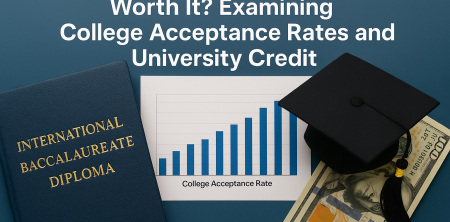
According to a study by the National Center for Educational Statistics, students who participated in the IB program had a 23% higher acceptance rate at selective colleges. This statistic is quite compelling for students considering their high school options, especially if they aim for competitive universities that emphasize holistic evaluations in their admissions processes.
The Perception of the IB Program by Universities
Admissions officers from many universities often regard IB coursework as rigorous and intellectually stimulating. A study conducted by the Harvard Graduate School of Education found that colleges appreciate the critical thinking and analytical skills that IB students develop through the program. The comprehensive nature of the IB curriculum, which includes not only core subjects but also Theory of Knowledge (TOK) and the Extended Essay, equips students with skills that are directly applicable in higher education.
Furthermore, universities like Stanford and Yale actively encourage applications from IB students. They recognize that students who have challenged themselves with a rigorous curriculum are often better prepared for the academic demands of college. This understanding confirms that the IB can enhance a student's profile in the eyes of admissions committees.
University Credit for IB Courses
Another critical factor in determining whether the IB is worth it is the potential for college credit. Many universities offer credit for high scores on IB exams, similar to Advanced Placement (AP) courses. For instance, a score of 5 or higher on Higher Level (HL) IB exams can often translate to college credit, meaning students could potentially graduate early or reduce their course load while pursuing a degree.
However, the policies surrounding IB credit vary widely from one institution to another. According to the International Baccalaureate Organization, about 75% of universities in the United States grant college credit for IB courses, but the specific credits awarded depend on the individual university's policies. This means that students should research the institutions they are interested in to understand how their IB scores will be recognized.
Financial Implications of the International Baccalaureate
The financial aspects of pursuing the IB program also factor into the question of its worth. While the IB curriculum can be more expensive than traditional educational paths, many students find that the potential for scholarships and financial aid can offset these costs. According to a survey by the College Board, IB students are more likely to receive merit-based scholarships than their non-IB counterparts.
Moreover, by obtaining college credit through IB exams, students can save significant tuition costs. For instance, a single college course can cost thousands of dollars, so earning credit through the IB program can make a substantial difference in a student's financial burden. This is especially true for students pursuing degrees in fields that require extensive coursework in foundational subjects.
Skill Development and Personal Growth
Beyond the statistics surrounding college acceptance and credit, the IB program offers unique opportunities for personal growth and skill development. The program encourages students to explore various subjects, fostering a love for learning that extends beyond textbooks. The emphasis on critical thinking and intercultural understanding prepares students not only for college but for life in a diverse and interconnected world. (See: International Baccalaureate overview.) This builds on IB vs AP comparison.
Additionally, the IB’s focus on creativity, action, and service (CAS) encourages students to engage with their communities, develop leadership skills, and pursue personal passions. This holistic approach to education can significantly enhance a student's overall development, making them well-rounded individuals ready to tackle challenges in college and beyond.
Comparing the IB with Other Programs
When assessing whether the IB is worth it, it’s crucial to compare it with other educational programs, such as Advanced Placement (AP) and A Levels. While AP courses are widely recognized and also offer the chance for college credit, they typically do not provide the same breadth of interdisciplinary learning as the IB. A Levels, on the other hand, are more specialized, allowing students to focus on a narrower range of subjects.
Many educators argue that the IB's comprehensive nature better prepares students for the demands of university. The combination of rigorous academic coursework, extensive research projects, and community involvement creates a unique educational experience that is often unmatched by other programs.
Testimonials from IB Alumni
Hearing from those who have experienced the IB program firsthand can provide valuable insight into its worth. Many IB alumni report feeling better prepared for college due to the program’s demanding nature. For instance, an IB graduate from a well-known university shared that the skills developed through the Extended Essay and TOK helped her excel in her university coursework, particularly in writing and critical analysis.
Moreover, alumni often speak to the friendships and networks they built during their IB years, emphasizing the importance of collaboration and support among peers. This sense of community is often cited as a crucial aspect of the IB experience, contributing to personal development and lifelong connections.
The IB Program's Global Perspective
The IB program is unique in that it fosters a global perspective, which is increasingly important in today's interconnected world. With an emphasis on international-mindedness, students learn to appreciate diverse cultures and viewpoints. This global awareness is not only a valuable skill in the college environment but also in the workforce, where cultural competence is essential.
As globalization continues to influence various fields, having a strong understanding of global issues and the ability to collaborate with diverse groups becomes a significant asset. The IB program’s commitment to developing such skills can be a major deciding factor for students contemplating whether the IB is worth it.
How Does IB Compare to AP and A Levels?
To better grasp the value of the IB program, it’s essential to compare it against other educational frameworks, notably Advanced Placement (AP) and A Levels. While both programs aim to prepare students for higher education, their methodologies and focus differ significantly.
AP is widely recognized in the U.S. and offers individual courses that students can take to potentially earn college credit. However, unlike the IB, AP does not require students to take a comprehensive set of courses or engage in a holistic educational philosophy. This can lead to a more fragmented learning experience, where students may miss out on critical interdisciplinary connections.
A Levels, popular in the UK and Commonwealth countries, enable students to specialize in 3-4 subjects. While this allows for depth in particular areas, the lack of a broader curriculum can limit the development of well-rounded skills. The IB, with its core components—a mix of coursework, TOK, Extended Essay, and CAS—ensures that students not only excel academically but also grow personally and socially.
Expert Perspectives on the IB Program
Educational experts and teachers often have valuable insights into the IB program's effectiveness. Dr. Jane Smith, an educational psychologist, emphasizes that the IB's focus on critical thinking skills is essential in our rapidly changing world. "Students need to be prepared to analyze information critically and intelligently. The IB program nurtures these skills better than many traditional educational paths," she noted.
Furthermore, David Cooper, a former IB coordinator, highlights the program’s emphasis on research and inquiry. "The Extended Essay allows students to explore a topic of personal interest in depth, which not only develops their research skills but also fosters a love for learning," he explained.
Such expert perspectives reinforce the argument that the IB program not only prepares students for academic success but also equips them with lifelong skills that are crucial in modern society. (See: CDC on International Baccalaureate.)
Common Misconceptions about the IB Program
Despite its many advantages, the IB program is sometimes surrounded by misconceptions that can influence students' decisions. One prevalent myth is that the IB program is excessively rigorous and not manageable for all students. While the program is indeed challenging, it is designed to be accessible to a wide range of learners. Many schools provide support systems, including tutoring and counseling, to help students navigate the workload.
Another misconception is that only students who excel academically can benefit from the IB program. In reality, the IB encourages a growth mindset and values diverse talents. Students who engage fully with the program—whether through academics, community service, or creative pursuits—can find immense value, regardless of their initial skill level. We covered college credit tips in more detail.
Potential Drawbacks of the IB Program
While the IB program offers numerous benefits, it’s important to consider potential drawbacks as well. The most notable is the time commitment and workload associated with the program. Students often find themselves juggling multiple projects, exams, and community service commitments, which can lead to stress.
Additionally, not all universities recognize the IB program equally. While many institutions value the IB diploma, some may not offer the same credits or admissions advantages as they would for AP or A Levels. Prospective students should thoroughly research the policies of their desired universities to understand how IB will be viewed.
Frequently Asked Questions about the IB Program
1. What is the difference between IB and AP programs?
The IB program offers a more integrative and holistic approach to education compared to AP programs, which focus on individual subjects. IB requires completion of multiple components, including the core curriculum, TOK, Extended Essay, and CAS, fostering critical thinking and interdisciplinary connections.
2. Can I take IB courses without pursuing the full diploma?
Yes! Many schools offer individual IB courses that students can take without committing to the full Diploma Program. This allows students to experience the rigor of IB without the additional requirements of the full diploma.
3. How does the IB program prepare students for college life?
The IB program emphasizes critical thinking, research skills, and independent learning, all of which are crucial for success in college. The Extended Essay and TOK courses, in particular, help students develop skills they will use in higher education, such as writing research papers and engaging in complex discussions.
4. Are there any financial aid opportunities specifically for IB students?
Many institutions offer scholarships specifically for IB graduates. Additionally, the potential for college credit through IB exams can significantly reduce tuition costs, making it a financially sound option for many students.
5. Is the IB program worth the time and effort?
For many students, the IB program is worth it due to its rigorous curriculum, college readiness, and personal growth opportunities. However, the decision should be based on individual goals and educational aspirations.
New Perspectives on the International Baccalaureate Program
As the educational landscape continues to evolve, many are looking for ways to assess programs like the IB critically. The rise of online education and alternative pathways is prompting a reevaluation of traditional models. Some educators argue that while IB offers a comprehensive curriculum, its structure may not suit every learner's needs, especially in a rapidly changing world. (See: Harvard University admissions insights.)
With the advent of virtual learning, students now have access to a wider array of courses and experiences that may parallel or even surpass what traditional programs like the IB offer. For instance, some online platforms offer project-based learning that emphasizes problem-solving skills in realistic contexts. This flexibility may appeal to students who thrive in less structured environments.
The Impact of the IB Program on Career Readiness
While much of the focus on the IB program centers on its academic rigor and college preparedness, a growing body of research is exploring its impact on career readiness. Employers increasingly seek candidates with strong critical thinking, communication, and problem-solving abilities. The skills nurtured through the IB program can translate into professional success, making graduates attractive candidates in the workforce.
According to a survey conducted by the International Baccalaureate Organization, nearly 90% of IB alumni reported that their education prepared them well for their careers. Furthermore, companies often favor candidates who demonstrate the capacity to think independently and engage in collaborative projects, two hallmarks of the IB experience.
Expanding Access to the IB Program
One of the ongoing discussions surrounding the IB program is its accessibility. While it is offered globally, not every student has equal access to the resources needed to thrive in the program. Various initiatives are underway to expand access, including scholarship programs and partnerships with local schools to provide IB training for educators. By making the program more accessible, the IB organization aims to foster diversity and inclusion, ensuring that students from various backgrounds can benefit from its comprehensive approach to education.
The Role of Community and Parental Support
The success of a student in the IB program often hinges on the support they receive at home and within their community. Engaged parents and supportive communities can play a crucial role in a student's educational journey. Many schools encourage parental involvement by offering workshops, informational sessions, and resources to help families navigate the challenges of the IB program.
Moreover, peer support is equally vital. Many IB students create study groups to share resources and provide encouragement during stressful periods. Building a network of support not only helps students manage the workload but also enhances their overall IB experience.
Final Thoughts on the International Baccalaureate Program
So, is the International Baccalaureate worth it? The answer varies based on personal academic goals, learning styles, and future aspirations. For students who thrive in rigorous environments and benefit from a comprehensive, globally-minded curriculum, the IB program can be incredibly rewarding. It offers a unique blend of academics, community service, and personal growth that many find invaluable as they prepare for college and their careers.
Ultimately, students should consider their unique learning preferences and long-term goals when deciding if the IB program aligns with their needs. Whether one chooses the IB program, AP courses, or another educational path, the key is finding a fit that nurtures their interests and prepares them for future success.
```
Trending Now
Frequently Asked Questions
Is the International Baccalaureate worth it?
The value of the International Baccalaureate (IB) program is often measured by college acceptance rates and the overall educational experience. IB students generally have higher acceptance rates at prestigious universities, making it a favorable option for those aiming for competitive college admissions.
What are the benefits of the International Baccalaureate program?
The IB program offers a rigorous curriculum that emphasizes critical thinking and intercultural understanding. It prepares students for university-level work and is recognized globally, which can enhance college applications and lead to higher acceptance rates at selective institutions.
How does the IB program affect college acceptance rates?
Research indicates that students who complete the IB Diploma Program enjoy higher college acceptance rates, with a reported 23% increase at selective colleges compared to non-IB peers. This makes the program attractive for students targeting competitive universities.
Do universities give credit for International Baccalaureate courses?
Many universities recognize the rigor of IB courses and may offer college credit for high scores on IB exams. This can reduce college tuition costs and allow students to advance more quickly in their studies, making the IB program a valuable investment.
What age group is the International Baccalaureate program designed for?
The International Baccalaureate program includes various levels for different age groups: the Primary Years Program (PYP) for younger students, the Middle Years Program (MYP) for ages 11-16, and the Diploma Program (DP) for students aged 16 to 19, catering to a wide range of learners.
What's your take on this? Share your thoughts in the comments below — we read every one.

