```html
Understanding Phonological Awareness
Phonological awareness is a critical skill in literacy development, encompassing the ability to recognize and manipulate sounds in spoken language. It serves as the foundation for reading and writing, allowing children to decode words, construct meaning, and ultimately engage with written text. This continuum of phonological awareness ranges from simple auditory skills, such as identifying rhymes, to more complex tasks like phoneme manipulation.
Developing phonological awareness is not just about recognizing letters or understanding words; it involves a deep understanding of how language works. Research indicates that children who possess strong phonological awareness skills tend to become better readers. According to the National Institute for Literacy, phonological awareness is one of the strongest predictors of a child’s ability to read successfully.
The Phonological Awareness Continuum Explained
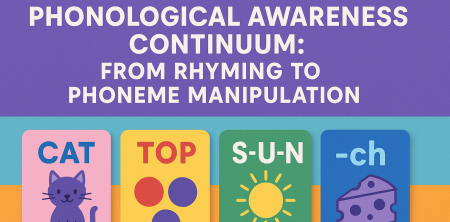
The phonological awareness continuum can be divided into several levels, each building upon the previous one. This progression allows educators and parents to target specific skills that reinforce children's literacy development. At the start of the continuum, we find basic skills such as rhyming and syllable awareness. As children progress, they develop skills in segmenting and blending sounds, culminating in phoneme manipulation.
Starting with Rhyming
Rhyming is often the first step in the phonological awareness continuum. Children learn to identify and produce rhyming words, which reinforces their ability to hear and manipulate sounds. Activities that involve singing nursery rhymes, reciting poems, or playing rhyming games can help children recognize patterns in language.
For example, when children listen to the classic rhyme "Hickory Dickory Dock," they not only enjoy the rhythm but also begin to understand that certain words sound alike because they share similar endings. This early recognition helps build their confidence and interest in language, setting a solid foundation for more complex phonological skills.
Syllable Awareness
Once children grasp rhyming, the next step involves developing syllable awareness. This skill requires children to recognize the individual syllables in words and to clap, tap, or count them. Syllable segmentation is a vital skill because it enhances children's understanding of the syllabic structure of words.
For instance, breaking down the word "banana" into three syllables (ba-na-na) is a simple yet effective exercise that illustrates this concept. Engaging children in activities where they segment and blend syllables can significantly improve their phonological processing abilities.
Onset and Rime
Following syllable awareness, children begin to understand onsets and rimes. The onset refers to the initial consonant sound(s) of a syllable, while the rime is the vowel and any following consonants. For example, in the word "stop," the onset is "st" and the rime is "op." Teaching children to identify onsets and rimes provides them with a way to dissect words into manageable parts, further enhancing their reading skills.
Activities such as playing with word families can foster this understanding. For example, presenting a set of words like "cat," "hat," and "bat" emphasizes the shared rime "-at," allowing children to see the relationship between different words and develop their decoding skills. (See: National Institute of Child Health and Human Development.)
Segmenting and Blending Sounds
As children progress through the phonological awareness continuum, they begin to engage in segmenting and blending sounds. Segmenting involves breaking a word into its individual sounds (phonemes), while blending involves putting those sounds back together to form a word.
For example, if we take the word "cat," a child practicing segmentation would identify the sounds /k/, /æ/, and /t/. Conversely, in blending, if you give the sounds /m/, /æ/, and /t/, the child would combine them to say "mat." This skill is crucial for reading, as it helps children decode unfamiliar words and develop spelling strategies.
Phoneme Manipulation
The most advanced skill in the phonological awareness continuum is phoneme manipulation. This skill allows children to change, delete, or add sounds to create new words. For instance, if a child is asked to change the /k/ sound in "cat" to /h/, they would say "hat." This level of phonological awareness is essential for mastering reading and writing, as it requires a deep understanding of how sounds work together.
Engaging children in phoneme manipulation can be done through interactive games and activities. For instance, playing a game where children are asked to take a word and change one sound can keep them motivated and enhance their phonological skills.
The Importance of Phonological Awareness in Early Literacy
The development of phonological awareness is critical for early literacy. Studies have shown that children who struggle with phonological awareness often face significant challenges in learning to read. In fact, according to the National Reading Panel, explicit instruction in phonological awareness can lead to improvements in children’s reading skills.
Moreover, integrating phonological awareness into the curriculum can help address the diverse needs of learners. Children who may be struggling with reading can benefit from targeted instruction that focuses on the phonological awareness continuum, allowing educators to provide effective support.
Teaching Strategies for Phonological Awareness
When teaching phonological awareness, it’s essential to employ a variety of strategies that cater to different learning styles. Here are some practical approaches:
- Games and Activities: Incorporate engaging games that encourage children to recognize and manipulate sounds. Activities like rhyming games, syllable clapping, and phoneme substitution can make learning fun.
- Read Alouds: Reading aloud to children exposes them to a rich language environment. Choosing books with rhythmic patterns and rhyming words can reinforce phonological awareness skills.
- Multi-Sensory Approaches: Utilize visual, auditory, and kinesthetic methods to teach phonological skills. For example, using letter cards for blending sounds or clapping to segment syllables can enhance understanding.
- Explicit Instruction: Provide direct instruction on phonological awareness skills. Teaching children the differences between syllables, onsets, and rimes can help them grasp the concepts more effectively.
Assessment and Monitoring Progress
To effectively support children's development along the phonological awareness continuum, ongoing assessment is vital. Teachers and parents should monitor progress to ensure children are developing the necessary skills for literacy. Several assessment tools and methods can be implemented:
- Phonological Awareness Screening: Use screening tools to assess children's phonological awareness skills early on. These assessments can help identify students who may need additional support.
- Progress Monitoring: Regularly assess students' phonological awareness skills through informal assessments, such as observing their participation in phonological activities or conducting brief assessments.
- Individualized Goals: Set specific and measurable goals for each child based on their assessment results. Tailoring instruction to meet individual needs ensures that children progress effectively through the continuum.
Current Relevance and Future Directions
As educators continue to emphasize the importance of phonological awareness in literacy instruction, there is a growing recognition of the need for effective teaching strategies. The phonological awareness continuum provides a framework that can guide educators in developing instructional practices that support all learners.
In recent years, research has pointed to the significance of integrating phonological awareness with other literacy components, such as phonics and vocabulary development. This holistic approach ensures that children not only recognize sounds but also understand how those sounds translate into written language, encouraging a more comprehensive literacy experience.
Common Misconceptions About Phonological Awareness
Despite the well-established importance of phonological awareness, several misconceptions persist that can hinder effective teaching. Here are a few to consider: (See: CDC on literacy and education.)
- Phonological Awareness is the Same as Phonics: While phonological awareness focuses on the auditory aspects of language, phonics involves the relationship between sounds and their corresponding letters. Both are crucial, but they address different skills.
- Phonological Awareness is Only for Younger Children: Although developing phonological awareness is vital in early childhood, older students can still benefit from reinforcing these skills, especially if they struggle with reading.
- If a Child Can Rhyme, They're Fine: Rhyming is just one part of the phonological awareness continuum. A child may be adept at rhyming yet still struggle with more complex tasks like phoneme manipulation.
Examples of Phonological Awareness Activities
Implementing fun and interactive activities can make phonological awareness skills more engaging for children. Here are some example activities:
- Sound Sorting: Provide children with a variety of objects or pictures and have them sort them according to their initial sounds. For example, sorting items that start with /b/ and /s/ helps reinforce sound recognition.
- Rhyming Bingo: Create bingo cards with pictures that represent rhyming words. As you call out the words, children can mark the corresponding images on their cards, making the recognition of rhymes interactive.
- Syllable Jump: Have children jump on a mat or hopscotch layout while clapping for each syllable in a word. This physical activity combines movement and phonological awareness effectively.
- Phoneme Substitution Games: Play games where children replace one sound in a word with another. For example, changing “bat” to “hat” by substituting /b/ for /h/ helps solidify their understanding of phoneme manipulation.
Expert Perspectives on Phonological Awareness
Leading educators and researchers emphasize the significance of phonological awareness in literacy development. Dr. Louisa Moats, a prominent figure in literacy education, states that understanding the structure of language is essential for teaching reading effectively. She advocates for early phonological awareness instruction as a transformative approach to prevent reading difficulties.
Moreover, Dr. Timothy Shanahan, a literacy expert, highlights the importance of integrating phonological awareness with reading instruction. According to him, while phonics is crucial, children must also have a strong foundation in phonological skills to become proficient readers. His research supports the idea that phonological awareness should not be an isolated component but rather interwoven with comprehensive literacy programs.
Challenges in Teaching Phonological Awareness
While teaching phonological awareness is invaluable, several challenges can arise:
- Diverse Learning Needs: Children come with varied backgrounds and learning experiences, which can make it difficult to find a one-size-fits-all approach.
- Lack of Training: Some educators may not have received sufficient training in phonological awareness instruction, leading to gaps in teaching practices.
- Time Constraints: With rigorous curricula and testing requirements, educators may struggle to find time to implement phonological awareness activities effectively.
Frequently Asked Questions (FAQ)
What is phonological awareness?
Phonological awareness is the ability to recognize and manipulate sounds in spoken language, which is crucial for developing reading and writing skills.
What is the difference between phonological awareness and phonics?
Phonological awareness deals with sounds in language, while phonics connects those sounds to their written forms. Both are essential for literacy development but address different aspects of reading.
How can I help my child develop phonological awareness at home?
You can help by engaging in rhyming games, singing songs, reading aloud, and encouraging sound sorting activities. Making it fun is key!
At what age should phonological awareness skills be introduced?
Phonological awareness skills should start being introduced in preschool, as this is a critical time for developing foundational literacy skills.
Are there specific assessments for phonological awareness?
Yes, there are various screening tools and informal assessments designed to evaluate children's phonological awareness skills. These assessments can help identify those who may need additional support.
Further Insights into the Phonological Awareness Continuum
The phonological awareness continuum extends beyond just basic skills; it incorporates a range of competencies that are vital for effective literacy development. Understanding this continuum in detail can arm educators and parents with the necessary tools to support children's learning.
Breaking Down the Levels of the Continuum
To gain a deeper understanding of the phonological awareness continuum, let’s explore each level in more detail:
- Level 1: Rhyme Recognition and Production - Children not only identify rhymes but also produce their own rhyming words. This level encourages creativity and phonemic curiosity.
- Level 2: Syllable Segmentation - Here, children learn to break words into syllables through clapping or jumping, which enhances their auditory processing abilities.
- Level 3: Onset and Rime Blending - Children begin to recognize how onsets and rimes can be blended to form new words. This skill supports spelling and decoding, which are critical for literacy.
- Level 4: Phoneme Segmentation and Blending - Mastery at this level allows children to dissect words into individual sounds, crucial for developing strong decoding skills. They also learn to blend sounds to read words.
- Level 5: Phoneme Manipulation - At the highest level, children manipulate phonemes to create new words, which is essential for spelling and advanced reading comprehension.
Statistics on Phonological Awareness Development
Research provides compelling statistics that illustrate the impact of phonological awareness on literacy outcomes. For example:
- According to the National Reading Panel, children who receive systematic phonological awareness instruction improve their reading skills by up to 30% compared to those who do not.
- A study by the University of Oregon found that 80% of children who demonstrated solid phonological awareness by kindergarten were proficient readers by third grade.
- Research from the International Literacy Association indicates that early intervention in phonological awareness can reduce reading difficulties in children at risk of literacy challenges by up to 50%.
Innovative Tools and Resources for Phonological Awareness
With technology playing an increasingly vital role in education, there are innovative tools and resources available to enhance phonological awareness instruction:
- Educational Apps: Apps like “Starfall” and “ABCmouse” provide engaging activities that focus on phonological skills through interactive games.
- Online Games: Websites such as “Teach Your Monster to Read” and “Phonics Play” offer fun and engaging online games that reinforce phonological awareness skills through play.
- Digital Storytelling: Encouraging children to create their own stories using digital platforms can enhance their understanding of sound manipulation and word construction.
- Printable Resources: Websites like “Teachers Pay Teachers” provide a wealth of printable phonological awareness activities that teachers can use in the classroom.
Building a Community of Support
Creating an environment that supports phonological awareness involves collaboration among educators, parents, and community members. Here’s how to build that support:
- Parent Workshops: Schools can host workshops that educate parents on the importance of phonological awareness and provide them with strategies to support their children at home.
- Community Reading Events: Organizing reading events at local libraries or community centers can engage children and families in literacy activities promoting phonological awareness.
- Collaborative Learning: Partnering with local early childhood programs can ensure that phonological awareness strategies are consistently applied across different learning environments.
Final Thoughts on the Phonological Awareness Continuum
The phonological awareness continuum serves as a roadmap for educators and parents alike, guiding them through the essential stages of sound recognition and manipulation. As we continue to emphasize the importance of these skills in literacy development, we empower children to become confident readers and writers. By embracing innovative teaching strategies, utilizing available resources, and fostering community support, we can nurture a generation of learners equipped to succeed in an increasingly literate world.
```
Trending Now
- our breakdown of “building fluency in english language learners: practical classroom techniques that work”
- our breakdown of “5 evidence-based strategies to improve math fluency in middle school classrooms”
- “Can Adults Have Dyscalculia? Recognizing and Managing Math Learning Disabilities Later in Life”
- this guide on “why young children think more water means a taller glass: explaining conservation concepts”
- “Teaching Math to Children Who Struggle…
Frequently Asked Questions
What is phonological awareness?
Phonological awareness is the ability to recognize and manipulate sounds in spoken language. It's crucial for literacy development, allowing children to decode words and engage with written text. Strong phonological awareness skills are linked to better reading abilities.
Why is phonological awareness important for reading?
Phonological awareness is one of the strongest predictors of a child's reading success. It helps children understand how language works, enabling them to decode words and construct meaning, which are essential skills for effective reading.
What are the levels of the phonological awareness continuum?
The phonological awareness continuum consists of several levels, starting with basic skills like rhyming and syllable awareness. As children progress, they develop more complex skills such as segmenting, blending sounds, and ultimately phoneme manipulation.
How can I help my child develop phonological awareness?
You can help your child develop phonological awareness through engaging activities such as singing nursery rhymes, reciting poems, and playing rhyming games. These activities encourage children to recognize sound patterns and enhance their language skills.
What activities improve phonological awareness in children?
Activities that improve phonological awareness include singing songs, reading poetry, and playing rhyming games. These fun, interactive experiences help children recognize and manipulate sounds, laying a strong foundation for their literacy development.
Have you experienced this yourself? We'd love to hear your story in the comments.

