```html
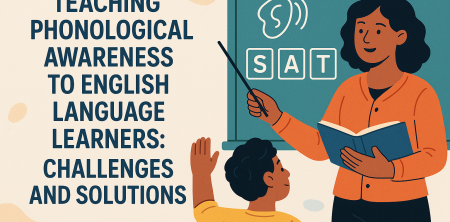
Teaching phonological awareness for English language learners (ELLs) presents unique challenges and rewards. As educators strive to create inclusive classrooms, understanding the intricacies of phonological awareness becomes crucial. Phonological awareness involves recognizing and manipulating sounds in spoken language and is foundational for reading success. Let’s explore what phonological awareness is, why it’s essential for ELLs, the challenges these learners face, and effective strategies to enhance their phonological skills.
Understanding Phonological Awareness
Phonological awareness encompasses a range of skills related to the sounds of language. It includes the ability to recognize and work with sounds at the word, syllable, and phoneme levels. For instance, being able to rhyme, count syllables in words, or identify the initial sounds in words are all aspects of phonological awareness. Research indicates that strong phonological awareness correlates with better reading and writing skills, making it a critical area of focus, especially for learners who are new to the English language.
The Importance of Phonological Awareness for ELLs
Phonological awareness is particularly vital for English language learners for several reasons. First and foremost, ELLs often face the added challenge of learning new vocabulary and grammar rules in a language that may be entirely foreign to them. A strong phonological foundation can ease this transition. Additionally, studies show that ELLs who develop phonological awareness skills early on tend to have better phonemic decoding skills, which are necessary for reading.
Moreover, many ELLs come from language backgrounds that differ significantly from English phonology. For instance, some languages do not have certain sounds that are prevalent in English, making it more challenging for learners to pronounce words correctly or recognize sounds in words. Therefore, targeted phonological awareness instruction can bridge this gap, helping ELLs achieve greater success in literacy.
Challenges in Teaching Phonological Awareness to ELLs
While the benefits of developing phonological awareness in ELLs are clear, the path can be fraught with difficulties. Some common challenges include:
- Linguistic Background: ELLs may come from diverse linguistic backgrounds where the sound systems are different from English. For example, students from languages that do not have a distinction between /r/ and /l/ may struggle with these sounds in English.
- Limited Vocabulary: ELLs may have a more limited English vocabulary, making it difficult for them to engage with phonological awareness activities that rely on word recognition.
- Socio-Cultural Factors: Variations in cultural backgrounds can affect students’ learning styles and their familiarity with phonological awareness activities.
- Teacher Preparedness: Not all teachers are adequately trained to address the needs of ELLs, which can result in a lack of targeted phonological instruction.
These obstacles underscore the importance of tailored instructional strategies that address the specific needs of English language learners.
Effective Strategies for Teaching Phonological Awareness
To effectively teach phonological awareness for English language learners, educators can employ several strategies:
1. Use Visuals and Gestures
Visual aids, such as pictures and diagrams, can help ELLs connect sounds to letters and words. For example, when introducing new vocabulary, pairing words with images can reinforce understanding. Gestures can also be effective; using hand motions to represent syllables or sounds can provide a physical component that aids memory.
2. Incorporate Songs and Rhymes
Music is a natural way to engage learners and reinforce phonological concepts. Songs and nursery rhymes often emphasize rhythmic patterns and sounds that can boost phonological awareness. For instance, singing songs that highlight vowel sounds or consonant blends can make learning fun and memorable. (See: Teaching reading and phonological skills.)
3. Implement Interactive Activities
Interactive games and activities that focus on sound manipulation can enhance engagement. Activities such as phonemic bingo, sound matching games, or using puppets to model sounds allow for active participation. This is particularly beneficial for ELLs, as it creates a low-pressure environment for practice.
4. Build on Students’ Native Languages
Connecting phonological awareness skills in English to students’ native languages can facilitate learning. For example, if a student’s first language has a similar sound system, highlighting these similarities can bolster confidence and understanding. It’s also helpful to encourage students to draw parallels between sounds and words across languages, fostering a more inclusive learning experience.
5. Provide Consistent and Repetitive Practice
Consistent practice is essential in mastering phonological awareness skills. Repetition through various activities reinforces learning and helps ELLs internalize phonological concepts. Daily phonological awareness exercises that are brief but focused can lead to significant improvements over time.
6. Differentiate Instruction
Recognizing that ELLs have diverse backgrounds and proficiency levels is crucial. Differentiated instruction—tailoring activities to meet the varying needs of students—can help each learner progress. For instance, some students might benefit from more phoneme isolation exercises, while others may need support with syllable segmentation.
7. Engage Families
Involving families in the learning process can enhance students’ phonological awareness. Providing resources for parents to use at home, such as phonological awareness games or activities in both English and the students’ native languages, encourages practice outside the classroom. Additionally, workshops for families can help bridge the gap between home and school, fostering a community of support.
Assessing Phonological Awareness Skills
Assessment is a critical component of any educational approach, and assessing phonological awareness in ELLs should be done thoughtfully. Standardized assessments may not always be appropriate due to language barriers and cultural differences. Instead, consider using informal assessments that focus on the specific skills being taught.
For example, teachers can observe students during phonological activities to gather qualitative data on their skills. Tools like checklists or portfolios can also help track progress. Furthermore, involving students in self-assessment can empower them to take ownership of their learning.
Professional Development for Educators
To effectively teach phonological awareness for English language learners, educators must have access to quality professional development. Training on language acquisition, cultural competence, and specific teaching strategies for ELLs can make an immense difference. Supporting teachers with resources and ongoing training ensures they remain equipped to meet the challenges of diverse classrooms.
Moreover, collaboration among educators can foster a supportive community where teachers share best practices and resources. Participating in workshops, online forums, or study groups can enhance understanding and application of phonological awareness strategies.
Current Relevance of Phonological Awareness Instruction
In today’s educational landscape, where classrooms are becoming increasingly diverse, the relevance of phonological awareness instruction cannot be overstated. The ability to recognize and manipulate sounds is foundational not just for reading, but for overall language development. As the number of English language learners continues to grow in many countries, educators must prioritize phonological awareness as a means to support literacy development. (See: What is phonological awareness?.)
The COVID-19 pandemic has also highlighted the need for effective phonological awareness instruction. Many students faced disruptions in learning, making it even more critical to focus on foundational skills. Addressing phonological awareness can help close learning gaps and promote equity in education.
Strategies to Integrate Phonological Awareness Across the Curriculum
Phonological awareness shouldn't be restricted to isolated lessons; it can be integrated across the curriculum. Here are some approaches that can be adopted:
1. Use Storytelling
Storytelling can be a captivating way to enhance phonological awareness. When teachers read aloud, they can emphasize rhyming words, alliteration, and phonemes. Encouraging students to retell stories allows them to practice these phonological skills in a meaningful context. Integrating familiar cultural stories or folklore can make this activity even more relevant and engaging for ELLs.
2. Create Phonological Awareness Stations
Setting up learning stations in the classroom focused on different aspects of phonological awareness can help students practice in small groups or independently. Each station can target specific skills like syllable counting, rhyme generation, or sound blending. Rotating through these stations allows for varied exposure and keeps students engaged.
3. Thematic Units
Designing thematic units around particular topics can also support phonological awareness. By focusing on a single theme (like animals or food), you can introduce vocabulary that students can practice in different contexts. This repetition reinforces their understanding of sounds and words while building their vocabulary.
Real-Life Applications
Phonological awareness has practical implications beyond literacy skills. It can foster confidence in social interactions and communication among ELLs. Here are a couple of examples:
- Peer Communication: ELLs who are confident in their phonological awareness may be more likely to engage in conversations with peers. This can lead to improved social skills and relationships, which in turn can enhance their ability to learn from and collaborate with others in the classroom.
- Public Speaking: As ELLs gain a better grasp of phonological structures, they may feel more comfortable participating in class discussions or giving presentations. This not only bolsters their speaking skills but also their overall confidence in using English.
Research and Statistics on Phonological Awareness and ELLs
Numerous studies have underscored the significance of phonological awareness in literacy development, particularly for ELLs. Here are some compelling statistics:
- Research shows that students with strong phonological awareness skills are up to **25% more likely** to succeed in early reading assessments.
- A meta-analysis indicated that phonological awareness instruction can improve reading outcomes for ELLs, with effect sizes ranging from **0.5 to 1.2**, depending on the intervention.
- In a study involving over **2,000 ELLs**, those who received targeted phonological awareness instruction outperformed their peers by an average of **15 points** on standardized literacy assessments.
Frequently Asked Questions About Phonological Awareness for ELLs
1. What is phonological awareness?
Phonological awareness is the ability to recognize and manipulate the sounds of language. It includes skills such as identifying, segmenting, and blending sounds in words.
2. Why is phonological awareness important for ELLs?
Phonological awareness is crucial for ELLs because it lays the foundation for reading and writing skills. It helps them decode new words and improves their overall language comprehension.
3. How can I assess phonological awareness in ELLs?
Informal assessments, such as observations during phonological activities or use of checklists, can be effective in assessing ELLs' skills. It's important to focus on specific skills being taught rather than relying solely on standardized tests.
4. How can I support ELLs who struggle with phonological awareness?
Providing targeted interventions, such as small group instruction, engaging activities, and family involvement can significantly help ELLs who struggle with phonological awareness. It’s essential to remain patient and provide encouragement as they develop these skills.
5. Can phonological awareness be taught in a multilingual context?
Yes! Teaching phonological awareness can be effectively done in multilingual settings by connecting sounds and skills between English and students' native languages. This approach respects their linguistic background and enhances understanding.
6. How can technology support phonological awareness instruction?
Technology can serve as a valuable tool in enhancing phonological awareness. There are numerous apps and online programs designed specifically for phonics and phonological training, such as ABCmouse and Starfall. These platforms often incorporate games and interactive activities that can engage ELLs while providing instant feedback on their progress. Moreover, utilizing digital storytelling tools allows students to create their own stories, emphasizing phonological components they learn in class.
7. What role does play have in developing phonological awareness?
Play is an essential part of learning, especially for young learners. Incorporating play-based learning activities, like sound scavenger hunts or phoneme hopscotch, can make learning phonological awareness engaging. These activities allow students to explore phonological concepts in a natural and enjoyable way, reinforcing their skills without the pressure of formal assessments.
Conclusion
Teaching phonological awareness for English language learners is both a challenge and an opportunity. By understanding the unique needs of ELLs and implementing effective instructional strategies, educators can help these students succeed in their literacy journey. Incorporating visuals, music, interactive activities, and family engagement can create a rich learning environment that fosters phonological awareness. As we continue to adapt to changing educational landscapes, reinforcing these foundational skills will be essential for the academic success of all learners.
```
Trending Now
- “Building Fluency in English Language Learners: Practical Classroom Techniques That Work”
- “5 Evidence-Based Strategies to Improve Math…
- our breakdown of “can adults have dyscalculia? recognizing and managing math learning disabilities later in life”
- read the full story
- read the full story
Frequently Asked Questions
What is phonological awareness?
Phonological awareness is the ability to recognize and manipulate sounds in spoken language. It includes skills such as rhyming, counting syllables, and identifying initial sounds in words, which are foundational for reading success.
Why is phonological awareness important for English language learners?
Phonological awareness is crucial for English language learners (ELLs) as it helps them transition into a new language by improving their vocabulary and grammar understanding. It also enhances their phonemic decoding skills, which are essential for reading.
What challenges do English language learners face in phonological awareness?
ELLs often struggle with phonological awareness due to differences in their native language phonology. Some languages lack certain sounds present in English, making it difficult for learners to pronounce words correctly or recognize sounds.
How can teachers support phonological awareness in ELLs?
Teachers can support phonological awareness in ELLs by implementing targeted instruction that includes sound recognition activities, rhyming games, and syllable counting exercises. This tailored approach helps build a strong phonological foundation.
What strategies enhance phonological skills for ELLs?
Effective strategies for enhancing phonological skills in ELLs include using visual aids, engaging in interactive sound games, and providing explicit instruction on sound manipulation. These methods create a more inclusive learning environment.
What's your take on this? Share your thoughts in the comments below — we read every one.

