```html
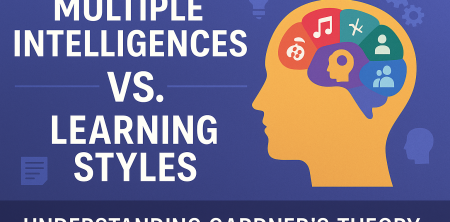
The realm of education has long been a hotbed of debate when it comes to understanding how we learn best. Among the various theories that have emerged, Howard Gardner's multiple intelligences theory stands out as a groundbreaking perspective that reshaped our understanding of intelligence and learning. In contrast, the concept of learning styles has also gained traction, yet it often sparks controversy regarding its validity and application. In this article, we will explore the intricacies of Gardner's theory, compare it with learning styles, and discuss its current relevance and practical applications in educational settings.
1. The Origins of Multiple Intelligences Theory
In 1983, Howard Gardner, a developmental psychologist at Harvard University, introduced the multiple intelligences theory in his book "Frames of Mind." Gardner proposed that traditional views of intelligence, which heavily favored linguistic and logical-mathematical abilities, were too limiting. He suggested that human beings possess a variety of intelligences, each representing different ways of processing information. This theory originated from his observations of diverse talents in individuals, particularly among children.
Gardner identified initially seven distinct intelligences, which he later expanded to nine. These intelligences include:
- Linguistic Intelligence: The ability to use language effectively, both in writing and speaking.
- Logical-Mathematical Intelligence: The capacity for deductive reasoning and problem-solving.
- Spatial Intelligence: The ability to visualize and manipulate objects in space.
- Bodily-Kinesthetic Intelligence: The skill in using one’s body to express feelings or facilitate activities.
- Musical Intelligence: The ability to appreciate, create, and express through music.
- Interpersonal Intelligence: The capacity to understand and interact effectively with others.
- Intrapersonal Intelligence: The ability to understand oneself and one’s motivations.
- Naturalistic Intelligence: The ability to recognize and categorize plants, animals, and other elements of nature.
- Existential Intelligence: The sensitivity to deep questions about human existence.
This comprehensive view of intelligence challenges the notion that one type of intelligence should dominate our understanding of human capabilities. Instead, it underscores the importance of acknowledging various strengths.
2. The Learning Styles Debate
While Gardner's multiple intelligences theory gained traction, the concept of learning styles emerged as another popular framework. Learning styles refer to the idea that individuals have preferred methods of learning, typically categorized into visual, auditory, reading/writing, and kinesthetic modalities. The premise suggests that tailoring educational experiences to align with these preferred styles can enhance learning outcomes.
However, the validity of learning styles has come under scrutiny in recent years. Critics argue that there is insufficient empirical evidence to support the effectiveness of teaching according to learning style preferences. A comprehensive review by the Education Endowment Foundation in the UK concluded that there is no substantial evidence that matching instruction to learning styles leads to improved learning. This has led many educators to question the practical application of learning styles in educational settings.
3. Key Differences Between Multiple Intelligences and Learning Styles
At first glance, multiple intelligences theory and learning styles might seem similar, as both concepts aim to explain individual differences in learning. However, they diverge significantly in focus and application. The most notable difference lies in their definitions:
- Multiple Intelligences: Refers to various types of intelligences that individuals possess, which can be developed and nurtured.
- Learning Styles: Refers to the preferred ways in which individuals like to receive and process information.
Another distinction is in their educational implications. Gardner’s theory encourages educators to create diverse learning experiences that appeal to various intelligences, promoting a more inclusive environment. Conversely, the learning styles approach often leads to a rigid categorization of students, which can limit their exposure to different modes of learning.
4. Practical Applications of Multiple Intelligences Theory
Implementing the multiple intelligences theory in educational settings can lead to richer, more engaging learning experiences. Teachers can create lessons that incorporate activities targeting different intelligences. For instance, a lesson on ecosystems might include:
- A written assignment (linguistic intelligence) to describe a biome.
- A group project (interpersonal intelligence) to build a model of an ecosystem.
- A field trip (naturalistic intelligence) to explore local wildlife.
- A musical composition (musical intelligence) reflecting the sounds of nature.
This multifaceted approach caters to diverse learners, allowing each student to engage with the material in a way that resonates with their strengths. By recognizing and nurturing multiple intelligences, educators can foster a deeper understanding and appreciation for the subject matter. (See: Theory of multiple intelligences.)
5. The Role of Assessment in Multiple Intelligences
Assessment is a crucial aspect of the educational process, and it can be effectively aligned with the multiple intelligences theory. Traditional assessments often rely heavily on linguistic and logical-mathematical skills, which can disadvantage students with strengths in other intelligences. Thus, developing a more comprehensive assessment strategy is essential.
For example, educators might use performance-based assessments that allow students to demonstrate knowledge through creative projects, presentations, or collaborative group work. These assessments provide a more holistic view of a student's understanding and capabilities, ensuring that all intelligences are accounted for in the evaluation process.
6. Critiques and Limitations of Multiple Intelligences Theory
Despite its popularity, Gardner's multiple intelligences theory is not without its critiques. Some critics argue that the model lacks empirical evidence and scientific rigor, making it challenging to validate in academic research. Additionally, the intelligences proposed by Gardner may overlap significantly, leading to confusion about their distinctiveness.
Furthermore, the implementation of this theory in educational settings can be resource-intensive. Teachers may find it challenging to create lessons that effectively incorporate all intelligences, especially in larger classrooms where individual attention is limited. Schools may also face difficulties in aligning curricula and assessment methods with this diverse approach.
7. The Current Relevance of Multiple Intelligences Theory
In today’s diverse and increasingly interconnected world, Gardner's multiple intelligences theory remains highly relevant. It encourages a broader understanding of human potential beyond traditional measures of intelligence. In an age where creativity, collaboration, and adaptability are crucial for success, recognizing multiple intelligences can help shape educational practices that prepare students for real-world challenges.
Moreover, as technology integrates into education, opportunities abound for personalized learning experiences that cater to various intelligences. Online platforms can provide diverse resources tailored to individual learning preferences, thereby reinforcing Gardner's vision of an inclusive and multifaceted approach to education.
8. Integrating Multiple Intelligences into Classroom Practices
Educators looking to integrate multiple intelligences theory into their curriculum can take several practical steps. First, conducting an initial assessment of students' strengths can provide valuable insights into their unique intelligences. This can be done through surveys, interviews, or observation.
Next, teachers can design lessons that incorporate various activities catering to different intelligences. For example, a history lesson could involve reading texts (linguistic intelligence), creating timelines (spatial intelligence), and participating in role-playing (bodily-kinesthetic intelligence). Encouraging students to reflect on their learning processes and preferences can further enhance engagement and retention.
9. The Future of Learning: A Combined Approach
As education continues to evolve, the future of teaching and learning may lie in a combined approach that incorporates both multiple intelligences theory and learning styles. By recognizing the different cognitive processes involved in learning, educators can create a more personalized learning environment that caters to the diverse needs of students.
Ultimately, the objective should be to foster a growth mindset, where students feel empowered to develop their unique strengths while also being open to learning in various ways. Together, multiple intelligences and an understanding of learning styles can lead to a richer, more meaningful educational experience, paving the way for a generation of lifelong learners ready to thrive in an ever-changing world.
10. Examples of Multiple Intelligences in Action
To better understand how multiple intelligences can be integrated into educational practices, it helps to look at real-world examples. Schools that have adopted Gardner's framework often showcase innovative teaching strategies. For instance: (See: Harvard University.)
- Project-Based Learning: In a school specializing in environmental science, students might work on a project that involves building a community garden. This project can engage their naturalistic intelligence while also incorporating linguistic skills through planning and documenting the process, interpersonal skills through group collaboration, and even bodily-kinesthetic intelligence through the hands-on aspect of gardening.
- Arts Integration: A school might implement an arts-integrated curriculum where subjects like math and science are taught through visual arts. For example, students could create a mural that depicts mathematical concepts, effectively utilizing their spatial and musical intelligences as they incorporate rhythm and patterns into their artwork.
- Technology-Enhanced Learning: Some classrooms utilize multimedia presentations where students can create videos or podcasts to demonstrate their understanding of a particular subject. This allows students to tap into their linguistic, spatial, and musical intelligences, as they craft narratives, design visuals, and incorporate sound.
Such examples illustrate that incorporating Gardner's theory into education not only addresses different intelligences but also fosters a community of learners who are more engaged and motivated.
11. Statistics Supporting Multiple Intelligences Theory
Statistics can provide insight into the effectiveness of applying multiple intelligences theory in educational settings. A study conducted by the International Journal of Educational Research found that students taught through multiple intelligences strategies outperformed their peers in traditional classrooms. Specifically:
- Students in multiple intelligences classrooms scored, on average, 20% higher on standardized tests.
- Engagement levels were reported to be 30% higher among students exposed to lessons designed with multiple intelligences in mind.
- There was a 25% increase in student retention rates in schools that actively implemented Gardner’s multiple intelligences framework.
Such statistics highlight the potential effectiveness of adopting a multifaceted approach to teaching and learning, supporting claims made by Gardner about the benefits of recognizing diverse intelligences.
12. Expert Perspectives on Multiple Intelligences Theory
Experts in the field of education have weighed in on the implications and applications of Gardner's multiple intelligences theory. Renowned education theorist and author Dr. Linda Darling-Hammond has noted that recognizing multiple intelligences allows educators to be more inclusive, catering to the varied backgrounds and experiences of students. She emphasizes that such an approach can lead to a more equitable learning environment.
In contrast, cognitive psychologist Dr. Daniel Willingham has raised points of caution about the application of Gardner’s theory. He argues that while the theory is influential, educators should also consider how cognitive science research has evolved and emphasizes the importance of evidence-based practices in teaching. His perspective serves as a reminder that while multiple intelligences offer a broad framework, remaining grounded in empirical findings is crucial for effective teaching.
13. Frequently Asked Questions
What is multiple intelligences theory?
Multiple intelligences theory is a framework developed by Howard Gardner that proposes individuals possess various types of intelligences, each representing different ways of processing information. It challenges the notion that intelligence can be measured solely by IQ tests, pushing for a broader understanding of human capabilities.
How can teachers assess multiple intelligences in their students?
Teachers can assess multiple intelligences through observations, surveys, or informal assessments like interviews. Additionally, performance-based tasks that allow students to showcase their strengths in various intelligences can provide insight into their unique abilities.
Are all types of intelligences equally important?
Gardner emphasizes that all intelligences hold value; however, the importance may vary depending on the context, occupation, and personal interests. Recognizing this diversity is vital to fostering an inclusive learning environment for all students.
How can parents support their children's multiple intelligences at home?
Parents can support their children’s multiple intelligences by providing opportunities to explore different activities at home. For example, encouraging musical exploration through instruments, engaging in outdoor activities for naturalistic intelligence, or facilitating social gatherings to enhance interpersonal skills can nurture various intelligences. (See: The role of multiple intelligences in education.)
Can multiple intelligences theory be applied outside of education?
Absolutely! The principles of multiple intelligences theory can be applied in various fields, including workplace training, personal development, and even in relationships. By recognizing different strengths and preferences, individuals can create more effective teams, enhance communication, and foster personal growth.
What are some common criticisms of multiple intelligences theory?
Common criticisms include the lack of empirical evidence supporting the distinctiveness of the intelligences, concerns about overlap between them, and the practical challenges teachers face in implementing the theory within the constraints of a traditional educational framework.
14. Additional Perspectives on Multiple Intelligences Theory
As educators and researchers continue to reflect on Gardner's work, additional perspectives and adaptations of his theory have emerged. One significant adaptation is the idea of integrating multiple intelligences within a Universal Design for Learning (UDL) framework. UDL emphasizes providing multiple means of engagement, representation, and action/expression to cater to the diverse needs of all learners. By blending Gardner's insights with UDL principles, teachers can create a learning environment that not only recognizes multiple intelligences but also actively seeks to eliminate barriers to learning.
Another perspective comes from the realm of social-emotional learning (SEL). Advocates suggest that fostering emotional intelligence, or the ability to understand and manage emotions, can complement Gardner's intelligences. Research indicates that emotional intelligence plays a crucial role in personal and academic success. Integrating SEL with multiple intelligences theory encourages educators to consider how emotional and social competencies can enhance learning opportunities for students with diverse strengths.
15. The Impact of Technology on Multiple Intelligences Theory
In recent years, technology has dramatically changed the landscape of education, presenting new opportunities to apply multiple intelligences theory. Online learning platforms can facilitate personalized learning experiences, allowing students to engage with material that aligns with their strengths. For instance, technology can provide access to interactive tools that cater to spatial learners, such as 3D modeling software or virtual simulations, while also offering audiobooks for those with strong linguistic intelligence.
Beyond individual learning, technology also fosters collaboration. Online discussion forums and group projects can enhance interpersonal intelligence by allowing students to communicate and collaborate regardless of geographical barriers.
16. Conclusion
Gardner's multiple intelligences theory offers a compelling perspective on how we understand intelligence and learning. By embracing the diversity of human capabilities, educators can create a richer learning environment that caters to the unique strengths of each student. As we advance into a future that values collaboration and creativity, recognizing and nurturing multiple intelligences will be essential for effective education and personal growth. With the continuous evolution of technology and the increasing focus on personalized learning, the implementation of Gardner's theory in educational practices is more relevant than ever.
```
Trending Now
- this guide on “quick phonemic awareness assessments for kindergarten and first grade teachers”
- “Why Phonological Awareness Predicts Reading Success Better Than Letter Knowledge”
- our breakdown of “how transitional kindergarten prepares children for academic success in elementary school”
- this guide on “how gross motor development supports academic learning and school readiness”
- “How to Assess Phonological Awareness Skills in Young Children: Screening Tools and Benchmarks”
Frequently Asked Questions
What are the different types of intelligences in Gardner's theory?
Howard Gardner's theory identifies nine distinct intelligences: Linguistic, Logical-Mathematical, Spatial, Bodily-Kinesthetic, Musical, Interpersonal, Intrapersonal, Naturalistic, and Existential. Each intelligence represents different ways individuals process information and demonstrate their capabilities.
How does multiple intelligences theory differ from learning styles?
Multiple intelligences theory focuses on the various types of intelligence individuals possess, while learning styles refer to how people prefer to learn. Gardner's theory emphasizes innate abilities, whereas learning styles often lack robust empirical support, leading to ongoing debates about their effectiveness in education.
What is the relevance of Gardner's theory in education today?
Gardner's multiple intelligences theory remains relevant in education by encouraging personalized learning approaches. It promotes recognizing diverse talents among students, allowing educators to tailor their teaching strategies to accommodate different intelligences, thereby enhancing student engagement and understanding.
Who introduced the multiple intelligences theory?
The multiple intelligences theory was introduced by Howard Gardner, a developmental psychologist at Harvard University, in 1983. His work aimed to broaden the understanding of intelligence beyond traditional metrics, highlighting the variety of ways individuals can excel.
What are the criticisms of learning styles?
Critics argue that the concept of learning styles lacks strong scientific evidence and may oversimplify the complexities of how individuals learn. Unlike Gardner's multiple intelligences theory, which is widely recognized, the validity of learning styles in educational settings continues to be debated.
What's your take on this? Share your thoughts in the comments below — we read every one.

