```html
In the realm of education, the term formative feedback emerges as a cornerstone for enhancing student learning. It serves as an essential tool for educators aiming to cultivate a growth-oriented environment. Unlike summative assessments, which evaluate student learning at the end of an instructional unit, formative feedback is designed to guide students on their journey, offering insights that pave the way for improvement. This article explores the intricacies of providing effective formative feedback, delves into its vital role in the learning process, and offers practical strategies that educators can adopt to maximize its impact.
1. Understanding Formative Feedback
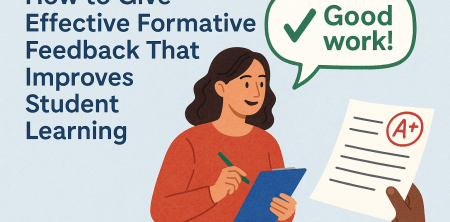
To fully grasp the significance of formative feedback, we first need to define it. Formative feedback refers to the ongoing evaluation process where teachers provide students with specific information regarding their performance and understanding during their learning pathway. This feedback is not merely a comment on grades but a dialogue that encourages students to reflect on their learning strategies and outcomes.
Research indicates that formative feedback can significantly boost student engagement and motivation. According to the Education Endowment Foundation, effective feedback can accelerate learning by up to eight months. The key lies in its constructive nature, which focuses on providing actionable insights rather than merely pointing out mistakes. When students receive formative feedback, they can identify areas for improvement, set learning goals, and ultimately enhance their academic performance.
2. The Principles of Effective Formative Feedback
Effective formative feedback is underpinned by several principles that educators should adhere to. Firstly, it should be timely. Feedback given shortly after an assessment or assignment allows students to connect the comments to their work while the content is still fresh in their minds. Secondly, the feedback needs to be specific. Rather than vague comments like "good job," teachers should provide detailed insights, such as "your argument is strong, but consider adding evidence to support your claims in paragraph two." This specificity helps students understand exactly what they need to improve.
Moreover, feedback should be constructive, focusing on growth rather than criticism. Teachers should use a positive tone and frame their feedback in a way that encourages students to see challenges as opportunities for development. This approach fosters a sense of ownership over their learning process, prompting students to take initiative and responsibility for their academic journeys.
3. The Role of Self-Assessment
Self-assessment plays a crucial role in the feedback process. Encouraging students to evaluate their own work fosters critical thinking and reflection. When students engage in self-assessment, they develop metacognitive skills that allow them to analyze their learning strategies and outcomes more effectively. This self-awareness is vital for understanding their strengths and weaknesses.
To implement self-assessment effectively, teachers can provide students with rubrics that outline clear criteria for evaluation. By guiding students to reflect on their performance, they can compare their work against the established metrics, identify gaps, and set personal learning goals. This practice not only enhances their ability to receive feedback but also empowers them to be active participants in their educational journey.
4. Creating a Feedback Culture
Establishing a constructive feedback culture within the classroom is essential for the effective implementation of formative feedback. For students to feel comfortable receiving and acting upon feedback, a supportive environment must be fostered. Teachers can achieve this by modeling how to give and receive feedback respectfully and positively.
In addition, incorporating peer feedback can be an effective strategy. When students share their work with classmates and provide each other with constructive insights, it not only reinforces their understanding of the material but also builds a sense of community. This practice encourages collaboration and helps students understand diverse perspectives, ultimately enriching their learning experiences.
5. Utilizing Technology for Feedback
In today's digital age, technology can significantly enhance the feedback process. Various tools and platforms allow educators to provide timely, personalized, and engaging feedback. For instance, learning management systems (LMS) offer features to comment directly on assignments, enabling real-time feedback without the typical delays of traditional methods.
Additionally, tools like Google Classroom and Edmodo allow educators to create a feedback loop where students can ask questions and seek clarification on their assignments. Video feedback is another innovative method where teachers can record their comments. This approach adds a personal touch and allows for a more nuanced delivery of feedback, making it easier for students to connect with the information being provided. (See: Effective feedback in education.)
6. Feedback Strategies for Different Learning Styles
Recognizing that students have diverse learning styles is crucial when delivering formative feedback. Some students may thrive on verbal feedback, while others may prefer written comments or visual aids. Understanding these preferences allows educators to tailor feedback to meet individual needs.
For visual learners, incorporating diagrams or charts to illustrate feedback can be highly beneficial. For auditory learners, discussion sessions where students can vocalize their understanding and receive immediate feedback may be most effective. Kinesthetic learners might benefit from hands-on activities that allow them to practice their skills immediately after receiving feedback. By adapting feedback strategies to suit different learning styles, teachers can enhance student comprehension and engagement.
7. Assessing the Impact of Feedback
It’s vital for educators to assess the effectiveness of their feedback strategies regularly. Understanding how students respond to feedback can provide insights into its impact on their learning. Surveys and questionnaires can be valuable tools to gather student perceptions about the feedback they receive and how it influences their motivation and understanding.
Additionally, tracking student progress over time can offer concrete data on the effectiveness of formative feedback. By analyzing trends in performance, educators can determine whether their feedback is fostering growth and make necessary adjustments to their approach. This reflective practice not only benefits students but also aids in professional development for teachers.
8. Challenges in Providing Formative Feedback
While the benefits of formative feedback are clear, several challenges may arise in its implementation. One major hurdle is the time constraints faced by educators. Providing meaningful and personalized feedback can be time-consuming, especially in larger classes. To combat this, teachers can prioritize feedback by focusing on specific learning goals or switching to digital formats that streamline the process.
Another challenge is the potential for students to become overwhelmed by excessive feedback. It's crucial to strike a balance between providing enough information to guide improvement without inundating students with criticisms. Implementing a feedback framework that highlights key areas for improvement can help maintain clarity and focus in the feedback process.
9. The Future of Formative Feedback
Looking ahead, the role of formative feedback will likely continue to evolve alongside educational practices and technologies. As the focus on personalized learning grows, formative feedback will become even more integral in tailoring instruction to meet individual student needs. Innovations in artificial intelligence could also pave the way for more adaptive feedback systems that respond in real-time to student performance.
Ultimately, the goal of formative feedback remains the same: to empower students to take control of their learning journey. By understanding and implementing effective feedback strategies, educators can create an environment that nurtures growth, resilience, and lifelong learning.
10. Examples of Effective Formative Feedback
To better illustrate the principles of formative feedback, it’s helpful to look at specific examples that demonstrate effective implementation in various educational contexts.
In a mathematics classroom, a teacher might provide feedback on a student’s problem-solving process by noting, “Your steps to solve the equation were clear, but consider checking the operations in step three. You might find an easier solution path by revisiting your calculations.” This approach not only addresses the mistake but also encourages the student to think critically about their methods.
In a literature class, feedback might include, “Your analysis of the character's motivations is insightful. To strengthen your argument, try to integrate more direct quotes from the text to support your points.” This encourages the student to deepen their understanding and refine their analytical skills.
These examples show how formative feedback can be specific, constructive, and geared toward encouraging students to engage with their learning more deeply. (See: Role of feedback in learning.)
11. Statistics on the Effects of Formative Feedback
The impact of formative feedback on student performance can be quantified, showcasing its essential role in education. A study published in the Journal of Educational Psychology revealed that students who received formative feedback scored 20% higher on subsequent assessments than those who did not. Additionally, the Institute for Education Sciences found that schools implementing formative feedback strategies saw a 15% increase in students meeting grade-level expectations.
Furthermore, a meta-analysis conducted by the American Educational Research Association highlighted that formative feedback is particularly effective for lower-achieving students, who showed a 30% improvement in their academic performance when they received regular, constructive feedback. These statistics underscore the transformative potential of formative feedback when effectively executed.
12. Expert Perspectives on Formative Feedback
Educators and researchers alike emphasize the importance of formative feedback. Dr. Dylan Wiliam, a prominent figure in education, argues that “assessment is not about finding out what students know; it's about finding out what they need to learn.” This perspective highlights the role of formative feedback in shaping instructional strategies to meet diverse learner needs.
Another expert, Dr. John Hattie, emphasizes that feedback is one of the most powerful influences on learning outcomes, provided it is specific and timely. His research shows that feedback has a high effect size, making it a critical component of effective teaching and learning practices.
These expert insights reinforce the idea that formative feedback is not just a supplemental aspect of education but a fundamental element that can drive student success.
13. Creating a Feedback-Friendly Classroom Environment
For formative feedback to be effective, it must be delivered within a feedback-friendly environment. Here are some practical steps educators can take to create such an environment:
- Encourage Open Communication: Foster a classroom atmosphere where students feel comfortable asking questions and expressing concerns about feedback. This can be achieved through regular check-ins and creating small group discussions where students can speak freely.
- Normalize Mistakes: Teach students that errors are part of the learning process. When mistakes are treated as learning opportunities, students are more likely to engage with feedback positively.
- Incorporate Reflection: Create structured reflection activities where students can process the feedback they receive. For instance, students can write a short paragraph about what feedback they found most helpful and how they plan to use it to improve their work.
14. Frequently Asked Questions about Formative Feedback
What is the difference between formative feedback and summative feedback?
Formative feedback is ongoing and provides students with information to improve during the learning process. In contrast, summative feedback is typically given at the end of a learning period and evaluates student performance against established criteria.
How can teachers ensure that feedback is effective?
To ensure feedback is effective, teachers should focus on being timely, specific, and constructive. They can also encourage self-assessment and peer feedback to reinforce the learning process.
Can formative feedback be used in online learning environments?
Absolutely. Online learning platforms provide multiple tools for educators to deliver formative feedback, including discussion boards, quizzes with immediate feedback, and video comments on assignments.
How often should feedback be provided?
The frequency of feedback can vary based on the subject and the specific teaching goals. However, regular, consistent feedback is generally more beneficial than infrequent comments, as it helps maintain student engagement and motivation.
Are there any drawbacks to formative feedback?
Some drawbacks can include the time required to provide meaningful feedback and the potential for students to feel overwhelmed if feedback is too frequent or detailed. Striking a balance is essential for maintaining student motivation and clarity.
15. Strategies for Implementing Formative Feedback Effectively
Implementing formative feedback effectively requires careful planning and consideration. Here are some strategies educators can adopt to enhance the effectiveness of their feedback:
- Set Clear Learning Objectives: Clearly defined learning goals provide students with a roadmap and context for the feedback they receive, making it more relevant and actionable.
- Utilize Different Feedback Formats: Experimenting with various formats—such as written comments, audio recordings, and video feedback—can cater to different learning preferences and help engage students more effectively.
- Provide Opportunities for Revision: Encouraging students to revise their work based on feedback allows them to actively engage with the feedback process and see their growth over time.
16. Case Studies on Effective Formative Feedback
Examining real-world examples of formative feedback in action can provide valuable insights. One case study from a high school English department demonstrated a structured approach to formative feedback where teachers held bi-weekly student conferences. During these conferences, students discussed their progress and the feedback they received. This personal interaction allowed students to clarify misunderstandings and set specific goals for improvement.
In a different setting, a middle school math teacher utilized exit tickets at the end of each lesson to gauge student understanding. These tickets prompted students to reflect on their learning and provide insights into areas where they struggled. The teacher would then use this information to tailor subsequent lessons and to offer targeted feedback, thus enhancing the learning experience for all students.
17. The Impact of Formative Feedback on Student Motivation
Studies have shown a direct correlation between formative feedback and student motivation. When students receive timely and specific feedback that acknowledges their efforts, they are more likely to feel encouraged and motivated to improve. According to a 2021 study published in the Journal of Educational Research, students who received regular formative feedback reported a 25% increase in their overall motivation and engagement compared to those who received minimal feedback.
This effect can be attributed to the positive reinforcement that comes from knowing their work is valued and that improvements can lead to tangible results. By creating a feedback-rich environment, teachers can foster a sense of belonging and investment in the learning process.
18. Conclusion: The Transformative Power of Formative Feedback
Formative feedback is a crucial element in the educational process that offers students the guidance and support needed to improve their learning outcomes. By embracing effective feedback strategies, educators can foster an environment where students feel empowered to take ownership of their learning. As we continue to explore innovative methods for delivering feedback, the potential for enriching the educational experience only grows. Through commitment and practice, formative feedback can truly transform how students engage with their learning journey.
```
Trending Now
- “Quick Phonemic Awareness Assessments for Kindergarten…
- the complete explanation
- this guide on “how transitional kindergarten prepares children for academic success in elementary school”
- “How Gross Motor Development Supports Academic…
- our breakdown of “how to assess phonological awareness skills in young children: screening tools and benchmarks”
Frequently Asked Questions
What is formative feedback in education?
Formative feedback is an ongoing evaluation process where teachers provide specific information about students' performance and understanding during their learning journey. It encourages a dialogue that helps students reflect on their strategies and outcomes, ultimately enhancing their academic performance.
How does formative feedback improve student learning?
Formative feedback improves student learning by offering actionable insights that help students identify areas for improvement, set learning goals, and enhance engagement and motivation. Research shows it can accelerate learning by up to eight months when delivered constructively.
What are the principles of effective formative feedback?
Effective formative feedback should be timely, specific, and constructive. It should be provided shortly after assessments to connect comments to students' work while still fresh. Additionally, it should focus on actionable insights rather than merely pointing out mistakes.
Why is timely feedback important in education?
Timely feedback is crucial because it allows students to connect the feedback to their work while the content is still fresh in their minds. This immediacy helps them understand and apply the insights effectively, leading to improved learning outcomes.
What are some strategies for providing effective formative feedback?
Some strategies include being specific and clear in your comments, focusing on strengths as well as areas for improvement, encouraging self-reflection, and fostering a supportive environment that motivates students to engage with the feedback constructively.
Have you experienced this yourself? We'd love to hear your story in the comments.

