```html
In the world of education, assessment serves as a critical tool for both teachers and students. However, not all assessments are created equal. Understanding the differences between formative vs summative assessment is essential for effective teaching and learning. Each type of assessment plays a distinct role in the educational process, influencing how knowledge is acquired and evaluated. This article delves into the key characteristics, purposes, advantages, and best practices associated with these two types of assessments.
1. What is Formative Assessment?
Formative assessment is an ongoing process that takes place during the learning experience. It aims to monitor student learning and provide feedback that can improve both teaching and student performance. This type of assessment occurs in real-time, allowing educators to gather insights about their students’ understanding and skills as they progress through a specific topic or course. Examples of formative assessments include quizzes, classroom discussions, peer reviews, and homework assignments.
The primary goal of formative assessment is to enhance learning. By providing timely feedback, educators can identify areas where students struggle and adjust their teaching methods accordingly. For instance, if a teacher notices that a significant number of students are misunderstanding a particular concept, they can revisit that topic, employing different strategies or resources to reinforce the material.
2. The Purpose of Formative Assessment
The purpose of formative assessment is multifaceted. Firstly, it aims to foster a learning environment where students feel supported and guided throughout their educational journey. Unlike high-stakes assessments, formative assessments are often low-stakes, meaning that they do not heavily impact students’ overall grades. This reduction in pressure encourages students to engage more openly in the learning process, as they can view mistakes as opportunities for growth rather than failures.
Secondly, formative assessment helps educators tailor their teaching practices. By gaining insights into student performance and understanding, teachers can modify their lesson plans and instructional strategies to better meet the needs of their learners. For example, using tools like exit tickets or one-on-one conferences can provide immediate feedback to adjust course material and ensure better comprehension among students.
3. What is Summative Assessment?
In contrast to formative assessment, summative assessment evaluates student learning at the end of an instructional unit or course. This type of assessment is typically more formal and often contributes significantly to a student’s overall grade. Summative assessments include final exams, standardized tests, projects, or presentations that reflect the cumulative knowledge gained over a specific period.
The primary purpose of summative assessment is to measure student learning outcomes and determine whether educational goals have been met. While it can provide an overview of student performance, it generally does not offer feedback that can be used to improve learning during the instructional process. Instead, summative assessments serve as a final indication of what students have learned and how well they can apply that knowledge.
4. The Purpose of Summative Assessment
Summative assessments serve several important purposes in education. Firstly, they provide a benchmark for measuring student achievement against predetermined standards or learning objectives. Educators can assess whether students have mastered the material and are ready to progress to the next level of education.
Secondly, summative assessments can inform stakeholders about the effectiveness of educational programs and curricula. By analyzing the results, schools and districts can identify patterns in student performance, making it easier to adjust instructional strategies or allocate resources effectively. Furthermore, summative assessments can play a role in accountability, as they often influence decisions about funding, curriculum changes, and teacher evaluations.
5. Key Differences Between Formative and Summative Assessment
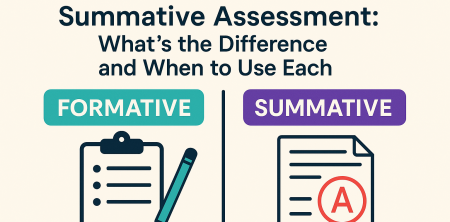
While both formative and summative assessments aim to evaluate student learning, their purposes, processes, and impacts differ significantly. Here are the key differences:
- Timing: Formative assessments occur during the learning process, while summative assessments take place at its conclusion.
- Feedback: Formative assessments provide ongoing feedback to help improve student learning, whereas summative assessments generally offer a final evaluation without the opportunity for immediate adjustment.
- Purpose: The primary aim of formative assessment is to inform instruction and support student growth, while summative assessment assesses the level of students’ knowledge and skills.
- Impact on Grades: Formative assessments typically have minimal impact on students’ overall grades, whereas summative assessments often carry significant weight in determining final grades.
Understanding these differences is crucial for educators who wish to create a balanced assessment strategy that enhances learning outcomes.
6. When to Use Formative Assessment
Formative assessments are most effective when used as part of an ongoing instructional strategy. They should be employed during lessons to monitor student progress and identify areas needing reinforcement. By integrating formative assessments into daily teaching practices, educators can create an adaptive learning environment that responds to students’ needs. (See: Formative Assessment Overview.)
Examples of effective formative assessments include:
- Exit Tickets: At the end of a lesson, students can write down one thing they learned and one question they still have. This feedback helps teachers understand students' grasp of the material.
- Peer Teaching: Having students explain concepts to each other reinforces their understanding while allowing the teacher to observe their comprehension.
- Quizzes: Short quizzes or polls can quickly gauge student understanding and highlight topics requiring further review.
Ultimately, the key to effective formative assessment is to use it consistently to shape and enhance the teaching and learning experience throughout the course.
7. When to Use Summative Assessment
Summative assessments should be used at the end of a unit or course to evaluate student learning against established criteria. They are particularly useful for measuring the cumulative knowledge students have acquired and assessing their readiness for subsequent educational challenges.
Examples of summative assessments include:
- Final Exams: These assess students’ understanding of the entire course material and gauge their ability to integrate concepts.
- Standardized Tests: Often utilized at the state or national level, these tests measure student performance against a larger population.
- Capstone Projects: These comprehensive projects require students to apply their knowledge and skills to solve real-world problems, demonstrating their learning outcomes.
Summative assessments serve as a final checkpoint, allowing educators to evaluate the effectiveness of their teaching and the educational program as a whole.
8. Integrating Formative and Summative Assessment
While formative and summative assessments serve different purposes, they are most effective when integrated into a cohesive assessment strategy. By combining both types of assessment, educators can create a comprehensive approach that promotes continuous learning and accountability.
For instance, teachers can use formative assessments to guide instruction and make adjustments to their teaching methods, while simultaneously preparing students for the rigors of summative assessments. This dual approach not only enhances student learning but also helps them feel more confident and prepared for high-stakes evaluations.
Additionally, educators can share insights gained from formative assessments with students, helping them set personalized learning goals that align with the expectations of summative assessments. This strategy empowers students to take ownership of their learning process and fosters a culture of accountability.
9. Current Trends in Assessment Practices
As education evolves, so do assessment practices. The rise of technology in the classroom has led to innovative assessment tools that facilitate both formative and summative evaluations. For example, digital platforms allow for real-time feedback, enabling educators to conduct assessments more efficiently and effectively.
Moreover, there is a growing emphasis on the importance of formative assessments in promoting student engagement and motivation. Many educators advocate for a shift toward more formative approaches, recognizing that the learning process is as critical as the final outcomes. This paradigm shift encourages teachers to prioritize ongoing feedback and adaptive instruction instead of solely focusing on students’ final grades.
10. Challenges of Formative and Summative Assessment
While both formative and summative assessments have their advantages, they also come with challenges that educators must navigate. Understanding these challenges can help teachers develop strategies to overcome them and maximize the effectiveness of their assessments.
Formative assessments, while beneficial, can sometimes lead to confusion among students. If not communicated effectively, students might not understand the purpose of these assessments or how to use the feedback provided. Educators need to be clear about how formative assessments fit into the learning process and ensure that students know that their purpose is to support improvement rather than to evaluate them harshly.
On the other hand, summative assessments can create stress for students. The high stakes associated with these assessments can lead to anxiety, which may negatively affect performance. To counter this, educators can implement strategies such as providing practice tests or allowing for retakes, which can alleviate some of the pressure associated with summative evaluations. (See: Learning Assessment Techniques.)
11. Expert Perspectives on Assessment
Educational experts frequently emphasize the importance of striking a balance between formative and summative assessments. Dr. Dylan Wiliam, a leading researcher in educational assessment, highlights that formative assessment is not just about using tools but about creating a culture of learning. He advocates for educators to focus on how feedback can be used to inform future learning strategies.
Similarly, Dr. Heidi Andrade, an expert in assessment practices, suggests that formative assessments can empower students by giving them a voice in their learning. She argues that when students are involved in self-assessment and peer-assessment, they develop greater ownership of their learning journey, leading to improved outcomes in both formative and summative contexts.
12. Real-World Applications of Formative and Summative Assessment
Both formative and summative assessments have clear applications in various educational settings. In a classroom, teachers might implement a combination of both types of assessments to achieve a holistic understanding of student learning. For instance, in a high school science class, a teacher may use regular quizzes (formative) throughout the unit to gauge understanding of key concepts before administering a final project (summative) that requires students to apply what they have learned.
In higher education, formative assessments can take the form of peer reviews in writing courses, where students provide feedback to each other on drafts before final submission. This approach not only helps improve the quality of their work but also fosters a sense of community and collaboration among peers. Summative assessments at this level may include final research papers or presentations that assess cumulative learning outcomes from the course.
13. FAQ: Understanding Formative vs Summative Assessment
Q1: Can formative assessments affect my final grade?
A1: Typically, formative assessments are designed to provide feedback without significantly impacting final grades. However, they can help inform your understanding and preparation for summative assessments, which do influence your overall grade.
Q2: How can I use formative assessments to improve my study habits?
A2: By actively engaging with formative assessments—such as quizzes, self-checks, and discussions—you can identify areas where you need to focus your study efforts. Use the feedback to guide your review sessions and seek help on topics that are challenging.
Q3: Are summative assessments always high-stakes?
A3: While summative assessments often carry significant weight, they can vary in stakes. Not every summative assessment needs to be a major exam; projects and presentations can also serve as summative evaluations without the same level of pressure.
Q4: How can teachers integrate both types of assessments effectively?
A4: Teachers can integrate formative assessments by using them to guide instruction and provide feedback throughout a unit while planning summative assessments that align with the learning objectives established during formative evaluations.
Q5: Can formative assessments be used in online learning environments?
A5: Absolutely! Online platforms offer numerous tools for formative assessments, such as polls, interactive quizzes, and discussion boards, allowing educators to gather feedback and monitor student engagement in real-time.
14. Future Directions in Assessment
The landscape of education continues to change, and with it comes the evolution of assessment practices. Future directions may include a greater reliance on technology to personalize formative assessments, enabling educators to tailor feedback to individual student needs based on real-time performance data.
Additionally, the integration of social-emotional learning (SEL) into assessment practices may become more prevalent. Educators might focus not only on academic skills but also on the emotional and social dimensions of learning, using both formative and summative assessments to support holistic student development. (See: Research on Formative vs. Summative Assessment.)
Ultimately, the goal is to create an assessment culture that emphasizes growth and learning, ensuring that all students have the opportunity to succeed and thrive in their educational journeys.
15. Statistics on Assessment Effectiveness
Understanding the effectiveness of formative and summative assessment methods is essential for improving educational outcomes. Research indicates that formative assessments can lead to a 20-30% increase in student performance when implemented effectively. A study by the National Center for Research on Evaluation, Standards, and Student Testing (CRESST) found that students who engaged in regular formative assessments performed significantly better in summative tests compared to those who did not.
Furthermore, a survey conducted by the Assessment Institute showed that 75% of educators believe that formative assessments improve student learning and engagement. This insight reinforces the necessity for a balanced approach to assessment in education, promoting continuous growth alongside final evaluations.
16. Case Studies: Successful Implementation of Formative and Summative Assessments
Case studies from various educational institutions illustrate the potential of integrating formative and summative assessments. For example, a high school in California implemented weekly formative assessments in the form of collaborative projects and peer reviews. Teachers observed a 40% improvement in student grades on subsequent summative assessments, highlighting the power of feedback and collaborative learning.
Another case study from a university in New York utilized digital platforms for formative assessments, allowing for real-time feedback. This approach resulted in higher student satisfaction rates and improved performance in summative assessments, as students felt more prepared and engaged throughout the course.
17. Teacher Training and Professional Development
To maximize the effectiveness of formative and summative assessments, ongoing teacher training and professional development are crucial. Workshops focusing on assessment strategies, feedback techniques, and data analysis can empower educators to implement effective assessment practices in their classrooms. For instance, training on how to design effective formative assessments can help teachers create tools that yield meaningful insights into student learning, while professional development in interpreting summative assessment data can inform instructional decisions and curricular improvements.
Additionally, collaboration among educators through communities of practice allows teachers to share best practices and resources, fostering a culture of continuous improvement in assessment methodologies.
In summary, understanding the nuances of formative vs summative assessment is essential for educators looking to enhance their teaching practices and improve student learning outcomes. By using both forms of assessment effectively, they can create a dynamic classroom environment that fosters growth and prepares students for future challenges.
```
Trending Now
- our breakdown of “quick phonemic awareness assessments for kindergarten and first grade teachers”
- our breakdown of “why phonological awareness predicts reading success better than letter knowledge”
- “How Transitional Kindergarten Prepares Children for…
- “How Gross Motor Development Supports Academic…
- our breakdown of “how to assess phonological awareness skills in young children: screening tools and benchmarks”
Frequently Asked Questions
What is the main difference between formative and summative assessment?
The main difference lies in their purpose and timing. Formative assessment is ongoing and aims to provide feedback during the learning process, helping to improve student understanding. In contrast, summative assessment evaluates student learning at the end of an instructional unit, often impacting final grades.
When should formative assessment be used?
Formative assessment should be used throughout the learning process, during lessons and activities. It helps teachers monitor student progress and adjust instruction in real-time, fostering a supportive learning environment where students can improve without the pressure of high-stakes testing.
What are some examples of formative assessments?
Examples of formative assessments include quizzes, classroom discussions, peer reviews, and homework assignments. These tools allow educators to gauge student understanding and provide timely feedback to enhance learning outcomes.
Why is formative assessment important in education?
Formative assessment is crucial because it provides ongoing feedback that helps both teachers and students identify areas needing improvement. This process supports a learning environment that encourages growth, reduces anxiety, and allows students to view mistakes as learning opportunities.
How do formative assessments benefit students?
Formative assessments benefit students by offering low-stakes opportunities to demonstrate their understanding and receive constructive feedback. This approach helps students engage more deeply with the material, enhances their learning experience, and encourages a growth mindset.
What's your take on this? Share your thoughts in the comments below — we read every one.

