```html
Attachment theory has long been a cornerstone of developmental psychology, providing insights into how early relationships with caregivers shape a child's emotional and social development. With the increasing prevalence of daycare settings, many parents and educators are left wondering: can infants actually form secure attachments with multiple caregivers in a daycare environment? This article will explore the intricacies of attachment theory, how it applies to daycare, and what implications this has for child development.
Understanding Attachment Theory
Attachment theory, originally developed by British psychologist John Bowlby in the mid-20th century, posits that the bonds between children and their primary caregivers significantly influence their emotional health and interpersonal relationships throughout life. Bowlby suggested that children are biologically predisposed to form attachments with caregivers, as this increases their chances of survival.
Mary Ainsworth later expanded on Bowlby’s ideas through her “Strange Situation” experiment, identifying different attachment styles: secure, anxious-ambivalent, anxious-avoidant, and disorganized. Secure attachment, which Ainsworth found to be the most beneficial for children, is characterized by a child feeling safe and supported by their caregiver, leading to healthier social relationships and emotional regulation.
The Role of Daycare in Attachment Formation
Daycare environments can present unique challenges to the formation of secure attachments. Traditional wisdom suggests that a child will only form secure attachments with their primary caregiver, often the mother. However, as families increasingly rely on daycare services due to work commitments, understanding how these settings influence attachment becomes essential.
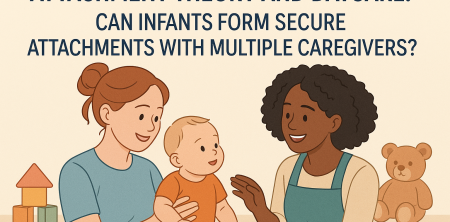
One key question is whether children can form secure attachments with multiple caregivers. A study conducted by researchers at the University of Minnesota found that children in high-quality daycare settings can, indeed, form secure attachments with multiple caregivers. This finding is critical, as it implies that the quantity and quality of care matter significantly in establishing these bonds.
Quality Over Quantity: What Makes a Secure Attachment?
While the presence of multiple caregivers can complicate attachment formation, the quality of interactions is paramount. Responsive caregiving—where caregivers are attuned to a child’s needs, provide comfort, and foster a sense of safety—plays a crucial role in developing secure attachments.
- Consistent Caregiver Presence: Regular interaction with specific caregivers helps build familiarity and trust, allowing children to feel secure even amidst a rotating cast of caregivers.
- Emotional Availability: Caregivers who are emotionally available and responsive to a child’s cues can help facilitate strong attachments.
- Creating a Safe Environment: A nurturing environment allows children to explore their surroundings while knowing they have a secure base to return to.
The Impact of Multiple Caregivers
Having multiple caregivers can offer various benefits, including a diverse set of interactions that can enhance social skills. A nurturing daycare setting can expose children to different communication styles, problem-solving approaches, and emotional expressions.
However, there are potential drawbacks. If caregivers are inconsistent in their approaches—whether in discipline, emotional responses, or caregiving styles—it can create confusion for the child. Children thrive on predictability, and when caregivers are not on the same page, it can lead to anxiety and attachment issues.
Research Insights on Attachment in Daycare Settings
Several studies have investigated the nuances of attachment theory in daycare settings. A key finding is that children who experience high-quality daycare can develop secure attachments with both their parents and daycare providers. For instance, a 2017 study published in the journal Child Development highlighted that children who had consistent, responsive care in daycare exhibited secure attachments, which positively impacted their social skills and emotional well-being.
Additionally, the effectiveness of a daycare program can often be assessed by its staff-to-child ratio. Low ratios typically allow for more individualized attention, supporting the formation of secure attachments. A healthy balance of caregiver engagement and independence can foster resilience and adaptability in children.
Balancing Daycare and Home Life
Parents play a crucial role in their child's attachment journey, even when the child spends a significant amount of time in daycare. The relationship between home life and daycare experiences should ideally complement each other. Parents can strengthen attachment by being present during pick-up and drop-off times, engaging in open dialogues about the child’s experiences, and maintaining consistent routines at home.
Establishing a secure base at home enables children to feel more confident exploring their daycare environment. Consistent practices between home and daycare can further solidify secure attachments, allowing children to thrive emotionally and socially both at home and in group settings. (See: Attachment theory overview on Wikipedia.)
Practical Strategies for Daycare Providers
Daycare providers can take several actionable steps to enhance attachment security among infants and toddlers:
- Training in Attachment Theory: Educators should be trained in the principles of attachment theory to facilitate responsive caregiving.
- Building Relationships: Caregivers should strive to build strong, individual relationships with each child, taking the time to understand their unique personalities and needs.
- Promoting Consistency: Consistent routines and predictability within the daycare environment can help children feel more secure.
- Parental Involvement: Encouraging parents to participate in daycare activities can help bridge the gap between home and daycare, fostering a sense of community and security.
Long-Term Implications of Secure Attachments
Research shows that secure attachments formed in early childhood have lasting benefits. Children who develop secure attachments tend to have better emotional regulation, social skills, and resilience in the face of challenges. They are also more likely to establish healthy relationships in later life.
On the contrary, insecure attachments during these formative years can lead to a host of issues, including anxiety, difficulties in social environments, and challenges in emotional regulation. Understanding the importance of attachment theory in daycare settings is vital for fostering healthy development.
Dispelling Myths About Daycare and Attachment
There are several myths surrounding daycare and attachment that require clarification. One common misconception is that children who attend daycare will inevitably suffer from attachment issues. However, as highlighted by the research, children can and do form secure attachments in high-quality daycare settings.
Another myth is that a child can only form a secure attachment with their primary caregiver. While the primary attachment figure is crucial, secondary attachments can be equally vital, particularly in enriching a child's social and emotional landscape.
Current Relevance and Future Directions
As society continues to evolve, the role of daycare in children's lives is more important than ever. With the rise of dual-income households and a growing acceptance of diverse family structures, understanding attachment theory in the context of daycare is critical.
Future research should continue to explore the long-term effects of daycare on attachment and emotional development. Moreover, policymakers and educators must advocate for high-quality daycare environments that emphasize the principles of attachment theory, ensuring that all children have the opportunity to form secure attachments, regardless of their caregiving circumstances.
Final Thoughts: The Path to Secure Attachments
Attachment theory provides a lens through which we can better understand the complexities of child development in daycare settings. By emphasizing the importance of responsive, consistent care, both parents and daycare providers can play an influential role in fostering secure attachments. Understanding how to create a nurturing environment, be it at home or in daycare, is essential for every child's emotional health and future success.
Attachment Styles and Daycare Adaptation
Understanding how attachment styles manifest in daycare settings can help caregivers tailor their approaches to meet the needs of individual children. For instance, children with a secure attachment may display confidence in exploring their environment and seeking out interactions with caregivers and peers. In contrast, children with anxious-ambivalent attachments may cling to caregivers and struggle with separation, while those with avoidant attachments might seem indifferent or disengaged.
Daycare providers can implement tailored strategies for different attachment styles. For secure children, encouraging exploration and social interactions can bolster their confidence. For anxious-ambivalent children, a caregiver might provide more reassurance and gradual separation techniques to ease anxiety. For those with avoidant attachments, gentle encouragement to engage and form connections can help them feel more comfortable.
Statistical Insights on Daycare and Attachment
Statistics reveal the importance of high-quality daycare in fostering secure attachments. According to a study from the National Institute of Child Health and Human Development (NICHD), children in high-quality daycare settings demonstrated better cognitive and social skills than those in lower-quality environments. The study also indicated that children who experienced consistent care in daycare were more likely to exhibit secure attachments.
Another report published by the American Academy of Pediatrics found that children who received responsive caregiving in daycare settings showed 30% better emotional regulation than their peers who did not. These statistics underline the importance of not only the quantity of care but the quality that significantly influences attachment security.
The Role of Cultural Context in Daycare Attachment
The cultural context in which daycare operates can significantly influence attachment formation. Different cultures have varying perspectives on child-rearing practices, caregiver involvement, and the role of daycare. In collectivist cultures, for example, extended family members often participate in caregiving, creating a broader support network that enhances attachment security. Conversely, in more individualistic societies, daycare may take a more central role in child development, necessitating high-quality care to foster secure attachments. (See: Study on daycare and attachment.)
Understanding these cultural nuances allows daycare providers to respect and incorporate family values and practices, further strengthening the child's sense of security and attachment within the daycare environment.
Strategies for Parents to Support Secure Attachments in Daycare
Parents can take proactive steps to support their child's attachment security even in a daycare setting. Here are some strategies:
- Frequent Communication: Maintain open lines of communication with daycare providers. This collaboration helps ensure that caregivers understand your child's needs and attachment style, allowing for tailored care.
- Consistent Routines: Reinforcing consistent routines at home that mirror daycare schedules can create predictability, which is crucial for attachment security.
- Quality Time: Spend quality time with your child outside of daycare. Engaging in meaningful activities can strengthen your bond, ensuring they feel secure when transitioning to daycare.
- Recognizing Signs of Distress: Be aware of how your child reacts to daycare. If they seem particularly distressed, it may be worth exploring whether changes in the caregiving approach are needed.
FAQs About Attachment Theory and Daycare
Can a child have secure attachments if they spend a lot of time in daycare?
Yes! Children can form secure attachments even in daycare if the environment is nurturing and caregivers are responsive to their needs.
What should I look for in a daycare to ensure my child can develop secure attachments?
Look for low staff-to-child ratios, well-trained staff in attachment theory, and a nurturing environment that emphasizes consistent routines and emotional availability.
How can I transition my child to daycare to support secure attachment?
Gradual transitions can help. Spend time in the daycare setting with your child initially, and establish a consistent drop-off routine to ease the adjustment period.
Are there any long-term effects of insecure attachments formed in daycare?
Yes, insecure attachments can lead to ongoing challenges in emotional regulation, social skills, and relationships throughout a child's life. The earlier these issues are addressed, the better the outcomes.
What role do parents play in fostering secure attachments in daycare settings?
Parents can play a vital role by maintaining consistent routines, communicating openly with caregivers, and spending quality time with their children to reinforce attachment bonds.
Is it possible for children to have multiple secure attachments?
Absolutely! Children can develop secure attachments with both primary caregivers and daycare providers, contributing positively to their overall emotional and social development.
Common Challenges in Daycare Attachment
While many children adapt well to daycare, some may face specific challenges that can impede the development of secure attachments. Here are a few common issues:
- Separation Anxiety: Many children experience separation anxiety when first entering daycare. Understanding how to manage this phase can help ease the transition.
- Adjustment to Caregiver Styles: If a child is used to a specific parenting style at home, they may struggle to adapt to different styles at daycare, which can impact their sense of security.
- Peer Interactions: Children who are introverted may find it challenging to engage with peers, potentially leading to feelings of isolation and impacting attachment relationships.
Daycare providers can help by identifying these challenges early and implementing tailored strategies to support each child’s adjustment and emotional well-being.
Building Strong Connections in Daycare
To foster secure attachments in daycare, it's essential for caregivers to create a strong emotional connection with each child. This can be achieved through:
- Individual Attention: Spending one-on-one time with each child can help build trust and a sense of security.
- Storytime and Play: Engaging in storytelling, singing, or interactive play can enhance emotional bonds, making children feel valued and understood.
- Positive Reinforcement: Praising and encouraging children during interactions can enhance their self-esteem and foster a sense of safety within the daycare environment.
Integrating Family Values into Daycare Practices
Integrating family values into daycare practices can significantly enhance attachment security. Caregivers should strive to understand the cultural, religious, and familial backgrounds of the children in their care. Here are some methods to achieve this:
- Family Events: Organizing events that encourage family participation helps to bridge the gap between home and daycare, reinforcing shared values and attachment.
- Feedback Mechanisms: Establishing feedback channels where parents can share insights about their child’s behavior and preferences helps caregivers adapt their approach.
- Incorporating Family Stories: Encouraging children to share stories about their family can create a sense of belonging and connection in the daycare setting.
FAQs About Attachment Theory and Daycare (Extended)
How important is the first few months in daycare for attachment development?
The initial months in daycare are critical for attachment development. This is when children are adjusting to new caregivers and environments, and responsive caregiving during this time is vital.
What if my child has difficulty bonding with their daycare provider?
If your child is struggling to bond, it’s essential to communicate with the daycare staff. They can implement strategies to help foster that bond, such as spending more one-on-one time or engaging in activities your child enjoys.
Can daycare lead to attachment issues later in life?
Not necessarily. High-quality daycare focused on nurturing relationships can foster secure attachments. However, inconsistent care or lack of emotional availability can lead to attachment issues, so it’s vital to choose a childcare setting wisely.
What role does the daycare environment play in attachment theory?
The daycare environment is crucial. A positive, nurturing atmosphere enhances attachment security, while a chaotic or unstructured environment may hinder it.
Can daycare staff influence a child's attachment style?
Yes, daycare staff can significantly influence a child's attachment style by providing responsive and consistent care. Their interactions can help shape how children view relationships and trust.
How do transitions between daycare and home affect attachments?
Transitions can be challenging but also an opportunity to reinforce secure attachments. Maintaining consistency in routines and communication can help children navigate these changes more smoothly.
Conclusion: A Holistic Approach to Attachment and Daycare
Understanding attachment theory in the context of daycare is essential for both parents and caregivers. By promoting high-quality interactions and establishing nurturing environments, we can work together to ensure that children develop secure attachments that foster their emotional health and social competence. As research continues to evolve, embracing these principles can lead to better outcomes for children, both in daycare and beyond.
```
Trending Now
- the complete explanation
- our breakdown of “why phonological awareness predicts reading success better than letter knowledge”
- our breakdown of “how transitional kindergarten prepares children for academic success in elementary school”
- this guide on “how gross motor development supports academic learning and school readiness”
- “How to Assess Phonological Awareness Skills…
Frequently Asked Questions
Can infants form secure attachments with multiple caregivers?
Yes, infants can form secure attachments with multiple caregivers, especially in daycare settings. Research indicates that children can develop strong bonds with several caregivers, which can positively influence their emotional and social development.
What is attachment theory in child development?
Attachment theory, developed by John Bowlby, explains how early relationships with caregivers shape children's emotional health and interpersonal skills. It emphasizes the importance of secure attachments for healthy social relationships and emotional regulation.
How does daycare affect a child's attachment style?
Daycare can impact a child's attachment style by introducing multiple caregivers. While traditional views suggest a single primary attachment figure is necessary, children can form secure bonds with various caregivers, enhancing their adaptability and social skills.
What are the different attachment styles identified by Ainsworth?
Mary Ainsworth identified four attachment styles: secure, anxious-ambivalent, anxious-avoidant, and disorganized. Secure attachment, which results in healthier emotional and social development, is the most beneficial for children.
Why is secure attachment important for infants?
Secure attachment is crucial for infants as it fosters a sense of safety and support, leading to better emotional regulation and healthier social relationships throughout their lives. It serves as a foundation for their future interactions.
Have you experienced this yourself? We'd love to hear your story in the comments.

