```html
Understanding Bloom's Taxonomy
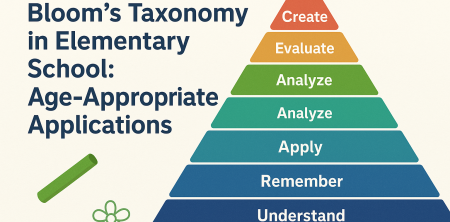
Bloom's Taxonomy, created by educational psychologist Benjamin Bloom and his colleagues in the 1950s, is a framework designed to classify educational objectives and goals. This hierarchy of cognitive skills helps educators develop curricula that foster critical thinking and deeper learning. The original taxonomy consists of six levels: Knowledge, Comprehension, Application, Analysis, Synthesis, and Evaluation. Over the years, it has been revised, most notably in 2001, when the levels were renamed to Remembering, Understanding, Applying, Analyzing, Evaluating, and Creating.
In the context of elementary education, Bloom's Taxonomy serves as an invaluable tool for teachers, allowing them to tailor lessons to meet the diverse learning needs of young students. With elementary learners' cognitive, social, and emotional development in mind, the application of Bloom's Taxonomy can significantly influence how they engage with and internalize information.
Why Bloom's Taxonomy Matters in Elementary Education
Bloom's Taxonomy is essential for several reasons. First, it provides educators with a structured approach to designing lessons that promote higher-order thinking skills. By encouraging students to move beyond basic memorization to deeper analysis and synthesis, educators can instill critical thinking skills that students will carry throughout their academic careers and into adulthood.
Second, the taxonomy supports differentiated instruction. Recognizing that students learn at different paces and with varying strengths, Bloom's framework allows teachers to create activities that cater to individual learning styles and cognitive abilities. This versatility is particularly important in elementary education, where students are at different stages of development.
Additionally, Bloom's Taxonomy encourages teachers to set more ambitious goals for their students. By aiming for higher levels of understanding and skill, educators can inspire students to engage actively with the material rather than passively absorb information. This shift not only enhances learning outcomes but also promotes a growth mindset among students, helping them understand that their abilities can develop over time through effort and perseverance.
Practical Applications of Bloom's Taxonomy in the Classroom
Implementing Bloom's Taxonomy in the elementary classroom can take various forms. Here are some effective strategies that educators can apply at each level of the taxonomy:
Remembering
At the remembering stage, students are tasked with recalling facts and basic concepts. Teachers can utilize flashcards, quizzes, and memory games to reinforce this level of learning. For example, a science teacher might use pictures of different animals and ask students to memorize their names and habitats. This foundational knowledge sets the stage for deeper learning.
Another engaging method includes creating a classroom "knowledge wall," where students contribute facts they've learned about various topics. Displaying this information visually encourages students to recall and reflect upon what they've learned regularly.
Understanding
Once students have grasped the basics, the next step is to ensure they understand the material. Activities that promote comprehension include summarizing readings, discussing key concepts in small groups, or creating visual aids like mind maps. For instance, after learning about a historical event, students could create a timeline that outlines the key players and events involved. This not only reinforces their understanding but also allows them to engage creatively with the content.
Teachers can also use "think-pair-share" activities, where students think about a question individually, discuss their thoughts with a partner, and finally share insights with the larger group. This process deepens understanding through collaboration and peer learning.
Applying
Application involves using knowledge in new or practical situations. Teachers can encourage this by designing projects that require students to apply what they've learned. For example, in a math class, students might be asked to create a budget for a class party, applying their understanding of addition, subtraction, and multiplication. This real-world connection makes learning relevant and exciting.
Students can also engage in role-playing activities where they use vocabulary or concepts in context. For example, a social studies lesson could have students simulate a town hall meeting, applying their knowledge of local government processes. (See: Bloom's Taxonomy on Wikipedia.)
Analyzing
At the analyzing level, students begin to break down information into components for better understanding. Activities might include comparing and contrasting different literary characters or dissecting a scientific experiment's results. For instance, in a literature class, students could analyze a character's motivations and actions, discussing how these elements affect the story's outcome. Such tasks develop critical thinking skills and enable students to articulate their insights.
In science lessons, teachers can encourage students to analyze data sets from experiments, prompting them to look for patterns and draw conclusions. This level of critical analysis empowers students to think like scientists and researchers.
Evaluating
Evaluation requires students to make judgments based on criteria and standards. In elementary education, this could look like peer reviews of writing assignments or group discussions on the merits of different solutions to a problem. For example, students could evaluate different approaches to a science project, discussing the pros and cons of each method. This fosters not only critical thinking but also collaboration and communication skills.
Teachers can also introduce rubrics that clearly outline the criteria for success in various assignments. By evaluating their own work and that of their peers against these criteria, students learn to assess quality and effectiveness critically.
Creating
The highest level of Bloom's Taxonomy is creating, where students synthesize information to generate new ideas or products. This can be achieved through cross-curricular projects, such as creating a presentation that combines art, science, and history. For instance, students might develop a brochure about a country they are studying, incorporating facts, artistic elements, and creative writing. Such projects encourage students to innovate and think outside the box.
Another example of the creating level could involve students designing and conducting their own research projects on topics of interest, fostering ownership of their learning and encouraging them to ask meaningful questions.
Adapting Bloom's Taxonomy for Different Age Groups
While Bloom's Taxonomy is a versatile framework, adapting it to fit the developmental stages of elementary school students is crucial. Thoughtful consideration of age-appropriate activities ensures that all students can engage meaningfully with the material.
Young Learners (Grades K-2)
For younger elementary students, lessons should focus on engaging activities that promote exploration and play. At this stage, it's essential to create a safe and stimulating environment where children feel confident to express themselves. For instance:
- Remembering: Use songs and rhymes to help students memorize vocabulary words.
- Understanding: Encourage storytelling and role-playing to help students grasp new concepts.
- Applying: Incorporate hands-on activities like building with blocks to apply math concepts.
- Analyzing: Use sorting games to help students analyze similarities and differences between objects.
- Evaluating: Have students share their opinions on a story’s ending or character choices.
- Creating: Encourage drawing or crafting projects that allow for creative expression.
In addition, teachers can introduce simple science experiments that allow young learners to explore concepts through observation and inquiry. This type of play-based learning helps solidify foundational knowledge while sparking curiosity.
Middle Elementary (Grades 3-5)
As students progress to the upper elementary grades, they can handle more complex tasks and independent learning. Activities can include:
- Remembering: Implement quizzes and flashcards for vocabulary and math facts.
- Understanding: Have students summarize chapters, emphasizing main ideas and details.
- Applying: Facilitate project-based learning where students can apply concepts to real-life situations, like planning a fundraiser.
- Analyzing: Introduce discussions that ask students to evaluate characters' decisions in a story.
- Evaluating: Assign group projects where students critique different solutions to a problem.
- Creating: Encourage students to write and perform a play or create a documentary on a topic studied in class.
Middle elementary students can also participate in community service projects, where they analyze local needs and create proposals for solutions. This real-world application enhances their understanding and investment in their learning.
Integrating Technology with Bloom's Taxonomy
In today's digital age, integrating technology into educational practices is more important than ever. Bloom's Taxonomy can seamlessly blend with various technological tools, enhancing student engagement and understanding.
For instance, digital platforms like Google Classroom or educational apps can facilitate collaboration and creativity. Students can use presentation software to create multimedia projects that synthesize information from different subjects. You might also have them work in pairs to create a video summarizing a lesson, allowing them to apply and analyze what they’ve learned while developing digital literacy skills. (See: Bloom's Taxonomy from the U.S. Department of Education.)
Moreover, coding platforms and interactive websites can offer students opportunities to design games or simulations based on their learning, particularly in subjects like mathematics and science. This hands-on approach allows students to engage in creative problem-solving while mastering essential skills.
Assessing Student Learning Through Bloom's Taxonomy
Assessment is a critical component of the educational process, and Bloom's Taxonomy provides a structured approach for evaluating student progress. Different assessment methods can be aligned with the various levels of the taxonomy.
Formative Assessments
Formative assessments, which occur during the learning process, can include quizzes, class discussions, and informal observations. By aligning these assessments with Bloom's levels, teachers can track students' progress and adjust instruction accordingly. For example, after implementing a new topic, a teacher can ask students to demonstrate their understanding through quick write-ups or small group discussions.
Additionally, exit tickets can be a quick way to assess student understanding at the end of a lesson. Teachers can ask students to write down one thing they learned and one question they still have, providing insight into their comprehension and areas needing further clarification.
Summative Assessments
Summative assessments, which evaluate cumulative knowledge at the end of an instructional unit, can be designed to address higher levels of Bloom's Taxonomy. Projects, essays, and presentations can assess students' ability to analyze, evaluate, and create based on what they have learned. By including these higher-order thinking tasks in assessments, educators gain a more comprehensive understanding of students' abilities.
Incorporating peer assessments into summative evaluations allows students to engage with others' work critically, fostering collaboration and communication skills while reinforcing their understanding of the material.
Challenges in Implementing Bloom's Taxonomy
Despite the clear benefits of using Bloom's Taxonomy in elementary education, there are challenges that educators must navigate. One significant issue is the varying degrees of readiness among students. Not every child will progress through the taxonomy at the same pace, and teachers must remain flexible in their approach, providing appropriate support as needed.
Another challenge is the potential overwhelming nature of higher-order thinking tasks. For some students, particularly those with learning disabilities or language barriers, these tasks can feel daunting. Educators should scaffold instruction by breaking complex tasks into manageable parts, offering guidance and encouragement along the way.
Additionally, educators may also face a lack of resources or support for implementing innovative teaching strategies aligned with Bloom's Taxonomy. Professional development opportunities can empower teachers with the necessary skills and knowledge to overcome these obstacles and effectively employ the taxonomy in their classrooms. (differentiated instruction insights)
Current Trends in Education and Bloom's Taxonomy
In recent years, education has seen a shift toward incorporating social-emotional learning (SEL) alongside academic development. Bloom's Taxonomy can complement these efforts by fostering not only cognitive skills but also emotional and social competencies. For example, activities that require collaboration and communication can help students develop essential interpersonal skills.
Furthermore, inquiry-based learning, which emphasizes students' questions and curiosities, aligns well with Bloom's Taxonomy. By encouraging students to ask questions and explore their interests, educators can tap into the higher levels of the taxonomy, fostering intrinsic motivation and a love for learning.
There’s also an increasing emphasis on critical digital literacy due to the prevalence of technology in education. Teachers are tasked with helping students discern credible information online, which requires them to apply, analyze, and evaluate information, directly aligning with Bloom’s higher-order skills.
Frequently Asked Questions (FAQ)
What is Bloom's Taxonomy?
Bloom's Taxonomy is a framework for categorizing educational goals and objectives. It organizes cognitive skills into six levels, which promote higher-order thinking in students. The levels are Remembering, Understanding, Applying, Analyzing, Evaluating, and Creating.
How can I implement Bloom's Taxonomy in my classroom?
To implement Bloom's Taxonomy, start by designing lessons that cater to each level of the hierarchy. Use engaging activities, assessments, and projects that encourage students to progress through the levels, from basic memorization to creative synthesis of information.
Why is Bloom's Taxonomy important for educators?
Bloom's Taxonomy helps educators create structured lesson plans that promote critical thinking and deeper learning. It allows for differentiated instruction and helps teachers assess student understanding more effectively.
Can Bloom's Taxonomy be applied to all subjects?
Yes, Bloom's Taxonomy can be applied across all subjects. Whether in math, science, literature, or social studies, educators can design activities and assessments that align with the taxonomy's levels, ensuring that students develop a comprehensive understanding of the material.
How does technology enhance Bloom's Taxonomy in the classroom?
Technology can enhance Bloom's Taxonomy by providing tools for collaboration, creativity, and engagement. Digital platforms allow students to create multimedia presentations, work together on projects, and analyze information in innovative ways.
What are some examples of activities for the Creating level of Bloom's Taxonomy?
Examples of activities at the Creating level include designing a website for a science project, writing and producing a short film on a historical event, or developing a new game that applies math concepts. These activities encourage students to synthesize information and apply their knowledge creatively.
How can I assess students’ understanding using Bloom's Taxonomy?
You can assess students' understanding through a variety of methods that align with the levels of Bloom's Taxonomy. Formative assessments like class discussions and quizzes help gauge understanding, while summative assessments like projects and presentations can evaluate higher-order thinking skills.
The Lasting Impact of Bloom's Taxonomy in Education
Bloom's Taxonomy in elementary education offers a comprehensive framework for developing critical thinking and fostering a love for learning among young students. By engaging students at different cognitive levels and integrating assessment, technology, and social-emotional learning into the curriculum, educators can cultivate an enriching educational experience. As we continue to explore the intersections of cognitive development and pedagogical practices, we can be confident that Bloom's Taxonomy will remain a vital tool in shaping future generations of learners.
```
Trending Now
Frequently Asked Questions
What is Bloom's Taxonomy in education?
Bloom's Taxonomy is a framework developed by Benjamin Bloom that classifies educational objectives into a hierarchy of cognitive skills. It includes six levels: Remembering, Understanding, Applying, Analyzing, Evaluating, and Creating, guiding educators in designing curricula that promote critical thinking and deeper learning.
How can teachers apply Bloom's Taxonomy in elementary school?
Teachers can use Bloom's Taxonomy to tailor lessons that meet diverse learning needs. By creating activities that range from basic knowledge recall to higher-order thinking tasks, educators can foster critical thinking and accommodate different learning styles among elementary students.
Why is Bloom's Taxonomy important for students?
Bloom's Taxonomy is crucial as it encourages students to develop higher-order thinking skills. This approach goes beyond memorization, promoting deeper analysis and synthesis, which equips students with critical thinking skills beneficial throughout their academic and professional lives.
What are the levels of Bloom's Taxonomy?
The levels of Bloom's Taxonomy are Remembering, Understanding, Applying, Analyzing, Evaluating, and Creating. These levels represent a progression from basic knowledge recall to complex evaluation and creation, helping educators design effective learning experiences.
How does Bloom's Taxonomy support differentiated instruction?
Bloom's Taxonomy supports differentiated instruction by allowing teachers to create activities that cater to varied learning styles and cognitive abilities. This approach is particularly effective in elementary education, where students are at different developmental stages.
What's your take on this? Share your thoughts in the comments below — we read every one.

