```html
Bloom’s Taxonomy has long served as a cornerstone in the field of education, providing teachers and educators with a framework to create effective learning experiences. At the heart of this framework are Bloom's Taxonomy question stems, which guide educators in crafting questions that encourage deeper thinking and understanding. In this article, we’ll explore the various levels of Bloom’s Taxonomy, the importance of question stems, and how educators can effectively utilize them in different classroom settings.
Understanding Bloom’s Taxonomy
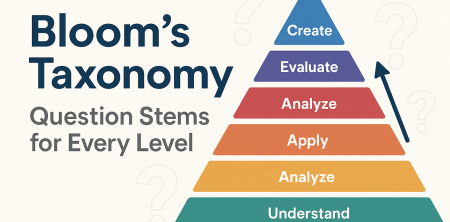
Developed by Benjamin Bloom in 1956, Bloom's Taxonomy categorizes cognitive skills into a hierarchy, facilitating a better understanding of the learning process. Originally, the framework included six levels: Knowledge, Comprehension, Application, Analysis, Synthesis, and Evaluation. In 2001, the taxonomy was revised by a group of cognitive psychologists, leading to the updated version that emphasizes higher-order thinking skills: Remembering, Understanding, Applying, Analyzing, Evaluating, and Creating.
The Importance of Question Stems
Question stems are essential tools in the educational process as they help teachers scaffold questions that correspond to the different levels of Bloom's Taxonomy. By using question stems, educators can promote critical thinking, encourage student engagement, and evaluate understanding effectively. These stems serve as a bridge between surface-level recall and deeper cognitive processes, guiding students to think critically about the material.
Level 1: Remembering
The first level of Bloom’s Taxonomy, Remembering, focuses on the ability to recall facts and basic concepts. At this level, students should be able to retrieve relevant knowledge from long-term memory. Question stems for this level enable educators to assess students' memorization skills. Here are some effective question stems:
- What are the main points of...?
- Can you list the steps involved in...?
- What is the definition of...?
- Who was responsible for...?
- When did... happen?
By utilizing these stems, teachers can assess students' factual knowledge, ensuring they have a solid foundation before moving on to more complex tasks.
Level 2: Understanding
The next level, Understanding, encourages students to demonstrate comprehension of the information. At this stage, learners should be able to explain ideas or concepts, making connections between various elements. Here are some valuable question stems to promote understanding:
- How would you summarize...?
- What do you think the author is trying to say about...?
- Can you explain the main idea of...?
- What is your interpretation of...?
- How does... relate to...?
These questions help students articulate their understanding, allowing teachers to gauge comprehension before progressing to applying knowledge in real-world scenarios.
Level 3: Applying
At the Applying level, students use their knowledge in new situations. This is where learning becomes practical, as students must demonstrate that they can apply their understanding to real-life contexts. Educators can use the following question stems:
- How would you use... in a different situation?
- Can you show how... works in practice?
- What examples can you find that illustrate...?
- What would happen if...?
- How can you solve this problem using...?
These question stems encourage students to think critically about how to implement their knowledge, reinforcing skills that are essential in both academic and professional settings.
Level 4: Analyzing
Analyzing requires students to break down information into parts and explore relationships within the material. This level encourages learners to examine data critically and identify patterns. Effective question stems for this level include: (See: Bloom's Taxonomy overview.)
- What are the components of...?
- How would you categorize...?
- What evidence can you find supporting...?
- Can you identify any biases in...?
- How would you compare and contrast...?
These stems prompt students to engage in higher-order thinking, allowing them to synthesize information and draw conclusions based on their analyses.
Level 5: Evaluating
Evaluation is about making judgments based on criteria and standards. At this level, students are expected to critique, defend, and support their opinions. To facilitate this evaluative thinking, educators can use the following question stems:
- How would you justify...?
- What are the strengths and weaknesses of...?
- What criteria would you use to assess...?
- Can you argue for or against...?
- How effective is... in achieving...?
These questions not only assess students' understanding but also encourage them to engage in thoughtful discussions and develop strong reasoning skills.
Level 6: Creating
Creating is the highest level of Bloom's Taxonomy, where students are expected to put elements together to form a coherent whole or propose alternative solutions. This level fosters innovation and creativity. Here are some question stems that promote creation:
- How would you design a new...?
- What would you change about... to improve it?
- Can you develop a plan for...?
- What new ideas can you propose for...?
- How can you combine... and ... to create...?
By using these stems, teachers can inspire students to think outside the box and pursue creative problem-solving, an essential skill in today’s rapidly changing world.
Practical Tips for Implementing Bloom's Taxonomy Question Stems
While understanding the different levels of Bloom's Taxonomy and their corresponding question stems is crucial, effectively implementing them in the classroom can be more challenging. Here are some practical tips to help educators integrate these stems into their teaching:
- Start Small: Introduce a few question stems at a time. Gradually incorporate more as both you and your students become accustomed to using them.
- Model the Process: Demonstrate how to use question stems in conversations, group discussions, and assignments. Provide examples of how to respond to these questions effectively.
- Encourage Peer Collaboration: Have students work in groups to create their question stems based on the material being studied. This collaborative effort can deepen their understanding and make the learning process more engaging.
- Reflect and Adjust: After implementing the question stems, take time to reflect on their effectiveness. Gather feedback from students and adjust your approach as needed to ensure the stems are fostering deeper learning.
By being intentional in how these question stems are utilized, educators can enhance critical thinking skills across diverse learning environments.
Current Relevance of Bloom's Taxonomy Question Stems
In today’s educational landscape, where critical thinking and problem-solving skills are paramount, Bloom’s Taxonomy question stems continue to hold significant relevance. As classrooms evolve towards more interactive and student-centered learning experiences, the need for probing questions that stimulate inquiry and engagement becomes even more crucial. Educators who embrace these frameworks are better equipped to prepare students for the challenges of the 21st century.
Incorporating Technology with Bloom's Taxonomy Question Stems
As technology integrates more into classrooms, educators have opportunities to leverage digital tools alongside Bloom's Taxonomy question stems. For instance, online discussion boards and collaborative platforms like Google Classroom allow teachers to implement these stems in innovative ways. Here are some strategies:
- Interactive Quizzes: Use platforms like Kahoot! or Quizizz to create quizzes based on Bloom's question stems. This not only engages students but also allows for immediate feedback and adjustments to teaching strategies.
- Digital Storytelling: Encourage students to create digital stories or presentations that require them to use higher-order thinking skills. By framing assignments with specific question stems, you can guide their creativity while ensuring they meet learning objectives.
- Online Research Projects: Assign research projects that prompt students to explore a topic deeply. Using question stems, students can navigate through levels of understanding, from basic facts to comprehensive analyses.
Technology can enhance the effectiveness of Bloom's Taxonomy question stems by fostering communication, collaboration, and creativity among students. (See: importance of evaluation in education.)
Assessment Strategies Using Bloom's Taxonomy
Assessment is a critical part of the learning process, and Bloom's Taxonomy question stems can guide educators in creating varied assessment tools. Here are some effective assessment strategies:
- Formative Assessments: Use regular, low-stakes assessments that incorporate question stems at different cognitive levels. This can include exit tickets or quick quizzes that help gauge understanding in real-time.
- Summative Assessments: Design tests that reflect each level of Bloom's Taxonomy. Include a mix of multiple-choice questions for recalling facts and open-ended questions for higher-order thinking.
- Peer and Self-Assessment: Encourage students to assess their work or that of their peers using criteria based on Bloom's levels. This practice can promote self-reflection and deeper understanding of the material.
Utilizing Bloom's Taxonomy in assessments ensures a comprehensive evaluation of student understanding and skills.
Expert Perspectives on Bloom's Taxonomy
Many educators and researchers have recognized the power of Bloom's Taxonomy in enhancing teaching and learning. Experts emphasize the importance of question stems in developing critical thinking skills:
"Bloom's Taxonomy provides a valuable framework for educators to challenge their students cognitively. By carefully crafting question stems, teachers can elevate discussions and deepen learning." — Dr. Sarah Johnson, Educational Psychologist
"Understanding how to ask the right questions is just as important as knowing the content. Bloom's Taxonomy question stems push students beyond rote memorization and into the realm of critical analysis." — Tom Harris, Teacher Trainer
These perspectives underscore the ongoing relevance of Bloom's Taxonomy in contemporary education, advocating for its integration into teaching practices.
Frequently Asked Questions (FAQ)
What is Bloom's Taxonomy?
Bloom's Taxonomy is a hierarchical classification of cognitive skills that educators use to create effective learning objectives and assessment methods. It includes six levels: Remembering, Understanding, Applying, Analyzing, Evaluating, and Creating.
How can I implement Bloom's Taxonomy question stems in my classroom?
Start by introducing a few question stems at each level of the taxonomy. Use them during discussions, assignments, and assessments. Encourage students to create their own questions using these stems for deeper engagement.
Why are question stems important in education?
Question stems guide students towards higher-order thinking by prompting them to analyze, evaluate, and create rather than just recall information. They help facilitate deeper understanding and encourage student engagement. (See: Harvard University educational resources.)
Can Bloom's Taxonomy be used in all subjects?
Yes, Bloom's Taxonomy is a versatile framework that can be applied across all subjects, from math and science to literature and the arts. The question stems can be tailored to fit the specific content and objectives of any discipline.
Are there any resources for educators to find Bloom's Taxonomy question stems?
Several educational websites and books provide extensive lists of question stems for each level of Bloom's Taxonomy. Many online teaching communities also share resources and examples of how to effectively use these stems in various educational contexts.
Challenges in Using Bloom's Taxonomy Question Stems
While Bloom's Taxonomy question stems can be powerful tools in education, educators may encounter challenges in their implementation. Understanding and addressing these challenges is key to maximizing the effectiveness of question stems:
- Resistance to Change: Some educators may be accustomed to traditional teaching methods and may feel hesitant to adopt a new framework. It’s important to provide support and demonstrate the benefits of using question stems for enhancing student engagement.
- Variability in Student Ability: Classrooms are diverse, with students at varying levels of understanding and skill. Tailoring question stems to meet the needs of all learners can be a daunting task. Consider differentiating questions or providing scaffolding to support students who may struggle.
- Time Constraints: Developing thoughtful question stems and incorporating them into lesson plans requires time and effort. Educators can streamline this process by collaborating with colleagues or utilizing existing resources that provide ready-made question stems.
- Assessment Alignment: Ensuring that assessments align with the question stems used in instruction can be challenging. Educators should strive to create assessments that reflect the same levels of cognitive skills emphasized in their teaching.
By recognizing these challenges, educators can devise strategies to overcome them and make the most of Bloom's Taxonomy question stems in their classrooms.
The Future of Bloom's Taxonomy in Education
As education continues to evolve, Bloom's Taxonomy remains relevant, adapting to new pedagogical trends. The integration of digital tools and innovative teaching strategies reflects a shift towards more student-centered learning environments. Here are some anticipated trends in the future of Bloom's Taxonomy:
- Personalized Learning: With advances in technology, personalized learning experiences will become more prevalent. Educators can leverage Bloom's Taxonomy to design tailored learning paths that cater to individual student needs and interests.
- Project-Based Learning: As project-based learning gains popularity, Bloom's Taxonomy question stems can guide students through complex projects, helping them navigate various cognitive levels while working on real-world problems.
- Interdisciplinary Approaches: Future curricula will likely emphasize interdisciplinary learning, where concepts from multiple subjects are integrated. Bloom's Taxonomy can facilitate connections across disciplines, promoting deeper understanding and application of knowledge.
- Focus on Social-Emotional Learning: Educational frameworks are increasingly recognizing the importance of social-emotional learning (SEL). By incorporating question stems that address emotions, relationships, and self-awareness, educators can enhance the learning experience holistically.
By staying attuned to these trends, educators can continue to leverage Bloom's Taxonomy question stems to create dynamic and impactful learning experiences for their students.
Conclusion: Embracing the Power of Question Stems
Bloom's Taxonomy question stems offer a structured approach for educators aiming to enhance cognitive skills in their students. By crafting questions that span various levels of understanding, educators can create a rich learning environment where critical thinking thrives. As you design your lesson plans and classroom activities, remember the power of these stems to promote engagement, understanding, and application. With careful implementation and a focus on fostering higher-order thinking, you can unlock the potential of your students and prepare them for future success.
```
Trending Now
Frequently Asked Questions
What are Bloom's Taxonomy question stems?
Bloom's Taxonomy question stems are prompts or phrases that educators use to formulate questions at different cognitive levels. They help guide students to engage with material more deeply, fostering critical thinking and understanding across the six levels of Bloom's Taxonomy.
How does Bloom's Taxonomy help in education?
Bloom's Taxonomy provides a structured framework for educators to create effective learning experiences. It categorizes cognitive skills into a hierarchy, enabling teachers to develop questions that promote higher-order thinking and assess student understanding at various levels.
What are the six levels of Bloom's Taxonomy?
The six levels of Bloom's Taxonomy, updated in 2001, are Remembering, Understanding, Applying, Analyzing, Evaluating, and Creating. Each level represents a different type of cognitive skill, progressing from basic recall to higher-order thinking.
Why are question stems important in the classroom?
Question stems are important because they help educators scaffold inquiries that align with Bloom's Taxonomy levels. They promote critical thinking, enhance student engagement, and enable teachers to assess comprehension effectively, bridging surface-level understanding with deeper cognitive processes.
Can you give examples of question stems for Remembering?
Examples of question stems for the Remembering level include: 'What are the main points of...?', 'Can you list the steps involved in...?', and 'What is the definition of...?'. These prompts help assess students' ability to recall facts and basic concepts.
Agree or disagree? Drop a comment and tell us what you think.

