```html
Understanding the Need for Developmentally Appropriate Assessment
In the realm of early childhood education, the term developmentally appropriate assessment has gained significant traction. But what does it mean? Essentially, this approach emphasizes methods that align with the cognitive, emotional, and physical readiness of young children. It’s not simply about measuring academic skills; it also encompasses social and emotional development, leading to a comprehensive understanding of a child's growth and learning.
Why is this so crucial? Children learn differently based on their age and stage of development. Using assessment methods that consider these differences ensures that educators can tailor their teaching strategies for each child. This not only fosters better learning outcomes but also promotes a more positive school experience.
A Brief History of Assessment in Early Childhood Education
The landscape of assessment in early childhood education has evolved significantly over the years. Historically, assessments often focused solely on standardized testing, which posed challenges for young learners. These one-size-fits-all approaches often missed the unique developmental trajectories of children.
In the late 20th century, educators began recognizing the limitations of traditional assessments. This shift led to a more nuanced understanding of developmental milestones, influenced by research from psychologists like Jean Piaget and Lev Vygotsky. Their work highlighted the importance of play, social interaction, and environmental context in a child’s development, paving the way for more tailored assessment methods.
Core Principles of Developmentally Appropriate Assessment
To effectively engage with young learners, there are several core principles that underpin developmentally appropriate assessment.
- Individualization: Every child is unique. Assessments should consider individual strengths and weaknesses.
- Contextual Relevance: Assessments should reflect the child's environment and experiences.
- Holistic Approach: Focus should be placed not only on academic skills but also on social and emotional development.
- Engagement: Assessments should be fun and engaging to maintain children's interest.
Types of Developmentally Appropriate Assessments
When discussing developmentally appropriate assessment methods, several strategies stand out as particularly effective in early childhood education settings.
1. Observational Assessments
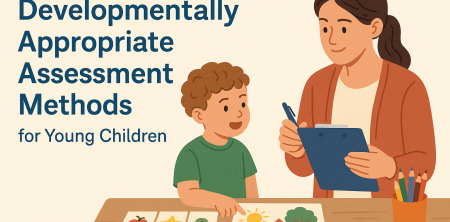
One of the most effective and unobtrusive methods is through observation. Educators can gather insights into a child's skills, interests, and social interactions simply by watching them in natural settings. This method provides rich qualitative data about a child's development.
2. Play-Based Assessments
Play-based assessments incorporate play as a primary method for evaluation. By observing children during play, educators can assess their problem-solving skills, creativity, and social interactions. This method aligns well with the natural learning processes of young children.
3. Portfolio Assessment
Portfolios allow for a collection of a child’s work over time. This method not only showcases individual progress but also encourages children to take pride in their work. Portfolios can include artwork, writing samples, and even photographs of activities, all documenting growth and development.
4. Developmental Checklists
While more traditional, developmental checklists can still play a role in a developmentally appropriate assessment strategy. These checklists help educators track specific skills and milestones, provided they are used flexibly and in conjunction with more qualitative methods.
5. Parent and Family Involvement
Involving parents in the assessment process can yield invaluable insights. Parents can provide context about their child's behavior and skills, which can enhance the understanding of the child's development. Parent-teacher conferences and surveys are effective ways to gather this information. (See: National Institutes of Health on Early Assessment.)
6. Child Self-Assessment
Encouraging children to express their opinions on their own learning can be powerful. Simple self-assessments, like rating their enjoyment of an activity or reflecting on what they learned, can empower children and provide educators with additional perspectives.
7. Standardized Tests with Caution
Though less favored in early childhood settings, standardized tests can still be used appropriately if they align with developmental milestones. Educators should ensure these tests are used sparingly and interpreted within the context of other assessment methods.
Implementing Developmentally Appropriate Assessment in the Classroom
Implementing these methods requires careful planning and a supportive environment. Here are some strategies to consider:
- Create a Positive Atmosphere: Make the learning environment welcoming and safe, encouraging children to express themselves freely.
- Training Educators: Continuous professional development is essential. Educators must understand how to implement these assessment methods effectively.
- Collaborate with Peers: Sharing insights and strategies with colleagues can enrich the assessment process. Collaborative planning sessions can enhance the quality of assessments.
- Use Technology Wisely: Consider using digital tools for portfolios and observational notes, but be cautious of over-reliance on technology.
The Role of Technology in Developmentally Appropriate Assessment
In recent years, the integration of technology into assessment methods has become increasingly prevalent. Digital portfolios, apps for observational assessment, and online parent surveys are just a few examples of how technology can enhance assessment strategies.
However, it's crucial to strike a balance. While technology can streamline the assessment process, it should not overshadow the importance of personal interactions and observations. Technology should complement traditional methods, not replace them.
Challenges in Developmentally Appropriate Assessment
Despite the clear benefits of developmentally appropriate assessments, challenges do exist. Some educators may feel pressure to conform to standardized testing requirements, which can undermine the use of more holistic methods.
Additionally, time constraints can make it difficult for educators to implement comprehensive assessment strategies. Balancing the demands of curriculum with the need for thorough assessments requires thoughtful planning and support from school administration.
The Future of Developmentally Appropriate Assessment
Looking ahead, the landscape of early childhood assessment is likely to continue evolving. As more research highlights the importance of developmentally appropriate practices, there's a growing movement towards integrating these assessments into educational standards.
Furthermore, advocacy for funding and resources to support early childhood education will be critical. Educators must push for policies that prioritize developmentally appropriate assessment methods to ensure that young children receive the quality education they deserve.
Embracing Family and Community Involvement
Family and community engagement plays a vital role in ensuring assessments are truly developmentally appropriate. When parents and caregivers are involved, they provide unique insights into a child’s abilities and challenges outside of the classroom setting. This creates a more comprehensive picture of a child’s development and can inform teaching strategies that resonate with their home environment.
Advocating for workshops that educate families about developmental milestones can also be beneficial. These workshops can help parents understand what to expect and how they can support their children’s learning at home. Collaborative activities that invite families into the classroom, such as a “family learning day,” can further enhance the relationship between home and school. By fostering these connections, it reinforces the idea that education is a partnership.
Real-World Examples of Developmentally Appropriate Assessment
Many educational institutions have successfully implemented developmentally appropriate assessment practices. For instance, the Reggio Emilia approach, rooted in Italy, emphasizes child-led learning and observational assessment. Educators in this approach document children’s progress through photos, videos, and notes, providing a rich narrative of each child's learning journey. (See: CDC Milestones for Child Development.)
In the United States, some schools utilize the HighScope curriculum, which emphasizes active participatory learning. This model employs a unique assessment tool called the Child Observation Record (COR), which is a systematic way to record children’s progress based on their play and activities. Such institutions have reported increased engagement and satisfaction among both educators and families.
Statistics on Developmentally Appropriate Assessment
Research supports the significance of developmentally appropriate practices in early childhood education. According to the National Association for the Education of Young Children (NAEYC), children who are assessed using developmentally appropriate methods show up to a 20% increase in engagement compared to those who undergo traditional assessments.
Furthermore, studies have shown that children in programs focused on holistic, developmentally appropriate assessments experience higher levels of social competence and emotional regulation, which are key indicators of later academic success. The data suggests that schools adopting these methods see improved outcomes not only in academics but also in the overall well-being of their students.
Expert Perspectives on Developmentally Appropriate Assessment
Experts in early childhood education emphasize the importance of developmentally appropriate assessment methods. Dr. Susan Jones, a well-respected child development specialist, advocates for an approach that prioritizes the child's interests and developmental stage. “When we assess children in a way that respects their natural learning processes, we not only gauge their progress more accurately but also nurture their love for learning,” she states.
Additionally, Dr. Robert Johnson, an educational psychologist, highlights the necessity of adapting assessments to reflect the cultural backgrounds of children. “Recognizing the diverse experiences that children bring into the classroom is crucial for meaningful assessments. It's about creating an inclusive environment where all children can thrive,” he explains.
Frequently Asked Questions (FAQ)
What is developmentally appropriate assessment?
Developmentally appropriate assessment refers to evaluation methods that align with the cognitive, emotional, and social development of young children. It emphasizes individualized, holistic approaches that consider a child's unique strengths and learning styles.
Why is developmentally appropriate assessment important?
This type of assessment is crucial because it helps educators understand a child's learning process more deeply. By focusing on developmental readiness, teachers can tailor their instruction to better meet each child's needs, leading to improved educational outcomes.
How can I implement developmentally appropriate assessment in my classroom?
Start by observing children in natural settings and incorporating play-based assessments. Use portfolios to document growth over time and engage families in the assessment process. Continuous training for educators is essential to ensure effective implementation.
What are some challenges I might face with developmentally appropriate assessment?
Challenges may include pressure to conform to standardized testing, time constraints for comprehensive evaluation, and a lack of resources. It's important to advocate for support and continue pushing for developmentally appropriate practices.
Can technology play a role in developmentally appropriate assessment?
Yes, technology can enhance assessment methods by providing tools for observational notes, digital portfolios, and parent surveys. However, it should not replace personal interactions and careful observation.
What resources are available for educators looking to learn more about developmentally appropriate assessment?
There are numerous resources available, including books, online courses, and organizations such as the NAEYC that focus on early childhood education practices. Networking with peers and attending workshops can also provide valuable insights.
Expanding the Perspective: The Cultural Context of Developmentally Appropriate Assessment
Another critical aspect to consider in developmentally appropriate assessment is the cultural context. Children come from diverse backgrounds that shape their learning experiences and developmental trajectories. Understanding these cultural influences is essential for creating an inclusive assessment framework.
For example, in some cultures, group participation and collective learning are emphasized over individual achievements. Recognizing this can reshape how assessments are conducted, allowing children to demonstrate their understanding in ways that align with their cultural practices. This perspective enhances the validity of assessments and helps educators appreciate the unique contributions of each child.
Integrating Social-Emotional Learning in Assessments
Social-emotional learning (SEL) is increasingly recognized as a vital component of early childhood education. Developmentally appropriate assessments should integrate SEL to provide a more comprehensive view of a child’s progress. This involves evaluating a child's ability to manage emotions, show empathy, and develop positive relationships.
For instance, educators can design activities that allow children to practice these skills, observe their interactions, and assess their growth in emotional intelligence. Implementing SEL within assessments ensures that children are not only developing academically but also thriving emotionally and socially.
Additional Strategies for Effective Assessment
Here are a few more strategies that educators can implement to enhance the effectiveness of developmentally appropriate assessments:
- Use Multi-sensory Approaches: Incorporate visual, auditory, and kinesthetic elements into assessments to cater to different learning styles. This can make assessments more relatable and enjoyable for children.
- Implement Flexible Assessment Timelines: Recognize that some children may need more time to demonstrate their skills. Flexible timelines can alleviate pressure and provide a more accurate representation of true learning.
- Encourage Peer Assessment: Allowing children to assess each other's work can foster a sense of community and collaboration. It also helps them learn to evaluate their work critically.
- Reflect and Adjust: After assessments, take time to reflect on the outcomes. Are there areas where children struggled? Use this information to adjust teaching strategies and assessment methods accordingly.
Conclusion: Embracing Developmentally Appropriate Assessment
Ultimately, embracing developmentally appropriate assessment methods in early childhood education is not just about compliance with best practices. It’s about recognizing the individuality of each child and providing a supportive framework for their growth. By prioritizing assessments that resonate with children's developmental needs, educators can lay a strong foundation for lifelong learning and success.
```
Trending Now
- our breakdown of “quick phonemic awareness assessments for kindergarten and first grade teachers”
- “Why Phonological Awareness Predicts Reading Success Better Than Letter Knowledge”
- “How Transitional Kindergarten Prepares Children for…
- “How Gross Motor Development Supports Academic Learning and School Readiness”
- our breakdown of “how to assess phonological awareness skills in young children: screening tools and benchmarks”
Frequently Asked Questions
What is developmentally appropriate assessment in early childhood education?
Developmentally appropriate assessment refers to evaluation methods that align with the cognitive, emotional, and physical readiness of young children. This approach considers not just academic skills but also social and emotional development, providing a holistic understanding of a child's growth.
Why are developmentally appropriate assessments important?
These assessments are crucial because they recognize that children learn differently based on their developmental stages. By using tailored methods, educators can adapt their teaching strategies, leading to better learning outcomes and a more positive educational experience.
How has assessment in early childhood education evolved?
Historically, early childhood assessments relied heavily on standardized testing, which often overlooked individual developmental paths. Over time, educators began to embrace more nuanced approaches influenced by research on developmental milestones, emphasizing the role of play and social interaction.
What are the core principles of developmentally appropriate assessment?
Key principles include individualization, recognizing each child's unique strengths and weaknesses, and contextual relevance, ensuring assessments are meaningful and relevant to the child's environment and experiences.
Who influenced the shift towards developmentally appropriate assessment methods?
The shift towards these methods was significantly influenced by psychologists like Jean Piaget and Lev Vygotsky. Their research underscored the importance of play, social interaction, and environmental context in a child's development, prompting a reevaluation of traditional assessment techniques.
Have you experienced this yourself? We'd love to hear your story in the comments.

