```html
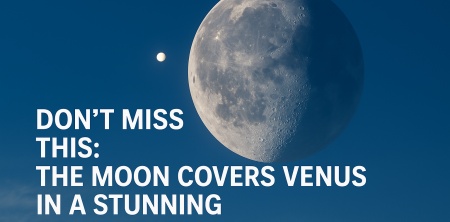
On June 17, 2026, a remarkable celestial event will unfold, captivating skywatchers across North America. The moon covers Venus, marking a rare lunar occultation that will occur during the daytime. While many people might miss this unique sight due to its timing and the challenges of viewing it in daylight, those who are prepared will witness an extraordinary spectacle.
Understanding Lunar Occultations
To fully appreciate the significance of this event, it’s essential to grasp what a lunar occultation is. Essentially, a lunar occultation occurs when the Moon moves in front of a celestial object, in this case, Venus, blocking it from our view. Unlike a total solar eclipse, which often attracts large crowds and extensive media coverage, lunar occultations are surprisingly underappreciated. This is partly due to their rarity and the specific conditions required for optimal viewing.
The fascinating aspect of a lunar occultation is how it showcases the dynamic nature of our solar system. The Moon orbits Earth at an average distance of about 238,855 miles and travels at a speed of nearly 2,288 miles per hour. Given this rapid motion, the Moon can easily obscure bright planets like Venus, especially when the two align from our perspective on Earth.
When and Where to See the Event
The timing of the moon covering Venus will vary depending on your location. For instance, observers on the U.S. East Coast should look to the sky at approximately 3:49 P.M. EDT. In Austin, Texas, the event will begin slightly earlier at 2:24 P.M. CDT, while those in Denver, Colorado, can anticipate the start at 12:55 P.M. MDT.
Being aware of local times is crucial for catching this spectacle. For those living farther from these locations, it’s advisable to check local astronomical resources or mobile apps that provide precise timings based on your geographical coordinates. The need for accurate timing cannot be overstated; the event will only last a few minutes, and any delay could result in missing this rare phenomenon.
The Challenge of Daytime Viewing
One of the intriguing challenges of the moon covering Venus is the daytime setting. Observing celestial events during the day can be tricky, especially with the brightness of the Sun overpowering fainter objects like Venus. However, Venus, known as the "Evening Star" or "Morning Star," shines brightly enough to be seen in daylight under optimal conditions.
To improve your chances of witnessing this event, consider using a pair of binoculars or a small telescope. While it may seem counterintuitive to use optical aids during the day, they can help filter out the Sun's glare and enhance your ability to see Venus before and after it is obscured by the Moon. Just remember to never look directly at the Sun with binoculars or a telescope, as this could cause permanent eye damage.
What You'll See: The Visual Experience
As the Moon passes in front of Venus, observers will experience a visual transformation. The bright planet will gradually disappear behind the Moon, creating a stunning effect that is both mesmerizing and fleeting. People have described similar events as akin to watching a light switch turn off, where one moment there is a bright point in the sky, and the next, it is gone, leaving only the Moon in its place.
For experienced observers, capturing the moment with a camera can add a layer of excitement. If you're planning to photograph the event, ensure your camera settings are optimized for the bright conditions. Use a fast shutter speed to prevent overexposure, and practice beforehand to ensure you’re ready when the time comes.
The Cultural Significance of Lunar Occultations
Throughout history, lunar occultations have held cultural significance in various civilizations. Many ancient cultures viewed celestial events as omens or messages from the gods. The disappearance of a bright planet like Venus could have been interpreted as a sign of impending change or a warning of future events. (See: Understanding lunar occultations.)
Today, while we might approach such events with a more scientific lens, they still inspire awe and wonder. They serve as reminders of our place in the universe and highlight the intricate dance of celestial bodies. Engaging with astronomical events like the moon covering Venus can foster a sense of community among enthusiasts and spark interest in the sciences.
Preparing for the Event: Tips for Skywatchers
As the date approaches, preparation is key to ensuring you don't miss this remarkable sight. Here are some practical tips to make the most out of the experience: We covered prepare for the event in more detail.
- Check the Weather: Clear skies are essential for viewing. Keep an eye on weather forecasts leading up to the event, and be ready to change your location if clouds threaten visibility.
- Join Local Astronomical Societies: Many clubs and societies host viewing events. Joining a group can provide access to telescopes, expert guidance, and a community of fellow enthusiasts.
- Use Technology: Download astronomy apps that can help you track celestial events and set reminders for when to look up.
- Practice Safe Viewing: If using binoculars or a telescope, ensure they have appropriate filters to prevent damage to your eyes.
- Share the Experience: Invite friends or family to join you. Sharing the moment can enhance your appreciation of this extraordinary event.
The Scientific Importance of Lunar Occultations
Beyond their aesthetic appeal, lunar occultations have scientific significance. They provide valuable opportunities for astronomers to study the atmospheres of distant planets and their moons. The event can also help refine our understanding of the Moon's orbit and its interaction with other celestial bodies.
When Venus is covered by the Moon, astronomers can gather data about the light spectrum that passes through the Moon's atmosphere, if any. Such studies can reveal information about the Moon's surface conditions and help in understanding the evolution of our closest celestial neighbor.
Future Events to Look Forward To
If you find yourself captivated by the prospect of the moon covering Venus, you’ll be pleased to know that this won't be the only exciting event on the horizon. Astronomical events like meteor showers, planetary conjunctions, and eclipses are frequent and offer plenty of opportunities for observation.
Mark your calendars for future lunar occultations and other celestial events. Keep an eye on astronomy websites, apps, and social media to stay updated on what's coming up. Your next chance to experience the wonders of the cosmos might be just around the corner!
What Makes Lunar Occultations Unique?
Lunar occultations are unique in several ways. First, their occurrence can be predicted with remarkable accuracy due to the stable orbits of the Moon and planets. They happen when the Moon’s orbit around Earth aligns perfectly with the position of other celestial bodies, making them a fascinating topic for astronomers and enthusiasts alike. This predictability allows both professional and amateur astronomers to prepare and observe these events.
Additionally, lunar occultations can vary in duration and visibility based on geographical location. Some observers might see the event for several minutes, while others might only catch a fleeting glimpse. This variability adds an element of excitement, as those who track the event closely can share their experiences with others, creating a sense of community among skywatchers.
Statistics and Historical Context
Surprisingly, lunar occultations are not as rare as one might think. On average, there are about 50 to 70 lunar occultations of various celestial bodies each year. However, the occultation of bright planets like Venus occurs less frequently, making the upcoming event on June 17, 2026, particularly special.
A historical perspective reveals that lunar occultations have been documented for centuries. Ancient astronomers, such as those in Babylon and Greece, meticulously recorded these events, often linking them to religious or socio-political significances. For example, the ancient Greeks associated the appearance and disappearance of Venus with various deities, illustrating how such celestial events influenced cultural narratives and beliefs. (See: NASA's explanation of lunar occultations.)
Expert Perspectives on Lunar Occultations
Experts in astronomy highlight the importance of lunar occultations as educational opportunities. Dr. Emily Huang, an astronomer at the University of California, noted, “Events like the moon covering Venus serve as excellent teaching moments. They allow us to engage with the public and stimulate interest in both astronomy and science in general.”
Another notable perspective comes from veteran skywatcher and author, Tom Sweeney, who emphasizes the communal aspect of such events. “When people come together to witness the beauty of the universe, it creates a sense of unity. Lunar occultations are perfect for this because they are accessible to everyone, regardless of their level of expertise.”
FAQ About the Moon Covering Venus
When is the moon covering Venus?
The moon will cover Venus on June 17, 2026. Timing varies by location, so check local resources for specific times.
How long will the occultation last?
The actual occultation will last just a few minutes, but the entire event can be observed as Venus approaches and moves away from behind the Moon.
Do I need special equipment to view it?
While you can see the event with the naked eye, binoculars or a small telescope can enhance visibility, especially during daylight. Just ensure you have proper filters if you're observing near the Sun.
What are the best locations to view the event?
The best locations are places with clear, unobstructed views of the sky. Urban areas may have light pollution, so finding a location away from city lights and with a clear horizon is ideal.
What if the weather is bad on June 17, 2026?
If the weather is unfavorable, consider having a backup viewing location in mind. Many astronomy groups often share live streams of such events if you're unable to see it in person.
How often do lunar occultations happen?
Lunar occultations occur frequently, averaging 50 to 70 per year, but significant ones involving bright planets like Venus are less common.
Can I photograph the event?
Yes! If you're planning to take photographs, practice your settings ahead of time, and use a fast shutter speed to avoid overexposure. Ensure your camera can capture both the bright Moon and the darker sky. (See: Scientific insights on lunar occultation.)
Exploring the Science: What Happens During an Occultation?
During a lunar occultation, the Moon's shadow creates a unique environment for scientific observation. As Venus is obscured, astronomers can study the effect of the Moon's atmosphere on the light coming from the planet. The light that passes through the Moon’s thin atmosphere can show variations in color and intensity. Such effects occur because of the Moon's surface and any transient atmospheric phenomena that may exist, including dust and gas.
For instance, some research focuses on how the Moon’s atmosphere, despite being extremely thin, interacts with light from stars and planets. This can provide data on the Moon's exosphere, which is crucial for understanding its geologic history and potential for future exploration.
The Joy of Shared Viewing Experiences
One of the most enriching aspects of astronomical events is the opportunity for shared experiences. Whether you’re gathering with friends, joining a community group, or attending a public viewing event, these moments can foster connections and dialogues about the universe. It’s not just about seeing the moon cover Venus; it’s about sharing the wonder and excitement that comes with observing the cosmos together.
Many astronomy clubs are known to organize public events where telescopes are set up for communal viewing. This is particularly helpful during daytime events like the upcoming one, where guidance from experienced observers can be invaluable. A shared experience often leads to discussions about the science behind the events, fostering a sense of camaraderie among participants.
How to Engage with Astronomy Beyond the Event
If the moon covering Venus intrigues you, consider delving deeper into astronomy. There are numerous ways to get involved, from amateur astronomy clubs to online forums and educational programs. Many resources are available for beginners, offering classes and workshops that range from basic telescope use to advanced astrophysics.
Books, podcasts, and documentaries about space can also enhance your understanding of celestial phenomena. Engaging with these resources can prepare you for future events and deepen your appreciation for the universe. For instance, following reputable astronomy websites can keep you informed about upcoming celestial events, making sure you never miss an opportunity to witness the wonders of the sky.
Conclusion: Embrace the Wonder
As the moon covers Venus on June 17, 2026, take a moment to embrace the wonder of this celestial event. With a bit of preparation and the right approach, you can enjoy a truly unique experience. Whether you're a seasoned astronomer or a curious newcomer, this rare occurrence in the daytime sky is not to be missed. So, gather your gear, check your local times, and get ready to look up!
```
Trending Now
Frequently Asked Questions
What is a lunar occultation?
A lunar occultation occurs when the Moon passes in front of a celestial object, such as a planet, blocking it from view. In this case, on June 17, 2026, the Moon will cover Venus during the daytime, making it a unique and rare event for skywatchers.
When will the Moon cover Venus?
The Moon will cover Venus on June 17, 2026. The timing varies by location, with the event starting at approximately 3:49 P.M. EDT on the U.S. East Coast, 2:24 P.M. CDT in Austin, Texas, and 12:55 P.M. MDT in Denver, Colorado.
How can I see the Moon covering Venus?
To see the Moon cover Venus, you need to be aware of the exact timing for your location. It's recommended to check local astronomical resources or mobile apps for precise timings, as the event will last only a few minutes.
Why are lunar occultations underappreciated?
Lunar occultations are often underappreciated due to their rarity and the specific conditions required for optimal viewing. Unlike solar eclipses, which draw large crowds, these events typically receive less media attention despite their fascinating nature.
What should I prepare to view the lunar occultation?
To prepare for viewing the lunar occultation of Venus, ensure you know the specific timing for your area, find a clear viewing location, and consider using binoculars or a telescope for a better view of the event.
What did we miss? Let us know in the comments and join the conversation.

