```html
The Federal Reserve's Recent Decision: A Hold on Rates
In a move that sent ripples through financial markets, the Federal Reserve opted to keep interest rates unchanged during its latest meeting in June. This decision comes amid growing concerns around inflation, which has remained stubbornly high in recent months. Despite maintaining the current rate, the Fed signaled the potential for at least one rate increase in the near future, prompting a swift reaction from investors.
The immediate aftermath was a sharp decline in major stock indexes, with the Dow Jones Industrial Average plummeting nearly 500 points. Such a market reaction underscores the anxiety surrounding the Federal Reserve's stance on interest rates and its direct implications for various economic sectors.
Kevin Warsh: A New Era Begins
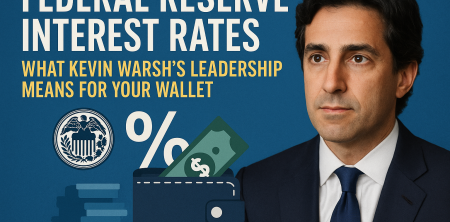
At the helm of this pivotal moment is Kevin Warsh, who has taken over as the chair of the Federal Reserve. His first meeting was particularly noteworthy, not just because it marked a leadership change but also due to Warsh's reputation for advocating a more aggressive monetary policy. Known for his previous role as a Fed governor, Warsh has consistently emphasized the importance of responding decisively to inflation pressures.
Warsh’s leadership is already being defined by a proactive approach, having established five task forces aimed at reassessing various aspects of the Federal Reserve’s operations. These task forces focus on key areas such as communication strategies, the Fed’s balance sheet, data utilization, labor dynamics, and the frameworks surrounding inflation. The implications of these reassessments could significantly affect how the Federal Reserve interest rates are perceived and implemented in the future.
The Broader Economic Implications of Federal Reserve Interest Rates
Understanding the Federal Reserve interest rates and their potential changes is essential for ordinary citizens, as these rates have a direct impact on borrowing costs, mortgages, job markets, and retirement savings. A potential increase in rates can lead to higher interest on loans, making it more expensive for individuals to finance homes, cars, and education. For many, this translates into a tightening of budgets and a reconsideration of spending habits.
Moreover, higher interest rates can also impact businesses, as the cost of borrowing increases. Companies may scale back on investment and hiring, which can lead to a ripple effect throughout the economy, potentially stifling growth and innovation.
Market Reactions and Future Projections
The broad market reaction to the Fed's decision indicated that investors are on edge. With all 11 major sectors of the stock market experiencing declines, it became apparent that the uncertainty around future interest rate hikes has created a volatile environment. Investors are bracing themselves for potential shifts in monetary policy, which could further influence their portfolios and investment strategies.
Looking ahead, experts suggest that the Federal Reserve may need to raise interest rates sooner rather than later if inflation continues to exceed expectations. The central bank’s dual mandate of promoting maximum employment while ensuring stable prices will necessitate careful monitoring and potentially aggressive action.
The Role of Inflation in Fed Decisions
Inflation has been a pressing concern for the Federal Reserve and the American public alike. Rising prices for essential goods and services have strained household budgets and led to heightened anxiety among consumers. The Fed’s inability to control inflation could necessitate even more drastic measures in the future, including significant increases in interest rates.
According to recent data, the inflation rate remains above the Fed's target of around 2%. If this trend continues, the Federal Reserve may be forced to act aggressively to rein in inflation, which could involve not just one but several rate hikes in the coming months. This persistent inflationary pressure is something that both the Fed and consumers need to watch carefully.
Consumer Behavior and Borrowing Costs
As Federal Reserve interest rates remain in flux, consumer behavior is likely to shift. When rates are low, borrowing becomes more attractive, leading to increased spending on big-ticket items. However, as rates begin to rise, the opposite effect often occurs. Consumers may hesitate to take on debt, impacting everything from home purchases to car loans.
For those considering mortgages, the current environment is particularly precarious. Potential homebuyers should weigh the benefits of locking in a mortgage at a lower rate against the risks of rising rates. Even a slight increase in rates can translate into hundreds of dollars more in monthly payments, making this a critical factor in financial planning. (See: Federal Reserve official website.)
Warsh's Focus on Task Forces
Under Kevin Warsh’s leadership, the establishment of five task forces is a significant development within the Federal Reserve. Each task force has a specific focus area, aimed at refining the Fed's operations and enhancing its responsiveness to economic changes. This strategy reflects Warsh’s commitment to ensuring that the Federal Reserve is equipped to handle modern economic challenges.
The task forces will delve into critical aspects such as how the Fed communicates its decisions and the data it uses to inform those choices. In an era where information is paramount, improving communication can help the Fed better connect with both markets and the public, thereby reducing uncertainty and volatility.
Implications for Jobs and Economic Growth
The relationship between Federal Reserve interest rates and employment is complex but vital. When rates rise, businesses face higher borrowing costs. This can lead to reduced investment in expansion and hiring, which can ultimately impact job growth. Conversely, a stable or declining interest rate environment can foster job creation as businesses feel more confident in their financial footing.
Job markets have shown resilience in recent months, but any increase in interest rates may test this resilience. If businesses begin to pull back on hiring due to increased costs, the job market could experience stagnation, affecting millions of workers across various industries.
Retirement Savings and the Future
For many Americans, retirement savings are a primary concern, and changes to Federal Reserve interest rates can significantly influence these savings. As rates rise, the return on fixed-income investments like bonds could improve, benefiting those who are relying on interest income for their retirement. However, higher borrowing costs can also put a strain on disposable income, which may reduce the amount individuals are able to save.
Those nearing retirement should closely monitor the Federal Reserve's moves. A well-structured retirement plan will account for potential interest rate changes, ensuring that individuals can adapt to shifts in financial landscapes. Financial advisors recommend diversifying investment portfolios to mitigate risks related to interest rate fluctuations, particularly for those who are heavily invested in bonds and other fixed-income assets. This builds on the silent threat of rates.
Final Thoughts: Navigating the Uncertain Future
The Federal Reserve interest rates are more than just a number; they represent a critical lever in the broader economy that influences everything from consumer behavior to business growth and individual financial health. With Kevin Warsh now leading the charge, the Fed's approach to inflation and interest rates is likely to undergo scrutiny and evolution. As we move forward, staying informed about these potential changes will be crucial for consumers, businesses, and investors alike.
In this environment of uncertainty, transparency and communication will be key. Warsh’s initiatives to reassess how the Fed communicates its policies and decisions will hopefully lead to greater clarity, allowing all stakeholders to make informed decisions amid shifting economic tides.
Understanding the Federal Reserve Framework
To fully grasp how Federal Reserve interest rates impact the economy, it’s helpful to understand the basic framework within which the Fed operates. The Federal Reserve's primary tool for influencing interest rates is the federal funds rate, which is the interest rate at which banks lend money to each other overnight. Adjustments to this rate can affect a wide array of financial products, including mortgages, credit cards, and business loans.
The Fed employs a dual mandate: to promote maximum employment and stable prices. This means that when inflation rises or falls outside of the Fed's ideal range, the central bank must act to adjust rates accordingly. For instance, if inflation consistently exceeds 2%, the Fed may increase rates to cool off the economy, preventing overheating.
Conversely, if unemployment rises or growth stagnates, the Fed might lower rates to stimulate economic activity. This balancing act is a continuous challenge, and the decisions made by the Fed can have both immediate and long-term repercussions on the economy.
Historical Context of the Federal Reserve’s Interest Rate Decisions
Looking back at historical trends can provide valuable insight into the Federal Reserve's interest rate strategies. For instance, during the financial crisis of 2008, the Fed slashed interest rates to near-zero levels to spur economic recovery. These low rates persisted for nearly a decade, promoting borrowing and spending but also contributing to concerns about asset bubbles and inflation.
In recent years, the Fed has gradually increased rates from those historic lows. This shift reflects the improving economic conditions, including falling unemployment rates and rising consumer confidence. However, the transition has not been without its challenges, as evidenced by market volatility and the ongoing debate over how high rates should rise.
The historical context also sheds light on the potential for future rate hikes. The Fed often signals its intentions through public communications, and market participants closely scrutinize these statements for clues about future policy direction. (See: New York Times on Federal Reserve rates.)
Comparative Analysis: U.S. vs. Global Central Banks
When discussing Federal Reserve interest rates, it's also informative to consider how they compare to monetary policies employed by other central banks around the world. For example, the European Central Bank (ECB) has taken a much more cautious approach in terms of raising rates, often keeping them lower than those in the U.S. This divergence can have significant implications for currency values, international trade, and capital flows.
As the Fed contemplates its next moves, global economic conditions will play a crucial role. Countries facing sluggish growth may adopt looser monetary policies, while the U.S. may need to remain vigilant about inflation if it continues to rise amid a recovering economy. The interplay between these policies can create complex dynamics that affect investment strategies, exchange rates, and international economic relations.
Impact on Financial Markets and Investments
The Federal Reserve interest rates can substantially influence financial markets and investment strategies. When rates rise, the cost of borrowing increases, often leading to lower corporate profits as expenses rise. This scenario can prompt investors to shift their portfolios, moving away from stocks and into safer investments like bonds.
Historically, rising interest rates have been correlated with declining stock market performance. For instance, in past cycles, markets have often reacted negatively to anticipated rate hikes, with volatility increasing as investors adjust their expectations. Understanding these market dynamics is crucial for anyone involved in investing, as it allows for better risk management and strategic positioning.
On the other hand, when interest rates are low, it can create a favorable environment for equities, as cheaper borrowing costs allow businesses to expand, invest, and increase profits. This can lead to bullish market sentiment among investors.
FAQ: Federal Reserve Interest Rates
What are Federal Reserve interest rates?
Federal Reserve interest rates refer to the rates set by the U.S. central bank, which influence the cost of borrowing and lending throughout the economy. The primary rate is the federal funds rate, which is the interest rate at which banks lend reserves to each other overnight.
How do Federal Reserve interest rates affect the economy?
Changes in Federal Reserve interest rates can significantly impact economic activity. Higher rates generally cool spending and borrowing, while lower rates encourage them. This affects everything from consumer loans and mortgages to business investments and job creation.
Why does the Federal Reserve raise interest rates?
The Fed raises interest rates primarily to combat rising inflation. By increasing rates, the Fed aims to reduce spending and borrowing, helping to stabilize prices and maintain the value of the currency. (inflation trends analysis)
How often does the Federal Reserve meet to discuss interest rates?
The Federal Reserve typically meets eight times a year to review economic conditions and set monetary policy, including interest rates. However, additional meetings may be called if significant economic events necessitate a policy adjustment.
What should individuals do in a rising interest rate environment?
In a rising interest rate environment, individuals should reassess their financial strategies. This may involve locking in fixed-rate loans, considering refinancing options, or adjusting investment portfolios to mitigate risk associated with higher borrowing costs.
What impact do Federal Reserve interest rates have on retirement savings?
Higher Federal Reserve interest rates can lead to higher returns on fixed-income investments, benefiting those who rely on interest income for retirement. However, increased borrowing costs may reduce disposable income, making saving more challenging for some individuals.
Is there a risk of recession if the Federal Reserve raises interest rates too quickly?
Yes, there is a potential risk of recession if the Federal Reserve raises interest rates too quickly. Rapid rate increases can stifle economic growth as borrowing costs rise, leading to reduced consumer spending and business investment. (See: BBC News on interest rates and inflation.)
Future Federal Reserve Interest Rate Policies: What to Expect
As we look ahead, many analysts are speculating on the Federal Reserve's future approach to interest rates. The Fed’s decisions will likely be influenced not only by domestic economic indicators but also by global financial trends. For instance, if other major economies like the Eurozone or China continue to struggle, the U.S. might adopt a more cautious stance to avoid potential negative impacts on exports and overall economic growth.
Additionally, the Fed’s policy will need to balance the pressures of inflation against the risks of slowing growth. The current economic climate necessitates a watchful eye on various metrics, such as consumer spending, wage growth, and employment rates. If consumers feel squeezed by higher prices and rising interest rates, it could lead to diminished spending, ultimately impacting economic growth.
How Consumer Sentiment Influences Rate Decisions
Consumer sentiment plays a pivotal role in shaping Federal Reserve interest rates. When consumers feel optimistic about the economy, they are more likely to spend, which can stimulate growth. Conversely, if consumer confidence wanes, the Fed may be prompted to adjust interest rates to support economic activity.
Recent surveys indicate that while consumer confidence has been strong, concerns about inflation and its impact on purchasing power are beginning to emerge. As these sentiments shift, the Fed may need to respond by either tightening or loosening interest rates to guide the economy toward desired outcomes.
Expert Perspectives: Economists Weigh In
Economists are often divided on the best approach for the Federal Reserve regarding interest rates. Some advocate for immediate increases to stave off inflation, while others warn that too rapid an increase could risk pushing the economy into recession.
For instance, renowned economist Janet Yellen has expressed that a cautious approach is critical, emphasizing the importance of data-driven decision-making. On the other hand, economists like Larry Summers argue that the Fed needs to act quickly to curb inflation, suggesting that a proactive stance is necessary to maintain economic stability.
This debate highlights the complexities of monetary policy and the various factors that must be considered when determining the appropriate course of action. As the Federal Reserve navigates these challenges, it will be essential to listen to diverse expert opinions to shape effective monetary policy.
Global Events and Their Impact on U.S. Interest Rates
Global geopolitical events, such as trade negotiations, conflicts, and economic sanctions, can significantly influence Federal Reserve interest rates. For instance, a trade war might lead to increased costs for consumers and businesses, impacting inflation rates and prompting the Fed to adjust interest rates accordingly.
Additionally, shifts in oil prices due to geopolitical tensions can have broad economic implications, affecting everything from transportation costs to consumer prices. The Fed must consider these global factors when assessing how best to manage domestic interest rates to ensure a stable economic environment.
```
Trending Now
Frequently Asked Questions
What did the Federal Reserve decide about interest rates in June?
In June, the Federal Reserve decided to keep interest rates unchanged, despite ongoing concerns about high inflation. However, they indicated that a rate increase could be on the horizon, which caused significant market reactions.
Who is Kevin Warsh and what is his role at the Federal Reserve?
Kevin Warsh is the new chair of the Federal Reserve, having taken over leadership recently. He is known for advocating a more aggressive monetary policy and has established task forces to reassess the Fed's operations.
How might Kevin Warsh's leadership affect interest rates?
Kevin Warsh's proactive approach at the Federal Reserve, including the establishment of task forces, could lead to significant changes in how interest rates are managed and perceived, especially in response to inflation.
What are the implications of the Federal Reserve's interest rate decisions?
The Federal Reserve's interest rate decisions have direct implications for borrowing costs, affecting loans, mortgages, and economic activity. Changes in rates can influence consumer spending and investor behavior.
Why did the stock market react negatively after the Fed's decision?
The stock market experienced a sharp decline, with the Dow Jones falling nearly 500 points following the Fed's decision to hold interest rates. This reaction reflects investor anxiety about the Fed's stance on inflation and future rate hikes.
What's your take on this? Share your thoughts in the comments below — we read every one.

