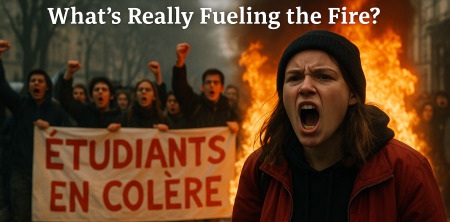
France, a nation with a rich history of public dissent, is once again finding its streets alive with the fervent energy of its youth. But this isn't just another casual demonstration; we're talking about widespread and, in some particularly tense moments, violent student protests that have seized the country's attention. The situation escalated so rapidly and intensely that Prime Minister Lecornu himself had to call a crisis meeting on October 1, 2026. This isn't just a local spat; it's a national phenomenon, and these student protests France is witnessing are quickly becoming a defining issue, shaping the political landscape as the country gears up for a presidential election.
What started as a ripple in the Paris region just last week has now crashed across the entire nation, leaving a trail of hundreds of arrests and dozens of injuries in its wake. When you see that kind of rapid escalation and widespread participation, you know it's not just about a minor inconvenience. There's a deeper undercurrent of frustration, a collective grievance that's finally boiling over. So, what exactly are these students so angry about? It turns out, it's a potent mix of issues, ranging from severely under-resourced schools to outrageously long hours, and a deeply flawed university application process. For many high schoolers, a typical day stretches from 8 a.m. to 6 p.m. – that's a professional adult's workday, but without the professional adult's pay or autonomy. It's a grueling schedule, and it's taking a toll. As we dig into the heart of these student protests France is grappling with, it becomes clear that these aren't just isolated complaints; they're symptoms of systemic issues that have been festering for years.
The Spark: Grievances Beyond the Classroom Walls
Let's be real, no one just decides to hit the streets, face down riot police, and risk arrest for trivial reasons. The grievances fueling these student protests in France are deeply felt and incredibly personal for many young people. Imagine being a teenager, already navigating the complexities of adolescence, and then adding an educational system that feels like it's actively working against you. That's the reality for many of these students.
One of the loudest complaints revolves around the chronic under-resourcing of schools. This isn't just about a lack of new textbooks, though that's certainly part of it. We're talking about crumbling infrastructure, insufficient teaching staff leading to overcrowded classrooms, and a general feeling that the institutions meant to nurture their intellectual growth are instead being starved. When you walk into a classroom that feels neglected, it sends a clear message about how much the system values your education. It's demoralizing, and it breeds resentment. Students are acutely aware when their learning environment is subpar, especially when they compare it to what they see or hear about in other, better-funded institutions or even other countries.
Then there's the sheer grind of the school day. Many high schoolers report schedules that run from 8 a.m. to 6 p.m. That's ten hours a day, five days a week, often followed by hours of homework. Think about that for a moment. Where is the time for extracurriculars, for family, for part-time jobs, or simply for being a teenager? This isn't just about being tired; it's about a lack of balance, a feeling that their entire lives are being consumed by an educational system that demands everything and gives little back in terms of genuine well-being. This kind of relentless schedule can lead to burnout, stress, and a profound disengagement from the very act of learning. It transforms education from an enriching experience into an endurance test, and that's a recipe for student protests France is now seeing.
Parcoursup: The University Application Labyrinth
Perhaps one of the most significant flashpoints, especially for older high school students, is the university application process itself, specifically the platform known as Parcoursup. This system, implemented a few years ago, was meant to streamline admissions to higher education institutions. However, for many students, it has become a source of immense stress, anxiety, and perceived unfairness. Parcoursup uses an algorithm to match students with university places, taking into account grades, course choices, and even extracurriculars. But the opaque nature of the algorithm and the competitive pressure it creates have led to widespread dissatisfaction.
Students often feel like their future is being decided by a black box, with little transparency about why some are accepted and others rejected. The system can feel arbitrary and impersonal, reducing years of hard work and individual aspirations to a series of data points. Imagine pouring your heart and soul into your studies, only to have your university dreams hinge on a mysterious algorithm. This isn't just about getting into a specific program; it's about the very sense of agency and control over one's own future. When that's taken away, frustration quickly turns to anger. Parcoursup has been a consistent target of student protests in France since its inception, proving to be a persistent thorn in the side of students and a symbol of governmental detachment from their realities.
From Paris Streets to National Outcry
The geographic spread and rapid intensification of these student protests in France are quite remarkable. What began as localized demonstrations in the Paris region quickly morphed into a national movement. This isn't surprising, given the shared nature of the grievances. Issues like under-resourced schools, long hours, and the frustrations with Parcoursup aren't unique to Parisian students; they're systemic problems affecting young people across the country. Social media, of course, plays a huge role in this amplification. A protest at one high school can quickly inspire similar actions hundreds of kilometers away, fueled by shared stories and a collective sense of solidarity.
The sheer scale of the response, with hundreds of arrests and dozens of injuries, speaks volumes about the intensity of the confrontations. When young people are willing to endure such consequences, it signals a profound level of desperation and conviction. It also highlights the government's firm, often heavy-handed, approach to maintaining order. The scenes of clashes with police, the use of tear gas, and the images of students being detained paint a vivid picture of a deeply polarized situation. These are not minor skirmishes; they are significant confrontations that reflect a growing chasm between the youth and the state. The fact that these protests have escalated to this level, rather than being contained, suggests a deep-seated anger that resonates far beyond the initial flashpoints. (See: France student protests 2023.)
The Political Hot Potato: Macron's Succession and Financial Woes
It's impossible to discuss these student protests in France without placing them squarely within the context of the ongoing political landscape. France is in the midst of an election campaign to replace President Emmanuel Macron, and these demonstrations have immediately become a major, undeniable issue. Every candidate is now forced to address the concerns of the youth, and their responses will undoubtedly influence public opinion. For the incumbent government, led by Prime Minister Lecornu, it's a particularly precarious situation. They are already facing immense pressure due to France's growing financial problems, and now they have a highly visible, highly emotional youth movement on their hands.
The timing couldn't be worse for the government. With an election on the horizon, they need to project an image of stability and competence. Widespread student unrest, especially when it turns violent, undermines that image. It also gives opposition parties potent ammunition, allowing them to criticize the government's handling of education, youth policy, and the broader economic situation. The government is caught in a bind: appearing too lenient might be seen as weakness, but being too heavy-handed risks alienating a crucial demographic and further inflaming tensions. This delicate dance is happening under the glare of public scrutiny, with every move scrutinized and every statement dissected. These student protests France is experiencing are not just about education; they are a powerful political statement, shaping the narrative of the upcoming election.
A Historical Echo: France's Tradition of Student Activism
To truly understand the current wave of student protests in France, one needs to appreciate the country's long and often tumultuous history of student activism. This isn't a new phenomenon; it's a deeply ingrained part of the French political consciousness. From the revolutionary fervor of 1789 to the seismic events of May 1968, students have consistently been at the forefront of social and political change. May '68, in particular, stands as a legendary moment, when student-led protests against traditional institutions, consumerism, and the Vietnam War sparked a national general strike involving millions of workers, nearly toppling Charles de Gaulle's government.
This historical precedent means that when students mobilize in France, it's taken seriously. It's not just dismissed as youthful exuberance; it's seen as a potential harbinger of broader social discontent. The government knows this, the public knows this, and crucially, the students themselves know this. They are tapping into a powerful legacy, drawing strength from the knowledge that their predecessors have, at times, profoundly reshaped the nation. This historical context gives the current student protests France is witnessing an added layer of significance and urgency, making them more than just isolated incidents of youthful defiance.
The Economic Shadow: Financial Problems and Youth Prospects
While the immediate triggers for the student protests in France are educational, we can't ignore the larger economic anxieties that undoubtedly fuel much of the frustration. France is facing significant financial problems, and these macroeconomic challenges inevitably trickle down to affect the lives and prospects of young people. When the national economy is struggling, it often means fewer resources for public services like education, leading directly to the under-resourcing that students are complaining about. Budget cuts can manifest as larger class sizes, fewer teachers, and neglected facilities.
Beyond the immediate school environment, a struggling economy casts a long shadow over future career prospects. Students are investing years of their lives and immense effort into their education, often with the implicit promise of a stable and rewarding career at the end of it. If the economic outlook is bleak, if job opportunities are scarce, or if the cost of living is rising disproportionately to wages, then that promise begins to feel hollow. This disconnect between effort and potential reward can breed cynicism and despair. The student protests in France are not just about textbooks; they're about a perceived betrayal of the social contract, where hard work in education is supposed to lead to a better future. When that future looks uncertain, frustration turns into action.
The Role of Social Media in Mobilization and Information
It goes without saying that social media platforms have become indispensable tools for modern protest movements, and the student protests in France are no exception. In an age where information travels at the speed of light, platforms like X (formerly Twitter), Instagram, TikTok, and WhatsApp groups are crucial for rapid mobilization, sharing real-time updates, and coordinating actions across different cities and schools. A single viral video of a protest or a police confrontation can ignite sympathy and spur others to join the movement.
Social media also serves as a critical counter-narrative to traditional media, which can sometimes be perceived as biased or slow to cover developing events. Students can share their direct experiences, photos, and videos, giving an unvarnished view of what's happening on the ground. This direct communication fosters a sense of solidarity and collective identity among protesters, allowing them to feel connected even when physically dispersed. Moreover, it creates a powerful public record, making it harder for authorities to downplay or misrepresent the scale and intensity of the demonstrations. For these student protests France is witnessing, social media isn't just a communication tool; it's an organizing engine and a powerful amplifier of their message.
Expert Perspectives: What Analysts Are Saying
Political analysts and sociologists are really digging into the current student protests in France, trying to figure out what makes this wave different from previous ones, or how it might echo them. Many are pointing to a feeling of "generational abandonment" among young people. Dr. Hélène Dubois, a leading sociologist at the Sorbonne, recently commented that "While the specific triggers are educational, the underlying current is a profound distrust in the state's ability to secure a decent future for its youth. It's not just about a curriculum, it's about the social contract breaking down for an entire demographic." This sentiment resonates with the economic anxieties we've touched on, suggesting that the educational issues are just the most visible symptoms of a deeper malaise.
Economists, on the other hand, are often linking the protests directly to France's fiscal situation. Dr. Marc Levasseur, an economic policy expert, highlighted that "Years of underinvestment in public services, particularly education, are now coming home to roost. The government is caught between the need for austerity and the demands of an increasingly vocal electorate. There's no easy fix when the national debt looms large, but ignoring these calls for investment will likely prove more costly in the long run." These perspectives underscore the complex web of factors at play, showing that these aren't just isolated student grievances but rather interconnected societal challenges. (See: French student protests analysis.)
The Impact on National Identity and Values
France prides itself on its republican ideals – liberty, equality, fraternity. These student protests are really putting those values to the test. When students feel their "equality" in access to quality education is compromised, or their "liberty" to shape their own future is constrained by a rigid system like Parcoursup, it starts to chip away at the national identity. This isn't just about policy changes; it’s about a generational re-evaluation of what it means to be French in the 21st century. Are these ideals still relevant when the youth perceive a growing disparity in opportunities?
The clashes with police, the images of students being forcibly removed, these scenes can be really jarring for a nation that values civil liberties. It raises questions about the balance between maintaining public order and protecting the right to protest. How the government handles these demonstrations, and whether they can bridge the gap with the protesting youth, will say a lot about the current health of French democracy and its commitment to its foundational principles. It's a moment of introspection for the entire country, forcing a look at whether the rhetoric of republicanism truly matches the reality on the ground for its youngest citizens.
Looking Ahead: What Could Happen Next?
The crisis meeting called by Prime Minister Lecornu on October 1, 2026, signals that the government is taking these student protests in France seriously. But a meeting is just the first step; the real challenge lies in finding meaningful solutions that address the core grievances. What could we expect to see unfold in the coming weeks and months?
One possibility is that the government will attempt to de-escalate the situation through dialogue and concessions. This could involve promises of increased funding for schools, a review of the Parcoursup system, or even adjustments to the school day schedule. However, any such promises would need to be concrete and credible, especially with an election looming. Students and the public will be scrutinizing these responses closely, looking for genuine commitment rather than mere political posturing.
Another scenario, particularly if the government's response is perceived as inadequate, is a further escalation of the protests. If students feel their concerns are being ignored or dismissed, the demonstrations could grow in size and intensity, potentially drawing in other segments of society, as happened in May '68. The involvement of parents, teachers' unions, or even other labor groups could transform these student protests in France into a broader social movement, putting immense pressure on the government and significantly impacting the upcoming election.
The path forward is fraught with challenges. The government needs to balance the demands of the students with its own fiscal constraints and political agenda. The students, for their part, need to maintain a unified front and articulate their demands clearly. This is a high-stakes moment for France, and the outcome of these protests will undoubtedly shape the country's educational policies, political landscape, and social fabric for years to come.
The Broader Implications for French Society
These student protests in France are more than just a passing phase of youthful rebellion; they carry significant implications for the broader fabric of French society. At their heart, these demonstrations are a plea for a more equitable, responsive, and humane educational system. But they also reflect deeper anxieties about social mobility, economic justice, and the future prospects of an entire generation.
If the government fails to adequately address these concerns, the long-term consequences could be severe. A disaffected and alienated youth population is not only a recipe for continued social unrest but also a drain on national potential. A generation that feels unheard and undervalued is less likely to engage constructively with democratic institutions, potentially leading to increased cynicism and political apathy down the line. Moreover, the perceived failures of the education system could exacerbate existing social inequalities, creating a two-tiered society where only those with privileged access to resources can truly thrive. The very ideals of French republicanism—liberty, equality, fraternity—are being tested in the streets and classrooms of the nation. How France navigates this period of intense student activism will tell us a great deal about its commitment to its youth and its ability to adapt to the evolving needs of its citizens.
Frequently Asked Questions About Student Protests in France
What are the main reasons students are protesting in France?
Students are protesting for several key reasons: chronic under-resourcing in schools, leading to crumbling infrastructure and overcrowded classrooms; excessively long school days, often from 8 a.m. to 6 p.m.; and deep dissatisfaction with Parcoursup, the university application system, which many find opaque and unfair. These educational grievances are also intertwined with broader economic anxieties about their future prospects. (See: Impact of education on protests.)
Is this the first time students have protested in France?
Absolutely not. France has a very long and proud history of student activism, with notable movements like May 1968 having significant impacts on the nation's political and social landscape. Students have consistently been a powerful force for change, making their current protests a serious matter for the government and public alike.
How is the government responding to the student protests?
Prime Minister Lecornu called a crisis meeting on October 1, 2026, indicating the government is taking the situation seriously. However, their full response is still unfolding. Historically, the French government has sometimes used a firm hand to maintain order, leading to arrests and injuries, but they also often seek dialogue and potential concessions, especially with an election approaching.
What is Parcoursup and why is it a point of contention?
Parcoursup is France's national university application platform. It uses an algorithm to match students with higher education programs. Students criticize it for its lack of transparency, feeling that their futures are decided by an impersonal "black box." They also find it incredibly stressful and competitive, leading to a sense of lost agency over their academic paths.
What role does social media play in these protests?
Social media platforms are vital for the current student protests in France. They enable rapid mobilization, real-time sharing of information and updates, and coordination of actions across different locations. Platforms like X, Instagram, and TikTok also allow students to share their direct experiences, creating a powerful counter-narrative and fostering solidarity among participants.
How do these protests connect to the upcoming presidential election?
The student protests have immediately become a central issue in the ongoing presidential election campaign. Every candidate is now pressured to address youth concerns, and their responses will heavily influence public opinion. For the incumbent government, the unrest undermines their image of stability and competence, providing opposition parties with significant political ammunition.
Ultimately, what we're witnessing with these student protests in France is a powerful expression of a generation demanding to be seen and heard. Their grievances are real, their energy is palpable, and their determination is unwavering. The coming weeks will reveal whether the French government can meet this challenge with genuine understanding and concrete action, or whether the current unrest is just the beginning of a much longer, more arduous struggle for the nation's youth.
Trending Now
- This Crucial Tech Could Upend Justice: The Pros and Cons of AI in Legal Practice
- 7 Groundbreaking Online Courses That Will Transform Your Understanding of AI Ethics in Law
- AI vs. Human Financial Advisors: Which…
- 7 Astonishing AI Finance Tools That Could Save College Students Thousands
Frequently Asked Questions
What are the main reasons for the student protests in France?
The student protests in France are fueled by a mix of grievances including severely under-resourced schools, excessively long hours, and a flawed university application process. Many high school students experience grueling schedules, leading to frustration and a sense of systemic injustice.
How have the student protests in France escalated recently?
The protests began as a localized issue in the Paris region but rapidly spread nationwide, resulting in hundreds of arrests and injuries. The situation escalated to the point where Prime Minister Lecornu called a crisis meeting, highlighting the protests' significance in the political landscape.
What impact are the student protests having on the political landscape in France?
The ongoing student protests are becoming a defining issue as France approaches its presidential election. The widespread participation and intensity of the protests signal a growing frustration among youth, potentially influencing political agendas and candidates.
What are the working hours like for students in France?
Many high school students in France face demanding schedules that stretch from 8 a.m. to 6 p.m., resembling a professional adult's workday. This extensive time commitment, coupled with lack of autonomy and pay, contributes to the students' growing dissatisfaction.
How are the authorities responding to the student protests in France?
Authorities in France have responded to the escalating student protests with increased police presence and measures to manage the demonstrations. The situation has led to numerous arrests and injuries, prompting government officials, including the Prime Minister, to hold crisis meetings.
Agree or disagree? Drop a comment and tell us what you think.


0 Responses