```html
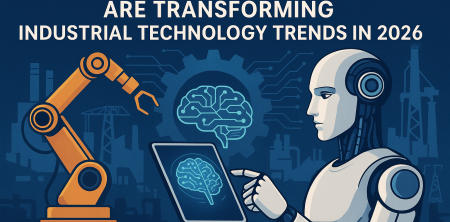
The landscape of industrial technology is experiencing a profound transformation, and the 2026 Hannover Messe has illuminated some of the most significant trends shaping this evolution. Central to these trends are the concepts of agentic AI, physical AI, and domain-specific industrial models, which are set to redefine how factories and supply chains operate. This article will explore these emerging technologies, their implications, and why they matter to anyone involved in the manufacturing and tech sectors.
1. The Rise of Agentic AI
At the forefront of industrial technology trends is the rise of agentic AI. Unlike traditional AI systems that merely analyze data, agentic AI takes it a step further. This form of AI is designed to operate autonomously, executing tasks without human intervention. This significant evolution allows businesses to automate complex processes that require decision-making and action-taking capabilities. We covered physical AI in manufacturing in more detail.
Companies are now looking at agentic AI as a solution to streamline operations and reduce labor costs. By implementing these intelligent agents, organizations can achieve enhanced productivity and efficiency. For instance, in manufacturing, agentic AI can manage inventory levels, monitor machinery health, and even predict maintenance needs—all while handling these tasks with a level of precision that surpasses human capabilities.
Recent studies indicate that the adoption of agentic AI could lead to a 40% increase in productivity across sectors. This is particularly essential in high-demand industries where precision and speed are crucial for success.
2. Understanding Physical AI
Physical AI is another groundbreaking trend making waves at Hannover Messe. This innovative technology integrates AI with physical systems, bridging the gap between digital intelligence and real-world machinery. The implications of physical AI are staggering, as it enables machines to perform tasks that previously required human oversight. From robotic arms that can adapt their functions based on real-time data to drones that can autonomously inspect infrastructure, physical AI is set to revolutionize how industries approach automation.
What makes this trend particularly compelling is the ease with which these physical AI systems can be integrated into existing production lines. Manufacturers can enhance their operations without the need for extensive overhauls. As a result, the speed of adoption is increasing, making it a critical area for industrial leaders to focus on if they wish to remain competitive.
Companies like ABB and KUKA have demonstrated how physical AI can lead to significant improvements in production efficiency. For example, KUKA’s robots are already being used in automotive manufacturing, handling tasks that require intricate movements and adjustments more efficiently than human workers.
3. Domain-Specific Models: Tailoring AI to Industry Needs
Another pivotal trend seen at Hannover Messe is the development of domain-specific industrial models. These models are designed to cater specifically to the unique challenges and requirements of various industries. Instead of a one-size-fits-all approach, organizations can now implement AI solutions that are finely tuned to their operational contexts.
This trend is crucial because it acknowledges that different sectors have distinct needs. For example, the automotive industry may require AI systems that optimize assembly line efficiency, while the pharmaceutical sector might focus on ensuring compliance with stringent regulatory standards. With domain-specific models, businesses can leverage AI to address specific pain points, enhancing productivity and compliance in the process.
For instance, in agriculture, domain-specific models can analyze soil conditions and predict crop yields, thereby aiding farmers in maximizing their output while minimizing resources. This tailored approach is reshaping not only production methodologies but also the overall strategic planning within industries.
4. The Impact on Supply Chain Management
The integration of agentic and physical AI into supply chain management is perhaps one of the most exciting applications of these technologies. By automating various facets of supply chains, companies can achieve unprecedented levels of efficiency and responsiveness. For instance, intelligent agents can analyze supplier performance and logistics data to make real-time adjustments to inventory levels and distribution routes.
This shift not only reduces operational costs but also mitigates risks associated with supply chain disruptions. As industries face increasing pressures from globalization and fluctuating market demands, adopting these advanced technologies can provide a crucial competitive edge. Failure to do so may lead to obsolescence in an ever-evolving market. (See: AI in industrial automation.)
Statistics show that companies embracing AI-driven supply chain management can reduce logistics costs by up to 15% while improving service levels by 20%. This dual advantage is vital for companies aiming to maintain a strong market position.
5. The Emotional Charge Behind Adoption
There's an undeniable emotional charge surrounding the rapid adoption of these industrial technology trends. Leaders in the manufacturing and tech sectors are realizing the urgency of integrating agentic and physical AI into their operations. The fear of missing out (FOMO) is palpable; with competitors racing to harness these technologies, the stakes have never been higher.
Decision-makers are increasingly aware that reluctance to adopt these advancements could render their operations obsolete. The speed of technological advancements is quickening, and the gap between those who embrace change and those who hesitate is widening. For many organizations, the critical choice lies in whether to invest in these innovations or risk being left behind.
As anecdotal evidence suggests, companies that have been early adopters of these technologies often report higher employee morale and engagement, demonstrating that innovation can invigorate work culture and foster a sense of purpose.
6. Real-World Applications and Case Studies
To understand the practical implications of agentic and physical AI, it's essential to look at real-world applications. For instance, Siemens has successfully integrated physical AI into its manufacturing processes, improving efficiency by 20% and significantly lowering production costs. Their use of autonomous robots for assembly tasks exemplifies the tangible benefits of these technologies.
Similarly, companies like Amazon are leveraging agentic AI in their fulfillment centers to optimize inventory management and distribution logistics. By employing autonomous systems that assess demand patterns and adjust stock levels, they're able to reduce waste and enhance customer satisfaction. These case studies illustrate not just the potential, but the actual benefits of adopting these groundbreaking industrial technology trends.
Another notable example is Tesla, which employs agentic AI in its manufacturing line to enhance the production quality of its electric vehicles. Their AI systems consistently monitor and adjust processes in real-time, ensuring that every vehicle meets rigorous quality standards.
7. Challenges and Considerations
While the advantages of agentic and physical AI are clear, the journey to adoption isn't without its challenges. Organizations must navigate a host of considerations including workforce displacement, investment costs, and the need for upskilling employees. The transition to these new technologies can create anxiety among workers who fear job loss, necessitating a thoughtful approach to change management.
Furthermore, the initial investment required to implement these advanced AI systems can be substantial. Companies will need to weigh the long-term benefits against short-term financial impacts. Engaging with stakeholders, including employees and partners, will be essential to create a supportive environment for implementing these technologies.
Moreover, organizations must also contend with cybersecurity risks associated with integrating AI into their systems. Protecting sensitive data from breaches while leveraging these technologies is critical for maintaining trust and compliance.
8. The Future of Industrial Technology Trends
Looking ahead, the landscape of industrial technology is poised for exciting developments. As agentic and physical AI continue to mature, we can expect even more sophisticated systems that push the boundaries of what automation can achieve. The potential for these technologies extends beyond manufacturing; they hold the promise to impact various sectors including healthcare, logistics, and agriculture.
As AI becomes more integrated into industrial settings, the future will likely involve increasingly collaborative environments where humans and intelligent systems work side by side. This evolution could lead to a new era of productivity and innovation, ultimately reshaping the global economy.
For instance, the healthcare sector is beginning to adopt AI-driven robots for surgery and patient care, improving outcomes and reducing the burden on human staff. This partnership between AI and healthcare professionals is set to redefine patient interaction and treatment paradigms. (See: MIT research on AI and automation.)
9. Emerging Industrial Technology Trends in 2026 and Beyond
Beyond the technologies mentioned, several emerging trends warrant attention. One notable trend is the adoption of the Internet of Things (IoT) in industrial settings. IoT devices are becoming ubiquitous, allowing for real-time monitoring and control of equipment and processes. This technology complements AI by providing the data necessary for intelligent decision-making.
Another trend gaining momentum is sustainability in industrial technology. Businesses are increasingly turning to green technologies to reduce their carbon footprint and comply with environmental regulations. Innovations such as energy-efficient machinery and waste-recycling systems are becoming standard in the industrial sector, reflecting a shift toward more responsible manufacturing practices.
Additionally, the rise of 5G technology is set to revolutionize industrial operations. With faster data transmission speeds and low latency, 5G enables real-time communication between machines and systems, enhancing the capabilities of AI and IoT. This means that equipment can be monitored and controlled far more efficiently, leading to optimized operations and reduced downtime.
Furthermore, edge computing is becoming a significant trend as it allows data to be processed closer to its source, improving response times and alleviating bandwidth issues associated with cloud computing. This trend is especially beneficial for time-sensitive applications in industries like manufacturing and energy production.
10. The Role of Data Analytics
Data analytics plays a crucial role in the evolution of industrial technology trends. With the advent of big data, companies can analyze vast amounts of information to uncover insights that drive decision-making. Machine learning algorithms are increasingly being used to predict trends, optimize processes, and enhance product quality.
For instance, predictive analytics can help manufacturers foresee equipment failures before they occur, allowing for proactive maintenance. This not only saves money but also minimizes disruptions in production. In this way, data analytics acts as a powerful partner to agentic and physical AI, enabling smarter, more efficient industrial practices.
According to recent reports, businesses that utilize advanced data analytics in their operations have been able to enhance their profit margins by an average of 10-20%, showcasing the importance of data-driven decision-making.
11. Skills and Workforce Development
The transition to these advanced technologies underscores the vital importance of workforce development. As industrial technology trends shift toward automation and AI, the demand for skilled workers who can operate, manage, and innovate within these environments will grow. Developing a workforce that is proficient in new technologies is essential for organizations wishing to remain competitive.
Many companies are investing in training programs that equip employees with the necessary skills to work alongside AI and automated systems. Collaboration with educational institutions is also becoming more common, ensuring that graduates enter the workforce with relevant skills. Upskilling existing employees helps mitigate fears of job loss and fosters a culture of innovation within the organization.
Additionally, companies are increasingly embracing mentorship programs that pair experienced employees with newer hires. This strategy not only facilitates knowledge transfer but also builds a more cohesive work environment that values continuous learning.
12. Frequently Asked Questions (FAQ)
What is agentic AI and how does it differ from traditional AI?
Agentic AI refers to systems that can operate autonomously and make decisions without human intervention, contrasting with traditional AI that primarily analyzes data and requires human input for actions.
How can businesses ensure a smooth transition to using physical AI?
To ensure a smooth transition, businesses should engage in comprehensive planning, involve stakeholders in the adoption process, provide adequate training for employees, and start with pilot projects to gradually integrate these technologies. (See: Scientific research on AI productivity.)
What are domain-specific industrial models?
Domain-specific industrial models are AI solutions tailored to meet the unique needs and challenges of specific industries, allowing for optimized operations that address sector-specific pain points.
How does the integration of AI impact supply chain management?
The integration of AI into supply chain management allows for real-time analytics and automation, leading to improved efficiency, reduced costs, and enhanced agility in responding to market changes.
Are there privacy concerns associated with industrial AI?
Yes, privacy concerns can arise, particularly with the data collected from IoT devices and AI systems. It's essential for companies to implement robust data protection measures and comply with regulations to safeguard sensitive information.
What future trends should we expect in industrial technology?
Future trends may include further advancements in AI capabilities, greater integration of IoT, a focus on sustainability, developments in 5G technology, and an emphasis on data analytics for decision-making.
How can companies strike a balance between automation and human labor?
Companies can strike a balance by identifying tasks that can be automated while ensuring that human workers are utilized for roles that require critical thinking, creativity, and interpersonal skills. This collaborative approach can enhance productivity without completely displacing the workforce.
What are the long-term benefits of investing in industrial technology trends?
Investing in industrial technology trends can lead to increased efficiency, reduced operational costs, improved product quality, enhanced employee satisfaction, and a stronger competitive edge in the market.
13. Conclusion: Embracing Change in Industrial Technology
The trends highlighted at Hannover Messe in 2026 demonstrate a remarkable shift in industrial technology. With agentic AI, physical AI, and domain-specific models leading the charge, businesses have an unprecedented opportunity to enhance their operations and stay ahead of the competition. However, with this opportunity comes the responsibility to navigate the challenges and ensure that the transition is beneficial for all stakeholders involved.
As you consider the future of your organization, embracing these industrial technology trends may be the key to not just survival but thriving in an increasingly automated world. The clock is ticking, and the time to act is now.
``` (impact of AI on education)
Trending Now
- “Quick Phonemic Awareness Assessments for Kindergarten and First Grade Teachers”
- read the full story
- “How Transitional Kindergarten Prepares Children for…
- “How Gross Motor Development Supports Academic Learning and School Readiness”
- “How to Assess Phonological Awareness Skills…
Frequently Asked Questions
What is agentic AI and how is it used in industry?
Agentic AI refers to autonomous systems that can execute tasks without human intervention. In industry, it streamlines operations, reduces labor costs, and enhances productivity by managing inventory, monitoring machinery health, and predicting maintenance needs, leading to significant efficiency gains.
What are the benefits of physical AI in industrial applications?
Physical AI integrates artificial intelligence with physical systems, allowing machines to perform tasks that previously required human oversight. This technology enhances operational efficiency, reduces errors, and enables real-time decision-making, transforming how factories and supply chains operate.
How is AI transforming industrial technology trends in 2026?
In 2026, AI is transforming industrial technology through advancements like agentic and physical AI. These technologies allow for greater automation, efficiency, and productivity, reshaping manufacturing processes and supply chain management to meet increasing demands.
What impact does agentic AI have on productivity?
Agentic AI can lead to a remarkable 40% increase in productivity across various sectors. By automating complex decision-making tasks, it enables organizations to operate with greater precision and speed, which is crucial in high-demand industries.
Why is the Hannover Messe important for industrial technology?
The Hannover Messe is a key event showcasing significant trends in industrial technology. It highlights innovations like agentic and physical AI, providing insights into how these technologies are shaping the future of manufacturing and supply chain operations.
What did we miss? Let us know in the comments and join the conversation.

