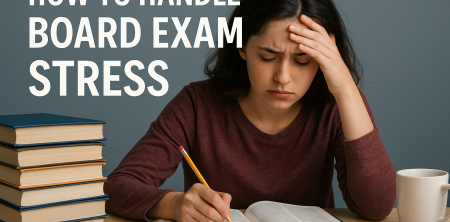
Ah, board exams. Just the phrase itself can send a shiver down the spine of students, parents, and even former educators. It's a period often characterized by late-night study sessions, endless cups of coffee, and a constant, gnawing anxiety about the future. While a certain level of pressure is natural – even healthy – to motivate us, the sheer weight of expectations, combined with the academic rigor, can quickly escalate into crippling stress. This isn't just about feeling a bit nervous; we're talking about a profound impact on mental and physical well-being, potentially affecting performance when it matters most.
For years, the focus has been on cramming more information, studying harder, and enduring the grind. But what if the problem isn't just the exams themselves, but how we approach and manage the inherent stress? Effective board exam stress management isn't a luxury; it's a necessity for optimal performance and preserving sanity. Ignoring it can lead to burnout, poor concentration, and even physical ailments. Let's dig into some of the less obvious, yet incredibly potent, sources of this pervasive stress and, more importantly, how you can proactively tackle them.
1. The Tyranny of Comparison: Why Looking Sideways Hurts Your Progress
It's almost an instinctive human trait, isn't it? We look at what others are doing, how they're performing, and immediately compare it to our own situation. In the highly competitive environment of board exams, this tendency becomes amplified and, frankly, toxic. You see your classmate breezing through a difficult concept, or hear about a friend who's already completed two full revisions, and suddenly, your own efforts feel inadequate. This isn't just a minor annoyance; it’s a direct assault on your self-confidence and can be a significant source of board exam stress.
The problem with comparison is that it's rarely a fair fight. You're comparing your 'behind the scenes' – your struggles, your slow progress, your moments of doubt – with someone else's 'highlight reel.' You don't see their late-night frustrations, their own moments of confusion, or the specific advantages they might have (perhaps they grasp certain subjects more easily, or have access to better resources). This skewed perspective can lead to feelings of inadequacy, increased anxiety, and a debilitating sense that you're falling behind, even when you're making perfectly good progress. It shifts your focus from your own learning journey to an external, often unattainable, benchmark.
2. The Echo Chamber of Expectations: Silencing External Pressure
You know the drill: your parents want you to excel, your teachers expect a certain performance, and society at large often equates success in board exams with future prosperity. While these expectations often come from a place of love and concern, they can create an immense, suffocating pressure. This 'echo chamber' of expectations can make you feel like the entire world is watching, waiting, and judging your every move. It’s no wonder this is a huge contributor to board exam stress management challenges.
This external pressure is particularly insidious because it often gets internalized. What starts as a parent's hope can transform into your own self-imposed, rigid standard, where anything less than perfection feels like a catastrophic failure. The fear of disappointing others, or of not living up to perceived standards, can become a heavier burden than the actual academic challenge itself. It can lead to a cycle of anxiety, perfectionism, and an inability to truly relax and learn effectively. Learning to filter and manage these external voices is crucial for maintaining your mental equilibrium.
3. The Myth of Perfectionism: When Good Enough Isn't Good Enough
We're often taught to strive for excellence, and there's certainly value in that. However, perfectionism takes it a step further, demanding flawless performance in every aspect. For board exams, this can manifest as an obsessive need to know every single detail, to get every practice question correct, and to ensure your notes are aesthetically perfect. While this might sound admirable on the surface, true perfectionism is a relentless, often self-defeating, pursuit and a major driver of board exam stress.
The issue with perfectionism is that it sets an impossibly high bar. When you inevitably fall short (because perfection is an illusion, especially under pressure), you're hit with intense self-criticism, guilt, and increased anxiety. It can lead to procrastination, as the fear of not being perfect can prevent you from even starting a task. Moreover, it often means spending an inordinate amount of time on minor details, neglecting broader concepts or more efficient study strategies. Recognising that 'good enough' is often truly excellent, especially in a high-stakes scenario, is a powerful step towards effective board exam stress management.
4. The Neglect of Basic Needs: Why Sleep, Food, and Movement Aren't Optional
In the frantic rush leading up to board exams, many students treat their fundamental physiological needs as optional extras, things to be sacrificed at the altar of studying. Sleep becomes a luxury, healthy meals are replaced by quick, often unhealthy, snacks, and physical activity dwindles to almost nothing. The mindset is often, "I'll catch up on sleep after the exams," or "I don't have time to exercise." This is a critical error, significantly exacerbating board exam stress.
Your brain, like any high-performance machine, needs fuel, rest, and maintenance to function optimally. Depriving it of sleep impairs memory consolidation, reduces concentration, and makes you more irritable and prone to anxiety. Skipping meals or relying on junk food can lead to energy crashes and poor cognitive function. And neglecting physical activity removes a vital outlet for stress, hindering the release of endorphins that act as natural mood boosters. Prioritizing these basic needs isn't a distraction from studying; it's a foundational element of effective study and robust board exam stress management. (See: Coping with stress effectively.)
5. The Information Overload Trap: Drowning in Data, Not Learning
In the digital age, information is abundant. Textbooks, online tutorials, YouTube videos, study apps, past papers, notes from multiple sources – it's all there, at your fingertips. While access to resources is undoubtedly a boon, it can also become a significant source of stress. The 'information overload trap' occurs when students feel compelled to consume every piece of available data, fearing they might miss something crucial. This often leads to superficial learning, exhaustion, and a heightened sense of anxiety. ways to combat teacher burnout offers useful background here.
Instead of leading to deeper understanding, this constant consumption can create a sense of being overwhelmed and can hinder actual knowledge retention. You might spend hours watching videos or reading articles, feeling productive, but without active engagement, critical thinking, and consolidation, much of that information simply washes over you. This cycle contributes heavily to board exam stress, as you feel like you're working hard but not seeing the commensurate results. Learning to curate your resources and focus on quality over quantity is essential.
6. The Future Catastrophizing Loop: Imagining the Worst-Case Scenario
Our brains are wired to anticipate threats, a survival mechanism from our evolutionary past. However, in the context of board exams, this mechanism can go haywire, leading to what's known as 'future catastrophizing.' This is the tendency to repeatedly imagine the worst possible outcomes, often in vivid detail. "What if I fail?" "What if I don't get into my desired college?" "What if my career is ruined?" These thoughts can quickly spiral, creating intense anxiety and crippling motivation.
This mental loop is incredibly draining and counterproductive. It robs you of your presence, making it difficult to focus on the task at hand – studying effectively. Each imagined negative outcome fuels more fear, creating a vicious cycle of anxiety that can be hard to break. The energy spent on worrying about hypothetical future failures is energy that could be better spent on preparation and positive action. Breaking free from this cycle is a crucial component of effective board exam stress management.
7. The Absence of Downtime: Why Your Brain Needs a Break
The relentless pursuit of academic success often leads students to believe that every waking moment must be dedicated to studying. Downtime, breaks, hobbies, and social interaction are often viewed as distractions or luxuries that can't be afforded during exam season. This 'all study, no play' approach is a recipe for burnout and significantly increases board exam stress.
Your brain isn't a machine that can operate at peak performance 24/7. It needs periods of rest and recovery to process information, consolidate memories, and recharge. Constantly bombarding it with new material without breaks leads to diminishing returns, reduced concentration, and increased fatigue. Furthermore, engaging in enjoyable activities and maintaining social connections are vital for mental well-being. They provide a necessary escape, a chance to de-stress, and a reminder that there's more to life than just exams. Denying yourself these crucial periods of downtime is a self-sabotaging act that will ultimately hinder your performance.
8. The Silent Burden of Imposter Syndrome: Feeling Like a Fraud
Ever feel like you don't truly deserve your achievements, or that at any moment, someone will discover you're not as capable as they think you are? That's imposter syndrome, and it's a surprisingly common source of stress, especially in high-pressure academic environments like board exams. You might have excellent grades and a strong understanding of the material, but a persistent inner voice tells you it's all luck, or that you've fooled everyone. This feeling of being a fraud can be incredibly isolating and anxiety-inducing.
The danger of imposter syndrome is that it prevents you from owning your successes and can drive an unhealthy pursuit of 'more' to prove your worth. You might overstudy, second-guess your answers, or shy away from asking questions, all out of fear of being "found out." This constant internal battle adds a significant layer of mental fatigue and contributes directly to board exam stress, making it harder to focus on the actual academic challenge. Recognizing these feelings for what they are – just feelings, not facts – is the first step toward disarming them.
Practical Strategies for Effective Board Exam Stress Management
Now that we've identified some of these subtle, yet powerful, stress triggers, let's talk about tangible, actionable strategies you can implement to counter them. This isn't just about coping; it's about building resilience and optimizing your performance.
1. Cultivate Self-Compassion, Not Comparison
Instead of constantly checking what others are doing, turn your focus inward. Recognize that everyone's journey is unique. When you catch yourself comparing, consciously pivot. Remind yourself of your own progress, no matter how small. Celebrate your own learning milestones. If a friend's success genuinely inspires you, that's great, but if it drains you, create some healthy distance. Remember, your only true competition is the person you were yesterday. Practice positive self-talk: "I'm doing my best," "I'm learning at my own pace," "My progress is valid." This shift is foundational for robust board exam stress management.
2. Reframe Expectations and Define Your Own Success
Sit down and have an honest conversation with yourself (and perhaps supportive family members or mentors). What does 'success' truly mean to you, independent of external pressures? It might be doing your personal best, understanding the material deeply, or achieving a certain score that allows you to pursue your next steps. Once you've defined your own metrics, you can filter out the noise. Communicate your boundaries; it's okay to politely tell well-meaning relatives that you appreciate their support but need to focus on your own plan. This proactive step helps you reclaim control over your emotional landscape. (See: World Health Organization on stress.)
3. Embrace 'Good Enough' and Strategic Imperfection
Perfection is a mirage, especially under exam conditions. Instead, aim for 'optimal.' This means understanding the core concepts thoroughly, practicing enough to be proficient, and knowing when to move on. Don't get stuck tweaking notes or re-reading a chapter for the fifth time if you already grasp it. Recognize the 80/20 rule: 80% of your results often come from 20% of your efforts. Identify those critical 20% areas and focus your perfectionist tendencies there, letting go of the need for flawlessness in less crucial aspects. This strategic imperfection is a powerful tool in your board exam stress management arsenal.
4. Prioritize Your Physical Well-being: The Unsung Hero of Performance
This cannot be stressed enough. Treat sleep (aim for 7-9 hours), nutrition (balanced meals, consistent hydration), and exercise (even 20-30 minutes of brisk walking) as non-negotiable study tools. Think of them as essential components of your study plan, not optional add-ons. A well-rested, well-nourished, and physically active brain is a brain that can concentrate better, retain more information, and handle stress more effectively. Schedule these activities into your daily routine just like you schedule study blocks. It's a direct investment in your board exam stress management and academic success.
5. Curate Your Resources and Active Learning
Instead of trying to consume everything, become a discerning curator of information. Choose a few high-quality textbooks or online resources and stick to them. Focus on active learning techniques: summarization, teaching concepts to someone else (or even a rubber duck!), creating flashcards, and, most importantly, solving practice problems and past papers. Active recall and spaced repetition are far more effective than passive consumption. When you feel overwhelmed by information, pause, breathe, and ask yourself: "What's the most important thing I need to know here?" This targeted approach helps reduce information overload and boosts learning efficiency. We covered Dr. Lynch on burnout effects in more detail.
6. Challenge Catastrophic Thoughts with Evidence
When you find yourself spiraling into 'what if' scenarios, pause and challenge those thoughts. Ask yourself: "Is this thought based on fact or fear?" "What's the most realistic outcome?" "Even if the worst happens, what steps can I take?" Often, simply acknowledging these fears and examining them rationally can diminish their power. Practice mindfulness – bringing your attention back to the present moment, to your breath, or to the task at hand. Keep a gratitude journal to shift your focus from potential negatives to current positives. This mental reframing is a cornerstone of effective board exam stress management.
7. Schedule Deliberate Downtime and Hobbies
Just like you schedule study sessions, explicitly schedule breaks, relaxation, and enjoyable activities. This isn't wasted time; it's essential for cognitive rest and emotional well-being. Whether it's listening to music, spending time with friends, going for a run, or indulging in a hobby, make time for things that bring you joy and help you switch off. Short, frequent breaks during study sessions are also incredibly beneficial – step away from your desk, stretch, grab a snack, or look out a window. These moments of mental respite actually improve your focus and productivity when you return to your studies.
8. Acknowledge and Reframe Imposter Syndrome
If you feel like an imposter, you're in good company – studies show a significant percentage of high-achievers experience it. Instead of fighting it, acknowledge the feeling. Then, gently challenge it. Look at your past achievements; they are real, and you earned them. Keep a "win journal" where you note down every successful study session, every concept mastered, every good practice score. These tangible pieces of evidence can act as a powerful counter-narrative to the imposter voice. Talk about it with a trusted friend, mentor, or counselor – often, just voicing the feeling can lessen its power. Understand that feeling unsure doesn't negate your competence; it's just a feeling.
Expert Perspectives on Managing Exam Stress
Psychologists and educators often highlight the importance of emotional regulation and a growth mindset during high-stakes periods. Dr. Carol Dweck's research on fixed vs. growth mindsets, for instance, suggests that students who believe their intelligence and abilities can grow through effort tend to handle challenges, like board exams, with greater resilience. Instead of seeing a difficult question as a sign of failure, they view it as an opportunity to learn and improve. This perspective is a powerful antidote to perfectionism and catastrophizing.
Neuroscience also backs up the importance of stress management techniques. When we're under chronic stress, our prefrontal cortex – the part of the brain responsible for planning, decision-making, and memory – can become impaired. Cortisol, the stress hormone, can actually shrink parts of the brain involved in memory. This is why prioritizing sleep, exercise, and mindfulness isn't just about feeling better; it's about optimizing your brain's biological capacity for learning and recall. A calm brain is a smart brain.
The Long Game: Building Resilience Beyond Exams
Ultimately, learning effective board exam stress management isn't just about getting through these specific tests. It's about developing life skills that will serve you well far beyond the classroom. The ability to manage pressure, cope with uncertainty, prioritize self-care, and maintain a positive mindset are invaluable assets in any future endeavor, be it higher education, career, or personal life. These exams, while significant, are but one chapter in your journey. Approaching them with a strategic, holistic mindset will not only help you perform better but also emerge stronger, more resilient, and with your well-being intact.
Frequently Asked Questions About Board Exam Stress Management
Q1: Is it normal to feel stressed about board exams?
A: Absolutely! A certain level of stress is completely normal and can even be motivating. It becomes a problem when it's overwhelming, prolonged, or interferes with your daily functioning, sleep, or ability to study effectively. The goal isn't to eliminate stress entirely, but to manage it so it doesn't derail you.
Q2: How do I know if my stress is becoming unhealthy?
A: Look out for persistent physical symptoms like headaches, stomach aches, insomnia, or fatigue. Mentally, watch for constant worry, difficulty concentrating, irritability, social withdrawal, or a loss of interest in activities you usually enjoy. If these symptoms are severe or long-lasting, it's a sign your stress might be unhealthy.
Q3: What's the quickest way to reduce stress during a study break?
A: Short bursts of activity are key. Try deep breathing exercises for 2-5 minutes, a quick walk around the block, listening to a favorite song, or a short mindfulness meditation. Stepping away from your study materials completely, even for a few minutes, can significantly refresh your mind.
Q4: My parents are putting a lot of pressure on me. How can I talk to them?
A: Choose a calm moment when you're both relaxed. Express how you feel using "I" statements, such as "I feel overwhelmed by the pressure," rather than "You are putting too much pressure on me." Explain that you're doing your best and that their support means more than their expectations for a specific score. You can suggest concrete ways they can support you, like providing healthy snacks or ensuring quiet study time. For more on this, see understanding the Door Principle.
Q5: What if I have a panic attack during an exam?
A: While scary, panic attacks are manageable. If you feel one coming on, focus on your breathing: breathe in slowly through your nose for four counts, hold for four, and exhale slowly through your mouth for six counts. Ground yourself by noticing five things you can see, four things you can touch, three things you can hear, two things you can smell, and one thing you can taste. Inform the invigilator if you need a moment. Remember, it will pass.
Q6: Should I avoid social media completely during exam season?
A: Not necessarily completely, but definitely with boundaries. Excessive social media use can fuel comparison and procrastination. Consider setting specific times for checking social media, using apps to block access during study periods, or muting notifications. The goal is to make it a deliberate choice, not a distraction.
Q7: How important is a study schedule for stress management?
A: Extremely important! A well-structured study schedule reduces anxiety by giving you a clear roadmap. It helps you prioritize, allocate time effectively, and ensures you're covering all subjects without feeling rushed. Critically, it should also include dedicated breaks, meals, and sleep times to truly be effective for stress management.
Trending Now
Frequently Asked Questions
How can I manage stress during board exams?
Managing stress during board exams involves adopting effective strategies such as setting realistic goals, creating a balanced study schedule, and incorporating relaxation techniques like mindfulness or deep breathing exercises. Additionally, it's crucial to maintain a healthy lifestyle with proper nutrition, exercise, and adequate sleep to support mental well-being.
What are the main causes of stress during board exams?
The main causes of stress during board exams include the pressure of high expectations, intense competition with peers, fear of failure, and the overwhelming amount of material to study. These factors can lead to anxiety and burnout if not managed properly.
How does comparison with peers increase exam stress?
Comparison with peers can significantly increase exam stress as students often measure their performance against others. This tendency can undermine self-confidence and lead to feelings of inadequacy, making it harder to focus on personal progress and study effectively.
What are some effective study techniques for board exams?
Effective study techniques for board exams include active learning methods such as summarizing information, practicing past papers, and teaching concepts to others. Utilizing spaced repetition and regular review sessions can also enhance retention and understanding of the material.
Why is it important to manage exam stress?
Managing exam stress is crucial because excessive stress can negatively impact mental and physical health, leading to burnout, poor concentration, and diminished performance. Effective stress management enhances focus, boosts confidence, and ultimately contributes to better exam outcomes.
What did we miss? Let us know in the comments and join the conversation.

