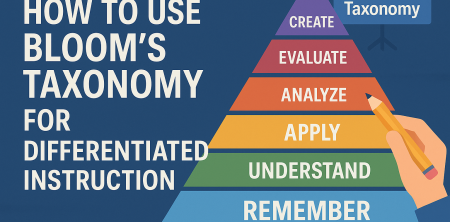
```html
When it comes to enhancing student learning, educators are constantly on the lookout for frameworks that provide structure and clarity. One such framework that has gained prominence is Bloom's Taxonomy. This educational tool not only aids in structuring learning objectives but also plays a pivotal role in Bloom's Taxonomy Differentiated Instruction. By employing this taxonomy, teachers can fine-tune their approaches to meet the diverse needs of their students, ensuring that everyone has the opportunity to succeed.
1. Understanding Bloom's Taxonomy
Bloom's Taxonomy was developed in 1956 by Benjamin Bloom and a group of educational psychologists with the goal of categorizing educational goals. The original framework consisted of six levels: Knowledge, Comprehension, Application, Analysis, Synthesis, and Evaluation. These levels represent a progression from basic recall of facts to higher-order thinking skills.
In 2001, a revised version was created, primarily by Lorin Anderson and David Krathwohl. This version rephrased the categories into verbs and added a new top level: Create. The revised taxonomy includes: Remember, Understand, Apply, Analyze, Evaluate, and Create. Understanding this hierarchy is crucial for educators who want to implement differentiated instruction effectively.
2. The Importance of Differentiated Instruction
Differentiated instruction is an educational philosophy that requires teachers to adapt their teaching strategies to accommodate individual learners' needs. This approach recognizes that students come to the classroom with varying backgrounds, learning styles, and abilities. The goal is to provide multiple avenues for students to demonstrate their understanding and skills.
By integrating Bloom's Taxonomy into differentiated instruction, educators can create targeted learning experiences that cater to each student’s unique strengths and weaknesses. This not only enhances engagement but also fosters a growth mindset, as students learn to appreciate different paths to knowledge acquisition.
3. Aligning Learning Objectives with Bloom's Taxonomy
When developing lesson plans, aligning learning objectives with the levels of Bloom's Taxonomy can provide clarity and focus. For instance, if your goal is for students to remember specific facts, your objective might be framed around the 'Remember' level. In contrast, if you want students to critique a piece of literature, you'd aim for the 'Evaluate' level.
Creating clear objectives helps in crafting assessments that truly measure what students have learned. For example, a teacher might ask students to *analyze* a historical event rather than merely recall its dates. This shift invites deeper engagement and critical thinking, which are essential in today’s educational landscape.
4. Utilizing Active Learning Strategies
Active learning is a cornerstone of effective differentiated instruction. It engages students in the learning process, allowing them to take charge of their education. Strategies like group discussions, peer teaching, and problem-based learning align perfectly with Bloom's levels, as they encourage students to explore concepts at various depths.
For instance, during a unit on ecosystems, students could start with a group project that requires them to *Apply* their knowledge by creating a miniature ecosystem. This hands-on activity not only reinforces foundational knowledge but also stimulates higher-order thinking as students analyze and present their findings to the class.
5. Designing Assessments Based on Bloom's Taxonomy
Assessment is a critical component of any teaching strategy, and using Bloom's Taxonomy can strengthen this process. Formative assessments, quizzes, and projects should be designed to reflect the different levels of the taxonomy. For example, a teacher might create a quiz that asks students to recall facts, followed by an assignment that requires them to analyze the implications of those facts.
This variety in assessment not only accommodates different learning styles but also provides a more holistic view of student understanding. Teachers can use rubrics that align with Bloom's levels to evaluate student performance, making it easier to identify areas for improvement and growth. (See: Bloom's Taxonomy overview.)
6. Creating Flexible Learning Environments
A flexible learning environment is key to implementing differentiated instruction effectively. This includes providing varied resources, materials, and approaches to learning. For example, a classroom might feature stations that correspond to different levels of Bloom's Taxonomy, allowing students to choose activities that match their interests and readiness levels.
In a literature class, stations could include a reading corner for *Remembering* key themes, a discussion group for *Analyzing* character motivations, and a creative writing area where students can *Create* their own stories inspired by the texts. This flexibility encourages students to take ownership of their learning, making the educational experience more engaging and effective.
7. Incorporating Technology in Instruction
Technology can be a powerful ally in differentiated instruction. Digital tools offer various ways for students to engage with content, assess their understanding, and collaborate with peers. For instance, online quizzes can assess students’ *Remembering* and *Understanding*, while collaborative platforms can facilitate *Analyzing* and *Creating* projects in real time.
Moreover, adaptive learning technologies can adjust the difficulty level of tasks based on individual student performance, ensuring that each learner is challenged appropriately. This personalized approach not only aligns with the principles of Bloom's Taxonomy but also optimizes student learning experiences.
8. Professional Development for Educators
To effectively implement Bloom's Taxonomy Differentiated Instruction, educators need ongoing professional development. Training programs that focus on understanding the taxonomy, how to differentiate instruction, and strategies for assessment are essential. Workshops and collaborative planning sessions can provide teachers with the resources and support they need to enhance their instructional practices.
By investing in professional development, schools can foster a community of learning among educators. This not only benefits the teachers but also positively impacts student outcomes as teachers become more skilled in creating engaging, differentiated learning experiences.
9. The Future of Bloom's Taxonomy in Education
As education continues to evolve, so does the application of Bloom's Taxonomy. The rise of personalized learning, competency-based education, and a focus on social-emotional learning are all shaping how teachers approach instruction. Incorporating these elements with Bloom's framework can create a more holistic educational experience.
Looking ahead, the integration of Bloom's Taxonomy with modern educational practices will likely continue to empower teachers and students alike. By fostering critical thinking and creativity, educators can prepare students not just for academic success but for life beyond the classroom. In this way, Bloom's Taxonomy remains a relevant and essential tool in the quest for effective and meaningful education.
10. Real-World Applications of Bloom's Taxonomy Differentiated Instruction
One of the most compelling aspects of Bloom's Taxonomy is its versatility across subjects and educational settings. For instance, consider how a science teacher might use Bloom's Taxonomy to differentiate instruction in a unit about the solar system. At the Remember level, students could start by memorizing planet names and characteristics. As they progress to the Understand level, they might compare and contrast the atmospheres of different planets.
Moving further, students could Apply their knowledge by conducting simple experiments demonstrating gravity or the effects of sunlight on temperature in various environments. At the Analyze stage, they could investigate the impact of space exploration on our understanding of the universe. Ultimately, at the Create level, students could design a model spacecraft, incorporating their learning from the entire unit. This approach not only engages students at all learning levels but also makes the content relevant and exciting. For more on this, see classroom examples of differentiated instruction.
11. Statistics Supporting Differentiated Instruction
Several studies have demonstrated the effectiveness of differentiated instruction in improving student outcomes. For instance, a report from the National Center for Learning Disabilities states that learners who experience differentiation can improve their academic performance by as much as 50%. Furthermore, research by Tomlinson and Strickland (2005) indicates that differentiated instruction positively affects student engagement and motivation, leading to increased academic achievement.
Additionally, a study published in the Journal of Educational Psychology found that teachers who employed differentiated strategies saw significant improvements in student performance on standardized tests. The results showcased that students in classrooms where differentiation was effectively implemented outperformed their peers in more traditional instructional settings by an average of 20%. (See: CDC on differentiated instruction.)
12. Strategies for Implementing Bloom's Taxonomy Differentiated Instruction
To implement Bloom's Taxonomy effectively in differentiated instruction, teachers can utilize several strategies:
- Flexible Grouping: Organizing students into groups based on their skill levels or interests can help tailor instruction according to their needs. Group members can rotate through different activities that target various levels of Bloom's Taxonomy.
- Choice Boards: Offering students a variety of activities to choose from allows them to take ownership of their learning. Activities can range from simple recall tasks to complex projects that require higher-order thinking skills.
- Learning Contracts: Establishing agreements with students about their learning objectives and the methods they will employ can enhance accountability. These contracts can be personalized to include different levels of Bloom's Taxonomy.
- Tiered Assignments: Designing assignments with varying levels of complexity ensures that all students are intellectually challenged, regardless of their starting point. For example, in a history lesson, some students may write a simple summary while others analyze primary sources.
13. Expert Perspectives on Bloom's Taxonomy Differentiated Instruction
Many educational experts emphasize the importance of integrating Bloom's Taxonomy into differentiated instruction. Dr. Carol Ann Tomlinson, a leading authority on differentiated instruction, advocates for the use of Bloom's framework as a guide for teachers. According to her, “When teachers understand and apply the principles of differentiation, they can meet the needs of every student, no matter their learning style or ability.”
Similarly, Dr. John Hattie, an education researcher, supports differentiated instruction as a means of enhancing student engagement. He states, “Effective differentiation through scaffolding, ongoing feedback, and the use of Bloom's Taxonomy can lead to deeper learning experiences for students.” Both experts highlight that utilizing a structured framework like Bloom's Taxonomy is vital for successful differentiation in the classroom.
14. Frequently Asked Questions (FAQs)
Q1: What is Bloom's Taxonomy?
A1: Bloom's Taxonomy is a framework for categorizing educational goals and objectives, originally developed by Benjamin Bloom in 1956. It helps educators create structured learning experiences by organizing learning objectives from basic recall of facts to higher-order thinking skills.
Q2: How does Bloom's Taxonomy relate to differentiated instruction?
A2: Bloom's Taxonomy provides a framework for teachers to tailor instruction to individual learners' needs. By aligning learning objectives with different levels of the taxonomy, educators can create varied activities and assessments that accommodate diverse learning styles and abilities.
Q3: Can Bloom's Taxonomy be applied to all subjects?
A3: Absolutely! Bloom's Taxonomy is versatile and can be effectively applied across all subjects, including math, science, language arts, and social studies. It helps educators develop relevant learning experiences regardless of the subject matter.
Q4: What are some common challenges when implementing differentiated instruction?
A4: Common challenges include time constraints, lack of resources, and difficulty in assessing student progress. Teachers may also struggle with managing the diverse needs of students simultaneously. However, with proper planning and the use of Bloom's Taxonomy, these challenges can be mitigated.
Q5: How can technology enhance Bloom's Taxonomy Differentiated Instruction?
A5: Technology can provide various tools and resources that support differentiated instruction, such as adaptive learning software, online collaboration platforms, and interactive assessment tools. These resources can help teachers create engaging and personalized learning experiences aligned with Bloom's Taxonomy.
Q6: What role does assessment play in differentiated instruction?
A6: Assessment is crucial in differentiated instruction as it informs teachers about student progress and understanding. By aligning assessments with Bloom's Taxonomy, educators can ensure that they measure a range of skills, from basic recall to higher-order thinking, thereby providing a clearer picture of student achievement.
Q7: How can teachers ensure all students are appropriately challenged?
A7: Teachers can ensure appropriate challenges by using various strategies such as tiered assignments, flexible grouping, and choice boards. By offering varied levels of complexity and allowing students to choose activities that interest them, teachers can engage and challenge every learner effectively.
15. Case Studies of Successful Implementation
Understanding how to implement Bloom's Taxonomy Differentiated Instruction effectively can be further clarified through real-world examples. For instance, a middle school math teacher applied differentiated instruction by structuring her lessons around Bloom’s levels during a unit on fractions. Initially, students engaged in activities that involved *Remembering* and *Understanding* basic fraction concepts through visual aids and flashcards. Next, they were grouped based on their performance in these initial activities.
Group A worked on *Applying* fractions in real-life scenarios, such as cooking and shopping, where they calculated proportions and discounts. Group B was challenged to *Analyze* and *Evaluate* the impacts of fractions in various contexts, encouraging critical thinking about how fractions are used in fields like construction and finance. Finally, Group C, consisting of advanced learners, was tasked with *Creating* a mini-project that involved designing a new game centered around fractions, incorporating elements of math and creativity. This approach not only met students where they were but also helped enhance their understanding and skills progressively.
16. Challenges and Solutions in Differentiated Instruction
While the benefits of Bloom's Taxonomy Differentiated Instruction are clear, challenges still exist. A common challenge is teacher workload. Differentiating instruction can seem daunting, especially for teachers managing large classrooms. One solution is collaborative planning, where educators work together to design differentiated lessons, share resources, and even co-teach sessions. This collaboration can lessen the individual burden and foster a supportive teaching community.
Another challenge might be student resistance, as some learners may prefer traditional methods of instruction. To address this, teachers can gradually introduce differentiated strategies, highlighting their benefits and providing choices that align with students' interests. Engaging students in the decision-making process encourages buy-in and foster autonomy.
17. Future Trends in Differentiated Instruction
Looking forward, the integration of artificial intelligence (AI) and machine learning in education could revolutionize differentiated instruction. These technologies offer the potential to analyze student performance data in real time, allowing for immediate adjustments in teaching strategies based on individual needs and learning paces. Imagine a scenario where an AI tool recommends specific resources or activities tailored to a student's unique learning style or performance level, all rooted in Bloom's Taxonomy. This could provide educators with unprecedented insights and tools to cater to diverse learning needs more effectively.
Additionally, as the education landscape increasingly embraces social-emotional learning, incorporating emotional intelligence alongside cognitive development will likely become a standard in differentiated instruction. This holistic approach can help students not only achieve academically but also grow as socially-aware individuals, preparing them for success in an interconnected world.
18. Conclusion
Bloom's Taxonomy Differentiated Instruction represents a powerful approach to education that acknowledges and embraces individual differences among learners. By applying the principles of Bloom's Taxonomy, educators can create a more inclusive, engaging, and effective learning environment. With ongoing professional development, collaborative efforts among educators, and a keen eye on future trends, the potential for enriched student experiences is vast. As we continue to refine and adapt our teaching practices, the legacy of Bloom's Taxonomy will undoubtedly remain a cornerstone of effective pedagogy.
```
Trending Now
Frequently Asked Questions
What is Bloom's Taxonomy?
Bloom's Taxonomy is a framework developed in 1956 by Benjamin Bloom and educational psychologists to categorize educational goals. It consists of levels ranging from basic knowledge recall to higher-order thinking skills. The revised version includes Remember, Understand, Apply, Analyze, Evaluate, and Create, providing educators with a structured approach to developing learning objectives.
How can Bloom's Taxonomy be used in differentiated instruction?
Bloom's Taxonomy can be used in differentiated instruction by helping educators tailor their teaching strategies to meet individual students' needs. By aligning lessons with the taxonomy's levels, teachers can create targeted learning experiences that cater to diverse learning styles and abilities, ensuring that all students have opportunities to succeed.
Why is differentiated instruction important?
Differentiated instruction is important because it recognizes that students have varied backgrounds, learning styles, and abilities. This educational philosophy allows teachers to adapt their methods to accommodate these differences, providing multiple avenues for students to demonstrate understanding and skills, enhancing engagement and promoting a growth mindset.
What are the levels of Bloom's Taxonomy?
The levels of Bloom's Taxonomy, as revised in 2001, include Remember, Understand, Apply, Analyze, Evaluate, and Create. These levels represent a hierarchy from basic recall to complex creation, guiding educators in designing lessons that promote higher-order thinking and deeper understanding among students.
How does Bloom's Taxonomy enhance student learning?
Bloom's Taxonomy enhances student learning by providing a structured framework for educators to develop clear and measurable learning objectives. By progressing through the taxonomy's levels, students engage in a variety of cognitive tasks that promote critical thinking, problem-solving, and creativity, ultimately leading to a deeper understanding of the material.
Have you experienced this yourself? We'd love to hear your story in the comments.

