```html
The universe has long been a source of fascination for humanity. From the first telescopes that peered into the night sky to the advanced instruments of today, our quest to understand the cosmos has never faltered. Now, with the upcoming launch of the Nancy Grace Roman Space Telescope, we're on the brink of uncovering the mysteries of the 'dark universe'—a realm dominated by dark matter and dark energy. Scheduled to launch in September 2026, this NASA space telescope promises to transform our understanding of the universe.
What is the Nancy Grace Roman Space Telescope?
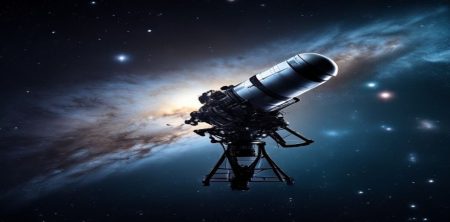
The Nancy Grace Roman Space Telescope, affectionately named after the pioneering astrophysicist, is set to make astronomical leaps in our exploration of the cosmos. Notably, its design allows for panoramic views that are 100 times larger than those captured by the Hubble Space Telescope. This capability positions Roman not merely as an incremental upgrade but as a revolutionary tool that will capture the universe's vastness in breathtaking detail.
This NASA space telescope will be equipped with cutting-edge technology, including a wide-field instrument that can detect extremely faint signals from far-off cosmic phenomena. It will primarily focus on mapping the distribution of dark matter and observing the effects of dark energy—phenomena that have puzzled scientists for decades.
The Science Behind the Dark Universe
The dark universe is a term used to describe the components of the cosmos that are invisible and undetectable through conventional means. Dark matter, which makes up about 27% of the universe, is believed to exert gravitational forces on visible matter, affecting the motion of galaxies. Conversely, dark energy, which constitutes about 68% of the universe, is thought to be responsible for its accelerated expansion.
One of the most compelling aspects of the Nancy Grace Roman Space Telescope's mission is its ability to observe Type Ia supernovae. These stellar explosions serve as 'standard candles,' allowing astronomers to measure distances in the universe with remarkable precision. By studying these supernovae, Roman will provide insights into the expansion rate of the universe and deepen our understanding of dark energy.
The Telescope's Unique Features
What sets the Nancy Grace Roman Space Telescope apart from its predecessors? For one, its wide field of view allows it to observe vast swaths of the sky in a single glance. This capability enhances efficiency, enabling astronomers to gather immense amounts of data in a shorter timeframe. As a result, researchers will be able to compile before-and-after sky libraries, providing a dynamic view of the universe as it evolves over time.
Additionally, the telescope will operate at a location 1 million miles from Earth. This stable environment allows for minimal interference from atmospheric disturbances, giving Roman the ability to capture clearer and more focused images of distant cosmic phenomena. Such precision is critical for studying the minute effects of dark matter and dark energy.
Preparing for Launch
Originally slated for a 2027 launch, the Nancy Grace Roman Space Telescope has been advanced to September 2026. This adjustment reflects NASA's commitment to accelerating its scientific endeavors. As the launch date approaches, excitement within the scientific community grows, with many anticipating the groundbreaking discoveries that lie ahead.
The telescope has undergone rigorous testing to ensure its readiness for the challenges of space. From its optics to its instruments, every component has been designed with precision to withstand the harsh conditions of space while delivering unparalleled performance.
Unlocking the Secrets of Dark Matter
For years, dark matter has remained one of the universe's greatest enigmas. Although it cannot be seen directly, its presence is inferred through gravitational effects on visible matter, such as galaxies. The Nancy Grace Roman Space Telescope aims to map dark matter's distribution across the universe by observing the bending of light—a phenomenon known as gravitational lensing.
Gravitational lensing occurs when a massive object, like a galaxy cluster, warps the fabric of space-time around it, causing light from more distant objects to bend. By analyzing these distortions, Roman will help scientists create detailed maps of dark matter, shedding light on its properties and behavior.
Examining Dark Energy and the Cosmic Expansion
The acceleration of the universe's expansion remains one of the most profound discoveries in modern cosmology. Dark energy, the mysterious force behind this acceleration, is still poorly understood. The Roman Space Telescope will investigate this phenomenon by observing Type Ia supernovae across different epochs of cosmic history. (See: understanding dark energy.)
By measuring the brightness and redshift of these supernovae, Roman will enable astronomers to determine how the rate of cosmic expansion has changed over time. This data will provide crucial insights into whether dark energy is a constant force or whether it varies, potentially reshaping our understanding of fundamental physics.
Searching for Exoplanets
In addition to studying dark matter and dark energy, the Nancy Grace Roman Space Telescope will also focus on exoplanets—worlds beyond our solar system. With its high-resolution imaging capabilities, Roman will contribute to the search for these distant planets and help characterize their atmospheres.
The telescope's ability to observe the transits of exoplanets—when a planet passes in front of its host star—will allow researchers to analyze the light signatures of these celestial bodies. This process will help identify potential habitability and the presence of key chemical markers indicative of life.
Engaging the Public and Scientific Community
The excitement surrounding the Nancy Grace Roman Space Telescope extends beyond the scientific community; it captures the imagination of the public as well. NASA has made a concerted effort to engage with audiences through educational resources, public outreach, and interactive platforms. These initiatives aim to demystify the complexities of the dark universe and inspire the next generation of scientists and astronomers.
Social media campaigns, virtual events, and partnerships with educational institutions are part of NASA's strategy to create a culture of curiosity and exploration. As we prepare for the launch, it’s essential to foster public interest in these cosmic mysteries, ensuring that the discoveries made by Roman resonate across the globe.
The Future of Cosmology
The launch of the Nancy Grace Roman Space Telescope marks a new chapter in our journey to understand the dark universe. With its unprecedented capabilities, this NASA space telescope is set to revolutionize our understanding of the cosmos, shedding light on the invisible forces that shape it.
As we prepare for its launch, the anticipation builds not only for the data it will collect but also for the new questions it will raise. Each discovery will serve as a stepping stone, pushing the boundaries of our knowledge and inspiring future generations to continue exploring the mysteries of the universe.
Why It Matters
The implications of the Roman Space Telescope's findings extend beyond academic curiosity. Understanding dark matter and dark energy may have far-reaching consequences for our grasp of fundamental physics and the nature of the universe. These insights could potentially inform technologies we develop and influence how we approach challenges on Earth.
Moreover, the quest to find exoplanets and investigate their potential for hosting life speaks to humanity's innate desire to understand our place in the universe. The revelations brought forth by the Nancy Grace Roman Space Telescope could ignite a new era of exploration—one that brings us closer to the stars and the possibility of life beyond our planet.
Final Thoughts
As the Nancy Grace Roman Space Telescope gears up for its mission, the excitement is palpable. With its ability to unveil the dark universe, this NASA space telescope will not only enrich our understanding of the cosmos but also challenge our perceptions of reality. What will we learn about the fabric of space-time, the forces that govern our universe, and the potential for life beyond Earth? The answers are just around the corner, and the world is watching with bated breath.
Frequently Asked Questions
1. What is the primary mission of the Nancy Grace Roman Space Telescope?
The primary mission of the Nancy Grace Roman Space Telescope is to study dark energy and dark matter, two of the most enigmatic elements of the universe. It will utilize its wide-field imaging capabilities to observe Type Ia supernovae, conduct deep surveys of the cosmos, and map the distribution of dark matter.
2. How will the Roman Space Telescope improve upon Hubble?
The Roman Space Telescope will provide a wider field of view, allowing it to capture images of large areas of the sky much faster than Hubble. While Hubble has been a groundbreaking observatory, its field of view is limited, making Roman’s ability to survey large swathes of space a significant advancement.
3. What technologies enable the Roman Space Telescope to function effectively in space?
Roman will employ cutting-edge technologies including advanced optics, a wide-field camera, and a highly sensitive infrared instrument. These tools will allow it to detect faint signals and capture high-resolution images of distant galaxies, supernovae, and exoplanets. (See: Nancy Grace Roman Space Telescope overview.)
4. Why is understanding dark energy important?
Understanding dark energy is crucial because it drives the accelerated expansion of the universe. This phenomenon challenges our current understanding of physics and cosmology. Insights gained from Roman could lead to breakthroughs in our knowledge of fundamental forces and the fate of the universe. This builds on revolutionizing neutron star research.
5. How can the public get involved with the discoveries made by the Roman Space Telescope?
The public can engage with the discoveries through various educational outreach programs and public events organized by NASA. These initiatives include social media campaigns, webinars, and community workshops that aim to make the science accessible and exciting.
6. How will Roman’s findings impact our search for extraterrestrial life?
By studying exoplanets and their atmospheres, Roman may uncover vital information regarding the potential habitability of these distant worlds. Discovering chemical markers that indicate the presence of life could revolutionize our understanding of how life might arise elsewhere in the universe.
7. What role does gravitational lensing play in the telescope's mission?
Gravitational lensing is key to mapping dark matter. By observing how light bends around massive objects, Roman can infer the presence and distribution of dark matter throughout the universe. This will enhance our understanding of its properties and the role it plays in cosmic structure.
8. When will the Nancy Grace Roman Space Telescope be launched?
The Nancy Grace Roman Space Telescope is scheduled for launch in September 2026. This timeline represents NASA's commitment to advancing our understanding of the universe and the technologies needed to explore it.
9. How does the Roman Space Telescope contribute to our understanding of cosmic history?
By observing various epochs of cosmic history through the study of Type Ia supernovae and cosmic surveys, Roman will provide insights into how galaxies and the universe have evolved over time. This historical perspective is crucial for understanding the dynamics of cosmic expansion and the influence of dark energy.
10. What are some potential challenges faced during the telescope's mission?
Challenges may include technical issues with instruments, the vast amounts of data to be processed, and the need for precise calibration to ensure accurate measurements. Additionally, the telescope's remote location in space means it will require robust communication systems to relay data back to Earth.
Anticipating the Discoveries
As we await the launch of the Nancy Grace Roman Space Telescope, there's a growing sense of anticipation regarding the groundbreaking discoveries that may arise from its observations. Experts predict that the data collected could not only enhance our knowledge of dark matter and dark energy but also uncover aspects of the universe that have eluded scientists for decades. For instance, one area of excitement is the potential to discover how dark energy interacts with other cosmic phenomena, perhaps shedding light on its nature and origin.
Additionally, the Roman Space Telescope's extensive surveys could lead to the identification of new supernovae, rare celestial events, and even the confirmation of existing theoretical models concerning cosmic evolution. Astronomers are particularly eager to see how these findings will correlate with results from other missions, such as the European Space Agency's Euclid mission, which will also focus on dark energy and dark matter.
The Impact on Future Missions
The Nancy Grace Roman Space Telescope is expected to pave the way for future astronomical missions. By producing a wealth of data on dark matter and dark energy, its findings could inform the design of upcoming telescopes and space missions. For example, advancements in imaging technology and data analysis protocols developed for Roman could significantly enhance future observatories, potentially allowing them to probe even deeper into cosmic mysteries.
Furthermore, Roman's contributions may set the groundwork for manned missions beyond our solar system. By expanding our understanding of the universe's structure and composition, scientists and engineers can better prepare for challenges that may arise during long-duration space travel, such as radiation exposure and resource management on other planets. (See: research on dark matter.)
Building a Community of Learners
NASA's outreach initiatives surrounding the Roman Space Telescope are also noteworthy. Engaging the public goes hand-in-hand with scientific advancement. Schools, universities, and community organizations are encouraged to incorporate the discoveries from Roman into their curricula. This effort not only fosters a deeper understanding of astrophysics among students but also cultivates a sense of belonging within the scientific community.
Workshops and training sessions can be organized to help educators explain complex concepts like dark matter and dark energy in accessible terms. NASA’s materials for educators often include interactive elements such as simulations and modeling activities, allowing students to visualize concepts that are typically abstract. This foundation in astronomy could motivate young learners to pursue careers in science, technology, engineering, and mathematics (STEM).
International Collaboration and Cosmic Exploration
The Nancy Grace Roman Space Telescope represents not just a national effort but a global one. Many international partners are contributing to the mission, from designing instruments to analyzing data. The collaborative spirit of this project highlights the importance of sharing knowledge and resources in the pursuit of scientific advancement.
Such cooperative efforts can lead to richer findings, as different teams bring unique perspectives and expertise to the table. By fostering international collaboration, the mission can stimulate a worldwide movement toward addressing complex scientific challenges in the field of cosmology. This teamwork might also lay the groundwork for joint missions in the future, expanding humanity's reach into the cosmos.
Long-Term Goals of NASA's Space Exploration
The Nancy Grace Roman Space Telescope is part of NASA's broader vision for space exploration over the coming decades. Its objectives align with the agency’s long-term goals to enhance our understanding of the universe and our place in it. By tackling fundamental questions about dark energy and dark matter, Roman's mission could ultimately influence how we understand the evolution of the universe itself.
In addition to its scientific endeavors, the insight gained from the Roman mission may inspire technological advancements that could benefit life on Earth. For example, as we develop new ways to capture and interpret data from the cosmos, those technologies can often find applications in other fields, including climate science, medicine, and communications.
Conclusion and Looking Ahead
As we stand on the cusp of a new era in astronomy with the Nancy Grace Roman Space Telescope, we are filled with hope and excitement for what lies ahead. Its powerful capabilities promise to unlock secrets of the universe that may redefine our understanding of cosmic phenomena. As scientists continue to prepare for its launch, the anticipation within both the scientific community and the public only continues to grow.
The journey ahead is not just about the information the telescope will gather; it’s also about the questions that will arise from those findings. Each answer will lead to new inquiries, and in that curiosity lies the essence of scientific exploration. With the Nancy Grace Roman Space Telescope, we are reminded that there are still many mysteries to solve and horizons to explore.
```
Trending Now
- this guide on why retail management careers are booming: insights from the national retail federation
- 7 Surprising Insights on Luxury Travel vs Budget Travel Cost Comparison for Aspiring Professionals
- our breakdown of 5 groundbreaking luxury travel internship programs for gen z that you must know about
- our breakdown of how tiktok trends in education are shaping luxury travel careers for gen z
- our breakdown of the ultimate showdown: environmental science degree vs general science degree – which one wins?
Frequently Asked Questions
What is the Nancy Grace Roman Space Telescope?
The Nancy Grace Roman Space Telescope is a NASA observatory scheduled for launch in September 2026. Named after pioneering astrophysicist Nancy Grace Roman, it features a wide-field instrument capable of capturing panoramic views 100 times larger than those of the Hubble Space Telescope, aiming to explore dark matter and dark energy. Related reading: detecting dark matter breakthroughs.
How will the Roman Space Telescope help us understand dark matter?
The Roman Space Telescope will map the distribution of dark matter by detecting faint signals from cosmic phenomena. Its advanced technology allows for detailed observations, helping scientists study the effects of dark matter on galaxy motion and providing insights into the universe's structure.
What is dark energy and why is it important?
Dark energy is a mysterious force that makes up about 68% of the universe and is believed to be responsible for its accelerated expansion. Understanding dark energy is crucial for comprehending the fate of the universe and the fundamental forces at play in cosmic evolution.
When is the Roman Space Telescope expected to launch?
The Nancy Grace Roman Space Telescope is scheduled for launch in September 2026. This mission is anticipated to significantly advance our knowledge of the universe, particularly in relation to dark matter and dark energy.
What are Type Ia supernovae and why are they important?
Type Ia supernovae are powerful stellar explosions that serve as crucial indicators for measuring cosmic distances. The Roman Space Telescope will observe these events to enhance our understanding of dark energy and the expansion rate of the universe, contributing to our overall knowledge of cosmic dynamics.
Agree or disagree? Drop a comment and tell us what you think.

