```html
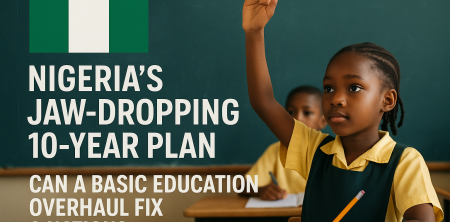
Imagine a nation embarking on a decade-long journey to fundamentally transform the very bedrock of its future: its children's education. That's precisely what Nigeria's Universal Basic Education Commission (UBEC) is setting out to do. Starting in October, UBEC is kicking off a massive, ambitious 10-year basic education overhaul – a sweeping intervention designed to reshape the learning landscape for millions of young Nigerians. This isn't just a minor policy adjustment; it's a systemic renovation, an attempt to address the deep-seated challenges that have plagued the country's foundational schooling for far too long.
When we talk about a 10-year plan, we're not just talking about a calendar; we're talking about a generation. This initiative has the potential to touch every family, every teacher, and every student in basic education across Nigeria. It's a promise of profound change, a commitment to elevating the quality of learning from the ground up. But, as with any grand vision, it also sparks considerable debate and a healthy dose of skepticism. Can such an expansive, long-term endeavor truly deliver the results so desperately needed? Will it finally provide the robust, equitable education that Nigerian children deserve?
The Genesis of a Decade-Long Vision: Why Now?
The decision by UBEC to initiate this monumental basic education overhaul isn't a sudden impulse; it's a response to decades of accumulated challenges. Nigeria, a nation of immense human potential, has long grappled with an educational system that, despite pockets of excellence, often struggles to provide consistent quality. From overcrowded classrooms and dilapidated infrastructure to a shortage of qualified teachers and outdated curricula, the issues are complex and multifaceted. These aren't just abstract problems; they manifest daily in the lives of children who don't receive the foundational skills they need to thrive.
The 'why now' really boils down to an undeniable reality: the future prosperity and stability of any nation are inextricably linked to the quality of its education system. Nigeria's demographic dividend – its vast youth population – can only be realized if that youth is educated and empowered. Without a strong basic education, subsequent levels of schooling become a house built on sand, and the workforce struggles to compete in an increasingly globalized economy. UBEC's move signals a recognition that incremental changes are no longer sufficient; a holistic, sustained intervention is absolutely essential.
Think about it: when you're dealing with a system as vast and intricate as national education, quick fixes often create more problems than they solve. A 10-year timeline, while daunting, acknowledges the sheer scale of the task. It suggests a commitment to sustained effort, a recognition that deep-rooted issues require time to unravel, address, and rebuild. This long-term perspective is perhaps one of the most compelling aspects of UBEC's new strategy, separating it from previous, often short-lived, reform efforts.
Understanding the New Intervention Model: Beyond One-Size-Fits-All
At the heart of UBEC's 10-year basic education overhaul is a novel 'new intervention model.' This isn't just bureaucratic jargon; it's a fundamental shift in how resources and support will be allocated. Historically, education interventions, especially in developing nations, have often taken a broad-brush approach, applying a uniform set of solutions across diverse contexts. While well-intentioned, this can be incredibly inefficient, as a school in a bustling urban center might have vastly different needs than one in a remote rural village.
The promise of this new model is its focus on the 'full needs of individual schools.' What does that really mean? It implies a granular, data-driven approach where each school's specific challenges and strengths are assessed. Instead of receiving a generic package, a school might get targeted support for teacher training, another for infrastructure upgrades, and yet another for curriculum development or learning materials. This bespoke approach, if implemented effectively, could dramatically improve the efficiency and impact of UBEC's investments.
Consider the analogy of a doctor treating patients: you wouldn't give every patient the same medicine, would you? A good doctor diagnoses the specific ailment and prescribes a tailored treatment. This new UBEC model aims to be the 'doctor' for Nigeria's schools, providing specific interventions rather than generic panaceas. This level of customization, while administratively complex, holds the key to addressing the unique educational disparities that exist across Nigeria's diverse regions.
The Scale of Change: Why Basic Education Matters Most
The sheer scale and length of this reform are what truly make it a major education development. UBEC isn't tinkering around the edges of tertiary education or vocational training, though those are important too. They are focusing squarely on basic education – the foundational years that shape a child's entire learning trajectory. This is where literacy, numeracy, and critical thinking skills are first developed. If these foundational blocks are weak, everything built upon them will inevitably be unstable.
When we talk about 'foundational schooling,' we're talking about primary and junior secondary education. This is where the vast majority of Nigerian children receive their initial formal learning. It's the stage where passions for learning are either ignited or extinguished. A robust basic education system ensures that every child, regardless of their socioeconomic background or geographical location, has the opportunity to acquire the essential knowledge and skills needed to participate meaningfully in society and progress to higher levels of education or productive employment.
The impact of a successful basic education overhaul radiates outwards. Children who receive a strong start are more likely to stay in school, perform better academically, and ultimately contribute more to the economy. It also has a profound social impact, reducing inequality and fostering a more informed and engaged citizenry. This isn't just about academic achievement; it's about building human capital, fostering national cohesion, and laying the groundwork for sustainable development. (See: CDC on Education and Youth Health.)
The Ripple Effect: Millions of Lives Touched
A reform of this magnitude, targeting foundational schooling, doesn't stay confined to policy documents or government offices. It spreads quickly, reaching into millions of homes, classrooms, and communities. Think about the numbers: Nigeria has one of the largest populations of school-aged children in the world. Even a modest improvement in the quality of basic education can have a profound, life-altering impact on a staggering number of individuals.
For parents, this initiative offers a glimmer of hope – the promise that their children will have access to better teachers, more engaging lessons, and safer, more conducive learning environments. For teachers, it could mean improved training, better resources, and a renewed sense of purpose. And for the students themselves, it could unlock opportunities that were previously unimaginable, giving them the tools to dream bigger and achieve more.
The public interest in education quality is always incredibly high, and for good reason. Education is seen by many as the ultimate equalizer, the pathway out of poverty, and the key to a brighter future. When a government agency like UBEC announces such a comprehensive basic education overhaul, it inevitably sparks conversations around dinner tables, in market squares, and across social media. Everyone has a stake in this, and everyone wants to know if this time, things will truly be different.
Viral Potential: Big Promises, Public Interest, and Implementation Uncertainty
This story has all the ingredients for significant public discourse, even viral spread. First, there are the 'big promises.' A 10-year basic education overhaul isn't a small pledge; it's a monumental commitment. People naturally gravitate towards narratives of large-scale transformation, especially when they touch on something as fundamental as their children's future. The ambition itself is compelling.
Then, there's the intense public interest in education quality. Nigerians are deeply invested in the schooling of their children. They see the struggles, the inconsistencies, and the potential that is often left unrealized. Any initiative that purports to address these issues will capture widespread attention. Parents are desperate for solutions, and teachers are eager for support.
However, the 'uncertainty about implementation' is the critical third element that truly fuels debate and engagement. Nigeria has seen its share of grand plans and ambitious projects that, for various reasons, didn't fully materialize. The skepticism isn't borne of cynicism, but often from lived experience. Questions will naturally arise: Who will oversee this? How will funds be managed? Will the political will remain steadfast for a full decade? These questions aren't meant to undermine the effort but to ensure accountability and robust planning. It's in this tension between hope and skepticism that the story truly comes alive, inviting robust discussion and critical analysis from all corners of society.
The Challenges Ahead: More Than Just Money
While the new intervention model and the 10-year timeline are promising, the road to a successful basic education overhaul is fraught with challenges. It's not simply a matter of throwing money at the problem, though adequate funding is undeniably crucial. One significant hurdle will be ensuring consistent political will and leadership over an entire decade. Governments change, priorities shift, and maintaining focus on a long-term project requires extraordinary commitment from successive administrations.
Another major challenge lies in data collection and needs assessment. To truly tailor interventions to individual schools, UBEC will need robust, reliable data on everything from student-teacher ratios and infrastructure conditions to teacher qualifications and learning outcomes. This kind of granular data is often difficult to collect accurately and consistently across a large, diverse nation. Furthermore, capacity building at the local level will be essential. Even with the best plans, if the people on the ground – school administrators, local education authorities, and teachers – aren't equipped to implement them, the initiative will falter.
Beyond these, there are systemic issues like teacher retention and motivation, curriculum relevance, security concerns in certain regions impacting school attendance, and even cultural factors that sometimes impede educational progress. A truly comprehensive basic education overhaul will need to consider and address these interconnected challenges holistically, rather than in isolation.
Learning from the Past: Avoiding Previous Pitfalls
Nigeria has embarked on educational reforms before, some with mixed results. To ensure this basic education overhaul succeeds, UBEC and its partners must meticulously analyze past efforts and learn from their pitfalls. What went wrong previously? Was it insufficient funding, poor implementation, lack of community engagement, or perhaps a disconnect between policy and reality?
Often, a major stumbling block has been the 'top-down' approach, where policies are formulated centrally without adequate input from those on the front lines – the teachers and local communities. The new 'individual school needs' model suggests a more decentralized approach, which is a positive sign. However, genuine consultation and empowerment of local stakeholders will be critical. This means not just informing them of decisions, but actively involving them in the planning and execution process, allowing for local adaptations and ownership.
Another common issue is sustainability. Many projects launch with great fanfare but lose momentum and funding over time. The 10-year commitment is a good start, but UBEC will need to build in mechanisms for long-term funding security, continuous monitoring and evaluation, and adaptive management. This means being flexible enough to adjust strategies based on real-world feedback and emerging challenges, rather than rigidly adhering to an initial plan that may become outdated.
A Look at the Metrics: How Will Success Be Measured?
For a basic education overhaul of this magnitude, defining and tracking success is absolutely paramount. Without clear metrics and transparent reporting, it will be impossible to tell if the ambitious goals are being met. What will UBEC consider a win? We can expect to see a focus on key indicators like increased enrollment and retention rates, particularly for girls and marginalized populations. Reducing the number of out-of-school children will undoubtedly be a primary objective.
Beyond access, quality metrics will be crucial. This includes improvements in student learning outcomes, measured through standardized assessments in literacy and numeracy. We should also look for indicators related to teacher quality – increased numbers of qualified teachers, improved continuous professional development, and better teacher-student ratios. Infrastructure development, such as the construction of new classrooms and the provision of essential learning materials, will also be tangible signs of progress.
Furthermore, success might be measured in terms of equity – narrowing the achievement gap between urban and rural schools, and ensuring that all children, regardless of background, have access to high-quality education. Transparency in reporting these metrics to the public will build trust and allow for informed debate and accountability throughout the decade-long journey.
The Global Context: Nigeria's Role in Basic Education
Nigeria's basic education overhaul doesn't happen in a vacuum; it's part of a broader global conversation about education for all. Many developing nations grapple with similar challenges, and the successes and failures of this Nigerian initiative could offer valuable lessons for others. International development partners, NGOs, and educational bodies will undoubtedly be watching closely, offering support where possible and learning from the strategies employed.
The Sustainable Development Goal 4 (SDG 4) – Quality Education – calls for inclusive and equitable quality education and lifelong learning opportunities for all by 2030. UBEC's 10-year plan, launching in October, aligns perfectly with this global agenda. By making significant strides in its own basic education system, Nigeria can contribute substantially to achieving this critical global goal. It also positions Nigeria as a leader in educational reform in Africa, potentially inspiring similar comprehensive efforts in other nations facing comparable educational crises.
Ultimately, the success of this monumental basic education overhaul will not only transform Nigeria but also serve as a powerful testament to what focused, long-term commitment can achieve in the pursuit of universal, quality education. It's a daunting task, no doubt, but one that holds the key to unlocking the immense potential of a nation and its people.
Engaging Local Communities: The Unsung Heroes of Reform
A crucial, yet often underestimated, component of any successful basic education overhaul is the active engagement of local communities. These are the parents, community leaders, religious figures, and local business owners who directly impact a child's educational journey outside the classroom. Without their buy-in and participation, even the most well-funded and strategically sound plans can falter. Think about it: a new school building is great, but if parents don't feel it's safe, or if community leaders don't advocate for attendance, then the building remains underutilized.
UBEC's new intervention model, with its focus on individual school needs, opens up a significant opportunity for localized engagement. This means empowering Parent-Teacher Associations (PTAs) with real decision-making power regarding school-specific allocations. It means involving community elders in discussions about curriculum relevance and cultural sensitivity. It could also involve local businesses in mentorship programs or providing resources. When communities feel ownership over their schools, they become fierce advocates and active partners, contributing not just financially, but with time, ideas, and vigilance. This bottom-up approach creates a sustainable foundation for reform, ensuring that solutions are not just imposed, but organically grown from the ground up.
Curriculum Modernization: Preparing Students for Tomorrow
Beyond infrastructure and teacher quality, a critical aspect of this basic education overhaul must be a significant modernization of the curriculum. The world is changing rapidly, and the skills needed for success in the 21st century workforce are vastly different from those emphasized decades ago. Rote memorization, while having its place, needs to be balanced with critical thinking, problem-solving, creativity, and digital literacy. Are Nigerian children learning coding, artificial intelligence basics, or even advanced critical reasoning skills at the basic education level?
UBEC needs to collaborate with educational experts, industry leaders, and even international bodies to develop a curriculum that is not only relevant to Nigeria's specific developmental goals but also competitive on a global scale. This might involve integrating practical, hands-on learning experiences, fostering entrepreneurial thinking from a young age, and ensuring that foundational subjects like science, technology, engineering, and mathematics (STEM) are taught in engaging, accessible ways. A modern curriculum isn't just about what's taught, but how it's taught, encouraging inquiry-based learning and student-centered approaches. This forward-looking approach will ensure that the millions of lives touched by this reform are not just educated, but empowered with the skills to shape their own futures and contribute meaningfully to Nigeria's economic growth.
The Role of Technology: Bridging Gaps and Enhancing Learning
In today's interconnected world, technology isn't a luxury in education; it's a necessity. For a basic education overhaul in a country like Nigeria, leveraging technology can be a game-changer, particularly in addressing disparities between urban and rural areas. Imagine tablets pre-loaded with educational content for remote schools lacking internet access, or interactive whiteboards in urban classrooms. Technology can democratize access to quality learning resources, provide personalized learning experiences, and even facilitate professional development for teachers in hard-to-reach regions.
This isn't just about providing devices; it's about integrating technology thoughtfully into the learning process. This could mean developing localized educational apps, creating online platforms for teacher collaboration, or using data analytics to track student progress and tailor interventions. Of course, this comes with its own set of challenges: ensuring reliable power supply, cybersecurity, and adequate training for both teachers and students. However, if UBEC strategically incorporates technology as a core pillar of its overhaul, it can significantly accelerate progress, making quality education more accessible, engaging, and effective for all Nigerian children, truly bridging existing educational divides.
A Thorough FAQ Section: Addressing Common Concerns
Let's tackle some of the burning questions people might have about this massive basic education overhaul.
Q1: What exactly does "basic education overhaul" mean for my child?
A: For your child, it means a potential for significant improvements in their school experience. This could include better-trained teachers, more up-to-date learning materials, renovated or new classrooms, and a curriculum that focuses more on practical skills and critical thinking. The goal is to make learning more engaging, effective, and relevant to their future.
Q2: How will this 10-year plan be funded? Is it sustainable?
A: Funding for basic education in Nigeria typically comes from a mix of federal allocations (through UBEC), state government contributions, and sometimes local government and donor support. The 10-year timeline suggests a commitment to sustained funding. UBEC will need to work closely with all levels of government and potentially international partners to ensure financial continuity and build in mechanisms for long-term resource mobilization beyond just initial allocations.
Q3: What specific changes can we expect to see in classrooms?
A: You might see teachers using more interactive teaching methods, incorporating technology like tablets or projectors, and focusing on group activities and problem-solving rather than just lecturing. Classrooms could become less crowded, and there should be a greater availability of textbooks and other learning aids. The aim is to shift towards a more student-centered and outcome-oriented learning environment.
Q4: How will UBEC ensure that funds are used effectively and not misappropriated?
A: This is a critical concern for any large-scale public project. The success of this overhaul will hinge on robust accountability mechanisms. This should include transparent budgeting, regular audits, public reporting on expenditures, and community oversight committees. The 'individual school needs' model, if implemented correctly, could also help by tying funds directly to verifiable improvements at the school level, making it harder for money to disappear.
Q5: Will this overhaul address the issue of out-of-school children, especially in conflict-affected regions?
A: Yes, reducing the number of out-of-school children, particularly vulnerable populations like girls and those in conflict zones, is a primary goal of basic education reform. The overhaul will likely include specific strategies such as providing safe learning environments, offering alternative learning pathways, community sensitization campaigns, and targeted support for displaced children. However, addressing security concerns will require broader governmental efforts beyond just UBEC.
Q6: What role can parents and communities play in supporting this initiative?
A: Your role is vital! Actively participating in Parent-Teacher Associations (PTAs), advocating for your child's school, monitoring their attendance and homework, and engaging with school staff are all incredibly important. Community leaders can help mobilize support, ensure school safety, and encourage enrollment. Your collective voice can hold authorities accountable and ensure the reforms translate into real improvements on the ground.
```
Trending Now
- our breakdown of the million-dollar question: virtual training vs. traditional trade schools for a high-paying career
- this guide on the secret skill that pays six figures without a degree
- our breakdown of the billion-dollar crisis: how edtech is solving our skilled trades shortage
- the complete explanation
- this guide on the mind-blowing ai platforms revolutionizing cybersecurity training
Frequently Asked Questions
What is Nigeria's 10-year education plan?
Nigeria's 10-year education plan, initiated by the Universal Basic Education Commission (UBEC), aims to fundamentally transform the country's basic education system. This ambitious overhaul seeks to address critical challenges like overcrowded classrooms, inadequate infrastructure, and a shortage of qualified teachers, ultimately improving the quality of education for millions of children.
Why is Nigeria reforming its education system now?
The reform is a response to decades of educational challenges in Nigeria, including inconsistent quality and outdated curricula. The urgency for change is driven by the need to equip children with essential foundational skills and to ensure that the education system meets the demands of a growing nation.
What challenges does Nigeria's education system currently face?
Nigeria's education system faces numerous challenges, including overcrowded classrooms, dilapidated infrastructure, a shortage of qualified teachers, and outdated curricula. These issues hinder the ability of students to receive a quality education and develop the skills necessary for their future.
Can Nigeria's education overhaul truly improve learning outcomes?
While the 10-year education overhaul has the potential to significantly improve learning outcomes, its success will depend on effective implementation and addressing systemic issues. The initiative aims to provide equitable and robust education, but skepticism remains about whether it can deliver lasting change.
How will the education overhaul affect Nigerian families?
The education overhaul is expected to impact every family with children in the basic education system across Nigeria. By improving the quality of education, families may see better educational opportunities for their children, leading to enhanced future prospects and a more educated workforce.
What's your take on this? Share your thoughts in the comments below — we read every one.


0 Responses