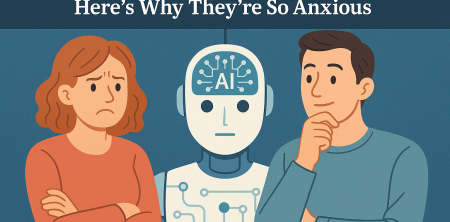
It feels like just yesterday we were debating the merits of calculators in math class, then the internet, and now, almost overnight, Artificial Intelligence has barged its way into our children's classrooms. As parents, we’re often the first line of defense, the ones trying to make sense of these seismic shifts in education. And let me tell you, when it comes to AI, there’s a deep well of anxiety bubbling up, especially around the core issue of responsible AI education.
A recent analysis from Child Trends, published on August 25, 2026, really underscored this parental unease. What truly jumped out was that our biggest worry isn't even data privacy, which is usually a massive red flag for parents. No, the top concern, by a significant margin, is academic honesty. This isn't just a fleeting worry; it's a fundamental question about the integrity of our children's learning experience. We're grappling with a technology that promises transformative benefits but simultaneously threatens to undermine the very skills we want our kids to develop. It's no wonder parents are split right down the middle, unsure if AI will ultimately be a boon or a detriment to the quality of education.
Think about it: one minute we're hearing about AI personalizing learning and making education more accessible, and the next, we're picturing students using it to write entire essays without a single original thought. This isn't some distant future scenario; it's happening now. A statewide poll in Massachusetts in January 2026 echoed these sentiments, showing parents are profoundly divided on AI's role. Worries about cheating, the erosion of critical thinking skills, and equitable access to these powerful tools are front and center. The Washington Post, on September 7, 2026, even went so far as to describe the current state of AI in schools as the 'wild, wild west,' a perfect metaphor for the lack of clear guidelines and consensus. It’s a chaotic landscape, and as parents, we're trying to figure out how to navigate it for our kids.
1. Academic Honesty: The Top Parental Anxiety: The Ghost in the Machine
When we talk about responsible AI education, the elephant in the room is undoubtedly academic honesty. It’s not just a concern; it’s the primary worry for parents, eclipsing even issues like data privacy or potential negative impacts on learning. Why? Because the very foundation of education rests on the idea that students are learning, understanding, and producing their own work. AI, particularly generative AI, directly challenges this.
Imagine your child spending hours researching and drafting an essay, only for another student to generate a similar, perhaps even superior, piece of writing in minutes with the help of an AI tool. How do we, as parents and educators, differentiate between genuine effort and AI-assisted output? This isn't just about catching cheaters; it's about fostering an environment where authentic learning is valued and rewarded. If students can outsource their critical thinking and writing to a machine, what incentive do they have to develop those skills themselves? This isn't a hypothetical fear; it's a very real, immediate problem that schools are grappling with right now, and parents are understandably anxious about the implications for their children's long-term intellectual development.
2. Erosion of Critical Thinking Skills: More Than Just a Shortcut
Beyond the immediate concern of cheating, parents are deeply worried about the potential for AI to diminish our children's ability to think critically. Critical thinking isn't just a buzzword; it's the bedrock of problem-solving, innovation, and informed decision-making. It’s about evaluating information, forming independent judgments, and constructing well-reasoned arguments. If AI becomes the default answer-provider, what happens to that crucial developmental process?
The fear is that students might become overly reliant on AI to process complex information, summarize texts, or even solve mathematical problems, rather than engaging in the demanding, sometimes frustrating, but ultimately rewarding process of figuring things out themselves. This isn't to say AI can't be a valuable tool for research or idea generation, but there's a fine line between using AI as an assistant and allowing it to replace the cognitive heavy lifting. Parents want their children to develop robust minds, capable of independent thought, and the thought of AI inadvertently short-circuiting that development is genuinely unsettling. It's a key reason why responsible AI education needs to prioritize how to *think* with AI, not just *use* it.
3. The Data Privacy Dilemma: Who Owns Our Kids' Information?
While academic honesty has taken the top spot in parental concerns, data privacy remains a significant, underlying worry – and for good reason. Every time a new technology enters the classroom, questions immediately arise about what data is being collected, how it's being used, and who has access to it. AI tools, by their very nature, are often data-hungry. They learn and improve by processing vast amounts of information, some of which could be highly personal to our children.
We're talking about everything from student performance data, learning styles, and behavioral patterns to potentially even biometric information if certain AI applications become more prevalent. As parents, we want assurances that our children's digital footprints are protected, not monetized or inadvertently exposed. The lack of clear, uniform regulations regarding AI in educational technology makes this all the more concerning. Without robust safeguards and transparent policies, the promise of personalized learning could come at the cost of our children's privacy, a trade-off many parents are simply not willing to make. This element of responsible AI education is critical for building trust.
4. Equitable Access: Bridging the Digital Divide, or Widening It?
Another major concern for parents, highlighted by the Massachusetts poll, is equitable access to AI tools. We’ve seen this play out before with computers and internet access: technology can either be a great equalizer or it can exacerbate existing inequalities. AI, with its potential for personalized learning and advanced resources, has the capacity to do both. (See: CDC Youth Risk Behavior Surveillance.)
If some schools or districts can afford cutting-edge AI software, highly trained educators to implement it, and robust infrastructure, while others cannot, what does that mean for the educational landscape? Will students in well-resourced areas gain a significant advantage, potentially leaving their less fortunate peers even further behind? This isn't just about having access to a device; it’s about access to the *quality* of AI tools, the training to use them effectively, and the pedagogical approaches that integrate them meaningfully into the curriculum. Responsible AI education must actively work to prevent a new form of digital divide, ensuring that every child, regardless of their socioeconomic background, has the opportunity to engage with and benefit from this powerful technology.
5. The 'Wild, Wild West' of AI in Education: A Call for Consensus
The Washington Post's description of AI in schools as the 'wild, wild west' on September 7, 2026, perfectly encapsulates the current state of affairs. There's a palpable lack of consensus, not just among parents, but among educators, administrators, and policymakers, regarding appropriate AI use. This isn't a criticism; it's a reflection of how rapidly this technology has emerged and how little time there's been to establish norms, best practices, and ethical guidelines.
Without clear, consistent policies, individual schools and even individual teachers are left to navigate this complex terrain on their own, often leading to inconsistent approaches and varying standards. Some might embrace AI enthusiastically, others might ban it outright, and many are simply trying to figure it out as they go. This creates confusion for students and parents alike. We need a concerted effort from educational leaders, technology experts, and parent groups to forge a common understanding and develop comprehensive frameworks for responsible AI education that can be adopted nationwide. The current fragmented approach benefits no one and only amplifies parental anxieties.
6. Parental Division: Help or Harm? A Generational Divide?
It's fascinating, and perhaps a little frustrating, to see how deeply divided parents are on whether AI will ultimately help or harm the quality of education. The Child Trends analysis clearly articulated this split. On one hand, you have parents who see the immense potential: personalized learning paths, instant feedback, access to vast amounts of information, and preparation for a future workforce saturated with AI. They envision AI as a tool that can unlock new levels of engagement and understanding.
On the other hand, there are parents who foresee a dystopian future where human connection is diminished, creativity is stifled, and genuine learning is replaced by algorithmic output. They worry about the over-reliance on technology, the loss of fundamental skills, and the ethical quagmires AI presents. This division isn't necessarily about being tech-savvy or not; it often stems from deeply held values about what education *should* be. It also might reflect a generational divide, with younger parents potentially more open to AI than older generations. Reconciling these vastly different perspectives will be crucial for developing a truly effective and responsible AI education strategy.
7. The Need for Educator Training and Support: Equipping the Front Lines
Let's be honest, teachers are on the front lines of this AI revolution, and many feel unprepared. It's not fair to expect them to suddenly become AI experts overnight, capable of integrating complex tools into their curriculum, detecting AI-generated content, and teaching responsible AI use, all without adequate training and support. The rapid pace of AI development means that what was true yesterday might be obsolete tomorrow, making continuous professional development absolutely essential.
Parents intuitively understand this. We want our children's teachers to be confident and competent in using AI, not just as a tool, but as a subject they can teach ethically and effectively. This means investing in comprehensive training programs, providing resources for experimentation, and creating platforms for educators to share best practices and challenges. Without this foundational support for teachers, any grand plans for responsible AI education are likely to fall flat. We can't expect our kids to learn about AI responsibly if their teachers aren't equipped to guide them.
8. Redefining Learning Objectives: What Does 'Educated' Even Mean Now?
Perhaps the most profound challenge AI presents to education, and one that fuels a lot of parental anxiety, is the need to fundamentally redefine what it means to be 'educated' in an AI-powered world. If AI can perform many of the tasks we traditionally associate with learning – memorizing facts, summarizing information, even drafting essays – then what skills become paramount?
This pushes us to consider a shift from rote learning and information recall to higher-order thinking skills: creativity, critical analysis, problem-solving, ethical reasoning, collaboration, and adaptability. Responsible AI education isn't just about teaching kids how to use AI; it's about teaching them how to be uniquely human in an age of artificial intelligence. It's about fostering the skills that AI *cannot* replicate, at least not yet. This means a significant overhaul of curricula, assessment methods, and pedagogical approaches, all designed to prepare students not just for jobs that exist today, but for a future workforce that is constantly evolving alongside AI. Parents want their children to be prepared, and that means a clear vision for what skills truly matter in this new paradigm.
9. The Role of Parents in Shaping AI Education: Beyond Just Worrying
It's easy for us as parents to feel overwhelmed and powerless in the face of such rapid technological change. We voice our concerns, we read the articles, and we talk amongst ourselves, but what's our actual role in shaping responsible AI education? It's more significant than you might think. Our collective voice holds immense power, and engaging with schools and policymakers is essential. (See: New York Times on AI in education.)
This means attending school board meetings, joining parent-teacher associations, and actively participating in discussions about technology integration. Ask tough questions: What are the school's policies on AI use? How are teachers being trained? What safeguards are in place for data privacy? Are there specific curricula being developed for AI literacy? Beyond school, fostering an open dialogue at home about AI is crucial. Talk to your kids about how they're using AI, the benefits, the ethical considerations, and the importance of original thought. We can model responsible digital citizenship and help them understand the nuances of this technology, not just as users, but as critical thinkers. Our involvement ensures that the conversation around AI in education isn't just happening *to* our children, but *with* their best interests at heart.
10. Ethical AI Use and Digital Citizenship: More Than Just 'Don't Cheat'
When we talk about responsible AI education, it extends far beyond simply telling students not to use AI to cheat. It's about instilling a comprehensive understanding of ethical AI use and fostering robust digital citizenship skills. This involves teaching kids to critically evaluate AI-generated content for bias, accuracy, and fairness. They need to understand that AI models reflect the data they're trained on, which can sometimes perpetuate societal prejudices.
Think about the implications of AI systems used in hiring, loan applications, or even medical diagnoses. Our children, as future citizens and professionals, will interact with these systems daily. Responsible AI education should equip them to identify when AI is being used unethically or irresponsibly, and to advocate for fair and transparent AI practices. It also means understanding concepts like intellectual property in the age of AI-generated art or text, and the environmental impact of training massive AI models. It’s about raising a generation that not only knows how to *use* AI but also how to *critique* it and demand better from it. This deeper ethical framework is a cornerstone of true responsible AI education.
11. The Mental Health Impact of AI: A Hidden Concern
While not always at the forefront of policy discussions, the potential mental health impact of AI on students is a growing concern for many parents. Constant interaction with AI, particularly personalized learning algorithms, could potentially lead to increased feelings of pressure, anxiety, or even isolation. If AI is constantly optimizing content to keep students engaged, could it inadvertently contribute to screen addiction or reduce opportunities for genuine human interaction and collaborative learning?
There's also the subtle psychological effect of interacting with highly sophisticated, seemingly infallible AI systems. Will it diminish self-efficacy if students constantly compare their work to AI-generated perfection? What about the stress of keeping up with ever-evolving AI tools? Responsible AI education needs to incorporate discussions around digital well-being, mindfulness in technology use, and ensuring that AI serves as a tool to enhance human connection and learning, rather than replace it. We want our kids to thrive emotionally and socially, not just academically, and the mental health dimension of AI integration cannot be overlooked.
12. AI Literacy for All Ages: It's Not Just for High Schoolers
When we picture AI education, we often think of older students learning coding or data science. But responsible AI education needs to start much earlier. Just as we teach basic computer literacy from a young age, fundamental AI literacy should be integrated into the curriculum from elementary school onward. This isn't about teaching complex algorithms to first graders, but about introducing the *concepts* of AI in an age-appropriate way.
For younger children, this could mean understanding that when they talk to a smart speaker, it's a computer program responding. It could involve simple games that illustrate how AI learns from data or how recommendations work. As they get older, it progresses to understanding how AI influences their social media feeds, online searches, and even the games they play. Building this foundational understanding early helps demystify AI, reduces fear, and equips children with the cognitive tools to understand its presence in their world. It fosters a sense of agency and critical awareness, which are vital components of responsible AI education throughout their academic journey.
Frequently Asked Questions About Responsible AI Education
Q1: What exactly does "responsible AI education" mean?
Responsible AI education means teaching students not just how to use artificial intelligence tools, but also how to understand their underlying principles, ethical implications, potential biases, and societal impact. It’s about equipping students to be critical users, ethical creators, and informed citizens in an AI-driven world, prioritizing human skills like creativity and critical thinking.
Q2: How can parents ensure their child's school is implementing responsible AI education?
Start by engaging directly with your child's school. Attend PTA meetings, school board sessions, and parent-teacher conferences. Ask specific questions about their AI policies: Do they have guidelines for AI use? How are teachers trained? What measures are in place for student data privacy? Are they teaching AI literacy? Advocating for clear policies and teacher support is key.
Q3: Is it possible for schools to completely ban AI?
While some schools initially attempted outright bans, most experts agree that a complete ban on AI is impractical and counterproductive in the long run. AI is an increasingly ubiquitous technology, and students need to learn how to engage with it responsibly to be prepared for the future. The focus is shifting from banning to integrating and teaching ethical use.
Q4: How can AI benefit my child's learning?
AI offers many potential benefits, including personalized learning experiences tailored to individual student needs, instant feedback on assignments, access to vast amounts of information, and tools for creative expression. It can help identify learning gaps, provide targeted support, and free up teachers to focus on higher-level instruction and individualized attention.
Q5: What are the main risks of AI in education that parents should be aware of?
The primary risks include academic dishonesty (students using AI to cheat), the erosion of critical thinking skills if students become overly reliant on AI, data privacy concerns regarding student information, and the potential for an exacerbated digital divide if access to quality AI tools isn't equitable. There are also concerns about the mental health impact and the spread of misinformation.
Q6: How can I talk to my child about using AI responsibly at home?
Foster an open and curious dialogue. Ask them how they're using AI, what they like or dislike about it, and what questions they have. Emphasize the importance of original thought, creativity, and critical evaluation. Discuss the concept of "AI as a tool" versus "AI as a replacement." Talk about ethical issues like plagiarism, bias, and the potential for AI to generate incorrect information. Model responsible digital behavior yourself.
Q7: Will AI replace teachers?
Most experts believe AI will not replace teachers but will significantly change their role. AI can automate administrative tasks, personalize content, and provide data insights, allowing teachers to focus more on mentorship, critical thinking instruction, social-emotional learning, and complex problem-solving activities. Teachers will become facilitators of AI-enhanced learning.
Q8: What skills should my child focus on to thrive in an AI-powered world?
Focus on skills that AI struggles with: creativity, critical thinking, ethical reasoning, complex problem-solving, collaboration, emotional intelligence, and adaptability. These are uniquely human capabilities that will become even more valuable. Also, understanding the basics of how AI works and how to prompt it effectively (AI literacy) will be crucial.
The conversation around AI in education is complex, fraught with both immense potential and significant peril. As parents, our anxieties are real and multifaceted, stemming from fundamental concerns about academic honesty, the development of critical thinking, data privacy, and equitable access. The current 'wild, wild west' situation isn't sustainable, and it’s clear we need a collective, thoughtful approach to integrating AI into our schools. We want our children to be prepared for the future, but not at the expense of genuine learning or ethical development. The path forward demands open dialogue, clear policies, robust teacher training, and a willingness to redefine what an excellent education truly looks like in the age of AI. It’s a massive undertaking, but our children's future depends on us getting responsible AI education right.
Trending Now
Frequently Asked Questions
What are parents concerned about regarding AI in schools?
Parents are primarily worried about academic honesty when it comes to AI in education. They fear that AI tools could undermine the integrity of their children's learning experiences, leading to issues like cheating and a decline in critical thinking skills.
How does AI impact academic honesty in education?
AI can facilitate cheating by allowing students to produce work without original thought, raising concerns about the authenticity of their learning. This shift challenges traditional educational values and the development of essential skills.
Are parents divided on the use of AI in education?
Yes, parents are significantly divided on AI's role in education. While some see it as a tool for personalized learning and accessibility, others fear it may erode critical thinking skills and academic integrity.
What benefits do parents see in AI for education?
Parents recognize that AI has the potential to personalize learning experiences and make education more accessible. However, they remain cautious about the implications for academic honesty and the skills their children need to develop.
What do experts say about the current state of AI in schools?
Experts describe the current landscape of AI in education as chaotic, likening it to the 'wild, wild west.' There is a lack of clear guidelines and consensus on how to responsibly integrate AI into classrooms, leading to widespread parental anxiety.
What did we miss? Let us know in the comments and join the conversation.


0 Responses