```html
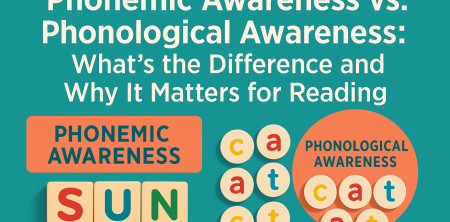
Reading is a fundamental skill that opens the door to knowledge, communication, and personal expression. Yet, the journey toward becoming a proficient reader involves mastering several key concepts, two of which are phonemic awareness and phonological awareness. While these terms often get used interchangeably, they represent distinct aspects of language that play crucial roles in literacy development. In this article, we'll explore the differences between phonemic awareness vs phonological awareness, their significance in reading, and practical insights to support learners.
1. Defining Phonological Awareness
Phonological awareness is an umbrella term that encompasses the ability to recognize and manipulate various sound structures in spoken language. This includes skills such as recognizing syllables, onsets, and rimes, as well as the ability to detect rhymes and alliteration.
For instance, when a child can break the word "banana" into its syllables—"ba-na-na"—they are demonstrating phonological awareness. This skill is vital for developing listening and spoken language abilities, as it lays the groundwork for further understanding of how sounds function in speech.
2. Understanding Phonemic Awareness
In contrast, phonemic awareness is a more specific subset of phonological awareness. It refers to the ability to identify, manipulate, and play with the individual sounds, or phonemes, in words. Phonemes are the smallest units of sound that can change the meaning of a word. For example, changing the first sound in "bat" from /b/ to /c/ creates the word "cat." This skill is crucial for reading because it directly relates to decoding words.
Children who develop strong phonemic awareness skills can more easily connect sounds to letters, making them more effective readers. Experts suggest that phonemic awareness is a vital precursor to successful reading acquisition.
3. The Relationship Between Phonemic and Phonological Awareness
Understanding the relationship between phonemic awareness and phonological awareness is critical. Phonological awareness serves as the foundation upon which phonemic awareness is built. Children typically develop phonological awareness skills before they move on to phonemic awareness.
For example, a child may first learn to recognize that "cat," "hat," and "bat" all rhyme (a phonological skill) before they can manipulate the individual sounds in those words (phonemic awareness). This progression illustrates why both types of awareness are vital for literacy development.
4. Why Phonemic and Phonological Awareness Matter for Reading
The importance of phonemic and phonological awareness in reading cannot be overstated. Research shows that children with strong phonological and phonemic skills are more likely to become proficient readers. They can decode words more effectively, understand spelling patterns, and read with greater fluency.
Moreover, these skills contribute to vocabulary development. A child who can break down sounds within words is better equipped to understand and learn new words, leading to improved comprehension across various texts.
5. Key Differences Between Phonemic Awareness and Phonological Awareness
To clarify the distinctions further, let’s outline some key differences between phonemic awareness and phonological awareness: (See: Reading skills and phonological awareness.)
- Scope: Phonological awareness is broad and includes various sound structures, whereas phonemic awareness focuses specifically on individual phonemes.
- Developmental Sequence: Children typically develop phonological awareness skills first, moving on to phonemic awareness as they progress.
- Impact on Literacy: Phonemic awareness has a more direct impact on reading abilities, particularly in decoding and spelling.
Recognizing these differences helps educators and parents tailor interventions to meet the specific needs of learners.
6. Practical Strategies to Develop Phonological Awareness
Developing phonological awareness in young children can be both fun and effective. Here are several strategies that parents and educators can employ:
- Rhyming Games: Engage children with rhyming books and songs. Ask them to identify and create rhymes to enhance their auditory discrimination skills.
- Syllable Clapping: Teach children to clap their hands for each syllable they hear in a word. For instance, with "elephant," they would clap three times.
- Sound Matching Activities: Use picture cards and ask children to find items that start with the same sound, reinforcing their understanding of onsets and rimes.
These activities not only support phonological awareness but also make learning enjoyable.
7. Effective Techniques for Enhancing Phonemic Awareness
To specifically bolster phonemic awareness, consider incorporating these techniques into literacy instruction:
- Sound Manipulation Exercises: Encourage children to change sounds in words. For example, ask them to replace the /s/ in "sat" with /m/ to form "mat." This exercise strengthens their understanding of phonemes.
- Phoneme Segmentation Activities: Teach children to break down words into individual sounds, such as saying /k/, /a/, /t/ for "cat." This skill is critical for decoding unfamiliar words.
- Sound Blending Games: Present children with individual sounds and challenge them to blend them together to form a word. This reinforces their auditory processing abilities.
By focusing on these techniques, educators can help students develop essential phonemic skills that contribute directly to their reading success.
8. Current Trends in Phonemic and Phonological Awareness Research
Research continues to evolve in the fields of phonemic and phonological awareness, emphasizing their crucial roles in literacy development. Recent studies have shown that systematic and explicit instruction in these areas significantly improves students' reading outcomes, especially for struggling readers.
One notable trend is the integration of technology into phonological and phonemic awareness instruction. Online programs and applications now offer interactive games and activities that make learning these skills engaging for children. These digital tools can supplement traditional teaching methods and provide additional practice for students outside the classroom.
9. Supporting Struggling Readers with Phonemic and Phonological Awareness
For struggling readers, targeted interventions focused on phonemic and phonological awareness can lead to significant improvements. Educators should identify students who are lagging in these areas and provide tailored support through small group instruction or one-on-one tutoring.
Programs like Response to Intervention (RTI) emphasize the importance of early identification and intervention. By incorporating phonological and phonemic awareness activities into intervention plans, educators can help students build a strong foundation for reading success.
10. The Future of Phonemic and Phonological Awareness in Education
As our understanding of phonemic awareness vs phonological awareness continues to evolve, it's clear that these concepts will remain at the forefront of literacy education. The push for early and effective instruction in these areas is essential for ensuring that all students have the skills they need to succeed in reading. See also apps for phonological skills.
Future educational policies and curricula will likely continue to prioritize phonological and phonemic awareness as key components of literacy instruction. By equipping educators with the necessary training and resources, we can better support students on their journey to becoming confident, proficient readers. (See: Literacy and its importance in education.)
11. The Role of Phonological and Phonemic Awareness in Multilingual Contexts
Understanding phonological and phonemic awareness is not only essential for native speakers of a language but also for multilingual learners. In today's globalized world, many children are exposed to multiple languages from an early age. This exposure can actually provide unique advantages in developing phonological and phonemic skills.
Research indicates that children who learn multiple languages often have enhanced phonological awareness because they become adept at recognizing and manipulating sounds in various linguistic contexts. For instance, a multilingual child might find it easier to identify phonemes when switching between languages, which could lead to greater ease in learning to read in their primary language.
However, it’s important to consider that each language has its phonetic system, which may influence a child's reading development differently. Educators working with multilingual learners should incorporate activities that highlight the sound structures of both the child’s home language and the language of instruction. This approach can help bridge the gap and foster a more inclusive learning environment.
12. Statistics and Research Findings on Phonemic and Phonological Awareness
Several key studies highlight the impact of phonemic and phonological awareness on reading success:
- A study from the National Reading Panel found that phonemic awareness instruction significantly improves children’s reading abilities. In fact, students who received explicit phonemic awareness training scored nearly 20% higher on reading assessments than those who did not.
- The National Early Literacy Panel reported that early phonological awareness skills are strong predictors of later reading success, particularly for children at risk for reading difficulties.
- Research published in the journal Reading Research Quarterly indicated that children who engaged in phonological awareness activities for just 15 minutes a day showed improvement in their reading fluency and comprehension within six months.
These statistics underscore the importance of integrating phonemic and phonological awareness into early literacy instruction, providing a strong basis for future reading development. For more on this, see phonemic awareness tools.
13. Expert Perspectives on Phonemic and Phonological Awareness
Leading experts in literacy education emphasize the significance of these foundational skills. Dr. Louisa Moats, a renowned educator and author, states, "Phonemic awareness is a critical skill for literacy. Children must be able to hear, identify, and manipulate the sounds in words before they can start to read. Without this ability, they will struggle." Her research highlights how explicit instruction in phonemic awareness lays the groundwork for decoding and spelling.
Similarly, Dr. Timothy Shanahan emphasizes that "phonological awareness is not only about sounds; it’s also about preparing children to understand the relationship between sounds and written letters." His insights encourage educators to create lessons that connect auditory skills with visual literacy.
These expert perspectives reinforce the idea that phonemic and phonological awareness are integral components of a comprehensive literacy education.
14. Frequent Questions About Phonemic and Phonological Awareness
What is the best age to start teaching phonemic and phonological awareness?
Research suggests that phonological awareness can begin as early as preschool. By age four, children can benefit from rhyming games and syllable recognition activities. Phonemic awareness instruction is often introduced in kindergarten when children start to learn about the sounds of letters. (See: Phonological awareness in early learning.)
How can I tell if my child is struggling with phonemic awareness?
Signs that your child may be struggling with phonemic awareness include difficulty rhyming, trouble breaking words into syllables, and challenges blending sounds into words. If these issues persist, it may be helpful to consult with an educator or specialist who can assess their skills and recommend targeted support.
Are phonemic and phonological awareness skills necessary for all students?
Yes, both phonemic and phonological awareness skills are critical for all students, regardless of their reading levels. These skills are fundamental for decoding, spelling, and overall reading comprehension. Early intervention and instruction can help prevent reading difficulties down the line.
Can phonemic awareness skills be taught at home?
Absolutely! Parents can incorporate fun activities such as singing songs, playing rhyming games, and reading aloud to help develop their child's phonemic and phonological awareness. Simple games using everyday objects, like asking your child to identify the first sound in a word, can also be effective.
What resources are available for teaching phonemic and phonological awareness?
Many resources are available, including books, online games, and educational apps designed to enhance phonemic and phonological awareness. Websites such as Starfall and ABCmouse offer engaging activities that can support learning in these areas. Additionally, local libraries often provide programs for early literacy that include phonemic and phonological awareness activities.
15. Common Misconceptions About Phonemic and Phonological Awareness
Despite their importance, several misconceptions surround phonemic and phonological awareness. Understanding these can help parents and educators support children more effectively:
- Myth 1: Phonemic Awareness Is Only for Young Children: While it is crucial in early childhood, phonemic awareness continues to be relevant for older students, especially those who struggle with reading. Older students may need reinforcement of these skills to improve their decoding and comprehension abilities.
- Myth 2: Phonemic Awareness Is the Same as Phonics: While they are related, phonemic awareness is about sounds in spoken language, whereas phonics connects those sounds to written letters and their corresponding spellings. Instruction in both areas is necessary for reading success.
- Myth 3: Phonemic Awareness Skills Can Be Learned Passively: Active engagement is essential for developing phonemic awareness. Children need hands-on activities and interactive experiences to grasp these concepts fully.
16. Phonemic and Phonological Awareness in Different Learning Environments
The context in which phonemic and phonological awareness skills are taught can significantly impact their effectiveness. Here are a few environments where these skills can be nurtured:
- Home Environment: Parents can create a rich language environment by reading to children, engaging in discussions, and playing sound-oriented games. This early exposure fosters a love for language and literacy.
- Classroom Instruction: Teachers can incorporate phonemic and phonological activities into their daily lesson plans. By using interactive tools and group activities, they can make learning these skills enjoyable and effective.
- Online Learning Platforms: With the rise of technology, various platforms offer resources and games focused on phonemic and phonological awareness. This can be particularly beneficial for remote learning situations or when additional practice is needed.
17. Conclusion: Encouraging Phonemic and Phonological Awareness for Lifelong Literacy
Encouraging phonemic and phonological awareness is foundational for developing strong reading skills. By understanding the nuances of these concepts and incorporating engaging strategies in various environments, we can support all learners on their journey to literacy. With the right resources, training, and encouragement, every child can become a confident reader, equipped with the skills they need to succeed.
```
Trending Now
- our breakdown of “5 evidence-based strategies to improve math fluency in middle school classrooms”
- our breakdown of “can adults have dyscalculia? recognizing and managing math learning disabilities later in life”
- the complete explanation
- this guide on “teaching math to children who struggle with irreversibility: concrete strategies that help”
Frequently Asked Questions
What is the difference between phonemic awareness and phonological awareness?
Phonological awareness is a broad skill that includes recognizing and manipulating sound structures like syllables and rhymes, while phonemic awareness focuses specifically on the ability to identify and manipulate individual sounds, or phonemes, in words.
Why is phonemic awareness important for reading?
Phonemic awareness is crucial for reading as it helps children connect sounds to letters, aiding in word decoding. It serves as a vital precursor to successful reading acquisition, allowing learners to become more effective readers.
How can I improve my child's phonological awareness?
To enhance phonological awareness, engage your child in activities such as rhyming games, syllable clapping, and alliteration exercises. These activities help them recognize and manipulate sound structures in spoken language.
What are some examples of phonemic awareness activities?
Examples of phonemic awareness activities include sound matching games, phoneme segmentation tasks, and blending sounds to form words. These exercises help children manipulate individual sounds effectively.
At what age should children develop phonemic awareness?
Children typically begin developing phonemic awareness skills around age 4 to 5. Early exposure to sound manipulation activities can significantly enhance their reading readiness as they approach formal schooling.
Have you experienced this yourself? We'd love to hear your story in the comments.

