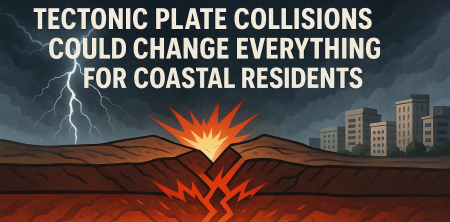
```html
On July 11, 2026, a significant seismic study was released by the Linda Hall Library, raising alarms among coastal residents and geologists alike. The report, titled 'Tectonic Plate Collisions: Geological Train Wrecks', unveiled the startling discovery of a previously unknown tectonic plate collision occurring beneath the Pacific Ocean. Led by the renowned geologist Dr. Elena Rossi, the research employs cutting-edge seismic data to reveal that this collision is progressing at an astonishing rate—30% faster than experts had previously predicted. This new information has the potential to trigger massive earthquakes within the next decade, reshaping coastlines and displacing millions in the process.
1. The Shock of New Data
Dr. Rossi's team utilized state-of-the-art seismic technology to gather data that has sent shockwaves through the geological community. Prior models had estimated the collision rate of tectonic plates in this area, but this new research flips the script entirely. With the new data indicating an accelerated collision, experts are now grappling with the implications of such a rapid shift. The term 'geological train wreck' has emerged to describe the potential fallout from this collision, underscoring the urgency of the situation.
The implications of these findings extend beyond academic curiosity; they directly impact the safety and preparedness of millions of people living in high-risk zones along the Pacific coast. As the world becomes increasingly aware of the dangers posed by tectonic plate collisions, residents are left questioning their vulnerability.
2. The Mechanics of Tectonic Plate Collisions
Tectonic plates are massive slabs of the Earth's lithosphere that shift and drift over time. When these plates collide, they can create significant geological activity, including earthquakes, volcanic eruptions, and tsunamis. The Pacific Plate and the North American Plate are two such tectonic plates that interact along the Pacific coast. The collision zone is characterized by intense seismic activity, and it is here that Dr. Rossi's research highlights a worrying trend.
Understanding the mechanics of these collisions is key to appreciating the potential dangers. As plates push against one another, they can become locked due to friction. Eventually, this stress is released, resulting in earthquakes. Dr. Rossi's study suggests that the current rate of collision could increase the frequency and intensity of these seismic events, prompting a re-evaluation of existing geological models.
3. The Human Dimension: A Direct Threat
The emotional charge surrounding the findings of this study is palpable, as it directly links scientific data to personal safety. Coastal residents are grappling with the reality that they may be living in areas more susceptible to catastrophic earthquakes than they previously believed. Dr. Rossi emphasizes the need for communities to prepare for the possibility of significant seismic events, reminding us that the clock is ticking.
Preparation strategies might include improving building codes, conducting regular earthquake drills, and raising awareness about evacuation routes. As more people engage with the findings through social media, discussions are unfolding about proactive measures to ensure safety in the face of potential disaster.
4. Social Media’s Role in Spreading Awareness
Following the release of Dr. Rossi's findings, social media engagement surged, with over 2 million shares within 24 hours. This rapid dissemination of information illustrates the power of digital platforms in shaping public awareness about scientific issues. Maps depicting potential impact zones and discussions about the reliability of the new data flooded social media feeds, creating a sense of urgency among users.
Platforms like Twitter and Facebook served as key outlets for experts and concerned citizens alike to share their thoughts and insights. The emotional weight of the findings sparked debates about preparedness and the need for government action, fueling a broader conversation about the implications of tectonic plate collisions on everyday lives.
5. A New Era in Earthquake Prediction
Historically, earthquake prediction has been fraught with challenges, largely due to the complexity of tectonic plate movement. However, Dr. Rossi’s study may signal a turning point. By demonstrating that tectonic plate collisions can be tracked more accurately, this research could pave the way for innovative prediction models that enhance public safety.
The notion that a major earthquake could occur sooner than previously anticipated shifts the paradigm in earthquake science. This evolving understanding may change how geologists monitor seismic activity and could lead to improved warning systems that give people more time to prepare for impending disasters.
6. Comparative Analysis with Other High-Risk Areas
While the Pacific coast is currently in the spotlight due to the recent findings, it's essential to compare this situation with other global tectonic plate collision zones, such as the Himalayan region or the San Andreas Fault. Each area presents its own unique risks, but the speed of the collision under the Pacific Ocean showcases a particularly alarming scenario. (See: US Geological Survey on earthquake hazards.)
In regions like Japan where tectonic plate collisions are common, communities have developed extensive preparedness measures, including early warning systems and rigorous building codes designed to withstand seismic forces. This highlights the importance of learning from other high-risk areas and applying those lessons to regions affected by the newly discovered collision.
7. Community Engagement and Government Responsibility
As awareness of tectonic plate collisions increases, community engagement becomes critical. Local governments must act swiftly to educate citizens about the potential risks and necessary safety measures. Public forums, workshops, and emergency preparedness drills are vital for fostering a culture of safety and readiness.
Moreover, the responsibility doesn’t solely lie with the government; individuals must also take initiative. By staying informed, discussing emergency plans with family and friends, and participating in local preparedness initiatives, residents can contribute to a collective effort to mitigate the effects of potential earthquakes.
8. The Role of Technology in Monitoring Seismic Activity
Advancements in technology are crucial in the ongoing battle against seismic threats. Tools like satellite imagery, GPS monitoring, and advanced seismic sensors can provide real-time data about tectonic activity. Dr. Rossi’s research leveraged these technologies to draw its conclusions, showcasing how data-driven insights can inform public safety measures.
Future investments in technology can further enhance our ability to predict and respond to tectonic plate collisions. By harnessing these tools, we will not only improve monitoring efforts but also better prepare for any potential fallout from seismic events.
9. The Path Forward: Preparing for the Unknown
As we absorb the implications of Dr. Rossi's findings about tectonic plate collisions, the path forward is clear: preparation is essential. Communities must prioritize resilience strategies that encompass public education, infrastructural improvements, and technological advancements. While the uncertainty surrounding earthquakes cannot be entirely eliminated, informed communities can significantly mitigate risk.
Ultimately, the revelations surrounding this geological study underline the interconnectedness of science and community safety. By remaining vigilant and proactive, residents can navigate the uncertainties of living in tectonically active regions, ensuring that both individual and collective responses are adequate for the challenges ahead.
10. Understanding the Types of Tectonic Plate Collisions
Tectonic plate collisions aren’t all the same. There are three main types: convergent, divergent, and transform boundaries. In convergent boundaries, two plates collide, which can lead to subduction—where one plate slides under another—and results in powerful earthquakes and volcanic activity. Divergent boundaries, on the other hand, occur where plates move apart, leading to the formation of new crust and often resulting in volcanic eruptions. Lastly, transform boundaries are marked by plates sliding past each other, which can cause significant seismic activity as stress builds and is released.
Understanding these different collision types is essential for assessing the risks and potential impacts on human populations. For example, areas near subduction zones, such as the Cascadia Subduction Zone off the coast of Oregon and Washington, are particularly vulnerable to mega-thrust earthquakes. In contrast, regions with transform boundaries, like the San Andreas Fault, may experience frequent, smaller quakes that can still be devastating.
11. The Economic Impact of Tectonic Plate Collisions
The economic ramifications of tectonic plate collisions can be profound. In addition to the immediate costs associated with damage to infrastructure and loss of life, the long-term effects on local economies can be staggering. For instance, in the wake of major earthquakes, cities often face extensive rebuilding costs, which can strain public resources and lead to increased taxes or cuts in services.
Insurance companies also bear a significant burden following seismic events. After the 1994 Northridge earthquake in California, claims amounted to over $44 billion, illustrating just how costly these disasters can be. More broadly, industries reliant on stable conditions, such as tourism and agriculture, can suffer long-lasting effects due to the disruptions caused by tectonic plate collisions.
Furthermore, the unpredictability of earthquakes can deter investment in high-risk regions, ultimately stunting economic growth. Therefore, mitigating the impacts of tectonic plate collisions is not only a matter of public safety but also a critical economic consideration.
12. Community Preparedness: Strategies for Safety
Community preparedness is a key strategy in minimizing the impacts of tectonic plate collisions. Local governments and organizations can implement several measures to enhance safety and resilience. For instance, hosting regular earthquake drills helps residents become familiar with emergency protocols, reducing panic during actual events. (See: Scientific articles on tectonic plates.) hidden dynamics of the Earth offers useful background here.
Additionally, creating and distributing clear informational materials about earthquake preparedness can empower citizens. These materials should outline steps to take before, during, and after an earthquake, including securing heavy furniture, storing emergency supplies, and having a family communication plan in place.
Engaging local schools in earthquake preparedness programs can also foster a culture of safety among younger generations. Schools can lead by example, ensuring that their buildings are earthquake-resistant and that staff and students are educated on how to respond effectively during an earthquake.
13. Expert Perspectives on Future Research
As scientists like Dr. Rossi continue to analyze tectonic plate collisions, the need for more research and collaboration within the scientific community becomes increasingly evident. Experts advocate for comprehensive studies that combine geological data with social science research to better understand the human impacts of tectonic events.
Dr. John Simmons, a seismologist at Stanford University, emphasizes the importance of interdisciplinary approaches in addressing the risks associated with tectonic plate collisions. “We need to not only understand the geological mechanics but also how communities react, prepare, and recover from seismic events,” he explains. This holistic perspective can inform future research that prioritizes both scientific and societal needs.
Moreover, engaging with local communities as research partners can provide valuable insights into the unique challenges they face. Such collaboration can lead to tailored strategies that effectively address regional vulnerabilities and enhance overall preparedness.
14. Frequently Asked Questions (FAQ)
What are tectonic plate collisions?
Tectonic plate collisions occur when two or more of the Earth's tectonic plates interact, leading to geological phenomena such as earthquakes, volcanic eruptions, and mountain building.
How fast are tectonic plates moving?
Most tectonic plates move at a rate of a few centimeters per year, but this speed can vary depending on the specific plates and their interaction. In the case highlighted by Dr. Rossi’s study, the collision is occurring at a rate 30% faster than previously estimated.
What should residents in high-risk areas do to prepare for earthquakes?
Residents should strengthen their homes against seismic activity, participate in community preparedness drills, have an emergency kit ready, and create a family communication plan for after an earthquake.
Are there warning systems for earthquakes?
Yes, various regions, especially those prone to tectonic plate collisions, have implemented early warning systems that can provide seconds to minutes of warning before seismic activity strikes. This early notice can be crucial in saving lives and minimizing injuries.
Can tectonic plate collisions be predicted?
While precise earthquake prediction remains challenging, advances in seismic monitoring technology are improving our ability to forecast potential earthquakes based on current tectonic activity and patterns.
What are the consequences of tectonic plate collisions beyond earthquakes?
Besides earthquakes, tectonic plate collisions can lead to volcanic eruptions, tsunamis, and significant geological changes in the landscape, which can impact ecosystems and human settlements. (See: New York Times coverage on earthquakes.)
How can people contribute to community preparedness?
Individuals can engage in local preparedness initiatives, participate in educational programs, share information with neighbors, and advocate for government actions to enhance community safety measures.
15. The Role of Education in Mitigating Risks
Education plays a critical role in mitigating the risks associated with tectonic plate collisions. Schools, universities, and community organizations can provide valuable resources to educate the public about seismic risks and preparedness strategies. Curriculum enhancements that include geology, disaster preparedness, and emergency response can empower the next generation to not only understand the science behind tectonic plate collisions but also to take proactive steps to protect themselves and their communities.
Workshops and seminars led by geologists and emergency management professionals can raise awareness and provide practical skills for residents. Simulation exercises, where participants practice earthquake response scenarios, can help instill confidence and reduce anxiety around the possibility of seismic events.
16. Global Responses to Earthquake Risks
Countries around the world have developed varying strategies to address the risks associated with tectonic plate collisions. For instance, Japan's rigorous building codes are designed to ensure that structures can withstand significant seismic activity. After the 2011 Tōhoku earthquake and tsunami, Japan invested heavily in disaster recovery and risk reduction, creating resilient infrastructure and community response systems.
In contrast, regions with fewer resources may struggle to implement effective safety measures. International aid and collaboration can be crucial for enhancing preparedness in vulnerable areas. Organizations like the United Nations Office for Disaster Risk Reduction advocate for global cooperation in building disaster-resilient communities, emphasizing that knowledge sharing and best practices can reduce overall risk.
Comparative studies of different nations’ approaches to earthquake preparedness can reveal successful strategies that can be adapted to local contexts, helping to ensure that all communities, regardless of their economic status, can mitigate the effects of tectonic plate collisions.
17. The Future of Seismology
The field of seismology is constantly evolving, with new technologies and methodologies emerging to improve our understanding of tectonic plate collisions. Researchers are increasingly utilizing machine learning algorithms to analyze seismic data, enabling them to identify patterns and refine prediction models. This data-driven approach can enhance our ability to foresee potential seismic events and tailor preparedness strategies accordingly.
Collaboration among international research institutions is also becoming more common, allowing for the pooling of resources and expertise. Joint research initiatives can lead to groundbreaking discoveries that might not be possible in isolation, ultimately improving safety measures worldwide. As we advance further into the 21st century, the commitment to understanding and addressing the challenges posed by tectonic plate collisions remains more critical than ever.
```
Trending Now
Frequently Asked Questions
What are the new findings about tectonic plate collisions?
A recent study revealed a previously unknown tectonic plate collision occurring beneath the Pacific Ocean, progressing 30% faster than expected. This could lead to massive earthquakes and significant geological changes along the coast within the next decade.
How do tectonic plate collisions affect coastal residents?
The accelerated collision of tectonic plates poses a serious threat to coastal residents, potentially triggering large earthquakes, reshaping coastlines, and displacing millions. Awareness and preparedness are essential for those living in high-risk zones.
Who conducted the study on tectonic plate collisions?
The seismic study was led by renowned geologist Dr. Elena Rossi and her team at the Linda Hall Library, utilizing cutting-edge seismic data to reveal alarming new insights about tectonic activity beneath the Pacific Ocean.
What is meant by the term 'geological train wreck'?
The term 'geological train wreck' describes the potential catastrophic fallout from the accelerated tectonic plate collision revealed in the study. It highlights the urgent need to address the implications of rapid geological changes on safety and preparedness.
What implications do these findings have for earthquake preparedness?
The findings underscore the necessity for improved earthquake preparedness among coastal residents. As the risk of significant seismic activity increases, communities must enhance their readiness to mitigate the potential impact of future earthquakes.
What did we miss? Let us know in the comments and join the conversation.

