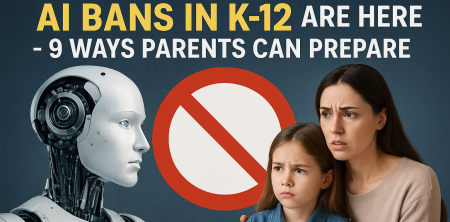
Alright, let's talk about something that's really shaking up the education world: artificial intelligence. You've probably heard the buzz, seen the headlines, and maybe even had a few conversations at the dinner table about ChatGPT or other AI tools. But here's the kicker – for many K-12 students, especially those in younger grades, AI isn't just a new tool; it's a restricted one. Major school districts, including the behemoths in New York City and Los Angeles, are implementing outright bans or at least temporary moratoriums on generative AI for K-8 students as the 2026-27 school year kicks off. This isn't just a localized thing; it’s a growing trend driven by genuine concerns about critical thinking, too much screen time, and, let's be honest, the ever-present specter of plagiarism.
As a parent, you might feel a bit caught in the middle. On one hand, you want your child to be technologically literate and prepared for a future that will undoubtedly be intertwined with AI. On the other hand, you understand the need for foundational skills, genuine creativity, and the kind of deep learning that AI might, at times, short-circuit. It’s a complex landscape, and navigating these new AI restrictions in K-12 education can feel like trying to steer a ship through uncharted waters. While a significant chunk of teachers – about 69%, believe it or not – see the potential for AI to actually improve how they teach, an even larger number, 71%, feel the burden of policing student AI use. It's a tough spot for everyone involved, from educators grappling with new tech to parents trying to figure out the best way to support their kids. So, what's a parent to do? Let's break it down.
1. Understand the 'Why' Behind the Bans: Delving into School Policies
Before you can effectively navigate AI restrictions in K-12 education, you really need to grasp why schools are taking these steps in the first place. It's not just about being anti-technology; often, it's about protecting core educational values. School districts, like those in New York City and Los Angeles, aren't just making these decisions on a whim. They’re looking at several critical factors: the potential for AI to undermine the development of critical thinking skills, the increasing concern over excessive screen time for young learners, and the very real issue of academic integrity, specifically plagiarism.
Think about it: if a student can simply prompt an AI to write an essay or solve a complex math problem, are they truly engaging with the material? Are they developing the analytical muscles necessary for higher-level thinking? The answer, for many educators, is a resounding 'no.' Furthermore, the sheer volume of time children spend in front of screens is a growing public health concern, and adding AI tools to the mix without careful consideration could exacerbate that. And then there's plagiarism, which AI makes incredibly easy. It’s a thorny issue, and schools are trying to draw a line to ensure students are still doing the heavy lifting of learning. Familiarize yourself with your specific school district's policies; they're often publicly available and will give you the precise framework your child is operating within.
It's worth noting that the reasons for these bans aren't always uniform across districts, even if they share common themes. Some schools might be more concerned about data privacy and the ethical implications of feeding student data into large language models operated by private companies. Others might prioritize equity, worrying that students without access to premium AI tools at home will be at a disadvantage. Understanding these nuances can help you frame your conversations with school staff and better advocate for your child's learning. For instance, if privacy is a major concern, you might discuss how the school plans to vet AI tools for data security, rather than focusing solely on academic integrity. This deeper dive into the 'why' allows for a more informed and constructive approach.
2. Prioritize Foundational Skills: The Unsung Heroes of Learning
With AI tools becoming more prevalent, it’s more important than ever to double down on foundational skills. When schools restrict AI, they're essentially creating a space where these core abilities can truly flourish without a technological crutch. This means encouraging strong reading comprehension, developing robust writing skills, and fostering a deep understanding of mathematical concepts. These aren't just 'nice-to-haves'; they are the building blocks for all future learning, regardless of how advanced technology becomes.
As parents, we have a crucial role to play here. Instead of reaching for a quick AI solution for homework, encourage your child to grapple with problems, articulate their thoughts in writing, and read widely. Engage them in discussions about what they're reading, ask them to explain their reasoning for a math problem, or have them summarize a historical event in their own words. These activities directly counter the potential pitfalls of AI over-reliance and strengthen the very skills schools are trying to protect. It's about empowering them to be independent thinkers and learners, not just prompt engineers.
Consider the analogy of building a house: you wouldn't start with the roof before laying a solid foundation. Foundational skills are that foundation. A child who can deconstruct a complex sentence, understand the nuances of a historical argument, or logically solve a multi-step math problem is better equipped to utilize AI as a tool later on, rather than being used by it. We're talking about nurturing skills like active listening, summarizing, synthesizing information, and basic arithmetic. These are the cognitive muscles that AI can augment, but never truly replace. Research from organizations like the National Council of Teachers of English (NCTE) consistently emphasizes that while technology evolves, the core principles of effective communication and critical analysis remain paramount. Supporting your child in these areas isn't just about complying with AI restrictions; it's about future-proofing their intellect.
3. Cultivate Critical Thinking Off-Screen: Beyond the Digital Realm
One of the primary fears driving AI restrictions is the concern that generative AI can bypass the need for genuine critical thinking. If an AI can generate a response, does a student truly understand the underlying concepts? This is where parents can step in and provide invaluable support. Think about ways to develop critical thinking skills that don't involve screens at all.
Engage your children in real-world problem-solving. This could be as simple as planning a family meal within a budget, figuring out the best route for a road trip, or debating the pros and cons of a local community issue. Encourage them to ask 'why' and 'how,' to consider different perspectives, and to evaluate information from various sources. Board games, puzzles, and even structured debates at home can be fantastic tools for sharpening these essential cognitive muscles. The goal is to teach them to analyze, synthesize, and evaluate information independently, skills that are timeless and transcend any technological advancement. (See: U.S. Department of Education on technology.)
Beyond structured activities, incorporate critical thinking into everyday conversations. For example, when watching a news report or a documentary, ask open-ended questions: "What do you think about that claim? Is there another way to look at this situation? What evidence are they using to support their point?" This helps children develop a healthy skepticism and the ability to question information, rather than passively accepting it. Encouraging them to articulate their reasoning, even if it's flawed, is crucial. It's not about being right; it's about the process of thinking. Psychologists often point out that the act of explaining a concept to someone else deepens one's own understanding, a phenomenon known as the "protégé effect." So, having your child explain a book plot or a historical event to you isn't just a test of their knowledge, it's a powerful critical thinking exercise.
4. Foster Creativity Through Analog Methods: Unleash the Imagination
AI is incredibly good at generating content, but true human creativity, the kind that sparks original ideas and unique expressions, often stems from a deeper well. When schools limit AI, it opens up opportunities to emphasize and nurture this human creativity through more traditional, analog methods. This doesn't mean shunning all technology, but rather ensuring that creative development isn't solely reliant on algorithms. For more context, see EU Kids Act Could Finally Make the Internet Safe for Your Children.
Encourage your child to engage in activities that demand imagination and hands-on effort. This could be anything from drawing, painting, sculpting, or playing a musical instrument to writing stories by hand, building models, or engaging in dramatic play. The process of creating something from scratch, without the instant gratification or pre-digested ideas that AI can offer, is profoundly important. It teaches perseverance, problem-solving, and the unique satisfaction of bringing an original idea to life. These are the experiences that build character and genuine innovative spirit, something AI can't replicate.
Think about the difference between an AI-generated image and a child's hand-drawn picture. While the AI image might be technically perfect, the child's drawing carries their unique perspective, their developing motor skills, and the story of their effort. It's about the journey of creation, not just the destination. Providing access to diverse art supplies – crayons, clay, construction paper, fabric scraps – can spark endless possibilities. Similarly, encouraging imaginative play with simple props, like a blanket fort transforming into a spaceship, allows children to build worlds and narratives entirely from their minds. Even something as simple as journaling or writing letters to family members can be a powerful creative outlet, allowing them to explore language and express emotions without the pressure of a digital interface. These analog creative endeavors are crucial for developing divergent thinking, the ability to generate multiple solutions to a problem, which is a hallmark of human ingenuity.
5. Emphasize Digital Citizenship and Ethics: More Than Just 'Don't Plagiarize'
Even with AI restrictions in place, the digital world is an undeniable part of our children's lives. Therefore, teaching strong digital citizenship and ethical use of technology, particularly concerning AI, is non-negotiable. It's not just about telling them not to use AI for schoolwork; it's about helping them understand the broader implications of AI, both good and bad.
Discuss the concept of intellectual property, the importance of citing sources, and what constitutes plagiarism, even if it's generated by a machine. Talk about data privacy, the potential for bias in AI algorithms, and the critical need to verify information, regardless of its source. This conversation goes beyond school rules and delves into fundamental ethical principles that will serve them well in an increasingly AI-driven world. By fostering a strong ethical compass around technology, you're equipping them with the judgment needed to navigate future technological challenges, including how to engage responsibly with AI when appropriate.
Digital citizenship extends beyond plagiarism to include concepts like online etiquette, cyberbullying prevention, and understanding their digital footprint. When it comes to AI, these conversations become even more layered. For example, discuss how AI systems learn from data, and if that data is biased, the AI's output might reflect those biases. This can lead to important discussions about fairness, equality, and the responsibility of technology developers. Explain that just because an AI generates something, it doesn't automatically make it true or unbiased. Encourage them to be "media literate" in the age of AI, questioning sources and cross-referencing information. It's about building a generation that doesn't just consume digital content but critically evaluates it, understanding the power and limitations of the tools they use. Organizations like Common Sense Media offer excellent resources for parents on fostering digital citizenship, providing age-appropriate discussion starters and activities.
6. Communicate and Collaborate with Educators: A United Front
One of the most effective strategies for how to navigate AI restrictions in K-12 education is to establish open lines of communication with your child's teachers and school administration. Educators are on the front lines of this evolving situation, and they often have a clear understanding of the specific challenges and goals within their classrooms. Don't assume you know their perspective; ask questions and listen.
Attend parent-teacher conferences, reach out via email, or schedule a brief meeting to discuss how AI is being addressed in their curriculum. Ask about specific assignments where AI use might be a concern and how you can best support your child at home without inadvertently undermining school policies. When parents and educators work together, presenting a united front, it sends a clear message to students about the importance of academic integrity and genuine learning. This collaboration ensures consistency between home and school, which is always beneficial for a child's educational journey.
Beyond just understanding policies, active collaboration can involve sharing observations about your child's learning process at home. For example, if you notice your child struggling with a particular concept and tempted to use AI, you can share this with the teacher, who might offer alternative strategies or additional support. Conversely, if you find effective ways to explain a concept that resonates with your child, sharing that insight with the teacher could benefit their classroom instruction. This open dialogue builds trust and a shared understanding of the child's needs. Remember, teachers are often overwhelmed with new technologies and evolving policies; your proactive engagement can be a valuable partnership in helping them navigate this complex terrain. Consider joining parent advisory committees or volunteering at school events to stay even more connected to the broader educational community and its approach to AI.
7. Encourage Hands-On Learning and Exploration: Real-World Experiences
In an era where digital tools can simulate almost anything, there’s an immense value in real, tangible experiences. AI restrictions in schools inadvertently highlight the importance of hands-on learning, which engages multiple senses and often leads to deeper understanding and retention. As parents, we can actively seek out and encourage these types of experiences for our children. (See: New York Times on AI education bans.)
Think about activities like science experiments (even simple ones in the kitchen!), gardening, building projects, coding with physical robots, or exploring nature. These experiences demand problem-solving, observation, and direct engagement with the physical world, fostering skills that AI cannot replicate. They teach kids how things work, how to troubleshoot, and how to learn from trial and error – invaluable lessons that build genuine competence and curiosity. These are the kinds of learning experiences that truly stick with a child, far beyond what a generated answer might provide.
Hands-on learning isn't just about academic subjects; it also encompasses practical life skills. Teaching a child how to cook a simple meal, fix a bicycle tire, or manage a small budget provides concrete, real-world problem-solving opportunities. These activities require planning, execution, and often, adapting to unexpected challenges – all skills that AI can't develop for them. Field trips to museums, historical sites, or even local businesses can offer immersive learning experiences that bring abstract concepts to life. For example, visiting a local farm can teach children about agriculture, economics, and environmental science in a way that reading about it online simply can't. The tactile nature of these experiences, the direct interaction with materials and environments, strengthens neural pathways and fosters a deeper, more embodied understanding of the world. Educational theorists like Jean Piaget emphasized the importance of concrete experiences in cognitive development, particularly for younger children, highlighting how direct manipulation of objects and exploration of environments are fundamental to learning. For more context, see Elite Private School's Radical New Method.
8. Model Responsible Technology Use: Leading by Example
Our children are constantly watching us, absorbing our behaviors and attitudes, especially when it comes to technology. If we want them to understand how to navigate AI restrictions in K-12 education responsibly, we need to model that behavior ourselves. This means demonstrating a balanced approach to technology and being transparent about how we use AI in our own lives.
Talk to your kids about when you choose to use AI for efficiency and when you choose to engage in tasks manually to develop your own skills. Show them how you verify information found online or generated by AI. Be mindful of your own screen time and encourage family activities that don't involve devices. When they see you making conscious choices about technology, they learn that it's a tool to be used thoughtfully, not a crutch to be leaned on indiscriminately. Our actions speak volumes, and our example can be one of the most powerful teaching tools we possess.
This modeling isn't just about AI; it extends to all forms of technology. For instance, if you're constantly on your phone during family meals or conversations, your child will internalize that behavior. Conversely, if you set boundaries for your own device use, they'll learn the importance of balance. When you do use AI, be explicit about it. "I'm using this AI tool to help me brainstorm ideas for my work presentation, but I'll be doing all the writing and critical analysis myself." Or, "I asked this AI for a quick summary of a complex topic, but now I'm going to read the original article to get the full picture and check for accuracy." This transparency helps demystify AI and positions it as a sophisticated tool, not an infallible oracle. It also reinforces the idea that human oversight and critical engagement are always necessary, even when using advanced technology. This proactive approach to modeling responsible tech use is far more effective than simply issuing rules, as it demonstrates the 'why' behind the guidelines.
9. Embrace the Long-Term View of AI Integration: A Shifting Landscape
It’s crucial to remember that the current AI restrictions in K-12 education are likely a temporary phase, a necessary pause to understand and adapt. AI isn't going away; it's going to become an even more integral part of our society. The bans and moratoriums are less about eradicating AI from education forever and more about giving schools, educators, and policymakers time to develop thoughtful, ethical frameworks for its use. States like California are already taking legislative steps to ensure AI accountability in education, which signals a move towards integration, not just restriction.
As parents, our role is to prepare our children not just for today's restrictions but for tomorrow's realities. This means focusing on adaptable skills like critical thinking, problem-solving, ethical reasoning, and continuous learning. These are the meta-skills that will allow them to thrive in any technological landscape, whether AI is banned, integrated, or somewhere in between. We're not just preparing them for school; we're preparing them for a dynamic future where the ability to learn, adapt, and think independently will be their greatest assets. So, while we respect the current boundaries, let's also keep an eye on the horizon, encouraging a mindset of lifelong learning and intelligent engagement with whatever new technologies emerge.
10. The Role of AI Literacy in a Restricted Environment: Beyond Just Using the Tools
Even with restrictions in place, understanding what AI is, how it works, and its capabilities is a form of literacy that's becoming just as important as reading and writing. When we talk about how to navigate AI restrictions in K-12 education, it's not just about compliance; it's about building foundational AI literacy. This doesn't mean teaching kids to use ChatGPT for homework, but rather educating them about the underlying principles, ethical considerations, and real-world applications of AI.
Think about discussing the basic concepts of machine learning, algorithms, and data. You don't need to be a computer scientist to explain these ideas in an age-appropriate way. For example, you can talk about how a streaming service recommends movies based on what you've watched (a simple algorithm), or how a self-driving car "sees" its environment (computer vision). This kind of conceptual understanding demystifies AI and prepares children to engage with it intelligently later on. It helps them understand the difference between human and artificial intelligence, the strengths and limitations of each, and how AI can be a powerful tool for good or ill. This literacy is essential for future citizens and professionals, regardless of their career path. By building this conceptual understanding now, even in a restricted environment, we're laying the groundwork for informed and responsible engagement with AI when the time comes for broader integration. For more context, see Lawsuit Claims Snapchat's Design Exposes Kids to Predators. (See: CDC on youth health behaviors.)
11. Exploring AI's Positive Potential (Outside Schoolwork): When AI Can Be a Friend
While schools are rightly cautious about AI's impact on core learning, there are many positive, educational, and fun ways children can interact with AI outside of academic assignments. Navigating AI restrictions in K-12 education doesn't mean shutting AI out completely; it means being selective and intentional about its use. As parents, we can introduce AI in ways that spark curiosity and develop beneficial skills.
For example, many educational apps use AI for personalized learning paths, adapting to a child's pace and style. Interactive AI tutors for learning new languages or practicing math facts can be incredibly engaging. There are AI-powered creative tools for art and music that allow children to experiment and explore new forms of expression. Even some video games incorporate AI elements that can teach strategic thinking or problem-solving. The key is to supervise these interactions, choose age-appropriate tools, and ensure they are supplementary to, rather than a replacement for, foundational learning. This approach helps children see AI as a helpful assistant or a creative partner, rather than just a way to cheat on homework. It’s about leveraging AI’s strengths in areas where it genuinely enhances learning and exploration, without undermining the development of essential human skills.
Frequently Asked Questions About Navigating AI Restrictions in K-12 Education
Q1: Why are K-8 students specifically targeted by AI restrictions, more so than high schoolers?
A: The primary reason for focusing on K-8 students is developmental. Younger learners are still in crucial stages of developing foundational cognitive skills like critical thinking, problem-solving, and creative expression. Educators worry that early reliance on AI could short-circuit these organic developmental processes. High school students, while still learning, are generally considered to have a more solid grasp of these basics, making the integration of AI potentially more about enhancing existing skills rather than replacing their development.
Q2: My child's school has a strict ban. How can I still prepare them for an AI-driven future without undermining school rules?
A: The best way is to focus on the underlying human skills that AI can't replicate. Emphasize critical thinking by discussing current events, encouraging debates, and analyzing information from various sources. Foster creativity through art, music, storytelling, and hands-on projects. Build strong foundational skills in reading, writing, and math. Also, educate them about AI literacy – what AI is, how it works, and its ethical implications – without actually using the tools for schoolwork. These skills are universally valuable and will serve them well when they encounter AI in higher education or the workforce.
Q3: What if my child sees other kids using AI at home for schoolwork, and feels disadvantaged by the restrictions?
A: This is a common challenge. It's important to have an open conversation with your child about integrity, fairness, and the long-term benefits of genuine learning. Explain that while AI can offer quick answers, it doesn't build understanding or critical skills. Reinforce the school's policy and your family's commitment to it. You can also highlight the unique advantages of human-driven learning, such as deeper comprehension, personal growth, and the satisfaction of earning success through one's own effort. If the peer pressure is significant, consider reaching out to the school to understand how they address such issues and if there are resources or discussions available for students on academic honesty in the age of AI.
Q4: How can parents identify if their child is secretly using AI for school assignments?
A: It can be tricky, as AI-generated content becomes more sophisticated. Look for inconsistencies in writing style or voice – if an assignment sounds much more mature or polished than your child's usual work. Watch for a sudden jump in performance without corresponding effort. Engage your child in discussions about their assignments; if they struggle to explain their work or the reasoning behind their answers, it might be a red flag. Also, encourage them to show their work process, not just the final product. Tools are emerging to detect AI use, but open communication and fostering an environment of trust and academic honesty are often the most effective preventative measures.
Q5: Will AI restrictions eventually disappear from K-12 education?
A: It's unlikely that AI restrictions will disappear entirely. Instead, they will likely evolve. The current bans are often temporary moratoriums, giving schools time to develop comprehensive policies, ethical guidelines, and effective pedagogical strategies for integrating AI responsibly. We'll probably see a shift from outright bans to more nuanced approaches, where AI is used for specific, instructionally sound purposes, particularly in higher grades, with strong emphasis on human oversight, critical evaluation, and ethical use. The goal isn't to eliminate AI, but to ensure it serves education in a way that truly benefits student learning and development.
Trending Now
Frequently Asked Questions
Why are schools banning AI tools for K-12 students?
Schools are banning AI tools for K-12 students due to concerns about critical thinking, excessive screen time, and plagiarism. Major districts, like those in New York City and Los Angeles, are implementing these restrictions to ensure students develop foundational skills and genuine creativity without reliance on AI.
How can parents prepare for AI restrictions in schools?
Parents can prepare for AI restrictions by understanding school policies, encouraging traditional learning methods, promoting critical thinking skills, and discussing the importance of creativity and deep learning. Engaging in conversations about technology and its role in education can also help children navigate these changes.
What are the impacts of AI bans on student learning?
AI bans can impact student learning by limiting access to advanced tools that could enhance education. However, they also encourage students to develop essential skills like critical thinking and creativity, fostering a deeper understanding of subjects without reliance on AI-generated content.
How do teachers feel about AI use in the classroom?
While about 69% of teachers believe AI has the potential to improve teaching methods, a larger percentage, approximately 71%, feel burdened by the need to monitor and control student AI usage. This creates a challenging environment as educators balance technology's benefits with its risks.
What are the long-term effects of AI restrictions on students?
Long-term effects of AI restrictions on students may include a stronger foundation in critical thinking and creativity as they learn to engage with content more deeply. However, there is also a concern that limiting technology use could hinder their readiness for a future where AI plays a significant role.
What's your take on this? Share your thoughts in the comments below — we read every one.

