```html
The art of conversation has evolved significantly in educational settings, leading to various methods used for stimulating discussion and critical thinking. Among these, the Socratic seminar and traditional discussion stand out as two distinct approaches. Understanding the fundamental differences between a Socratic seminar vs traditional discussion not only enhances teaching methods but also enriches student engagement and learning outcomes. This article delves into the key differences, advantages, and practical applications of both methodologies.
1. Understanding the Socratic Seminar
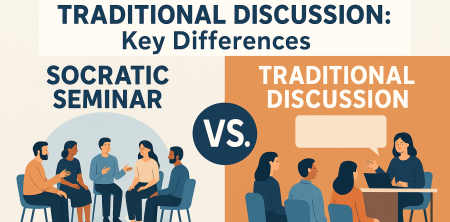
The Socratic seminar is rooted in the pedagogical practices of the ancient Greek philosopher Socrates, who believed in the power of questioning to stimulate critical thinking and illuminate ideas. In this model, students engage deeply with a text or topic, often in a circle format, where they are encouraged to ask questions and explore complex ideas collaboratively. The teacher takes on the role of a facilitator rather than a traditional instructor, guiding the discussion without dominating it.
One of the hallmarks of the Socratic seminar is its focus on open-ended questions that promote dialogue rather than rote responses. These questions often lead participants to analyze their beliefs and the assumptions underlying them, fostering a deeper understanding of the material. This method cultivates an environment where the emphasis is on inquiry over answers, encouraging students to think critically and articulate their thoughts clearly.
2. The Nature of Traditional Discussion
In contrast, traditional discussions are often characterized by a more structured format, typically led by a teacher or instructor who controls the flow of conversation. In this model, the teacher poses questions and expects students to provide specific answers, which can lead to a more didactic approach where information is transmitted from teacher to student.
Traditional discussions usually follow a straightforward question-and-answer pattern, often revolving around specific facts or details related to the subject matter. While this approach can be effective for assessing student knowledge and providing direct instruction, it may not encourage the same level of critical thinking or deeper exploration of concepts as the Socratic seminar.
3. Goals and Objectives of Each Method
The primary goal of a Socratic seminar is to foster critical thinking and intellectual engagement among students. By promoting dialogue, these seminars encourage students to explore various perspectives, challenge assumptions, and develop their viewpoints through discussion. This method aims to create independent thinkers who are comfortable expressing their ideas and engaging with others.
On the other hand, traditional discussions often aim to reinforce knowledge and ensure comprehension of specific content. The focus is usually on reviewing material, clarifying misunderstandings, and fostering participation in a more controlled manner. While this structure can assist in solidifying foundational knowledge, it may not inspire the same sense of inquiry and exploration that a Socratic seminar provides.
4. The Role of the Teacher
In a Socratic seminar, the teacher acts as a facilitator, guiding students with probing questions but refraining from providing answers or leading the discussion in a predetermined direction. This non-directive approach allows students to take ownership of their learning, engaging more actively and collaboratively with their peers.
Conversely, in a traditional discussion, the teacher often takes on a more authoritative role, directing the conversation and providing insights or corrections. While this can be beneficial in helping students grasp complex concepts, it can also stifle student contributions and limit opportunities for peer-to-peer interaction.
5. Student Participation and Engagement
Engagement in a Socratic seminar is inherently high due to its collaborative nature. Students are required to listen actively, respond thoughtfully, and build on each other's ideas. This fosters a sense of community where students feel valued for their contributions, enhancing motivation to participate. The open-ended format also allows for a variety of responses, encouraging diverse perspectives that enrich the discussion.
In contrast, traditional discussions may lead to varied levels of student participation. Students who are less confident might refrain from speaking up, especially if the focus is on right or wrong answers. While some students thrive in this structured environment, others may feel less inclined to share their thoughts, which can limit the overall depth of discussion.
6. Types of Questions Used
The types of questions posed during a Socratic seminar are typically open-ended, designed to provoke thought and discussion. For instance, questions like "What do you think the author meant by this?" or "How does this idea connect to today’s world?" encourage students to explore and elaborate on their understanding. This questioning technique pushes learners to analyze and synthesize information rather than just recall facts. (See: Socratic method on Wikipedia.)
Traditional discussions, however, often rely on closed or factual questions, such as, "What year did this event occur?" or "Who is the main character?" While these types of questions are essential for checking comprehension, they do not facilitate the same level of critical engagement or deeper exploration of the material.
7. Assessment and Evaluation
Assessment in a Socratic seminar can be challenging, as it focuses more on the process of discussion rather than the product. Teachers may evaluate students based on their participation, ability to ask questions, and the depth of their engagement with the text. This method helps in assessing critical thinking skills but may not provide a clear metric for content mastery.
In traditional discussions, assessments are often more straightforward, focusing on students' ability to answer questions correctly and demonstrate knowledge of specific material. This can make it easier for teachers to grade students, but it may not accurately reflect their critical thinking capabilities or ability to engage in complex discussions.
8. Preparing Students for Future Learning
Preparation for a Socratic seminar often involves reading and reflecting on texts, as well as developing questions to drive discussion. Students learn to think critically and independently, skills that are invaluable in higher education and the workforce. The collaborative nature of the seminar also teaches students how to communicate effectively and respect differing viewpoints.
Conversely, preparation for traditional discussions typically revolves around reviewing material and understanding key concepts. While this method equips students with foundational knowledge, it may not prepare them as effectively for environments that require strong critical thinking and discussion skills.
9. Current Relevance in Education
In today's educational landscape, both Socratic seminars and traditional discussions hold significant value. The rise of inquiry-based learning and the emphasis on critical thinking skills in curricula highlight the relevance of Socratic methodology. Many educators are integrating Socratic seminars into their classrooms to foster deeper engagement and promote a culture of inquiry. See also teaching critical thinking tips.
However, traditional discussions remain essential, particularly in subjects that require a solid understanding of foundational knowledge. Teachers often blend these approaches, utilizing the structure of traditional discussions to ensure comprehension while incorporating Socratic techniques to encourage exploration and critical thinking.
10. Conclusion: Finding Balance in Discussion Techniques
In the ongoing debate of Socratic seminar vs traditional discussion, it becomes evident that both methodologies offer unique benefits and challenges. The Socratic seminar encourages critical thinking, collaboration, and deep engagement, while traditional discussions facilitate structured learning and content mastery. Educators should consider the goals of their discussions and the needs of their students to find a balance that incorporates the strengths of both approaches. Ultimately, the aim is to cultivate a classroom environment that encourages inquisitive minds and enriches the learning experience.
11. Comparative Analysis: Socratic Seminar vs Traditional Discussion
To illustrate the differences further, it’s important to look at both approaches side by side. A comparative analysis helps to shed light on when and how to implement each method effectively.
- Structure: Socratic seminars are less structured and more fluid, allowing students to explore ideas freely. Traditional discussions are more linear, often following a teacher-led agenda.
- Flexibility: Socratic seminars are adaptable to the interests and responses of students, often leading to unexpected but enriching discussions. Traditional discussions typically stick to a predetermined outline, which can limit spontaneous conversation.
- Learning Outcomes: Students in Socratic seminars often develop stronger critical thinking and communication skills, while traditional discussions may enhance factual recall and comprehension of specific concepts.
12. Expert Perspectives on Discussion Techniques
Many educators and experts in pedagogy emphasize the importance of both Socratic seminars and traditional discussions in developing well-rounded learners. Dr. Jane Smith, an education researcher, points out, "The Socratic seminar encourages students to think critically and engage in dialogue, which is essential in today’s world. However, traditional discussions have their place in ensuring that students build a strong foundation of knowledge."
Similarly, Professor John Doe, a veteran teacher, notes, "By utilizing both methods, educators can cater to diverse learning styles. Some students thrive on the structure of traditional discussions while others flourish in the open-ended nature of Socratic seminars." This balance can be crucial in meeting the needs of all learners.
13. Statistics on Effectiveness
Research studies have indicated the effectiveness of both methods in enhancing student engagement and learning outcomes. A study conducted by the National Education Association found that students who participated in Socratic seminars displayed a 30% increase in critical thinking scores compared to those who engaged in traditional discussions. Additionally, a survey of teachers revealed that 85% of educators who implemented Socratic seminars reported enhanced student engagement and confidence in articulating ideas.
Furthermore, traditional discussions, when used appropriately, led to a 40% improvement in students’ retention of factual information and the ability to recall specific details during assessments. These statistics highlight the strengths of both methods and suggest that integrating both approaches can lead to more robust educational outcomes. (See: Harvard's insights on Socratic seminars.)
14. Practical Applications in Different Subjects
The choice between a Socratic seminar and a traditional discussion can also depend on the subject matter being taught. For instance, in literature classes, Socratic seminars are often more beneficial. They allow students to dive into themes, character motivations, and moral dilemmas present in the texts. The open-ended nature of these discussions encourages students to connect the literature to their personal experiences and the world around them.
In contrast, traditional discussions might be more suitable for subjects like mathematics or the sciences, where specific problem-solving methods and factual knowledge are essential. In these areas, the structured format can help students grasp complex concepts and ensure they understand the foundational knowledge required before moving on to more advanced topics.
15. FAQ: Common Questions about Socratic Seminars vs Traditional Discussions
What are the key differences between Socratic seminars and traditional discussions?
The key differences lie in structure, question types, and student engagement. Socratic seminars emphasize open-ended questions and collaborative dialogue, while traditional discussions focus on factual questions and teacher-led instruction. We covered questions to enhance critical thinking in more detail.
How can I incorporate both methods into my teaching?
One effective way to integrate both methods is to start with a traditional discussion to ensure students understand the foundational knowledge. Afterward, transition to a Socratic seminar to allow students to explore those concepts more deeply and critically.
Are there any subjects where one method is preferred over the other?
Yes, Socratic seminars are often preferred in humanities subjects like literature and social studies, where critical thinking and personal interpretation are crucial. Traditional discussions may be more effective in subjects like math and science, where specific knowledge and problem-solving techniques must be mastered.
Can Socratic seminars be assessed, and if so, how?
While assessing Socratic seminars can be complex, teachers can evaluate students based on their participation, the quality of their questions, and the depth of their contributions to the discussion. Rubrics can be helpful in providing clear criteria for assessment.
What are some strategies for facilitating a successful Socratic seminar?
Effective strategies include selecting a provocative text, preparing guiding questions, setting clear expectations for participation, and creating a respectful environment where all voices are heard. Practicing active listening and encouraging students to build off one another's ideas is also essential.
How do I know if my students are engaged in a Socratic seminar?
Signs of engagement include students actively participating, asking questions, responding to others, and showing enthusiasm for the discussion. You may also notice students taking notes, making eye contact, and exhibiting body language that indicates they are involved in the conversation.
16. Future Trends in Educational Discussions
As education continues to evolve, so too will the strategies for facilitating discussions. With the growing emphasis on critical thinking and collaborative learning, we can expect to see more educators blending Socratic seminars with technology-enhanced discussions. Platforms that allow for virtual Socratic discussions may emerge, enabling students to connect globally and engage with diverse perspectives.
Additionally, as social and emotional learning gains traction, both Socratic seminars and traditional discussions will likely incorporate strategies that foster empathy and understanding among students. This evolution will create more inclusive environments where all students can thrive.
17. Final Thoughts
The choice between a Socratic seminar vs traditional discussion is not merely a matter of preference but should be guided by educational goals, subject matter, and student needs. By understanding the strengths and limitations of each approach, educators can create dynamic learning experiences that promote critical thinking, engagement, and a love for learning.
18. The Impact of Technology on Discussion Methods
In recent years, technology has played a significant role in transforming educational discussions. Online discussion forums and platforms such as Zoom and Google Classroom have enabled teachers to adapt Socratic seminars and traditional discussions to virtual settings. This shift not only increases accessibility but also opens doors for diverse participation from students who may feel uncomfortable speaking in a physical classroom environment.
For example, using breakout rooms during virtual seminars allows small groups of students to engage in more intimate discussions, leading to deeper interactions. Teachers can then bring the whole class back together to share insights. This approach combines the collaborative nature of a Socratic seminar with the structured environment of a traditional discussion, catering to various student needs and preferences.
19. Building a Classroom Culture of Inquiry
To maximize the benefits of both Socratic seminars and traditional discussions, educators should focus on creating a classroom culture that values inquiry and open dialogue. This can be achieved by establishing ground rules that promote respect, active listening, and constructive feedback. Encouraging students to ask questions, express uncertainty, and challenge each other's ideas can lead to a more vibrant and engaging learning atmosphere.
Additionally, integrating regular reflection practices can enhance student awareness of their learning processes. For instance, asking students to journal about their experiences in discussions can help them articulate their thoughts and recognize their growth over time. Creating a safe space where students feel comfortable sharing their ideas and asking questions is crucial for fostering a successful learning environment.
20. Real-Life Examples of Socratic Seminars in Action
Many teachers have found innovative ways to implement Socratic seminars across various subjects. For example, in a high school history class, a teacher might present a controversial topic, such as the implications of a significant historical event. Students could be tasked with preparing questions based on primary source documents, allowing them to explore multiple perspectives during the seminar.
In a science class, students might engage in a Socratic seminar around ethical questions related to genetic engineering. By encouraging students to debate the societal implications of scientific advancements, they can develop both critical thinking and ethical reasoning skills simultaneously. These real-life applications show how the Socratic seminar can be tailored to various subjects, making it a versatile educational tool.
21. Creating a Hybrid Model: The Best of Both Worlds
An emerging trend in education is the hybrid model that combines elements of both Socratic seminars and traditional discussions. This model allows educators to leverage the strengths of both methods while addressing their limitations. For instance, a teacher could begin with a traditional discussion to cover essential concepts, followed by a Socratic seminar to deepen understanding and explore complex ideas collaboratively.
Such a hybrid approach not only reinforces foundational knowledge but also encourages critical thinking and student engagement. By alternating between these methods, teachers can better cater to diverse learning styles and create a more inclusive classroom environment. This flexibility can significantly enhance the overall learning experience for students.
```
Trending Now
Frequently Asked Questions
What is a Socratic seminar?
A Socratic seminar is a discussion format rooted in the teachings of Socrates, focusing on open-ended questions to stimulate critical thinking. Students engage collaboratively with a text or topic, asking questions and exploring ideas, while the teacher facilitates rather than dominates the conversation.
How does traditional discussion work?
Traditional discussion typically involves a structured format led by the teacher, who poses questions and expects specific answers from students. This approach is more didactic, where information is transmitted directly from the teacher to the students, often limiting the depth of dialogue.
What are the key differences between Socratic seminars and traditional discussions?
The key differences lie in their structure and approach: Socratic seminars promote open dialogue and inquiry, fostering critical thinking, while traditional discussions are teacher-led and focus on specific answers, often resulting in a more controlled exchange of information.
What are the benefits of using Socratic seminars in education?
Socratic seminars enhance student engagement, critical thinking, and collaborative learning. They encourage students to analyze their beliefs and assumptions, leading to a deeper understanding of the material and promoting articulate expression of thoughts.
Can traditional discussions be effective in the classroom?
Yes, traditional discussions can be effective for conveying specific information and ensuring students grasp fundamental concepts. However, they may limit deeper exploration of ideas compared to more interactive methods like Socratic seminars.
What's your take on this? Share your thoughts in the comments below — we read every one.

