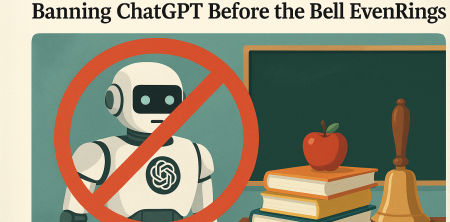
As another school year kicks off, you'd expect the usual buzz: new teachers, fresh textbooks, maybe a few updated laptops. But this year, there's a different kind of tension humming through the hallways, a digital undercurrent that's forcing educators to confront a truly game-changing technology. We're talking, of course, about generative AI, and specifically, the rapidly spreading trend of AI restrictions in schools.
It's not just a few tech-averse districts; we're seeing major players like New York City and Los Angeles, two of the largest school systems in the United States, implementing outright bans or at least serious moratoriums on generative AI for K-8 students. This isn't a small thing. These are decisions that impact millions of young learners and signal a profound unease about how this technology might reshape the very foundations of education. The concerns are multifaceted, touching on everything from the development of critical thinking skills to the ever-present issue of screen time, and, perhaps most acutely, the specter of widespread plagiarism. It's a clash between the lightning-fast pace of technological innovation and the often-slow, deliberate march of traditional educational values. And believe me, it’s sparking some serious debate among parents, teachers, and policymakers alike.
The Sudden Rise of Generative AI in Classrooms
Think back just a couple of years. AI, for most K-12 educators, was largely an abstract concept, perhaps something discussed in a computer science elective or hinted at in a futuristic sci-fi novel. Then, seemingly overnight, ChatGPT burst onto the scene in late 2022, and suddenly, AI wasn't just theoretical; it was tangible, accessible, and incredibly powerful. Students could, with a few prompts, generate essays, write code, solve complex math problems, and even create art. It was a wake-up call, a splash of cold water for an education system that was, in many ways, unprepared for such a rapid technological leap.
This wasn't like the introduction of calculators or even the internet. Those tools, while transformative, still largely required human input and understanding to be truly effective. Generative AI, however, could produce seemingly original content with minimal human effort. This capability immediately raised red flags for educators concerned about academic integrity. How do you assess a student's understanding if a bot is doing the heavy lifting? How do you foster genuine creativity if the ideas are being spun out by an algorithm? These aren't easy questions, and the speed at which they arrived left many districts scrambling for answers.
Why K-8 Schools Are Leading the Charge on AI Restrictions
It’s no accident that the strongest AI restrictions in schools are often found in K-8 settings. The rationale here is deeply rooted in developmental psychology and pedagogical principles. Younger students, particularly those in elementary and middle school, are still in crucial stages of developing foundational cognitive skills. Critical thinking, problem-solving, analytical reasoning, and creative writing aren't just subjects they learn; they're mental muscles they're actively building.
The fear is that over-reliance on generative AI at these formative stages could stunt that development. If a student can simply ask an AI to write an essay, are they truly learning to organize their thoughts, construct arguments, and articulate their ideas? If an AI solves their math problems, are they grappling with the underlying concepts that build mathematical fluency? Educators worry that these tools might become a crutch, preventing students from engaging in the struggle, the productive friction, that's essential for deep learning. Furthermore, the concerns around increased screen time, already a hot-button issue for young children, only amplify the desire to limit AI exposure in these critical early years.
The Impact on Foundational Skills Development
Let's zoom in on what those foundational skills really entail for K-8 students. In elementary school, we're talking about basic literacy and numeracy. Learning to form coherent sentences, understanding sentence structure, and developing a personal writing voice are critical. If an AI writes a story for a second grader, that child misses out on the cognitive effort of brainstorming characters, plotting a narrative, and choosing descriptive words. It’s like trying to learn to ride a bike while someone else is holding the handlebars the whole time. You never quite get the feel for it yourself.
In middle school, the stakes get even higher. Students are expected to move beyond basic comprehension to analysis and synthesis. They learn to construct research papers, engage in debates, and solve multi-step problems. If an AI can generate a persuasive essay on a historical event, the student isn't practicing the critical skill of evaluating sources, synthesizing information from different texts, or crafting a nuanced argument. They're not wrestling with the complexities of a topic, which is where real learning happens. These are the formative years where students develop the intellectual habits that will serve them throughout high school and beyond. Undermining that process with premature AI reliance could have long-term consequences for their academic trajectory and overall intellectual growth.
The Plagiarism Predicament: A Major Driver of Bans
Let's be blunt: plagiarism is a massive headache for educators, and generative AI has turned that headache into a throbbing migraine. For years, schools have invested in tools like Turnitin to detect copied content from the internet or other students. But AI-generated text presents a new, more insidious challenge. Because the output is 'original' in the sense that it hasn't been directly copied from an existing source, traditional plagiarism checkers often struggle to identify it as such.
This creates an ethical quagmire. How do you fairly grade student work when you can't be sure who (or what) actually produced it? The burden of proof often falls on the teacher, who suddenly has to become a digital detective, looking for subtle stylistic tells or inconsistencies that might indicate AI use. This isn't just about catching cheaters; it's about maintaining the integrity of the entire assessment process. If students can bypass genuine learning by simply prompting an AI, then grades lose their meaning, and the core purpose of education—to impart knowledge and develop skills—is undermined. This concern is perhaps the single biggest factor driving widespread AI restrictions in schools, particularly in writing-heavy subjects.
Beyond Plagiarism: The Erosion of Academic Integrity
While plagiarism is the most immediate and tangible concern, the issue of AI in academic work goes deeper. It's about the erosion of academic integrity itself. When students know they can rely on AI, even if they don't explicitly plagiarize, it can subtly shift their approach to learning. The motivation to deeply understand a topic, to struggle through a complex problem, or to craft an original thought might diminish. Why spend hours researching and writing when a machine can do it in minutes?
This isn't just a moral failing; it's an educational one. The goal of education isn't just to produce correct answers; it's to develop the cognitive processes that lead to those answers. It's about the journey of inquiry, the development of critical thought, and the satisfaction of genuine intellectual achievement. If AI shortcuts that process, we risk producing a generation of students who are proficient in prompt engineering but lack the fundamental skills of independent thought and deep learning. This makes the push for AI restrictions in schools not just about catching cheaters, but about safeguarding the very value of an education. (See: AI restrictions in schools.)
Teacher Perspectives: A Mixed Bag of Hope and Heavy Burden
It’s easy to assume teachers are uniformly against AI, but the reality is far more nuanced. A significant percentage, about 69% in recent surveys, actually acknowledge AI's potential to improve teaching methods. They see possibilities for personalized learning, automated grading of objective tasks, generating lesson plans, or even creating engaging, customized learning materials. Imagine an AI tutor providing instant feedback, or an AI assistant helping a teacher differentiate instruction for a diverse classroom. These are powerful visions.
However, and this is a big 'however,' an even larger portion of teachers, 71%, feel burdened by the responsibility of policing student AI use. This isn't just about detecting plagiarism; it's about understanding the technology, staying ahead of its capabilities, and developing new pedagogical strategies to integrate or mitigate it. Most teachers aren't trained in AI ethics or prompt engineering. They're already stretched thin, juggling large class sizes, diverse student needs, administrative tasks, and parental communication. Adding 'AI detective' to their job description, without adequate training or tools, is simply overwhelming. This burden contributes significantly to the push for clear AI restrictions in schools, as it provides a temporary respite from this new, complex challenge. For more context, see EU Kids Act Could Finally Make the Internet Safe for Your Children.
The Professional Development Gap
The core issue for many teachers isn't an unwillingness to adapt, but a lack of proper support. The pace of AI development has far outstripped the professional development opportunities available to educators. We're asking teachers to understand, evaluate, and integrate a complex technology that many adults are still trying to wrap their heads around, often without any formal training. Expecting them to become experts in AI detection or ethical AI usage overnight, on top of their already demanding schedules, is simply unrealistic.
Surveys consistently show that teachers feel unprepared. A recent study indicated that while 70% of teachers believe AI will change their profession, less than 20% feel adequately trained to use it effectively. This gap is critical. Without targeted, ongoing professional development that covers not just the "how-to" of AI tools but also the pedagogical implications and ethical considerations, teachers will continue to feel overwhelmed. This lack of support directly fuels the sentiment that AI restrictions in schools are necessary, as it offers a temporary solution to an unaddressed training deficit.
State-Level Responses and the Push for Accountability
The conversation isn't confined to individual school districts; states are also stepping up. California, a perennial leader in technological innovation and policy, is a prime example. Lawmakers there are taking legislative steps to ensure AI accountability in education. This often involves discussions around data privacy, algorithmic bias, and establishing clear guidelines for how AI tools can be developed, deployed, and used within educational settings. The goal isn't necessarily to ban AI outright, but rather to create a framework that ensures these powerful tools are used ethically, equitably, and effectively.
This legislative push is crucial because school districts often lack the resources or expertise to develop comprehensive AI policies on their own. State-level guidance can provide much-needed clarity, funding for training, and even procurement standards for EdTech companies developing AI solutions. Without this kind of top-down support, individual districts are left to navigate a complex and rapidly changing landscape largely on their own, leading to inconsistent policies and potentially ineffective outcomes.
The Role of State Education Agencies in Policy Development
State Education Agencies (SEAs) are becoming increasingly vital in shaping the response to AI. They can act as central hubs for research, policy dissemination, and resource allocation. For instance, an SEA might convene a task force of educators, technologists, ethicists, and legal experts to develop a comprehensive AI strategy for the entire state. This strategy could include model policies for districts to adopt, guidelines for ethical AI use, recommendations for vendor selection, and funding allocations for professional development.
Consider the varying resources among school districts. A large, affluent district might have the capacity to hire AI specialists or develop sophisticated internal policies. A small, rural district, however, might struggle to even understand the basic implications of AI, let alone craft effective policies. State-level initiatives help level the playing field, ensuring that all students and educators, regardless of their district's resources, benefit from thoughtful AI integration and protection from its potential downsides. This collaborative approach is essential to move beyond fragmented AI restrictions in schools towards a more unified and effective strategy.
The EdTech Industry's Role and Commercial Intent
Whenever a new technology shakes up education, the EdTech industry pays close attention, and generative AI is no exception. There's a strong monetization angle here, with high commercial intent for a range of products and services. On one side, you have companies developing AI detection software for schools, promising to help educators identify AI-generated content and combat plagiarism. Think of these as the next generation of Turnitin, specifically designed to grapple with the nuances of large language models.
On the other side, there's a growing market for ethical AI tools designed specifically for learning. These might include AI-powered tutors that guide students through problem-solving without giving away answers, AI platforms that help teachers generate differentiated content, or AI tools that assist students with brainstorming and outlining, but still require them to do the actual writing. Then, of course, there's the perennial concern of cybersecurity. With more AI tools in use, there's an increased need for robust cybersecurity solutions to protect student data and ensure the privacy of learning interactions. The industry is in a fascinating dance: developing tools that both address the problems AI creates and harness its potential, all while navigating the complex landscape of AI restrictions in schools.
Navigating the Vendor Landscape and Ethical Considerations
The EdTech market for AI tools is booming, but it also presents a minefield for schools. Districts must be incredibly careful when selecting AI vendors. Beyond efficacy, critical questions arise: How does the AI tool handle student data? Is it compliant with privacy regulations like FERPA? Are there built-in biases in the algorithms that could disadvantage certain student populations? Is the AI transparent about how it generates content or provides feedback?
Many companies are rushing to market, and not all prioritize ethical considerations or educational best practices. Schools need to demand evidence of responsible AI development, robust data security, and clear statements on how the AI operates. Without careful vetting, districts risk implementing tools that could compromise student privacy, perpetuate biases, or simply not deliver on their educational promises. The commercial intent of the EdTech industry needs to be balanced with a strong ethical compass from educational institutions, making the conversation around AI restrictions in schools also a conversation about responsible procurement and ethical AI development.
Balancing Innovation and Educational Integrity
The core tension in this whole debate is how we balance the undeniable innovative potential of AI with the fundamental imperative to preserve educational integrity. No one wants to be Luddites, resisting technology for technology's sake. We've seen how previous technological advancements—the printing press, the internet, personal computers—have ultimately enriched and expanded educational opportunities. AI, in its mature form, could offer unprecedented opportunities for personalized learning, access to information, and even new forms of creative expression. (See: impact of screen time on youth.)
However, the current phase is one of caution. The technology is new, its implications are still being understood, and the ethical guardrails are still being built. The AI restrictions in schools we're seeing now are, in many ways, a defensive posture, a temporary measure to give the education system time to catch up. The goal isn't to permanently ban AI, but to understand it, to develop best practices, and to ensure that its integration serves the student first, rather than undermining their learning journey. It's a delicate tightrope walk, and mistakes will undoubtedly be made on both sides.
Looking Ahead: The Evolving Landscape of AI in Education
So, what does the future hold? It's unlikely that these widespread bans will last forever. As educators gain a deeper understanding of AI, and as the technology itself evolves (perhaps with built-in educational safeguards or transparency features), we'll likely see a shift from outright prohibition to thoughtful integration. This will require significant investment in professional development for teachers, who need to understand not just how to use AI, but how to teach *with* AI and how to teach students *about* AI. For more context, see Snapchat's Design Exposes Kids to Predators.
We'll also see curricula adapt. Assignments will need to change, moving away from tasks that can be easily outsourced to an AI and towards those that demand higher-order thinking, critical analysis, and unique human creativity. Project-based learning, collaborative tasks, and assessments that require in-person demonstration of understanding may become even more prominent. The conversation around AI restrictions in schools is just the beginning. It's a signal that education is at an inflection point, and how we choose to navigate this technological revolution will define the learning experiences of generations to come. It won't be easy, but it's a conversation we absolutely must have, thoroughly and thoughtfully.
Ultimately, the rapid rise of AI has thrown a wrench into the traditional gears of education. While the immediate response for many districts has been to hit the pause button with restrictions, the longer-term challenge is to move beyond mere bans and figure out how to harness AI's power responsibly. This means developing new pedagogies, equipping teachers with the right tools and training, and ensuring that our students learn to be critical, ethical users of this transformative technology, rather than simply being its passive recipients.
Beyond Bans: Strategies for Responsible AI Integration
The initial wave of AI restrictions in schools was a necessary defensive move, but it's not a sustainable long-term solution. The real work begins now: figuring out how to responsibly integrate AI into education in a way that enhances learning, rather than hindering it. This isn't about throwing out everything we know; it's about adapting and evolving our pedagogical approaches.
One key strategy is to shift assessment methods. If AI can write an essay, then essays as a primary assessment tool might need to evolve. We could focus more on oral presentations, where students articulate their understanding and defend their ideas in real-time. Or, we could design assignments where students are *required* to use AI as a tool for brainstorming or research, but then critically analyze its output and transform it into something uniquely their own. This involves teaching students how to prompt effectively, how to critically evaluate AI-generated content for accuracy and bias, and how to cite AI tools appropriately – essentially, teaching them to be discerning digital citizens.
Another approach is to emphasize project-based learning. These types of projects often require collaboration, problem-solving, and creative application of knowledge that AI tools, in their current form, can't fully replicate. They encourage students to engage with real-world problems, develop interpersonal skills, and present their findings in dynamic ways. The focus moves from rote memorization and simple content generation to complex problem-solving and innovative thinking. This kind of shift reclaims the human element of learning, ensuring that students are actively engaged in constructing knowledge, rather than passively receiving or generating it through a machine.
The Global Perspective: How Other Countries Are Responding
It's helpful to remember that AI restrictions in schools aren't just an American phenomenon. Educators and policymakers worldwide are grappling with the same questions. For example, some European countries, known for their strong emphasis on data privacy and ethical technology use, are focusing heavily on developing national frameworks for AI in education that prioritize student safety and data protection. They're often investing in research to understand the long-term impact of AI on cognitive development before widespread adoption.
In contrast, some Asian countries, particularly those with a strong tech focus like South Korea or Singapore, are exploring AI integration more aggressively, often piloting AI-powered personalized learning platforms and intelligent tutoring systems. Their focus might be on leveraging AI to optimize learning outcomes and streamline administrative tasks, while still acknowledging the need for ethical guidelines. These diverse approaches highlight that there's no single "right" way to handle AI in education. Each nation is navigating this new terrain based on its unique cultural values, educational priorities, and technological infrastructure. Learning from these global responses can inform our own strategies and help us avoid pitfalls.
Expert Perspectives: Educators, Ethicists, and Technologists Weigh In
When you talk about AI in education, you hear a lot of different voices, and it's important to consider them all. Educators, like myself, often highlight the immediate classroom challenges – the plagiarism, the impact on developing skills, and the burden on teachers. We're on the front lines, seeing how students use (or misuse) these tools daily. Our concern is always for the student's learning journey and the integrity of the educational process.
Ethicists, on the other hand, bring a broader lens. They're concerned with issues like algorithmic bias, ensuring equity of access, and the potential for AI to create new forms of digital divide. They ask important questions about who develops these tools, whose values are embedded in their algorithms, and what long-term societal impacts they might have on critical thinking and human creativity. They remind us that technology is never neutral. For more context, see Schools don’t have to tell parents about student gender identity. (See: Harvard's research on education technology.)
Technologists, often from the EdTech industry or research labs, tend to focus on the possibilities. They envision AI as a powerful tool for personalization, efficiency, and expanding access to education for underserved populations. They argue that banning AI outright is short-sighted and that we should instead focus on teaching students how to use it responsibly and effectively. They often emphasize the need for innovation and the potential for AI to solve some of education's most intractable problems. Balancing these perspectives is crucial for developing policies around AI restrictions in schools that are both practical and forward-thinking.
Frequently Asked Questions About AI Restrictions in Schools
Q1: What exactly are "AI restrictions in schools"?
AI restrictions in schools refer to policies put in place by school districts or states that limit or ban the use of generative artificial intelligence tools, like ChatGPT, by students. These restrictions can range from outright prohibitions on using AI for assignments to specific guidelines on how and when AI tools are permitted.
Q2: Why are schools implementing these restrictions, especially for K-8 students?
Schools are implementing restrictions primarily due to concerns about academic integrity (plagiarism), the potential for AI to hinder the development of critical thinking and foundational skills in younger students, increased screen time, and the burden on teachers to police AI use without adequate training or tools.
Q3: Do AI restrictions mean schools are completely against technology?
Not at all. Most educators recognize the potential benefits of technology. AI restrictions are generally seen as a temporary measure to allow the education system to catch up with the rapid pace of AI development, understand its implications, and develop thoughtful strategies for responsible integration. It's about caution and calibration, not Luddism.
Q4: How do AI detection tools work, and are they effective?
AI detection tools analyze text for patterns, stylistic elements, and statistical anomalies that are characteristic of AI-generated content. While these tools are evolving rapidly, their effectiveness is still debated. They can sometimes produce false positives (flagging human-written text as AI) or false negatives (missing AI-generated text), making them an imperfect solution for detecting AI use.
Q5: What's the difference between using AI for learning and using it to cheat?
The key difference lies in the student's engagement and the learning objective. Using AI for learning might involve using it to brainstorm ideas, get feedback on a draft, or research a topic – as long as the student is still doing the critical thinking, synthesizing information, and producing original work. Using it to cheat means having the AI complete an assignment entirely or largely, bypassing the learning process altogether.
Q6: Will AI eventually be allowed in schools?
It's highly probable. As AI technology matures, becomes more transparent, and as educators receive better training and develop new pedagogies, we'll likely see a shift from widespread restrictions to thoughtful integration. The goal is to leverage AI's power to enhance learning, not replace it, and that will require careful planning and adaptation.
Q7: What can parents do to help their children navigate AI in school?
Parents can talk to their children about academic integrity, understand their school's specific AI policies, and encourage them to use AI tools responsibly as learning aids rather than shortcuts. Fostering critical thinking skills and emphasizing the value of genuine effort are also crucial in this new landscape.
Trending Now
- the complete explanation
- our breakdown of this game-changing eu kids act could finally make the internet safe for your children
- this guide on ‘it’s a huge concern’: families of kids with complex medical needs worry about frequent measles outbreaks | cidrap
- Schools don’t have to tell parents about student gender identity — unless they ask, judge rules – LA Times
Frequently Asked Questions
Why are schools banning ChatGPT?
Schools are banning ChatGPT due to concerns about its impact on critical thinking skills, increased screen time, and the risk of plagiarism. Major districts like New York City and Los Angeles have implemented these restrictions as they grapple with the rapid integration of generative AI in education.
What are the concerns about generative AI in education?
Concerns about generative AI in education include the potential decline in students' critical thinking abilities, the temptation to plagiarize, and the overall impact on learning outcomes. Educators worry that reliance on AI tools may undermine foundational educational values.
How has generative AI changed classrooms?
Generative AI has transformed classrooms by providing students with tools to generate essays, solve complex problems, and create art instantly. This rapid technological advancement has caught many educators off guard, prompting discussions about its implications for teaching and learning.
What is the impact of AI on K-8 students?
The impact of AI on K-8 students includes potential benefits like enhanced learning opportunities but also significant challenges. Educators are concerned about how AI might hinder the development of essential skills and the ethical issues surrounding its use in academic settings.
Are all schools banning AI tools?
Not all schools are banning AI tools, but many major districts, including New York City and Los Angeles, have implemented bans or strict regulations. This reflects a growing unease among educators about how generative AI could affect the educational landscape.
Agree or disagree? Drop a comment and tell us what you think.

