```html
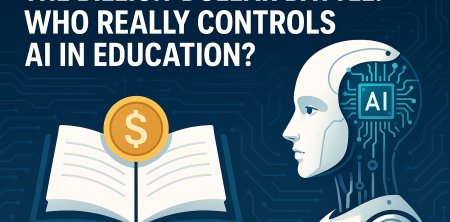
Alright, let's talk about something that's got everyone in education talking, and quite a few people pulling their hair out: the rapid, some might say reckless, integration of AI into our classrooms. It's not just a debate anymore; it's a full-blown clash of titans, with tech giants throwing millions into the ring and concerned parents, educators, and child development experts pushing back hard. We're witnessing a pivotal moment where the future of learning, critical thinking, and even student privacy hangs in the balance, and the question of who gets to decide this future is becoming increasingly urgent.
On one side, you have the promise – or perhaps the siren song – of personalized learning, administrative efficiency, and a future-ready workforce. On the other, there are legitimate fears about data harvesting, the erosion of essential cognitive skills, and a fundamental lack of understanding about what AI truly means for developing young minds. As someone who's spent years in K-12 classrooms, chaired university departments, and now consults on educational reform, I can tell you this isn't just academic. This is personal for millions of families and educators, and it deserves our closest attention.
The Edtech Gold Rush: Big Tech's Bold Advance into Classrooms
It's no secret that where there's disruption, there's opportunity, and big tech companies are seeing the education sector as their next frontier. We're talking about giants like Microsoft, OpenAI, and Anthropic – names synonymous with the cutting edge of artificial intelligence – now making significant financial commitments to shape how AI in education unfolds. They're not just selling tools; they're actively investing in training programs, curriculum development, and partnerships that could fundamentally alter the educational landscape for generations.
Consider initiatives like the National Academy for AI Instruction. This isn't some small pilot program. It's an ambitious endeavor designed to train hundreds of thousands of educators in AI literacy and application. The goal, ostensibly, is to empower teachers, but it also creates a massive installed base for their technologies and philosophies. While the idea of upskilling educators is laudable, it also raises questions about who sets the curriculum for these training programs, and whose interests are ultimately being served. Is it truly about pedagogical excellence, or is it also about market dominance?
This aggressive push isn't happening in a vacuum. The education technology (Edtech) market is already a multi-billion dollar industry, and AI is poised to become its most lucrative segment. Companies are racing to develop and deploy solutions for everything from automated grading and personalized tutoring to content generation and administrative support. The potential for monetization is enormous, spanning secure Edtech solutions, AI ethics training, AI detection software, and consulting services for schools navigating this complex new terrain. This isn't just about improving education; it's about securing a massive new revenue stream.
School Districts Push Back: The Case for Caution and Moratoriums
While tech companies are full steam ahead, many of those on the ground – school district leaders, particularly in major urban centers – are pumping the brakes. We've seen significant pushback from districts like New York City and Los Angeles, which have implemented one-year bans on generative AI for younger students. This isn't a knee-jerk reaction; it's a deliberate, thoughtful pause driven by deep concerns about the potential negative impacts on fundamental learning processes.
The core worry here revolves around critical thinking skills. Educators understand that learning isn't just about acquiring information; it's about processing it, analyzing it, evaluating it, and creating original thought. When a generative AI can instantly produce a well-written essay or solve a complex math problem, what does that do to a student's incentive to struggle, to think deeply, to develop their own voice and problem-solving strategies? The fear is that an over-reliance on AI could short-circuit these crucial developmental pathways, leaving students ill-equipped for a world that still demands genuine intellectual rigor.
These moratoriums aren't anti-technology; they're pro-education. They represent a pragmatic approach, acknowledging that while AI has potential, we need time to understand its implications, develop appropriate safeguards, and build a pedagogical framework that ensures technology serves learning, rather than supplants it. It's about taking a breath, doing our homework, and making informed decisions rather than being swept away by the latest technological wave.
Parents and Child Development Experts Sound the Alarm
Beyond the institutional pushback, a powerful chorus of concern is rising from parents and child development experts. These are the people whose primary focus is the holistic well-being and healthy development of children, and they're asking some very uncomfortable questions about AI in education. Their concerns are multifaceted, touching on everything from data privacy to the very nature of learning itself.
Student data privacy is perhaps the most immediate and palpable fear. When AI systems are integrated into classrooms, they collect vast amounts of data on student performance, learning styles, emotional responses, and even biometric information. Who owns this data? How is it stored? Who has access to it? And how can we be sure it won't be misused, sold, or fall into the wrong hands? The track record of some tech companies on data privacy isn't exactly stellar, and parents are rightly wary of handing over their children's most sensitive information without ironclad guarantees. (See: U.S. Department of Education.)
Furthermore, child development experts are questioning the unproven claims of AI's benefits for younger learners. While personalized learning sounds appealing in theory, there's little robust, independent research demonstrating its long-term efficacy or its impact on social-emotional development. There's a concern that AI might diminish the human element of teaching – the nuanced guidance, emotional support, and spontaneous interactions that are vital for children's growth. Are we rushing to implement solutions without fully understanding the potential costs to a child's overall development?
The Emotional Tug-of-War: Promise vs. Peril
This whole discussion about AI in education isn't just a dry policy debate; it's highly charged with emotion. On one side, there's the genuine excitement about AI's potential to revolutionize education. Imagine an AI tutor available 24/7, adapting to each student's pace and learning style, providing immediate feedback, and freeing teachers to focus on deeper, more meaningful interactions. This vision of personalized learning, tailored to individual needs, is incredibly compelling, especially for educators who have long struggled with overcrowded classrooms and diverse learning requirements. For more context, see EU Kids Act could make the internet safer for children.
However, this promise is constantly battling against a deep-seated fear of the unknown and the potential for unintended consequences. The fear isn't just about job displacement for teachers – though that's a valid concern – it's about something more fundamental: the fear of losing what makes us human. Will critical thinking atrophy? Will creativity be stifled by algorithmic suggestions? Will the joy of discovery be replaced by the efficiency of an AI? These aren't minor worries; they strike at the heart of what we believe education should be about.
The emotional intensity is further fueled by the unprecedented scale of data harvesting that AI in education entails. The idea of algorithms collecting intimate details about a child's learning journey, potentially influencing future opportunities or even creating psychological profiles, is deeply unsettling for many. It's a classic technology dilemma: the immense potential for good weighed against equally immense risks, and the emotional pendulum swings wildly between hope and apprehension.
Defining the Future: Who Holds the Power to Decide?
This brings us to the crux of the matter: who ultimately gets to decide how AI in education is deployed and regulated? Is it the tech companies, with their vast resources and cutting-edge innovations? Is it school districts and state education departments, often under pressure from multiple stakeholders? Is it parents and community groups, advocating for their children's best interests? Or is it a collaborative effort that has yet to be fully realized?
Right now, it feels like a fragmented decision-making process, with different actors operating on different timelines and with different priorities. Tech companies are pushing products and training, often setting the narrative about AI's inevitability and transformative power. School districts are reacting, often playing catch-up, trying to balance innovation with responsibility. And parents are largely left to react to decisions made by others, often feeling disempowered in the face of rapid technological change.
What's desperately needed is a more unified, inclusive, and transparent approach to governance. We need clear ethical guidelines, robust regulatory frameworks, and genuine collaboration between all stakeholders. Without a cohesive strategy, we risk a chaotic, piecemeal adoption of AI in education that could lead to significant inequities and unforeseen problems down the line. The power to decide shouldn't rest with any single entity, especially not one driven primarily by profit.
The Need for Robust AI Ethics Training for Educators
One area where there's broad consensus on the immediate need is in equipping educators with the knowledge and tools to navigate this new landscape. It's simply not enough to hand teachers an AI tool and expect them to integrate it effectively and ethically. This is where AI ethics training for educators becomes absolutely paramount. And I'm not talking about a one-off webinar; I mean comprehensive, ongoing professional development that goes beyond mere technical proficiency.
Educators need to understand not just how AI works, but its inherent biases, its limitations, and its ethical implications. They need to be able to critically evaluate AI tools, understand data privacy protocols, recognize potential algorithmic biases that could disadvantage certain student populations, and know how to use AI to augment learning without diminishing human agency or critical thinking. They also need to be empowered to teach students about AI literacy, preparing them to be informed and responsible users of these powerful technologies.
Without this foundational ethical understanding, even the best AI tools can do more harm than good. Teachers are on the front lines, and they need to be the ethical gatekeepers, ensuring that AI serves the student, not the other way around. This kind of training represents a significant opportunity for specialized consulting services and professional development providers, but it must be driven by pedagogical principles, not just technological hype.
Securing the Digital Frontier: Why Cybersecurity is Non-Negotiable
As we integrate more AI into education, the attack surface for cyber threats expands exponentially. This isn't just about protecting test scores; it's about safeguarding sensitive student data, protecting the integrity of learning systems, and preventing malicious actors from disrupting education. Secure Edtech solutions and robust cybersecurity measures are no longer optional extras; they are fundamental requirements for any school district considering AI implementation. (See: New York Times on AI in Education.)
Think about the sheer volume and sensitivity of the data that AI systems in education can collect: academic performance, behavioral patterns, health information, family dynamics, and even biometric data. A breach of this information could have devastating consequences, not just for individual students and families, but for the entire educational institution. Schools are often soft targets for cybercriminals, and the introduction of complex AI systems without adequate security protocols is an invitation for disaster.
This means investing in state-of-the-art encryption, multi-factor authentication, regular security audits, and continuous monitoring. It also means educating staff and students about cybersecurity best practices. For companies in the cybersecurity sector, this represents a massive opportunity to partner with educational institutions, providing the expertise and technology needed to protect this new digital frontier. The cost of prevention is always far less than the cost of a breach. For more context, see elite private school's radical new method.
AI Detection Software: A Necessary Evil or a Crutch?
With the rise of generative AI, an immediate and practical concern for educators has been academic integrity. If an AI can write a flawless essay, how do we assess a student's genuine understanding or writing ability? This has led to a boom in AI detection software, designed to identify AI-generated content. But this technology itself is not without controversy.
On one hand, it seems like a necessary tool to maintain academic standards and ensure fairness. Without it, the temptation for students to rely solely on AI for assignments could become overwhelming, undermining the entire learning process. On the other hand, these detectors are not always perfectly accurate, leading to potential false positives and accusations that could unfairly penalize students. Furthermore, focusing solely on detection might miss the larger point: how do we design assignments and assessments that make AI a tool for learning, rather than a crutch for cheating?
The debate around AI detection software highlights a deeper tension: are we simply trying to police technology, or are we fundamentally rethinking our pedagogical approaches in light of it? Perhaps the answer isn't just about detection, but about creating assignments that require critical thinking, originality, and personal reflection that AI, at least for now, cannot fully replicate. It's a complex area, and the market for AI detection will continue to grow, but its long-term efficacy and impact on learning remain open questions.
Crafting Comprehensive AI Policies: The Role of Consulting Services
Given the complexity and the stakes involved, school districts and educational institutions are finding themselves in uncharted territory when it comes to developing AI policies. This isn't just about setting rules; it's about crafting a vision for how AI will integrate into the educational ecosystem, addressing everything from ethical use and data privacy to teacher training and curriculum adaptation. This is where specialized consulting services for schools become invaluable.
Developing a comprehensive AI policy requires expertise in technology, pedagogy, law, ethics, and child development. It means engaging with diverse stakeholders, conducting thorough risk assessments, and designing a framework that is both forward-thinking and grounded in educational best practices. Simply put, most school districts don't have this kind of internal expertise readily available, and trying to navigate it alone can lead to costly mistakes and missed opportunities.
Consulting firms can provide the guidance needed to develop robust policies that address everything from acceptable use guidelines for students and teachers, to protocols for data governance, to strategies for integrating AI into the curriculum in a meaningful way. This is a niche that will only grow as the adoption of AI in education accelerates, and those who can offer balanced, expert advice will be in high demand.
Addressing the Digital Divide in AI Integration
One critical aspect that often gets overlooked in the rush to adopt AI is the potential to exacerbate existing inequities. The digital divide isn't just about internet access anymore; it's about access to high-quality AI tools, AI literacy, and the supportive infrastructure needed to make AI beneficial. If we're not careful, AI in education could widen the gap between well-resourced districts and those struggling with limited budgets and technological resources.
Consider a scenario where affluent districts can afford premium AI-powered tutors and personalized learning platforms, while underfunded schools are left with basic, potentially less effective, free versions or no AI integration at all. This creates an uneven playing field, where some students gain significant advantages in AI-enhanced learning environments, while others are left behind. Equitable access isn't just a moral imperative; it's essential for a functional society. For more context, see education department probes district accused of transing teen. (See: Research on AI in Education.)
Policy discussions must actively address how to bridge this new form of digital divide. This means advocating for funding models that support equitable AI access, developing open-source AI tools, and ensuring that AI ethics training includes a strong component on equity and inclusion. We need to be proactive in designing AI solutions that serve all students, not just a privileged few. Otherwise, AI could become another tool that reinforces existing societal inequalities, which is the last thing we need in education.
The Future of Assessment: Rethinking How We Measure Learning
The advent of AI, particularly generative AI, forces us to fundamentally rethink our approach to student assessment. If AI can craft essays, solve complex equations, and even generate creative projects, traditional methods of evaluation become less reliable. Simply relying on AI detection software feels like a temporary fix, rather than a sustainable solution.
Instead, we need to shift towards assessments that AI can't easily replicate – tasks that demand uniquely human skills. This might include project-based learning that requires collaboration, critical thinking, and real-world application; oral presentations and debates that test immediate understanding and persuasive communication; or problem-solving scenarios that involve ambiguous data and ethical dilemmas. The focus should move away from rote memorization and towards demonstrating higher-order thinking skills, creativity, and the ability to synthesize information from diverse sources.
This re-evaluation of assessment isn't just about preventing cheating; it's about preparing students for a future where information is abundant and the ability to critically analyze, apply, and innovate with that information is paramount. AI can be a powerful tool in this new assessment landscape, perhaps even helping teachers design more adaptive and personalized evaluations, but the core design of what we measure must evolve.
My Take: A Call for Deliberate, Human-Centered Integration
Having witnessed numerous educational reforms over the years, I've learned that technology, while powerful, is only as good as the human intent behind it and the pedagogical framework it supports. The current gold rush mentality around AI in education, driven largely by tech companies, risks overlooking the most important aspect: the student.
My hope is that we can move beyond the hype and the fear, and engage in a deliberate, human-centered integration of AI. This means prioritizing critical thinking, creativity, and social-emotional development above all else. It means empowering teachers as the lead architects of this integration, providing them with the training and support they need. And it means putting student data privacy and ethical considerations at the forefront of every decision.
The conversation shouldn't just be about what AI can do, but what it should do for our children. It's about designing an educational future where technology enhances human potential, rather than diminishing it. We need to be the ones in control, shaping AI to serve our educational goals, not allowing AI to shape our educational goals for us. The stakes are simply too high to get this wrong.
```
Trending Now
- this guide on this game-changing eu kids act could finally make the internet safe for your children
- this guide on ‘it’s a huge concern’: families of kids with complex medical needs worry about frequent measles outbreaks | cidrap
- our breakdown of this elite private school’s radical new method will leave you speechless
Frequently Asked Questions
How is AI being integrated into education?
AI is being integrated into education through personalized learning tools, administrative efficiencies, and curriculum development. Tech giants are investing in training programs and partnerships to reshape the educational landscape, aiming to enhance student learning experiences.
What are the concerns about AI in classrooms?
Concerns regarding AI in classrooms include data privacy issues, the potential erosion of critical cognitive skills, and a lack of understanding about AI's impact on young minds. Parents and educators are worried about how these technologies may affect student learning and development.
Who are the major players in educational AI?
Major players in educational AI include tech giants like Microsoft, OpenAI, and Anthropic. These companies are making significant investments in the education sector, aiming to influence how AI is utilized in classrooms and shape future learning environments.
What is the Edtech Gold Rush?
The Edtech Gold Rush refers to the surge of investment and interest from big tech companies in the education sector. These companies see opportunities to disrupt traditional learning methods and are actively developing AI tools to enhance educational experiences.
Why is AI in education a contentious issue?
AI in education is contentious due to its potential benefits and significant risks. While it promises personalized learning, there are fears about data harvesting and its impact on cognitive skills. The debate involves multiple stakeholders, including educators, parents, and tech companies.
What's your take on this? Share your thoughts in the comments below — we read every one.

