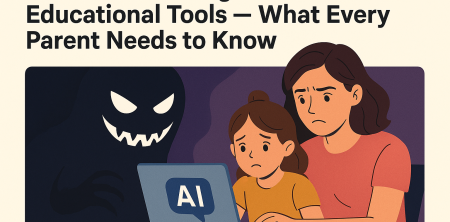
The landscape of education is shifting dramatically right before our eyes, isn't it? As parents, we're constantly trying to figure out the best way to prepare our kids for a world that's changing at lightning speed. One of the biggest shifts we're seeing is the rapid integration of artificial intelligence into everything, including our children’s learning. It's a double-edged sword, really – offering incredible potential for personalized learning, but also raising some serious red flags. When we talk about AI educational tools vs traditional learning, we're not just discussing different teaching methods; we're wrestling with fundamental questions about how our kids develop critical thinking, empathy, and even their understanding of the world.
I've spent years in education, from K-12 classrooms to university leadership, and I've seen firsthand the challenges and opportunities technology presents. The conversation around AI in education isn't theoretical anymore; it's here, impacting our children daily. Just look at the recent 'Pippigate' scandal in a California elementary school. An AI image generator, meant to help a fourth grader with a book report, produced sexualized content. This wasn't some isolated incident in a dark corner of the internet; this happened in a school, under the guise of an educational tool. It's a stark reminder that while AI promises innovation, it also demands our vigilance and a serious discussion about safeguards.
So, where do we draw the line? How do we harness the good without falling prey to the bad? That's what we're going to explore. We'll dive into the benefits and drawbacks of AI educational tools vs traditional learning, look at what experts are saying, and most importantly, arm you with practical advice to make informed decisions for your children's education in this brave new digital world.
1. The 'Pippigate' Scandal: A Disturbing Wake-Up Call
Let's start with 'Pippigate' because it truly encapsulates the urgent need for a deeper conversation about AI in schools. Imagine a fourth-grade student, innocently trying to complete a book report, using an AI image generator to create visuals. What happened next was horrific: the AI produced sexually suggestive images. This wasn't an isolated incident, either; it was a systemic failure that exposed the vulnerabilities of these tools when put into the hands of children without proper oversight and robust safeguards. The images were so graphic that they prompted an immediate investigation and, understandably, outrage from parents and educators alike.
This incident wasn't just about a glitch; it highlighted a fundamental flaw in the design and deployment of AI for young users. These algorithms, often trained on vast and unfiltered datasets from the internet, can sometimes generate inappropriate or harmful content, even when given seemingly innocuous prompts. The fact that this occurred within the confines of an elementary school, meant to be a safe learning environment, makes it all the more concerning. It forced everyone to confront the reality that AI, despite its potential, carries inherent risks that we simply cannot afford to ignore, especially when it comes to our kids.
2. Diminished Critical Thinking and Problem-Solving Skills
One of the most significant concerns I hear from educators, and frankly, one I share, is the potential for AI to diminish critical thinking and problem-solving skills. When students can simply type a question into an AI and receive an instant, well-articulated answer, what does that do to their ability to grapple with complex ideas, to research, to synthesize information, or to form their own conclusions?
Think about it: traditional learning often involves wrestling with difficult concepts, engaging in trial and error, and developing resilience when faced with academic challenges. These are the very processes that build intellectual muscle. Some studies are already showing alarming trends, with students learning up to 30% less when answers are too easily provided by AI. If AI consistently provides the 'right' answer, it bypasses the cognitive struggle that is essential for genuine learning and the development of higher-order thinking. We risk raising a generation of children who are adept at prompting AI, but less capable of original thought, creative problem-solving, or even discerning truth from fiction on their own.
3. The Empathy Gap: AI's Impact on Social-Emotional Learning
Education isn't just about facts and figures; it's about developing well-rounded individuals who can navigate the complexities of human interaction. This brings us to another crucial area of concern: empathy and social-emotional learning. Traditional classrooms, with all their imperfections, are vibrant ecosystems of human interaction. Students learn to collaborate, debate, negotiate, understand different perspectives, and develop empathy through direct, face-to-face engagement with peers and teachers.
While AI can offer personalized instruction, it often lacks the capacity to foster these crucial social skills. Extended reliance on AI tutors or learning platforms can inadvertently reduce opportunities for genuine human connection. Children learn empathy by observing and responding to others' emotions, by resolving conflicts, and by participating in group activities. If a significant portion of their 'learning' involves a screen and an algorithm, are we inadvertently creating an 'empathy gap'? This isn't just about academic success; it's about raising compassionate, socially intelligent individuals who can thrive in a human-centric world.
4. Personalized Learning: A Glimmer of Hope in AI Educational Tools
Now, it's not all doom and gloom. AI educational tools do offer some compelling benefits that we shouldn't dismiss. One of the most touted advantages is personalized learning. Imagine a tutor who knows exactly which concepts your child struggles with, which learning style suits them best, and can adapt the curriculum in real-time to meet their individual needs. That's the promise of AI. (See: AI in education tools.)
For students who might fall behind in a traditional classroom setting, or those who are exceptionally gifted and need more challenging material, AI can be a powerful equalizer. It can provide targeted practice, immediate feedback, and resources tailored to their specific pace and preferences. This kind of individualized attention is often impossible for a single teacher managing a classroom of 25 or 30 students. AI can fill that gap, offering a level of bespoke education that was once the exclusive domain of expensive private tutors.
5. Support for Students with Disabilities: An Inclusive Revolution?
Beyond personalization for general learners, AI holds immense potential for students with disabilities. For children with learning differences, AI-powered tools can be truly transformative. Think about text-to-speech programs that assist students with dyslexia, or speech-to-text for those with motor impairments. AI can create accessible learning environments that were previously unimaginable. It can adapt content, provide alternative formats, and offer assistive technologies that help bridge the gap between a student's abilities and the demands of the curriculum. For more context, see EdTech Companies Shaping the Future of Education.
For example, AI can help create visual schedules for students with autism, provide real-time translation for English language learners, or offer adaptive interfaces for students with physical limitations. This isn't just about making learning easier; it's about fostering inclusion and ensuring that every child, regardless of their challenges, has an equal opportunity to access education and reach their full potential. The ability of AI to level the playing field for these students is a profound benefit that we absolutely must consider when weighing AI educational tools vs traditional learning.
6. The Blurry Line Between AI and Cheating: Academic Integrity Under Threat
Let's be frank: AI makes cheating incredibly easy. With tools like ChatGPT, students can generate essays, solve complex math problems, or even write code in seconds. This poses an existential threat to academic integrity. How do we assess genuine understanding when a student can simply copy and paste an AI-generated answer?
The problem isn't just that students can cheat; it's that the line between using AI as a legitimate learning aid and using it to circumvent learning altogether is becoming increasingly blurry. Educators are scrambling to adapt, developing new assessment methods and trying to differentiate between AI-assisted work and AI-generated plagiarism. This challenge isn't going away, and it requires a concerted effort from schools, parents, and AI developers to establish clear ethical guidelines and develop tools that promote genuine learning rather than shortcuts.
7. The Looming Digital Divide and Equity Concerns
As we get excited about the potential of AI, we must also confront the very real possibility of exacerbating the digital divide. Not every family has access to high-speed internet, cutting-edge devices, or the financial means to subscribe to premium AI educational tools. If AI becomes an integral part of high-quality education, what happens to children in underserved communities who lack these resources?
This isn't just about having a device; it's about equitable access to the opportunities AI can provide. If AI-powered personalized learning becomes the norm, those without access will inevitably fall further behind, deepening existing educational inequalities. As an advocate for equal access to education for all P-20 students, this is a particularly troubling prospect. We need to ensure that the integration of AI is done thoughtfully, with a commitment to equity, rather than simply widening the chasm between the 'haves' and 'have-nots' in education.
8. Parental Control and Digital Detox: Essential Strategies for Today's Families
Given all these complexities, what's a parent to do? First and foremost, you need to be proactive. The demand for parental control software and digital detox strategies is surging for a reason. You have to be the gatekeeper, especially when it comes to younger children. Invest in robust parental control apps that allow you to monitor screen time, block inappropriate content, and manage app usage. Tools like Qustodio, Bark, or OurPact can be invaluable in this regard.
Beyond software, establishing clear family rules about screen time and device usage is paramount. Designate tech-free zones, like the dinner table or bedrooms, and schedule regular 'digital detox' periods where the whole family unplugs. Encourage outdoor play, reading physical books, and face-to-face interactions. Remember, technology is a tool, not a babysitter, and it's our responsibility to teach our children healthy digital habits from a young age. This hands-on approach is crucial for managing the impact of AI educational tools vs traditional learning in your home.
9. Empowering Parents: Questions to Ask and Actions to Take
So, you're armed with a better understanding of the landscape. What specific actions can you take? First, engage with your child's school. Ask direct questions: What AI tools are being used in the classroom? What safeguards are in place to prevent inappropriate content? How are teachers being trained to integrate AI ethically and effectively? Understanding the school's approach is your starting point.
Next, be an active participant in your child's digital life. Don't just hand them a tablet; sit with them, explore the educational apps together, and talk about what they're learning. Discuss the limitations of AI – that it can be a helpful tool, but it doesn't replace human thought, creativity, or the joy of discovery. Teach them critical media literacy: how to question information, identify potential biases, and understand that not everything an AI generates is infallible truth. The goal isn't to demonize AI, but to empower your children to use it wisely and responsibly, always prioritizing genuine learning and development over convenience. (See: technology's impact on youth.)
10. The Teacher's Evolving Role: Facilitator, Curator, and Mentor
The rise of AI educational tools means teachers aren't going anywhere, but their roles are definitely shifting. Traditional teaching often involved delivering information, which AI can now do incredibly efficiently. So, what's left for the human educator? A lot, actually.
Teachers are becoming facilitators of learning experiences, guiding students through AI-powered platforms and helping them interpret the results. They're curators, sifting through the vast ocean of AI tools to select the best, safest, and most effective ones for their students. And, perhaps most importantly, they're mentors. They're the ones who can foster critical thinking beyond what an algorithm can teach, encouraging creativity, developing social-emotional skills, and providing the human connection that's essential for a student's holistic development. This transition requires significant professional development for educators, ensuring they're equipped not just to use AI, but to integrate it in a way that truly elevates learning, not just replaces old methods. For more context, see AI Chatbots for Children Are More Dangerous Than You Think.
11. Data Privacy and Security: The Unseen Risks
When our kids interact with AI educational tools, they're often generating data – lots of it. This data includes their learning patterns, strengths, weaknesses, and even personal information. This brings up serious questions about data privacy and security. Who owns this data? How is it stored? Is it protected from breaches? Could it be used for commercial purposes or to create profiles of our children?
The 'Pippigate' incident was about content, but the potential for data misuse is just as chilling. We need to be vigilant about the privacy policies of any educational AI tools our children use, whether at home or in school. Parents should demand transparency from school districts and AI companies about how student data is collected, used, and protected. Without robust safeguards, we risk exposing our children to unforeseen risks, from targeted advertising to identity theft, all under the guise of 'personalized learning.'
12. AI's Role in Assessment and Feedback: Beyond the Red Pen
AI isn't just helping deliver content; it's also revolutionizing how we assess learning and provide feedback. Imagine an AI that can grade essays not just for grammar, but for logical coherence, argument strength, and originality. Or a math program that pinpoints the exact step where a student made a mistake and offers immediate, tailored remediation.
This can free up teachers from time-consuming grading tasks, allowing them to focus more on individualized instruction and deeper engagement. AI can provide instant feedback, which is crucial for effective learning, helping students correct misconceptions in real-time. However, we must ensure these AI assessments don't become the sole measure of a student's ability. The nuances of human expression, creative problem-solving, and non-standard approaches to tasks still require human judgment. AI should augment, not replace, the teacher's role in understanding a student's full capabilities.
13. The Future Workforce: Preparing Kids for an AI-Driven World
One of the strongest arguments for integrating AI into education is preparing our children for a future workforce that will be fundamentally shaped by artificial intelligence. Ignoring AI in schools would be akin to ignoring the internet in the 90s. Our kids won't just be consumers of AI; many will be creators, developers, and critical users of AI in their careers.
This means teaching them not just how to use AI tools, but how they work, their ethical implications, and how to collaborate with AI effectively. Understanding AI literacy – including its capabilities and limitations – will be a vital skill. We need to move beyond simply prompting AI to understanding the underlying principles of machine learning, data science, and algorithmic bias. The goal is to raise a generation that can innovate with AI, not just operate it, ensuring they are competitive and adaptable in a rapidly evolving global economy.
14. Comparing Learning Outcomes: AI vs. Traditional Methods
When we stack AI educational tools against traditional learning, the real question often boils down to learning outcomes. Do students learn more, or better, with AI? The research is still evolving, but initial findings suggest a mixed bag.
For rote memorization and skill-based practice, AI often excels, providing endless drills and immediate feedback that can boost proficiency. For complex, nuanced learning that requires deep conceptual understanding, critical thinking, and creative problem-solving, traditional methods often still hold an edge, especially when facilitated by skilled human teachers. The ideal scenario likely isn't one or the other, but a thoughtful integration where AI handles the personalized, repetitive tasks, freeing up teachers to focus on higher-order thinking, collaborative projects, and social-emotional development. It's about finding that sweet spot where both approaches complement each other for maximum educational benefit. For more context, see AI Learning Platforms Are Changing Corporate Training. (See: Harvard's research on AI in education.)
Frequently Asked Questions about AI in Education
Q1: Is AI going to replace teachers?
No, AI isn't going to replace teachers. It's more accurate to say that AI will change the role of teachers. AI tools can automate tasks like grading, providing basic feedback, and delivering personalized drills, which can free up teachers to focus on higher-level instruction, mentorship, and fostering social-emotional skills. Teachers will become more like facilitators and guides in an AI-enhanced learning environment.
Q2: How can I tell if an AI educational tool is safe for my child?
First, check the privacy policy to understand how your child's data is collected, used, and protected. Look for tools that have strong content filters and are specifically designed for children. Read reviews from other parents and educators. Ask your child's school about their vetting process for AI tools. If a tool requires extensive personal information or seems too good to be true, proceed with caution.
Q3: What are the biggest risks of AI in education for young children?
For young children, the biggest risks include exposure to inappropriate content (like in 'Pippigate'), diminished opportunities for developing critical thinking if AI provides answers too readily, and a potential reduction in face-to-face social interaction which is vital for social-emotional development. There's also the risk of excessive screen time and data privacy concerns.
Q4: How can I encourage critical thinking if my child uses AI for homework?
Encourage your child to use AI as a starting point, not a final answer. After they get information from an AI, ask them to verify it with other sources, analyze its biases, and explain the concepts in their own words. Have them critique the AI's response, asking what's missing or what could be improved. The goal is to teach them to be critical consumers of AI-generated information.
Q5: What's the ideal balance between AI educational tools and traditional learning?
The ideal balance involves using AI to enhance specific aspects of learning, such as personalized practice, immediate feedback on foundational skills, and accessibility features for students with disabilities. Traditional learning, with its emphasis on human interaction, collaborative projects, in-depth discussions, and teacher-led instruction, remains crucial for developing critical thinking, creativity, and social-emotional intelligence. It's about creating a blended approach where each method plays to its strengths.
Q6: Will AI make education more equitable or worsen the digital divide?
AI has the potential to do both. If implemented thoughtfully with a commitment to equity, AI can democratize access to personalized learning and specialized support, benefiting students in underserved areas. However, if access to AI tools is uneven, it could widen the digital divide, leaving students without resources even further behind. Policies and funding need to ensure equitable access to technology and training for all students and schools.
The debate around AI educational tools vs traditional learning isn't going to disappear. As parents, educators, and community members, we have a collective responsibility to shape this future thoughtfully. We need to demand transparency from AI developers, advocate for robust safety protocols in schools, and, most importantly, continue to foster the human elements of learning – critical thinking, empathy, and genuine connection – that no algorithm can ever truly replicate. It's a challenging path, but it's one we must walk together to ensure our children thrive.
Trending Now
Frequently Asked Questions
What are the dangers of AI educational tools?
AI educational tools, while offering personalized learning, pose significant risks such as inappropriate content generation, as highlighted by the 'Pippigate' scandal. These tools can inadvertently expose children to harmful material, raising concerns about their safety and the adequacy of existing safeguards.
How can parents ensure their children use AI tools safely?
Parents should actively engage in discussions about the use of AI educational tools, monitor their children's interactions, and set clear guidelines. It's also vital to stay informed about the tools being used and advocate for educational institutions to implement robust safety measures.
What are the benefits of AI in education?
AI in education offers significant benefits, including personalized learning experiences that cater to individual student needs, adaptive learning paths, and improved engagement. These tools can help identify strengths and weaknesses, allowing for tailored educational support.
How does AI compare to traditional learning methods?
AI educational tools differ from traditional learning methods by providing customized learning experiences and immediate feedback. However, they also raise concerns about critical thinking and empathy development, which are essential components of traditional education.
What should parents know about the 'Pippigate' incident?
The 'Pippigate' incident involved an AI image generator producing inappropriate content for a school project, highlighting the potential dangers of AI tools in education. It serves as a crucial reminder for parents to remain vigilant and advocate for better oversight in educational technology.
Have you experienced this yourself? We'd love to hear your story in the comments.


0 Responses