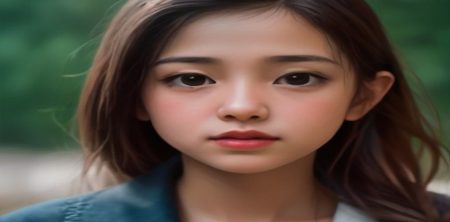
Remember the annual dread (or excitement, depending on your fashion choices) of school picture day? The stiff poses, the awkward smiles, the slightly-too-shiny backdrop, and then, weeks later, the hefty price tag for a package of photos you mostly give to grandparents. Well, that whole ritual is getting a radical, digital makeover. A new viral trend has parents bypassing traditional, often expensive, school photo packages entirely, instead opting for a surprisingly sophisticated and cost-effective method: AI school portraits.
This isn't just a niche fad; it's a rapidly spreading 'hack' that’s blowing up on social media, particularly as back-to-school season gears up. Parents are uploading their kids' casual snapshots to AI platforms, feeding prompts, and watching as these tools generate polished, classic school portraits complete with traditional backdrops and even a semblance of that studio lighting. It sounds almost too good to be true, doesn't it? And, as with most things that sound too good to be true in the digital age, there's a flip side. While the convenience and savings are undeniable, this burgeoning trend is also raising serious questions about privacy, copyright, and the ethical boundaries we're drawing (or not drawing) in our increasingly AI-driven lives.
1. The Viral Sensation of AI School Portraits: How It Started
The concept of AI school portraits didn't just appear out of nowhere; it's a natural evolution of readily available generative AI tools meeting a common pain point for parents. Think about it: every year, families face the same cycle. School picture day arrives, often with little warning, and kids are expected to look their best. Then comes the order form, a bewildering array of packages that quickly add up. A basic sheet of wallet-sized photos, a few 5x7s, and maybe a class photo can easily run upwards of $50, sometimes even $100 or more, especially if you want digital copies or retouches.
Enter the 'AI school portrait hack.' What began as a few tech-savvy parents experimenting with tools like ChatGPT's image generation capabilities or dedicated AI art apps has rapidly snowballed. These early adopters shared their stunning, professional-looking results on platforms like TikTok and Instagram, showcasing how they could get multiple 'portraits' for a fraction of the cost, often just pennies, or even free if they're using basic versions of AI tools. The appeal was immediate and obvious: save money, get more creative control, and avoid the logistical hassle of picture day itself.
2. How the 'Hack' Works: A Step-by-Step Guide for Parents
So, how exactly are parents creating these AI school portraits? It's surprisingly straightforward, even for those who aren't tech wizards. The core idea is to leverage generative AI models to transform an existing photo into a new, stylized image. Here's a simplified breakdown:
First, you start with a decent quality photo of your child. This could be a casual snapshot taken at home, a well-lit photo from a recent outing, or even a selfie. The key is to have a clear, well-focused image of your child's face and upper body. Next, you upload this image to an AI platform. Tools like ChatGPT (specifically its image generation features, often powered by DALL-E), Midjourney, or even more user-friendly apps designed for photo editing with AI capabilities are popular choices. Once uploaded, you provide a text prompt to the AI. This is where the magic happens. You might write something like, "Generate a school portrait of this child with a classic blue studio background, natural lighting, and a slight smile." You can specify details like the backdrop color (blue, grey, mottled), lighting style (soft, bright), expression, and even clothing if you want to push it further, though most parents focus on the headshot aspect.
The AI then processes your image and your prompt, generating several variations of the school portrait. You can then select the one you like best, or refine your prompt for further iterations. Many parents find they get surprisingly realistic and high-quality results on their first few tries. The resulting image can then be downloaded, printed at a local photo lab (often for a few dollars per print), or shared digitally, completely bypassing the traditional school photography services. It's a DIY approach to school photos that gives parents unprecedented control and cost savings.
3. The Allure of Affordability: Why Parents Are Embracing It
Let's be honest, the cost of raising children is constantly rising. Every little saving helps, and school photos have long been an item that can feel like a luxury rather than a necessity. This is perhaps the biggest driver behind the rapid adoption of AI school portraits. Traditional school photo packages are notorious for their pricing structure. You often have to buy a package that includes more prints than you need, or pay extra for digital copies, retouches, or specialty items like keychains and magnets. The base price might seem reasonable, but once you start adding on, it quickly escalates.
With AI, the cost can be negligible, or even zero. Many AI image generators offer free tiers with a certain number of credits, or charge a small monthly subscription that, when compared to the annual cost of school photos for multiple children, is a drop in the bucket. For parents on a tight budget, or those who simply feel the traditional system is overpriced, this represents a significant financial relief. It also allows for more flexibility – if you don't like the first batch of AI-generated photos, you can just generate more without incurring additional costs, something impossible with traditional photography services.
4. Beyond Cost: Creative Control and Convenience
While cost is a huge factor, it's not the only reason parents are flocking to AI school portraits. Think about the convenience. No more trying to get your child to sit still and smile perfectly on a chaotic picture day. No more worrying if their hair is just right, or if they'll blink at the wrong moment. With AI, you can use an existing photo where your child is already looking happy and natural. This removes a layer of stress for both parents and children. (See: AI and its impact on society.)
Furthermore, AI offers a level of creative control that traditional school photography simply can't match. Want a classic blue background? Done. Prefer a grey one? Easy. Want to see what your child would look like with a slightly different expression, or perhaps even a different outfit without actually changing them? AI can do that. This allows parents to truly customize the final product to their liking, rather than being limited to a few generic options offered by the school photographer. It's about getting *the* perfect picture, not just *a* picture.
5. The Elephant in the Room: Data Privacy Concerns
Here's where the excitement around AI school portraits hits a snag. Experts are raising significant privacy concerns, and for good reason. When you upload a photo of your child to an AI platform, you're essentially handing over biometric data – their face, their likeness – to a third-party company. What happens to that data? How is it stored? Who has access to it? These are critical questions that many parents, understandably caught up in the novelty and savings, might not be asking.
Most AI companies have terms of service that outline how they use uploaded data, but these can be complex and often go unread. Some models use uploaded images to further train their AI, meaning your child's face could become part of a vast dataset used to generate future images for other users. While companies typically anonymize data, the idea of a child's image being used in this way without explicit, informed consent is unsettling for many. It's a new frontier of data privacy, and the long-term implications are still largely unknown. Before uploading any photo, especially of a minor, it's crucial to understand the privacy policy of the AI tool you're using. Are you comfortable with their data retention and usage policies? If not, the convenience might not be worth the potential risk.
6. Copyright Infringement: A Legal Minefield
Beyond privacy, there's another serious legal pitfall: copyright infringement. The viral trend isn't just about generating *new* AI school portraits; some discussions online hint at using AI to 'improve' or alter *existing* copyrighted photos. For instance, if a parent has an old school photo from a previous year that they like, but perhaps it has a watermark, or they only have a low-resolution digital copy, the temptation might be to upload it to an AI and prompt it to remove the watermark or upscale the image. This is a big no-no.
School photographers, like any professional photographers, own the copyright to the images they create. Removing a watermark, altering an image without permission, or reproducing it without purchasing the rights constitutes copyright infringement. This isn't a minor offense; it can lead to legal action, including significant fines. While it might seem like a harmless 'hack,' it's a direct violation of intellectual property law. Parents need to be acutely aware that while AI offers powerful editing capabilities, those capabilities don't grant them ownership or usage rights over images they didn't create or license.
7. The Ethical Debate: Convenience vs. Responsibility
This whole phenomenon of AI school portraits really boils down to a fascinating ethical debate: where do we draw the line between convenience, cost-saving, and our responsibilities regarding data privacy and intellectual property? On one hand, parents are constantly looking for ways to manage their budgets and simplify their lives. AI offers a powerful solution to a seemingly minor, yet recurring, expense and hassle. It democratizes access to professional-looking photos.
On the other hand, the ease of use can obscure significant ethical quandaries. Are we, as a society, becoming too comfortable with surrendering personal data, especially that of our children, to opaque algorithms? Are we inadvertently normalizing copyright infringement in the pursuit of a 'good deal'? The debate highlights a broader tension in the digital age: the rapid advancement of technology often outpaces our ability to understand its full implications, both good and bad. It's a personal decision for each family, but one that warrants careful consideration of all angles, not just the immediate benefits.
8. The Future of School Photography: What Comes Next?
This viral 'AI school portrait hack' isn't just a fleeting trend; it's a harbinger of significant disruption in the traditional school photography industry. If enough parents adopt this method, the financial model for school photographers could be severely impacted. This could force traditional services to innovate, reduce prices, or offer more compelling value propositions beyond just prints.
Perhaps we'll see school photographers integrating AI into their own workflows, offering more personalized digital packages, or focusing on unique, experiential photography that AI can't easily replicate. We might even see AI companies partner directly with schools, offering a hybrid model that balances affordability with privacy assurances. The rise of AI school portraits is a clear signal that consumers are ready for change, and the industry will have to adapt, or risk being left behind in the digital dust. The conversation isn't going away, and as AI tools become even more sophisticated and accessible, we're only just beginning to see their impact on everyday services like school photos.
9. The Human Element: What AI Can't Replicate (Yet)
While AI can mimic studio lighting and traditional backdrops with impressive accuracy, there's a certain "je ne sais quoi" that a human photographer brings to the table. A skilled professional doesn't just point and shoot; they interact with your child. They might tell a joke, play a silly game, or capture a genuine, unforced laugh that an AI, working from a static image, simply can't generate. These are the candid moments, the nuances of personality that can make a portrait truly special and memorable. AI can create a technically perfect image, but it struggles to infuse it with the authentic warmth or sparkle in a child's eyes that comes from a real-time connection. You're getting a representation, not a true reflection of that specific moment in time and emotion. (See: AI school portraits trend analysis.)
Furthermore, traditional school photography often includes group shots, like class photos, which require complex composition and interaction between multiple subjects. AI is getting better at multi-subject generation, but perfectly arranging a dozen kids and making it look natural is a different challenge. The logistics of group photos, the shared experience of picture day with classmates, and the physical print that captures a moment in a child's school year are all aspects that AI currently struggles to replicate or replace. These aren't just pictures; they're artifacts of a collective experience.
10. Understanding AI's Limitations: When Perfection Isn't Perfect
It's easy to be wowed by AI's capabilities, but it's important to remember its limitations. While AI school portraits can look incredibly realistic, they aren't always flawless. You might notice subtle distortions, especially around hair, hands, or intricate clothing details, that give away the AI generation. Sometimes a child's eyes might look a little too perfect, or the texture of their skin might appear slightly unnatural. These are often called "artifacts" of AI generation. While these issues are becoming less common with advancements, they still crop up, and they can detract from the overall quality for a discerning eye.
Another limitation is the "garbage in, garbage out" principle. If your initial photo is poorly lit, blurry, or has an awkward angle, the AI will struggle to produce a high-quality portrait. It can enhance and transform, but it can't perform miracles. Parents need to start with a reasonably good base image to get the best results. This means the convenience isn't always absolute; you still need to put some effort into capturing a good initial photo, which some might argue brings back a bit of the "hassle" they were trying to avoid.
11. The Environmental Impact: Digital vs. Physical
Let's also consider the environmental footprint. Traditional school photography involves printing thousands, if not millions, of physical photos each year, along with paper order forms, packaging, and shipping. This consumes resources and generates waste. AI school portraits, by contrast, are primarily digital. While parents might choose to print a few copies at a local lab, the default is a digital file. This significantly reduces the environmental impact associated with mass production and distribution of physical goods. It's a subtle benefit, but one that aligns with a growing global awareness of sustainable practices. Choosing digital-first options for things like photos can contribute to a smaller carbon footprint over time, a consideration many modern families value.
12. Expert Perspectives: What Photographers and Tech Ethicists Say
The conversation around AI school portraits isn't just happening among parents; industry professionals and ethicists are weighing in. Professional photographers often express concern about their livelihoods, arguing that while AI offers convenience, it undervalues the craft, experience, and artistic eye of a human photographer. Many emphasize the personal connection they build with children, which helps them capture genuine expressions that AI, by its nature, cannot replicate. They also point to the ethical breaches around copyright as a serious threat to their intellectual property rights.
Tech ethicists, on the other hand, are primarily focused on the data privacy implications. Dr. Anya Sharma, a leading researcher in AI ethics, notes, "When we upload images of minors, especially to platforms with ambiguous terms of service, we're creating a digital footprint that's incredibly difficult to erase. The long-term implications for identity, data security, and even potential misuse are still largely theoretical, but they warrant extreme caution and transparency from AI developers." This highlights the urgent need for clearer regulations and more user-friendly privacy policies for generative AI tools.
13. The Hybrid Model: Blending AI with Traditional Services
As the landscape evolves, we might see a hybrid model emerge. Imagine school photography companies offering basic packages with traditional prints and then providing an option for parents to use an AI tool, perhaps one they've licensed and vetted for privacy, to generate additional styles or digital variations of their child's official portrait. This could give parents the best of both worlds: the quality and emotional connection of a human photographer, combined with the affordability and creative flexibility of AI.
Schools themselves might also play a role in this. They could partner with AI companies that adhere to strict data privacy standards, offering a sanctioned, secure way for parents to generate AI portraits. This would address many of the privacy concerns while still providing a cost-effective alternative. It's a way for the traditional industry to adapt rather than simply resist, finding new avenues for revenue and value propositions in a changing technological environment.
Frequently Asked Questions About AI School Portraits
Q1: Are AI school portraits truly free?
Many AI image generators offer free tiers with a limited number of generations or credits. If you only need one or two portraits, you might be able to do it for free. However, for more options, higher quality, or consistent use, you'll likely need to pay for a subscription or purchase additional credits. Even with a subscription, the cost is usually significantly less than traditional school photo packages. (See: Artificial Intelligence fact sheet.)
Q2: What's the best AI tool for generating school portraits?
Popular choices include ChatGPT's image generation (powered by DALL-E 3), Midjourney, and various dedicated AI photo apps. Each has its strengths and learning curve. ChatGPT is often considered more user-friendly for text prompts, while Midjourney is known for its artistic quality. It's worth trying a few to see which one gives you the results you prefer.
Q3: Is it legal to use AI to generate school portraits?
Yes, it's generally legal to use AI to generate *new* portraits from photos you own (photos you've taken yourself or have permission to use). The legal issues arise if you try to use AI to alter or reproduce copyrighted images created by a professional photographer without their permission. Always ensure you have the rights to the original image you're uploading.
Q4: How do I ensure my child's privacy when using AI tools?
This is a critical concern. Always read the privacy policy and terms of service of any AI platform before uploading photos, especially of minors. Look for clear statements on how they store, use, and share data. Opt for tools that prioritize user privacy and explicitly state they will not use your uploaded images for training their AI models without your consent. Using reputable platforms is also a good idea.
Q5: Can AI make my child look older or different?
Yes, with specific prompts, AI can make subtle (or even dramatic) alterations to appearance, including age, hairstyle, or clothing. However, most parents using AI for school portraits aim for a natural, age-appropriate look, simply enhancing the existing photo with a professional backdrop and lighting. Be mindful of the ethical implications if you intend to significantly alter your child's likeness.
Q6: What quality of photo do I need to start with for AI generation?
For the best results, you should start with a clear, well-lit, in-focus photo of your child's face and upper body. Good lighting (natural light is often best) and a steady shot will give the AI the best foundation to work from. While AI can improve some aspects, it can't magically fix a very blurry or poorly composed original image.
Q7: Can I print AI-generated school portraits?
Absolutely! Once you've generated and downloaded your preferred AI portrait, you can print it just like any other digital photo. You can use online printing services, local photo labs, or even a home printer. The cost of printing will be separate from the AI generation, but it's typically very affordable, especially for standard sizes.
Ultimately, the choice to use AI for your child's school portraits rests with you. It's a powerful tool with undeniable benefits in terms of cost and convenience. But like any powerful tool, it comes with responsibilities and potential downsides. Understanding those, weighing them against the advantages, and making an informed decision is key to navigating this exciting, yet complex, new landscape.
Trending Now
Frequently Asked Questions
What are AI school portraits?
AI school portraits are digitally generated images created using artificial intelligence. Parents upload casual snapshots of their children to AI platforms, which then produce polished portraits complete with traditional backdrops and studio-like lighting, offering a cost-effective alternative to traditional school photos.
Why are parents choosing AI over traditional school photos?
Parents are opting for AI school portraits due to their affordability and convenience. Traditional school photo packages can be expensive, often costing $50 or more, while AI-generated portraits provide a budget-friendly option without compromising on quality.
How do AI school portraits work?
To create AI school portraits, parents upload a casual photo of their child to an AI platform. They then provide prompts or preferences, and the AI processes this information to generate a professional-looking portrait, mimicking the style of traditional school photos.
What are the concerns surrounding AI school portraits?
Concerns about AI school portraits include issues of privacy, copyright, and ethical considerations. As this trend grows, questions arise about how personal data is used and the implications of relying on AI for something as personal as children's portraits.
Is it legal to use AI for school portraits?
While using AI to create school portraits is generally legal, it raises important questions about copyright and the ownership of generated images. Parents should ensure they understand the terms of service of the AI platforms they use to avoid potential legal issues.
Have you experienced this yourself? We'd love to hear your story in the comments.

