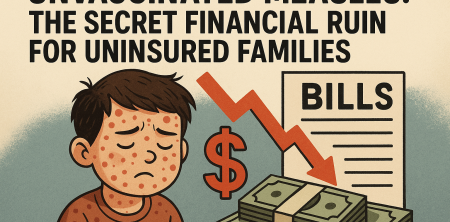
As an educator who's spent years in classrooms and university halls, I've seen firsthand how public health issues can ripple through communities, affecting everything from school attendance to family finances. The recent resurgence of measles, a disease many of us thought was relegated to history books, is a stark reminder of this interconnectedness. What's truly heartbreaking isn't just the illness itself, but the often-invisible financial burden it places on families, especially those without health insurance. When we talk about measles, we often focus on the symptoms, the contagiousness, or the vaccine debate. But there's a critical, often overlooked aspect: the devastating measles treatment cost uninsured families face, an expense that can quickly spiral out of control.
It's a conversation we absolutely need to have, because while the physical toll of measles is well-documented, the financial aftermath can be just as crippling, silently pushing families into debt or even bankruptcy. And it's a conversation that hits particularly hard when we consider that this is a largely preventable illness. We’re not just talking about a sniffle; we're talking about intensive medical care, prolonged hospital stays, and a barrage of tests that come with a hefty price tag. For families already struggling to make ends meet, a measles diagnosis can feel like a financial death sentence, amplifying the emotional distress with overwhelming practical worries. This isn't just a health crisis; it's a financial one, deeply impacting the stability and future of vulnerable households.
The Alarming Comeback: Why Measles Is Back on Our Radar
For decades, measles was largely a footnote in American public health. Thanks to widespread vaccination efforts, the disease was declared eliminated in the U.S. in 2000. It was a triumph of modern medicine, a testament to what collective action and scientific advancement can achieve. But now, we're seeing a troubling reversal of fortune. Measles cases are on the rise again, particularly in communities with lower vaccination rates. This isn't just a statistical blip; it's a genuine public health concern that demands our attention.
The reasons for this comeback are complex, but vaccine hesitancy is undoubtedly a major contributing factor. Misinformation, fear, and a misunderstanding of vaccine science have created pockets of vulnerability where measles can thrive. As a former Dean of Education, I understand the importance of critical thinking and questioning, but when it comes to established medical science, especially regarding diseases that cause severe harm, we need to rely on expert consensus. Pediatricians in Utah, for example, have been vocal about seeing more and more unvaccinated children contracting measles, leading to more aggressive interventions than they've seen in years. This isn't just a theoretical problem; it's a reality unfolding in emergency rooms and pediatric wards across the country.
Beyond the Rash: The Aggressive Medical Interventions Required
When most people think of measles, they picture a distinctive rash and fever. While those are indeed hallmark symptoms, the reality of a severe measles infection, especially in young children, is far more grim. It's not just a mild illness you can 'ride out' at home. Measles can lead to serious complications like pneumonia, encephalitis (brain swelling), ear infections, and even death. These aren't abstract possibilities; they're very real risks that require intensive medical intervention.
Doctors are reporting that managing these severe cases often involves a battery of painful and invasive procedures. We're talking about extensive blood work, sometimes multiple times a day, to monitor a child's immune response and organ function. For kids, especially toddlers and infants, these blood draws can be terrifying and traumatic. And in cases where encephalitis is suspected, a lumbar puncture – a spinal tap – might be necessary to check for inflammation or infection in the cerebrospinal fluid. Imagine your child, already suffering, enduring such a procedure. These aren't routine doctor's visits; they're critical, often life-saving, but always uncomfortable and distressing medical interventions that underscore the seriousness of the disease and contribute significantly to the measles treatment cost uninsured families face.
The Emotional Toll: Regret, Shame, and the Weight of 'Could Have Been'
One of the most poignant aspects of the current measles resurgence, and something that truly resonated with me as an educator and a parent, is the profound emotional impact on families. Doctors frequently recount stories of parents expressing immense regret and shame after seeing their child suffer from a preventable illness. This isn't just about feeling bad; it's about grappling with the knowledge that a simple, safe vaccine could have spared their child this pain and themselves this anguish.
The shame can be overwhelming. Parents often feel judged by medical staff and, perhaps even more acutely, by themselves. They witness their child struggling, sometimes fighting for breath or unresponsive due to neurological complications, and they're forced to confront the 'what if' – what if we had vaccinated? This emotional burden is often compounded by the isolation required for measles patients, cutting off support networks. It's a heavy weight to carry, and it highlights the tragic human cost that goes far beyond the physical symptoms, making the financial burden even harder to bear. (See: CDC Measles Information.)
Unpacking the Measles Treatment Cost Uninsured Families Bear
Now, let's get down to the brass tacks: the money. For families with robust health insurance, the financial hit of a measles infection might be limited to deductibles and co-pays. But for the uninsured, a measles diagnosis can be financially ruinous. We're talking about a spectrum of costs that most people simply aren't prepared for. An emergency room visit alone can run into hundreds, if not thousands, of dollars, even before any diagnostics are performed. For more context, see Medical Education and Public Health.
If hospitalization is required – and with severe measles, it often is – the costs skyrocket. Intensive care unit (ICU) stays, especially for children with respiratory distress or neurological complications, can easily accumulate tens of thousands of dollars per day. Then there are the specific medical procedures: blood tests, spinal taps, imaging like CT scans or MRIs, IV fluids, oxygen therapy, antibiotics for secondary infections, and antiviral medications. Each of these carries its own separate charge. And don't forget the professional fees from doctors, specialists, and nurses. The measles treatment cost uninsured families face isn't just a single bill; it's an avalanche of charges from various departments and providers, often leading to medical debt that can take years to pay off, if ever.
The Hidden Economic Impact: Beyond Direct Medical Bills
The direct medical bills are just one piece of the puzzle. A severe measles infection also creates significant indirect economic burdens that often go unacknowledged. For starters, there's the lost income. When a child is hospitalized, often one or both parents have to take time off work, sometimes for weeks. For hourly wage earners or those without generous paid time off policies, this translates directly into lost wages, making it even harder to cover those mounting medical bills.
Then there are the auxiliary costs: transportation to and from the hospital, parking fees, meals bought in hospital cafeterias, and childcare for other siblings. These seemingly small expenses add up quickly during a prolonged medical crisis. Furthermore, if a child suffers long-term complications, such as hearing loss or neurological damage from encephalitis, there could be ongoing therapy costs, special educational needs, and a lifetime of medical follow-ups. The measles treatment cost uninsured families incur isn't just the hospital bill; it's the entire disruption and financial strain placed on their lives, potentially for years to come, painting a grim picture of the true economic devastation.
Global Perspectives: Measles and Economic Strain Worldwide
It's easy to focus on the challenges within our own borders, but the measles treatment cost uninsured families face here in the U.S. is just a microcosm of a much larger global crisis. In many low-income countries, where healthcare infrastructure is weaker and vaccination rates might be historically lower, measles outbreaks can be truly catastrophic. The World Health Organization (WHO) consistently highlights measles as a leading cause of death among young children globally, despite the availability of a safe and effective vaccine. The economic impact in these regions extends beyond individual families, often straining entire national health systems and diverting resources from other critical public health initiatives. For instance, an outbreak can overwhelm hospitals, deplete already limited medical supplies, and force governments to spend emergency funds on containment and treatment rather than on long-term development projects. This global perspective underscores that the financial burden of measles isn't just an American problem; it's a worldwide challenge that disproportionately affects the most vulnerable populations, reinforcing the critical need for universal vaccination efforts.
The Role of Misinformation in Driving Costs
As someone deeply involved in education, I've seen how misinformation can derail progress. In the context of measles, the spread of false information about vaccine safety has directly contributed to declining vaccination rates, which in turn leads to outbreaks and, consequently, higher treatment costs for everyone, especially the uninsured. When parents are misled into believing vaccines are dangerous, they make choices that put their children at risk. The internet and social media have amplified these narratives, making it harder for accurate, science-based information to reach people. This isn't just about individual choices; it's about a societal vulnerability created by a lack of critical information literacy and an abundance of unvetted claims. The cost of treating a measles case, particularly a severe one, is a direct financial consequence of this informational breakdown. It's a sobering reminder that education isn't just about what we learn in school; it's about how we process information and make decisions that impact public health.
The Economic Argument for Universal Vaccination
From a purely economic standpoint, the argument for universal measles vaccination is overwhelmingly clear. The cost of administering the MMR vaccine is relatively low, typically under $100 for both doses without insurance. Compare that to the potential tens of thousands, or even hundreds of thousands, of dollars required to treat a severe, hospitalized measles case. Studies have repeatedly shown that for every dollar invested in childhood immunizations, there's a significant return on investment in terms of averted healthcare costs, increased productivity due to fewer sick days, and reduced burden on public health systems. When we fail to vaccinate, we're not just risking individual health; we're incurring massive societal costs. The measles treatment cost uninsured families face is just the tip of the iceberg; the ripple effect on emergency services, public health tracking, and lost economic output is substantial. It's an economic no-brainer: prevention is not only better for health but also profoundly more fiscally responsible.
Navigating the Labyrinth: Support and Resources for Uninsured Families
While the financial outlook for uninsured families facing measles can seem bleak, it's crucial to understand that there are often resources available, though finding them can feel like navigating a maze. Hospital financial aid programs are a primary starting point. Many hospitals, especially non-profit ones, have policies to provide discounted care or even charity care for low-income patients who meet specific criteria. It's important for families to proactively ask about these options and be prepared to provide documentation of their income and assets. (See: WHO Fact Sheet on Measles.)
Additionally, Medicaid and the Children's Health Insurance Program (CHIP) exist to provide low-cost or free health coverage for eligible children and families. Even if a family wasn't enrolled before the illness, it's worth checking eligibility during a medical crisis, as some programs have retroactive coverage options. Community health centers and local public health departments can also be invaluable resources, offering guidance on navigating the healthcare system, applying for aid, and sometimes even providing certain services at a reduced cost. It’s a challenging path, but not one families have to walk entirely alone. Understanding the measles treatment cost uninsured families face also means knowing where to turn for help.
The Preventable Nature: A Critical Public Health Message
The most infuriating aspect of this entire situation is that measles is almost entirely preventable. The measles, mumps, and rubella (MMR) vaccine is one of the safest and most effective vaccines ever developed. It has a proven track record of preventing severe illness, hospitalization, and death. The scientific consensus is overwhelming: vaccination protects not only the individual but also the community through herd immunity, especially those who are too young to be vaccinated or have compromised immune systems. For more context, see Higher Education System and Community Health.
As an educator, I believe in empowering people with accurate information. The decision not to vaccinate, often based on debunked myths and misinformation, has tangible, devastating consequences, both for individual children and for the collective health of our society. The resurgence of measles is a direct consequence of declining vaccination rates, and it serves as a powerful, painful reminder of the importance of public health initiatives and the critical role vaccines play in keeping our communities safe and healthy. The discussion around measles treatment cost uninsured families must always circle back to this fundamental truth: prevention is not only better but exponentially cheaper.
My Take: An Educator's Plea for Informed Choices and Community Well-being
From my vantage point, having worked in education for decades, I’ve seen how crucial it is for individuals to make informed decisions – decisions based on reliable, evidence-based information, not on fear-mongering or misinformation. When it comes to something as serious as measles, a disease that causes such suffering and creates such a profound measles treatment cost uninsured families, those informed choices become a moral imperative for the well-being of our entire community.
The stories coming out of pediatric wards are heartbreaking. No parent wants to see their child in distress, and certainly no parent wants to face the impossible choice between their child's health and financial ruin. We live in a society where access to healthcare is already a challenge for many, and adding a preventable, expensive illness like measles into that equation is simply unconscionable. It's time we renewed our commitment to public health education, supported our healthcare providers, and ensured that every family has the information and resources they need to protect their children and avoid the catastrophic financial and emotional fallout of a preventable disease.
The resurgence of measles isn't just a medical problem; it's a societal one that underscores the fragility of public health when trust in science erodes. We need to remember that community health is a shared responsibility, and the decisions we make as individuals have far-reaching consequences. Let's not allow a preventable disease to continue inflicting such pain and financial hardship on our most vulnerable families. Let's choose science, choose prevention, and choose a healthier, more secure future for all our children.
Looking Ahead: Strengthening Public Health and Support Systems
The ongoing challenge of measles and its financial implications for uninsured families isn't going to disappear overnight. It requires a multi-faceted approach, rooted in both immediate support and long-term systemic improvements. First and foremost, we need to redouble our efforts in public health education. This means not just disseminating information, but actively engaging with communities, addressing concerns with empathy and facts, and rebuilding trust in scientific institutions. We need to empower parents with accurate data about vaccine safety and efficacy, presented in an accessible, understandable way.
Secondly, we must strengthen our social safety nets. This includes expanding access to affordable health insurance, ensuring that programs like Medicaid and CHIP are adequately funded and widely accessible, and streamlining the process for families to apply for financial assistance during medical crises. Hospitals, too, have a crucial role to play in proactively informing uninsured families about financial aid options rather than leaving them to discover these resources on their own. The measles treatment cost uninsured families face highlights a significant gap in our current system that needs urgent attention. When a preventable illness can bankrupt a family, it signals a systemic failure that we, as a society, must work together to rectify. This isn't just about healthcare; it's about social justice and ensuring that every child has the opportunity to grow up healthy and secure, regardless of their family's economic status or insurance coverage. (See: NIH on Measles Outbreak Costs.)
Frequently Asked Questions About Measles Treatment Costs for Uninsured Families
What is the average cost of treating a severe measles case for an uninsured child?
This is incredibly difficult to pinpoint an "average" because the costs vary wildly depending on the severity of the infection, the duration of hospitalization, and the specific complications. However, an emergency room visit alone can be thousands of dollars. If a child needs to be hospitalized, especially in an ICU for complications like pneumonia or encephalitis, the total cost can quickly escalate to tens of thousands of dollars, sometimes even hundreds of thousands for prolonged, complex cases. These figures don't even include potential long-term care costs if permanent damage occurs.
Are there any government programs that can help uninsured families with measles treatment costs?
Yes, absolutely. Medicaid and the Children's Health Insurance Program (CHIP) are crucial resources. Even if a family didn't have coverage before the illness, it's worth checking eligibility during a medical emergency, as some programs offer retroactive coverage. These programs provide low-cost or free health coverage for eligible children and families. Local public health departments can also help guide families through the application process and identify other state-specific assistance programs.
What financial assistance can hospitals offer to uninsured families?
Many hospitals, especially non-profit facilities, have financial assistance policies, often called "charity care" or "financial aid." These programs can offer discounted services or even fully waive bills for patients who meet certain income and asset criteria. Families should proactively ask the hospital's financial counseling department about these options as early as possible in the treatment process. They'll typically need to provide documentation of their financial situation.
Does a measles diagnosis affect a family's credit score if they can't pay the medical bills?
Unfortunately, yes, unpaid medical bills can significantly impact a family's credit score. If bills go to collections, it can lead to negative marks on credit reports, making it harder to secure loans, housing, or even certain jobs in the future. This is why it's so important for uninsured families to engage with hospital financial counselors and explore all available aid programs to prevent bills from becoming delinquent.
What are the long-term financial implications if a child suffers permanent damage from measles?
The long-term financial implications can be devastating. If measles leads to complications like permanent hearing loss, vision impairment, or neurological damage from encephalitis, a child may require ongoing therapy (physical, occupational, speech), specialized medical equipment, special education services, and frequent medical follow-ups for the rest of their life. These costs, extending over decades, can easily far exceed the initial treatment expenses and place an unbearable burden on families, especially those without comprehensive insurance.
Trending Now This builds on Florida's vaccination concerns.
Frequently Asked Questions
What are the financial risks of measles for uninsured families?
Uninsured families face significant financial risks if a member contracts measles. The costs associated with intensive medical care, prolonged hospital stays, and numerous tests can quickly escalate, potentially leading families into debt or even bankruptcy. This financial burden can be devastating, especially for those already struggling to make ends meet.
How does measles impact families without health insurance?
For families without health insurance, a measles diagnosis can be financially catastrophic. The treatment costs can spiral out of control, creating a heavy financial burden that adds to the emotional distress of dealing with the illness. Many families may find themselves facing overwhelming practical worries alongside the health crisis.
Why is measles making a comeback in the U.S.?
Measles is making a comeback in the U.S. due to declining vaccination rates. As more families choose not to vaccinate their children, the disease, which was declared eliminated in 2000, is re-emerging. This resurgence highlights the importance of public health initiatives and the collective responsibility to maintain herd immunity.
What are the symptoms of measles and why is it dangerous?
Measles symptoms include high fever, cough, runny nose, and a distinctive rash. It is highly contagious and can lead to serious complications, such as pneumonia and encephalitis. The resurgence of measles poses a risk not only to individual health but also to community health, especially among vulnerable populations.
What is the importance of vaccination against measles?
Vaccination against measles is crucial for preventing outbreaks and protecting public health. Vaccines have successfully eliminated measles in many areas, showing the power of collective action in combating infectious diseases. Maintaining high vaccination rates is essential to prevent the financial and health burdens that come with measles outbreaks.
What's your take on this? Share your thoughts in the comments below — we read every one.

