```html
When it comes to crafting effective lesson plans, clarity and purpose in what students should achieve is paramount. This is where Bloom's Taxonomy Learning Objectives come into play. By providing a structured framework, Bloom's Taxonomy allows educators to formulate clear, measurable, and actionable learning goals that cater to various cognitive levels. In this article, we’ll explore the intricacies of Bloom's Taxonomy, how to write better learning objectives, and practical insights to enhance your lesson plans.
Understanding Bloom's Taxonomy: A Brief Overview
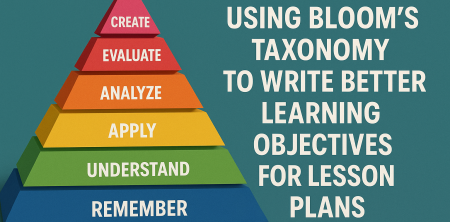
Developed in 1956 by educational psychologist Benjamin Bloom and his colleagues, Bloom's Taxonomy categorizes cognitive skills into a hierarchy. The taxonomy originally consisted of six levels, which were later revised in the 2000s. Here's a breakdown of the levels:
- Remembering: Recalling facts and basic concepts.
- Understanding: Explaining ideas or concepts.
- Applying: Using information in new situations.
- Analyzing: Breaking information into parts to explore relationships.
- Evaluating: Justifying a decision or course of action.
- Creating: Producing new or original work.
This structured approach helps educators design learning experiences that promote higher-order thinking and deeper understanding. By leveraging Bloom's Taxonomy, teachers can assess not just what students know, but how they can apply that knowledge in practical situations.
The Importance of Learning Objectives
Learning objectives serve as the foundation of any lesson plan. They define what students are expected to learn and accomplish during a specific lesson or unit. Well-crafted learning objectives help:
- Guide Instruction: Clear objectives inform teachers about the content and skills to focus on during lessons.
- Assess Learning: Objectives provide benchmarks against which student progress can be measured.
- Engage Students: When students understand the goals of a lesson, they are more likely to be motivated and take ownership of their learning.
Ultimately, effective learning objectives bridge the gap between teaching and learning, ensuring that students achieve meaningful outcomes.
Crafting Bloom's Taxonomy Learning Objectives
Writing learning objectives using Bloom's Taxonomy involves aligning desired outcomes with the appropriate cognitive level. Here are some practical steps to do just that:
Identify Desired Outcomes
Start by clearly defining what you want your students to achieve. Be specific about the knowledge, skills, and attitudes you expect them to develop. For example, instead of stating, "Students will understand photosynthesis," you might say, "Students will explain the process of photosynthesis and its significance to plant life." This shift not only clarifies the objective but also aligns it with the understanding level of Bloom's Taxonomy.
Select Appropriate Action Verbs
Each level of Bloom's Taxonomy is associated with specific action verbs that can help you articulate your objectives more effectively. Here’s a quick guide:
- Remembering: list, recall, identify
- Understanding: summarize, describe, explain
- Applying: demonstrate, execute, implement
- Analyzing: compare, contrast, differentiate
- Evaluating: judge, critique, defend
- Creating: design, construct, develop
Using these verbs can make your objectives more dynamic and measurable.
Ensure Measurability
A key aspect of writing effective learning objectives is ensuring they are measurable. This means you should be able to assess whether students have achieved the objectives through assignments, tests, projects, or presentations. For example, revise the objective "Students will understand the relationship between supply and demand" to "Students will analyze a real-world market scenario and create a graphical representation of the supply and demand curves." This revised objective is not only measurable but also engages students in higher-order thinking.
Examples of Bloom's Taxonomy Learning Objectives
To further illustrate how to apply Bloom's Taxonomy in your lesson plans, let’s examine some specific examples across various subjects.
Science
Objective: Students will classify different types of organisms into appropriate kingdoms based on their characteristics (Analyzing).
This objective not only aligns with the analyzing level but also promotes critical thinking as students distinguish between the various classifications.
Mathematics
Objective: Students will solve complex equations and explain the steps taken to arrive at the solution (Applying and Understanding). (See: Bloom's Taxonomy overview.)
This encourages students to demonstrate their understanding of mathematical concepts while also applying them to solve real problems.
Literature
Objective: Students will evaluate the themes present in a novel and construct a persuasive argument about the author's intent (Evaluating and Creating).
This reframes a typical literature objective into one that fosters both critical evaluation and creative expression.
Aligning Assessment with Learning Objectives
Once you have drafted your learning objectives, the next step is ensuring that your assessments align with those objectives. This creates a coherent educational experience where instruction, objectives, and evaluation are all synchronized. Here’s how to align them:
Design Assessments Based on Objectives
Assessments should reflect the skills and knowledge outlined in your learning objectives. For instance, if your objective is for students to analyze literature, a multiple-choice test may not suffice. Instead, consider using essays, presentations, or group discussions to gauge their understanding comprehensively.
Use Rubrics for Clarity
Rubrics provide students with clear criteria for evaluation, helping them understand what is expected to achieve different levels of performance. For example, when assessing a project on environmental science, a rubric can outline expectations for research depth, presentation skills, and creativity. This not only clarifies your grading process but also guides students in their work.
Current Relevance of Bloom's Taxonomy in Education
Despite being over half a century old, Bloom's Taxonomy remains highly relevant in today’s educational landscape. As teaching methods evolve to include technology, experiential learning, and collaborative approaches, the fundamental principles of Bloom's Taxonomy continue to support educators in structuring their objectives. Here’s how:
Integration with Technology
With the rise of technology in the classroom, Bloom's Taxonomy provides a framework for integrating digital tools that enhance learning. For instance, using online platforms for collaborative projects encourages students to engage at higher cognitive levels—creating, evaluating, and analyzing content collectively.
Focus on 21st Century Skills
Today's education emphasizes skills like critical thinking, creativity, and collaboration. By utilizing Bloom's Taxonomy Learning Objectives, educators can better prepare students for the demands of the modern workforce. Objectives structured around creating and evaluating align perfectly with these skills, ensuring students are ready for future challenges.
Practical Tips for Using Bloom's Taxonomy in Lesson Planning
Now that we've explored the theory and application of Bloom's Taxonomy, here are some practical tips to seamlessly integrate it into your lesson planning process:
Begin with the End in Mind
Before planning your lessons, think about the end goals. What do you want your students to achieve by the end of the unit? Starting with clear learning objectives can significantly streamline your lesson planning process. There's a fuller look at top resources for lesson plans.
Collaborate with Colleagues
Teamwork can lead to more robust learning objectives. Work with fellow educators to share ideas and develop interdisciplinary objectives that can be used across different subjects. This not only enriches the learning experience but also fosters a collaborative teaching environment.
Regularly Review and Revise Objectives
Learning objectives shouldn't be set in stone. As you teach and receive feedback, don’t hesitate to revisit and adjust your objectives to better meet the needs of your students. This flexibility can lead to improved engagement and understanding.
Frequently Asked Questions about Bloom's Taxonomy Learning Objectives
Why is Bloom's Taxonomy important for teachers?
Bloom's Taxonomy helps teachers develop clear and measurable learning objectives, guiding instructional strategies and assessment methods. It promotes higher-order thinking skills and ensures that lessons are designed to engage students at various cognitive levels.
How can I apply Bloom's Taxonomy in a mixed-ability classroom?
In a mixed-ability classroom, you can differentiate learning objectives based on students' varying skill levels. By offering tiered objectives aligned with Bloom's levels, all students can work on tasks suited to their abilities, while still aiming towards the same overarching goal. (See: Harvard University educational resources.)
Can Bloom's Taxonomy be used for online learning?
Absolutely! Bloom's Taxonomy is highly applicable in online learning environments. Educators can utilize various digital tools to create interactive assignments that target different levels of the taxonomy, fostering engagement and understanding even in virtual settings.
What are some common mistakes when writing learning objectives?
Common mistakes include writing objectives that are too vague, failing to make them measurable, or not aligning them with appropriate Bloom's levels. Ensure that every objective is specific, actionable, and fits within the cognitive levels you aim to target.
How can I ensure my objectives remain relevant over time?
To keep your objectives relevant, regularly review and update them based on curriculum changes, student feedback, and emerging educational practices. Engaging in professional development and collaborating with peers can also help you stay current with educational trends.
The Connection Between Bloom's Taxonomy and Educational Standards
Many educational systems have adopted standards that align closely with the principles outlined in Bloom's Taxonomy. Understanding how these standards interact can enhance your lesson planning:
State and National Standards
Most state and national educational standards emphasize critical thinking, problem-solving, and analytical skills. Bloom's Taxonomy serves as an essential framework for aligning lesson objectives with these standards, ensuring that students not only meet statutory requirements but also develop the skills needed for future success.
Curriculum Development
When developing curriculum, educators can utilize Bloom's Taxonomy to create a coherent scope and sequence of learning experiences. By structuring objectives according to cognitive levels, curriculum developers can ensure that students encounter progressively challenging material that builds upon their prior knowledge.
Professional Development for Educators
Many professional development programs incorporate Bloom's Taxonomy as a core component of training. By equipping educators with the tools to write effective learning objectives, these programs help improve instructional quality and student outcomes.
Future Directions: Bloom's Taxonomy in the Age of AI and Personalization
As artificial intelligence and personalized learning become more prevalent in education, Bloom's Taxonomy can guide the development of innovative teaching strategies that leverage technology effectively.
Artificial Intelligence in Education
AI tools can analyze student performance data to help educators tailor their instruction. By integrating Bloom's Taxonomy with AI capabilities, teachers can receive insights into which cognitive levels students are struggling with and adjust their learning objectives accordingly.
Personalized Learning Paths
Personalized learning approaches enable students to progress at their own pace. Utilizing Bloom's Taxonomy, educators can create customized learning objectives that reflect individual student needs, ensuring that all learners are engaged and challenged appropriately.
Exploring Advanced Strategies with Bloom's Taxonomy
Teachers can further enhance their lesson plans by exploring advanced strategies that build on Bloom’s Taxonomy. Here are a few effective approaches to consider:
Project-Based Learning
Project-based learning (PBL) encourages students to engage with real-world challenges while applying their knowledge and skills. By structuring PBL assignments around Bloom's Taxonomy, educators can guide students through higher-order thinking processes. For example, a project on sustainable living could require students to evaluate current practices, create a proposal for improvement, and present their findings. This not only solidifies their understanding of the topic but also boosts their critical thinking and collaboration skills.
Flipped Classroom Model
The flipped classroom approach allows students to learn new content at home, often through videos or readings, and apply their knowledge during class time. By using Bloom's Taxonomy to design pre-class learning objectives that focus on understanding and applying knowledge, teachers can maximize classroom time for analysis, evaluation, and creation of new ideas. This model promotes deeper engagement and allows educators to support students in a more tailored manner.
Interdisciplinary Learning
Integrating multiple subjects into a single project can provide students with a more holistic understanding of concepts. By using Bloom's Taxonomy to set shared objectives across disciplines, teachers can create projects that encourage students to draw connections between subjects and apply their learning in diverse contexts. For example, a project that combines science and art might have students analyze environmental issues, create an artistic representation of their findings, and present their work to the class.
How to Measure the Effectiveness of Learning Objectives
Measuring the effectiveness of Bloom's Taxonomy Learning Objectives is crucial for assessing the impact on student learning. Here are some practical methods:
Feedback and Reflection
Encouraging feedback from students about their understanding of the objectives and activities can provide insight into their effectiveness. Reflection sessions can also be useful, allowing students to articulate what they learned, which objectives they found challenging, and how they can apply their skills in the future.
Performance Data Analysis
Analyze performance data from assessments and projects to evaluate whether students are meeting the learning objectives. Identifying patterns in student performance can help educators refine their teaching strategies and objectives. For instance, if a significant number of students struggle with evaluating information, it may indicate a need for improved instruction in that area.
Longitudinal Studies
Consider conducting longitudinal studies to track student progress over time and the long-term impact of the objectives on their academic development. This approach can reveal insights about retention of knowledge and the ability to apply skills in new contexts, helping inform future teaching practices.
Bringing It All Together: Strategies for Implementation
Implementing Bloom's Taxonomy Learning Objectives in your teaching practice involves a thoughtful approach. Here are some strategies to effectively integrate these principles:
Professional Learning Communities
Joining or forming professional learning communities (PLCs) allows teachers to collaborate and share best practices in developing and implementing learning objectives. These communities can provide support, resources, and encouragement as educators work to enhance their lesson plans using Bloom's Taxonomy. We covered Getcosmiq's insightful article in more detail.
Continuous Professional Development
Engage in ongoing professional development opportunities focused on Bloom's Taxonomy and modern educational practices. Workshops, webinars, and conferences can deepen your understanding and provide new strategies for writing effective learning objectives.
Engagement with Educational Research
Stay updated with the latest educational research related to Bloom's Taxonomy and effective teaching practices. Engaging with academic journals, articles, and case studies can provide evidence-based insights that can be applied to your own teaching methods.
Conclusion: The Lasting Impact of Bloom's Taxonomy
Bloom's Taxonomy Learning Objectives offer a powerful framework for educators aiming to enhance their lesson plans. By focusing on measurable outcomes and aligning assessments with clear objectives, teachers can create meaningful learning experiences that not only engage students but also foster lifelong learning. As the educational landscape continues to evolve, the principles of Bloom's Taxonomy remain a cornerstone for effective teaching. Embrace this framework, and watch your students reach new heights in their educational journeys.
```
Trending Now
Frequently Asked Questions
What is Bloom's Taxonomy in education?
Bloom's Taxonomy is a framework developed by educational psychologist Benjamin Bloom in 1956 that categorizes cognitive skills into a hierarchy. It consists of six levels: Remembering, Understanding, Applying, Analyzing, Evaluating, and Creating, which help educators design effective learning objectives and assess student understanding.
How do you write learning objectives using Bloom's Taxonomy?
To write learning objectives using Bloom's Taxonomy, identify the desired outcome at the appropriate cognitive level. Use action verbs associated with each level, such as 'analyze' for analyzing or 'create' for creating. This ensures your objectives are clear, measurable, and aligned with the goals of your lesson plan.
Why are learning objectives important in lesson plans?
Learning objectives are crucial because they define what students are expected to learn and achieve during a lesson. They guide instruction, provide benchmarks for assessing student progress, and engage students by clarifying the goals of the lesson, ultimately enhancing the educational experience.
What are the six levels of Bloom's Taxonomy?
The six levels of Bloom's Taxonomy are: 1) Remembering - recalling facts; 2) Understanding - explaining concepts; 3) Applying - using information in new contexts; 4) Analyzing - breaking information into parts; 5) Evaluating - justifying decisions; and 6) Creating - producing original work.
How can Bloom's Taxonomy enhance student learning?
Bloom's Taxonomy enhances student learning by promoting higher-order thinking and deeper understanding. It encourages educators to set clear, measurable learning objectives that challenge students to apply and analyze knowledge, fostering critical thinking skills and preparing them for real-world applications.
What did we miss? Let us know in the comments and join the conversation.

