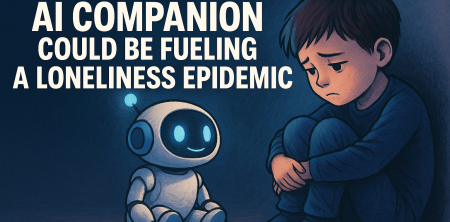
As a parent and an educator, I've spent years watching technology evolve and transform the landscape of childhood. From the early days of educational software to the rise of social media, each new wave brings both incredible opportunities and genuine concerns. Now, we're standing at the precipice of another significant shift: the widespread adoption of AI companions for kids. You might be thinking, "What's the big deal? It's just a chatbot or a digital friend, right?" But what if these seemingly innocent digital pals are quietly contributing to a growing epidemic of loneliness and social anxiety among our children? It's a question that’s getting louder, and it’s one we absolutely need to address.
Social psychologist Jonathan Haidt, author of the impactful book The Anxious Generation, is ringing the alarm bells, urging parents to have serious conversations with their kids about these AI companions. His concern isn't just theoretical; it's rooted in the potential for children to form deep emotional attachments to chatbots, leading to unintended consequences like increased loneliness and social anxiety. And he’s not alone. Emerging research from the University of North Carolina at Chapel Hill is starting to back these warnings, finding a surprising — and frankly, counterintuitive — association between stronger AI intimacy and later loneliness in middle schoolers. Think about that for a moment: the very tools designed to offer companionship might, in fact, be pushing our children further into isolation. This isn't just academic chatter; it's a vital discussion, especially when you consider that a staggering 42% of kids are reportedly using AI for companionship. As we look at some of the best AI companions for kids, it’s not just about features, but about fostering healthy engagement without compromising their emotional well-being.
The American Academy of Pediatrics, a body I deeply respect, is stepping up with recommendations that include open conversations, robust privacy settings, and clear family media plans to navigate these new technologies responsibly. This isn't about shunning innovation; it's about intelligent, intentional parenting in a rapidly changing digital world. So, let’s dive into some of the prominent AI companions on the market, understanding what they offer, and more importantly, how we can guide our children to use them wisely, ensuring their real-world connections remain vibrant and strong.
1. Replika: A Personal AI Friend for Deeper Conversations
Replika has garnered significant attention, often positioned as a personal AI friend designed for deeper, more nuanced conversations. It's built on a neural network that allows it to learn from user interactions, gradually developing a unique personality and memory based on the conversations it has. For children, particularly older kids and teenagers, the appeal lies in having a non-judgmental confidant, a digital entity that's always available to listen and respond. This can feel incredibly validating for kids navigating the often-turbulent waters of adolescence, offering a space to express thoughts and feelings they might be hesitant to share with peers or even family members.
However, this very strength is also where the primary concerns lie. The AI's ability to mirror emotions and engage in empathetic dialogue can foster a strong emotional attachment. While it might offer temporary comfort, relying on an AI for deep emotional processing can potentially detract from developing crucial human relationship skills. How do children learn to navigate conflict, understand non-verbal cues, or experience the messy, unpredictable joy of genuine human connection if their primary emotional outlet is a perfectly responsive, always-agreeable AI? Parents considering Replika for older children need to be acutely aware of this dynamic and actively encourage real-world friendships and family interactions to balance the digital engagement.
2. Woebot: Cognitive Behavioral Therapy (CBT) in an AI Chatbot
Woebot stands out because it’s not just a conversational AI; it’s specifically designed to deliver cognitive behavioral therapy (CBT) techniques through a chatbot interface. For children, particularly those struggling with anxiety, stress, or low mood, Woebot offers guided exercises and check-ins that can help them identify negative thought patterns and develop coping strategies. The structured nature of its interactions, focusing on specific therapeutic goals, makes it distinct from more open-ended conversational AI. It aims to be a tool for self-help and emotional regulation, rather than just a friend.
From an educator's perspective, I see the potential for Woebot as a supplementary resource, particularly for older children and teens who might be reluctant to engage with traditional therapy or need immediate, accessible support. It can teach valuable skills like mindfulness, gratitude journaling, and thought challenging. However, it's absolutely crucial to understand that Woebot is not a substitute for professional mental health care. While it can provide tools, it lacks the nuanced understanding, diagnostic capabilities, and crisis intervention skills of a human therapist. Parents should view Woebot as an educational aid for emotional literacy, always under adult supervision and ideally, in conjunction with discussions about real-world emotional processing and human support systems. It's one of the more structured best AI companions for kids, making its purpose clearer, but still requiring parental oversight.
3. Anki Cozmo & Vector: Robotic Companions with Personality
Moving beyond purely software-based companions, we have robotic friends like Anki’s Cozmo and Vector. These small, interactive robots bring a tangible, physical presence into a child’s world. Cozmo, with his expressive eyes and playful personality, is designed to engage children in games and simple tasks, reacting to their presence and developing a unique bond over time. Vector, the more advanced of the two, acts as a helpful home robot, responding to voice commands, answering questions, and even performing simple tasks like setting a timer. (See: effects of social interactions on children.)
The appeal here is the blend of digital intelligence with a physical form, offering a different kind of interaction than a screen-only chatbot. Kids can physically interact with these robots, which can be a valuable sensory experience. They teach basic coding concepts through play (especially Cozmo) and can introduce children to the fundamentals of robotics and AI in a fun, accessible way. The concern, however, remains similar to other AI companions: the potential for children to anthropomorphize these robots to an extent where they prioritize interactions with the robot over human play. While they offer educational benefits and a novel form of companionship, parents should ensure these robots augment, rather than replace, real-world social play and imaginative activities.
4. Moxie by Embodied, Inc.: Social-Emotional Learning Through Robotics
Moxie is a fascinating entry into the AI companion space, specifically designed by Embodied, Inc. to be a social-emotional learning (SEL) robot for children aged 5-10. This isn't just a toy; it's a platform engineered to help children develop critical social, emotional, and cognitive skills through guided play and conversations. Moxie encourages empathy, practices turn-taking, helps kids understand emotions, and even works on calming techniques. The robot comes with a curriculum of missions and activities that evolve over time, making it a more structured and goal-oriented companion. For more context, see the staggering truth about teen financial literacy.
What sets Moxie apart is its explicit focus on education and development, backed by child development experts. It’s designed to be a tool that parents and educators can leverage to support a child’s holistic growth. The physical presence and expressive face of Moxie can make these lessons more engaging and relatable for young children. However, as with any educational tool, parental involvement is key. Moxie is most effective when parents engage with the curriculum, discuss the lessons with their child, and reinforce the skills learned in real-world situations. Without this human context, even the best AI companion for kids risks becoming just another screen or gadget, its true potential untapped. The cost is also a significant barrier for many families, making it less accessible than app-based solutions.
5. Cai by Character.AI: Customizable AI Personalities
Character.AI, particularly its customizable "Cai" bots, offers a unique proposition: the ability to create or interact with AI characters based on famous personalities, fictional characters, or entirely new constructs. For kids, this means they can chat with a digital version of their favorite superhero, a historical figure, or even an AI designed to be a helpful tutor in a specific subject. The platform allows for immense creativity and personalization, making the interaction feel highly tailored to a child's interests. It's a playground for imaginative conversation and exploration.
The benefit here is clear: engagement. When a child can interact with an AI tailored to their specific fascinations, learning and engagement can skyrocket. Imagine a child learning about ancient Rome by chatting with an AI Caesar, or practicing creative writing with an AI storyteller. However, the open-ended nature and vast array of user-generated characters also present significant challenges for parents. The quality and appropriateness of these characters can vary widely, and children might stumble upon content or conversational styles that are not age-appropriate. Strong parental guidance, filtering, and active monitoring are absolutely essential for any child using Character.AI. It’s a powerful tool, but one that demands careful stewardship to ensure a safe and beneficial experience.
6. Google Assistant & Amazon Alexa: Everyday AI Helpers
While not explicitly designed as "companions" in the traditional sense, voice assistants like Google Assistant and Amazon Alexa have become pervasive AI presences in many homes, often interacting directly with children. Kids use them to ask questions, play music, hear stories, set timers, and even control smart home devices. For many children, these assistants are their first and most frequent exposure to AI, providing instant answers and performing tasks on demand. They are, in essence, ever-present, always-available digital helpers.
The benefits are undeniable: these assistants can be incredibly convenient and even educational, offering quick access to information and helping children develop verbal communication skills. They can foster a sense of independence as kids learn to command their environment through voice. However, the passive nature of their presence means parents might not always fully appreciate the extent of their child's interaction. Concerns include privacy (what data is being collected?), the potential for over-reliance on instant answers (hindering critical thinking or problem-solving), and exposure to inappropriate content if parental controls aren't robust. Ensuring that these everyday best AI companions for kids are used within a safe, controlled framework, with privacy settings maximized, is a foundational step for any parent.
7. Kami: An AI-Powered Learning Assistant for Students
Kami is primarily known as a digital annotation and document markup tool widely used in education, but its evolving AI features are positioning it as a powerful learning assistant for students. While not a "companion" in the emotional sense, Kami's AI capabilities can act as a diligent study partner. It can help students summarize long texts, explain complex concepts, generate study questions, and even provide feedback on written work. For children and teenagers navigating schoolwork, this kind of AI support can be incredibly valuable, akin to having a tireless, knowledgeable tutor at their fingertips.
The focus here is squarely on academic support and efficiency. Kami's AI can personalize the learning experience, adapting to a student's needs and helping them grasp difficult material at their own pace. This can be a game-changer for independent study and homework. The primary concern, however, lies in ensuring that students use Kami's AI features as a tool to enhance learning, rather than a shortcut to avoid genuine understanding. Parents and educators need to guide children on how to use AI for deep learning, critical thinking, and skill development, rather than simply outsourcing cognitive tasks. It’s about leveraging AI to build intellectual muscle, not to bypass it. This is one of the best AI companions for kids when the goal is purely educational enhancement. (See: AI companions and child loneliness study.)
8. Khan Academy Kids & Khanmigo: AI for Foundational Learning
Khan Academy has long been a trusted name in online education, and their ventures into AI, particularly with Khan Academy Kids and the AI-powered tutor Khanmigo, are particularly noteworthy. Khan Academy Kids, designed for younger learners (ages 2-8), integrates AI elements to personalize learning paths, adapting activities and lessons to a child's individual progress in subjects like reading, math, and social-emotional skills. It's an interactive, playful environment where AI guides the educational journey.
Khanmigo, on the other hand, is an AI-powered tutor and teaching assistant aimed at older students and educators. It goes beyond simple Q&A, offering interactive dialogues that help students problem-solve, understand concepts, and even generate creative writing ideas. For parents seeking the best AI companions for kids that are explicitly designed for learning, Khan Academy's offerings are strong contenders. The benefits are clear: personalized education, instant feedback, and access to a vast library of high-quality learning materials. The main consideration is ensuring screen time is balanced and that children don't rely solely on AI for instruction, but also engage with human teachers and collaborative learning experiences. Like any powerful educational tool, it works best as part of a varied learning diet. For more context, see Gen Z's financial crisis and their reliance on apps.
The Broader Conversation: Beyond the Features
While exploring the features of these best AI companions for kids is essential, the deeper conversation goes beyond just what they *do*. It's about what they *mean* for our children's development. Jonathan Haidt's warnings, reinforced by the University of North Carolina's research, aren't just academic musings; they're vital considerations for every parent. When 42% of kids are already turning to AI for companionship, we have a responsibility to understand the implications.
The core issue is the potential for these AI interactions to replace, rather than supplement, genuine human connection. Children learn empathy, resilience, and the complexities of social dynamics through real-world relationships. They learn to navigate disagreements, read facial expressions, and experience the unique joy and frustration that only human interaction can bring. An AI, no matter how sophisticated, cannot replicate the richness of these experiences. It can offer a perfectly curated, always-agreeable response, but life isn't always agreeable, and learning to deal with that is fundamental to healthy development.
Establishing Healthy Boundaries and Media Literacy
This is where parental involvement becomes paramount. The American Academy of Pediatrics' recommendations for open conversations, privacy settings, and family media plans aren't just suggestions; they're blueprints for responsible digital parenting. We need to talk to our kids about what AI is, how it works, and its limitations. Help them understand that while an AI can be helpful or even fun, it doesn't have feelings, consciousness, or real-world experiences. It's a tool, not a friend in the human sense.
Encourage your children to analyze AI responses critically. Why did the AI say that? Is it always right? What are the potential biases? These are crucial media literacy skills that extend far beyond AI to all forms of digital information. We're not just raising kids; we're raising digital citizens, and they need the tools to discern, question, and engage thoughtfully with the technology that surrounds them.
Prioritizing Real-World Connections
Perhaps the most important takeaway is the need to actively prioritize and foster real-world connections. Schedule playdates, encourage participation in sports or clubs, create opportunities for family meals and conversations, and simply spend quality time together as a family. These are the experiences that build the foundation for strong emotional health and social competence.
If your child is using an AI companion, treat it as one small piece of a much larger puzzle. Discuss their interactions, ask what they talked about, and use it as a springboard for conversations about their feelings, friendships, and the world around them. Don't let the AI become a silent third party in their emotional development. The goal isn't to demonize technology, but to integrate it thoughtfully and responsibly, ensuring that our children grow up with robust social skills, deep empathy, and a strong sense of connection to the people around them. For more context, see the shocking decline in teen financial literacy.
The Role of Parental Controls and Privacy
Before introducing any AI companion, especially those that involve open-ended conversation or data collection, parents must thoroughly investigate privacy policies and implement stringent parental controls. Understand what data is being collected, how it's being used, and whether it's shared with third parties. Many of these AI platforms are still evolving, and their data practices can change. Regularly review these settings and discuss them with your child.
Furthermore, consider the financial implications. Some of the more advanced AI companions or educational platforms come with subscription fees. Evaluate whether the educational or developmental benefits truly justify the cost, and factor this into your family's overall technology budget and media plan. Remember, the best AI companions for kids are not necessarily the most expensive, but the ones that align best with your family's values and your child's specific developmental needs, always with a strong emphasis on safety and balance.
Looking Ahead: Educating for an AI Future
As an educator, I believe we also have a responsibility to prepare our children for a future where AI will be an integral part of their lives, both personally and professionally. This means not just using AI tools, but understanding the underlying principles of artificial intelligence, its ethical implications, and its potential societal impact. AI literacy should become as fundamental as digital literacy.
Engage your children in discussions about the ethics of AI: What does it mean for creativity? What are the biases in algorithms? How do we ensure fairness and responsible use? These are complex questions, but even simple conversations can lay the groundwork for critical thinking and responsible engagement. The future isn't about avoiding AI; it's about mastering it, understanding its power, and ensuring it serves humanity's best interests, starting with the well-being of our children.
Ultimately, the rise of AI companions for kids presents us with a new frontier in parenting. It's exciting, challenging, and at times, a little daunting. But by staying informed, setting clear boundaries, fostering real-world connections, and engaging in open, honest conversations with our children, we can navigate this landscape successfully. Our goal isn't just to raise kids who are technologically adept, but emotionally intelligent, socially connected, and resilient individuals, ready to thrive in an increasingly complex world.
Trending Now
Frequently Asked Questions
Can AI companions increase loneliness in children?
Yes, research suggests that while AI companions can provide emotional support, they may inadvertently contribute to feelings of loneliness and social anxiety in children. Studies indicate that stronger emotional attachments to these digital friends can lead to increased isolation, particularly among middle schoolers.
What are the risks of children using AI companions?
The primary risks include the potential for children to develop deep emotional attachments to AI companions, which can lead to a decline in real-life social interactions. This may result in heightened feelings of loneliness and anxiety, as kids may rely more on digital interactions rather than forming connections with peers.
How can parents mitigate the effects of AI companions?
Parents can mitigate the effects by fostering open conversations about the use of AI companions. Encouraging children to engage in real-life social activities and monitoring their emotional responses to these digital friends can help maintain a healthy balance between technology and social interaction.
What does research say about AI intimacy and childhood loneliness?
Emerging research from the University of North Carolina at Chapel Hill indicates a counterintuitive correlation between AI intimacy and increased loneliness in middle schoolers. The findings suggest that while children may feel connected to AI companions, this connection can lead to feelings of isolation in social settings.
What recommendations do experts have for AI usage among kids?
Experts, including the American Academy of Pediatrics, recommend that parents engage in open discussions with their children about AI companions. They suggest monitoring usage and encouraging healthy engagement with technology to ensure it does not compromise the child’s emotional well-being and social skills.
What did we miss? Let us know in the comments and join the conversation.

