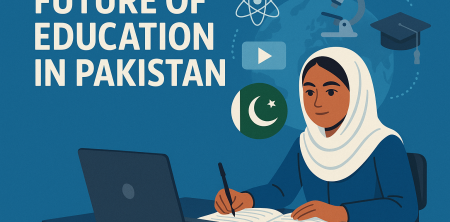
When we talk about the future of education in Pakistan, it’s not just an academic discussion; it’s a conversation about the very soul and potential of a nation. For decades, Pakistan has grappled with an educational landscape marked by stark contrasts: pockets of excellence alongside widespread access issues, quality concerns, and a curriculum often seen as outmoded. This isn't a new problem, but the stakes have never been higher. In an increasingly globalized and technology-driven world, a nation's prosperity, stability, and even its social cohesion are intrinsically linked to the quality of its education system. So, what exactly does the path forward look like for Pakistan, and how can it overcome the formidable challenges that stand in its way?
It’s a complex tapestry, to be sure, woven with threads of socio-economic disparities, political priorities, and cultural norms. But amidst the challenges, there's also immense potential for transformation, particularly through the strategic integration of technology and a renewed focus on foundational learning. This isn't just about tweaking existing systems; it's about a fundamental reimagining of how, what, and why we teach. The future of education in Pakistan demands nothing less than a revolutionary shift, driven by innovation, equity, and a deep commitment to empowering every child.
The Current State: A Foundation Riddled with Cracks
To understand where Pakistan's education system needs to go, we first have to honestly assess where it is right now. The picture, frankly, is mixed. On one hand, you have a vibrant private sector, especially in urban centers, offering modern curricula and better facilities. Think of the elite schools in Karachi, Lahore, or Islamabad, churning out students who go on to prestigious international universities. But these are the exceptions, not the rule. The vast majority of Pakistani children attend public schools, which often struggle with underfunding, dilapidated infrastructure, and a severe shortage of trained teachers.
Consider the sheer scale of the problem: according to UNICEF, Pakistan has the second-highest number of out-of-school children in the world, with an estimated 22.8 million children aged 5-16 not attending school. That's a staggering figure, representing 44% of the total population in that age group. Girls are disproportionately affected, especially in rural areas, due to cultural barriers, poverty, and a lack of safe schooling options. Even for those who are in school, the quality of education can be deeply concerning. Rote learning often dominates, critical thinking is rarely encouraged, and the curriculum frequently fails to equip students with the skills needed for the 21st-century job market. See also the cycle of uneducation.
This isn't just about statistics; it's about individual lives and missed opportunities. Imagine a child in a remote village, eager to learn, but with no school within walking distance, or one with only a single teacher for multiple grades. Or consider a teenager graduating from a public secondary school, only to find their diploma offers little practical value in a competitive economy. These are the realities that underscore the urgency of reform for the future of education in Pakistan.
Leveraging Technology: A Pathway to Accessibility and Quality
Here's where the conversation about the future of education in Pakistan truly gets exciting: technology. It's not a silver bullet, but it offers unprecedented opportunities to leapfrog some of the traditional barriers that have plagued the system. Think about it: a country with vast distances, disparate populations, and infrastructure challenges can suddenly connect learners and educators in ways that were impossible just a decade or two ago. The COVID-19 pandemic, despite its devastating impact, inadvertently highlighted this potential, forcing a rapid, if sometimes chaotic, shift towards online learning.
Digital learning platforms, for instance, can bring high-quality educational content to remote areas where qualified teachers are scarce. Imagine a village school accessing interactive lessons developed by top educators in Lahore or Karachi. E-learning can also offer flexibility, allowing students to learn at their own pace and revisit complex topics as needed. This is particularly crucial for adult literacy programs or for those who missed out on foundational schooling. Furthermore, technology can empower teachers by providing access to professional development resources, lesson plans, and collaborative networks, helping them improve their pedagogical skills and stay updated with modern teaching methodologies.
However, simply throwing technology at the problem won't work. It requires strategic planning, investment in infrastructure (internet access and electricity are still major hurdles in many areas), and training for both teachers and students. But the potential to democratize access to quality education, to personalize learning experiences, and to make education more engaging and relevant is immense. This digital transformation is not just a luxury; it’s a necessity for the future of education in Pakistan.
Rethinking Curriculum: Skills for the 21st Century
A critical component of shaping the future of education in Pakistan involves a serious overhaul of what is actually being taught. For too long, the curriculum has been criticized for being outdated, emphasizing rote memorization over critical thinking, and failing to equip students with the practical skills demanded by today's job market. If Pakistan wants its youth to be competitive globally and contribute meaningfully to its economy, this has to change.
The focus needs to shift towards skills like problem-solving, critical analysis, creativity, collaboration, and digital literacy. These are the competencies that empower individuals to adapt to a rapidly changing world, not just a static set of facts. Imagine a science class where students design and conduct their own experiments, or a history lesson where they debate different perspectives on historical events, rather than just memorizing dates and names. Project-based learning, inquiry-based learning, and interdisciplinary approaches should become the norm, encouraging students to connect concepts across different subjects and apply their knowledge to real-world problems.
Moreover, vocational and technical education needs a significant boost. Not every student is destined for a university degree, and a robust economy requires skilled tradespeople, technicians, and entrepreneurs. Integrating practical skills, entrepreneurship education, and career counseling into the curriculum from an earlier age can help students make informed choices and prepare them for diverse career paths. This re-imagining of the curriculum isn't just about updating textbooks; it's about preparing a generation to innovate, create, and thrive in a complex global landscape. (See: BBC News on Education Challenges.)
Teacher Training and Professional Development: The Unsung Heroes
Any discussion about the future of education in Pakistan would be incomplete, and indeed, futile, without addressing the pivotal role of teachers. They are, quite simply, the backbone of any education system. Yet, in Pakistan, teachers often face immense challenges: low pay, lack of resources, and insufficient professional development opportunities. It’s hard to expect miracles from educators who are themselves struggling.
Investing in comprehensive and continuous teacher training is non-negotiable. This means moving beyond outdated pre-service training models and implementing ongoing professional development programs that focus on modern pedagogical techniques, digital literacy, and subject matter expertise. Teachers need to be equipped to facilitate active learning, integrate technology effectively, and cater to diverse learning needs. They should be encouraged to be facilitators, mentors, and lifelong learners themselves, rather than just dispensers of information.
Furthermore, their status and working conditions need significant improvement. Competitive salaries, better benefits, and a supportive work environment are essential to attract and retain talented individuals in the teaching profession. Creating communities of practice where teachers can share experiences, learn from each other, and collaborate on lesson planning can also foster a sense of professionalism and continuous improvement. Empowering teachers is not just about upskilling them; it's about recognizing their immense contribution and valuing their critical role in shaping the nation's future.
Early Childhood Education: Building a Strong Foundation
One of the most impactful, yet often overlooked, areas for reform in the future of education in Pakistan is early childhood education (ECE). The evidence is overwhelming: investing in quality ECE for children aged 3-5 yields significant long-term benefits, not just academically, but socially and emotionally. Children who participate in well-structured ECE programs are more likely to perform better in primary school, complete higher levels of education, and even earn more as adults.
In Pakistan, access to quality ECE is largely a privilege of the urban affluent. Public sector provision is minimal, and where it exists, it often lacks trained personnel and appropriate learning environments. This creates a significant disadvantage for children from disadvantaged backgrounds even before they enter primary school, widening the achievement gap from the very beginning. Imagine a child starting first grade already behind their peers in language skills, social development, and pre-literacy concepts. It's an uphill battle from day one.
Prioritizing ECE means establishing more accessible and affordable preschools, developing a play-based, child-centered curriculum, and crucially, training a dedicated cadre of early childhood educators. It also involves raising awareness among parents about the importance of early learning and providing resources to support home-based learning. This foundational investment is not just about preparing children for school; it's about fostering holistic development and laying the groundwork for a lifetime of learning and success. It's a fundamental pillar for a brighter future of education in Pakistan.
Financing Education: A National Priority
Let's be blunt: none of these ambitious goals for the future of education in Pakistan can be achieved without significant and sustained financial investment. Pakistan's public spending on education has historically been low, often hovering around 2-3% of its GDP, well below the 4-6% recommended by UNESCO. This underinvestment manifests in all the challenges we've discussed: dilapidated schools, underpaid teachers, lack of resources, and limited access.
Increasing the education budget needs to become a national priority, not just a line item that gets cut during austerity measures. This isn't just about throwing money at the problem; it's about strategic allocation. Funds need to be directed towards improving infrastructure, procuring modern learning materials, investing in teacher training, expanding ECE, and developing robust digital learning platforms. Transparency and accountability in how these funds are utilized are also paramount to ensure maximum impact and prevent leakage. There's a fuller look at technology's role in education.
Beyond government funding, exploring innovative financing mechanisms, such as public-private partnerships, philanthropic contributions, and even community-led initiatives, can help augment resources. International aid can also play a role, but ultimately, the primary responsibility lies with the Pakistani government to recognize education as an investment in its future, not just an expense. Without a substantial increase in financial commitment, all other reforms will remain aspirational.
Addressing Equity and Inclusion: No Child Left Behind
One of the most pressing challenges in Pakistan's education system is the stark inequality in access and quality. The future of education in Pakistan must be profoundly inclusive, ensuring that every child, regardless of their gender, socio-economic background, geographic location, or physical ability, has the opportunity to receive a quality education. This is not just a moral imperative; it's essential for national development and social cohesion.
Specific strategies are needed to address these disparities. For girls, this means ensuring safe school environments, providing separate sanitation facilities, and challenging cultural norms that hinder their enrollment. Targeted scholarships and incentives can also help keep girls in school, particularly in rural areas. For children with disabilities, inclusive education policies are crucial, requiring adapted infrastructure, specialized teaching methods, and trained support staff. We need to move away from segregated schooling and integrate these children into mainstream classrooms whenever possible.
Furthermore, children from marginalized communities, ethnic minorities, and those living in conflict-affected regions often face unique barriers. Tailored interventions, flexible learning approaches, and community engagement are vital to reach these vulnerable populations. This requires a nuanced understanding of their specific needs and a commitment to removing systemic obstacles. Real equity means actively seeking out and supporting those who have historically been excluded, ensuring that the promise of education extends to every corner of the nation. Related reading: challenges in educational equity.
The Role of Parental and Community Engagement
Education is not solely the responsibility of the government or schools; it's a collective endeavor. The future of education in Pakistan will be significantly shaped by the degree to which parents and local communities are actively engaged in the learning process. When parents are involved, children perform better, attendance rates improve, and schools become more accountable.
But how do you foster this engagement, especially in communities where literacy rates are low or where parents feel disempowered? It starts with creating welcoming school environments and establishing clear channels of communication between schools and homes. Parent-teacher associations (PTAs) can be revitalized to become genuine forums for collaboration, where parents have a voice in school decisions and can contribute to school improvement efforts. Imagine parents volunteering in classrooms, helping with school maintenance, or organizing community events that support learning.
Community involvement can also extend to local leaders, religious scholars, and NGOs, who can advocate for education, mobilize resources, and help address issues like school dropouts or teacher absenteeism. Educating parents about the importance of early literacy, encouraging them to read to their children, and providing resources for home-based learning can also make a significant difference. A strong partnership between schools, parents, and communities creates a supportive ecosystem where children can truly flourish.
The Impact of Global Trends on Pakistan's Educational Future
It's impossible to discuss the future of education in Pakistan without acknowledging the broader global landscape. Educational reforms elsewhere, rapidly evolving technologies like AI, and the changing demands of international job markets all exert pressure and offer opportunities. Pakistan isn't operating in a vacuum.
For example, the rise of artificial intelligence isn't just a distant concept; it's already beginning to reshape industries and the types of skills employers need. If Pakistan's curriculum doesn't adapt to incorporate AI literacy, data science fundamentals, and advanced computational thinking, its graduates will find themselves at a severe disadvantage. Similarly, the global movement towards personalized learning, where education adapts to individual student needs and paces, could be transformative if implemented strategically in Pakistan's diverse classrooms.
We also see global trends in sustainable development and climate change education. Integrating these topics into the curriculum can not only prepare students for future challenges but also instill a sense of global citizenship and responsibility. Keeping an eye on these global currents allows Pakistan to learn from best practices, avoid pitfalls, and ensure its educational system is preparing students for a world that's constantly changing, not just for the Pakistan of today.
Accountability and Governance: Ensuring Reforms Stick
Even the best policies and most well-intentioned reforms can fall flat without robust systems of accountability and strong governance. This is a crucial, though often less glamorous, aspect of securing the future of education in Pakistan. It's about ensuring that funds are spent wisely, that teachers are effectively supported and evaluated, and that schools are delivering quality education.
This means establishing clear, measurable targets for educational outcomes, like literacy rates, graduation rates, and student performance in core subjects. Regular, transparent assessments are needed not just to rank schools, but to identify areas where support is most needed. Empowering local education authorities with more autonomy, while also holding them accountable for results, can foster a sense of ownership and responsiveness to community needs.
Fighting corruption within the education sector is also paramount. Every rupee diverted from school budgets or every ghost teacher on a payroll directly harms a child's educational prospects. Strong oversight mechanisms, independent audits, and whistleblower protections can help ensure that resources reach their intended beneficiaries. Ultimately, good governance creates a stable and trustworthy environment where educational reforms can take root and flourish, making a lasting impact on the future of education in Pakistan.
FAQs: The Future of Education in Pakistan
Q1: What are the biggest challenges facing Pakistan's education system right now?
Pakistan faces several significant challenges. We're talking about a high number of out-of-school children (around 22.8 million), particularly girls in rural areas. There's also widespread underfunding of public schools, dilapidated infrastructure, a shortage of trained teachers, and a curriculum that often emphasizes rote learning over critical thinking and practical skills. Inequality in access and quality between urban private schools and rural public schools is also a major hurdle.
Q2: How can technology really help improve education in Pakistan?
Technology offers huge potential. Digital learning platforms can deliver high-quality content to remote areas, addressing the teacher shortage. E-learning allows students to learn at their own pace. It can also provide teachers with access to professional development and collaborative networks, helping them update their skills. The key is strategic investment in internet access, electricity, and training for everyone involved.
Q3: Why is rethinking the curriculum so important for Pakistan?
An outdated curriculum prepares students for a world that no longer exists. For Pakistan's youth to be competitive globally and contribute to a modern economy, the curriculum needs to shift focus to 21st-century skills like problem-solving, critical thinking, creativity, collaboration, and digital literacy. It also means boosting vocational training and entrepreneurship education to offer diverse career paths beyond traditional university degrees.
Q4: What role do teachers play in the future of education in Pakistan, and how can they be supported?
Teachers are the backbone of the entire system. To improve education, Pakistan needs to invest heavily in comprehensive and continuous teacher training. This includes modern teaching techniques, digital literacy, and subject expertise. Equally important is improving their working conditions, offering competitive salaries, better benefits, and a supportive environment. Valuing teachers is crucial for attracting and retaining talent. This builds on engaging all in tech initiatives.
Q5: What's early childhood education (ECE) and why is it critical for Pakistan?
ECE refers to education for children aged 3-5. It's critical because research consistently shows that quality ECE leads to better academic performance, higher educational attainment, and even increased earnings in adulthood. In Pakistan, access is limited, creating a significant disadvantage for children from poorer backgrounds before they even start primary school. Prioritizing ECE means more accessible preschools, child-centered curricula, and trained early childhood educators.
Q6: How can Pakistan finance these necessary educational reforms?
Financing is a major hurdle. Pakistan's public spending on education is historically low. Increasing the education budget to at least 4-6% of GDP, as recommended by UNESCO, is essential. This isn't just about more money, but strategic allocation towards infrastructure, teacher training, ECE, and digital platforms. Exploring public-private partnerships, philanthropic contributions, and ensuring transparency in fund utilization can also help.
Q7: How can Pakistan ensure education is inclusive for all children?
Ensuring no child is left behind requires targeted strategies. For girls, this means safe schools and challenging cultural barriers. For children with disabilities, it means inclusive policies, adapted infrastructure, and specialized support. Children from marginalized communities need tailored interventions and flexible learning approaches. True equity involves actively reaching out to and supporting historically excluded populations.
Looking Ahead: A Vision for Transformative Change
The challenges facing the future of education in Pakistan are undoubtedly immense, but so is the potential for transformative change. It won't be easy, and it won't happen overnight. It requires sustained political will, significant financial investment, innovative thinking, and a nationwide commitment to prioritizing human development.
Imagine a future where every Pakistani child, regardless of their background, has access to a modern, engaging, and relevant education. A future where classrooms are vibrant hubs of critical thinking and creativity, powered by technology and guided by passionate, well-trained teachers. A future where vocational skills are valued as highly as academic degrees, and where education truly empowers individuals to contribute to a prosperous and equitable society.
This vision isn't just a pipe dream. It's an achievable reality if Pakistan embraces a holistic approach that integrates technology, revamps curriculum, invests in its teachers, prioritizes early childhood education, addresses systemic inequities, fosters strong community partnerships, and strengthens its governance and accountability. The road ahead is long, but the journey towards a brighter educational future for Pakistan is one that absolutely must be taken.
Trending Now
Frequently Asked Questions
What are the main challenges facing education in Pakistan?
The education system in Pakistan faces several challenges, including significant socio-economic disparities, inadequate funding for public schools, outdated curricula, and access issues. These factors contribute to a mixed educational landscape where elite private institutions thrive, while the majority of public schools struggle to provide quality education.
How can technology improve education in Pakistan?
Integrating technology into Pakistan's education system can enhance learning experiences and accessibility. By incorporating digital tools and resources, schools can provide interactive learning environments, improve teacher training, and reach underserved areas, ultimately fostering a more equitable educational landscape.
What is the future of education in Pakistan?
The future of education in Pakistan hinges on a revolutionary shift towards innovation and equity. This includes a focus on foundational learning, strategic technology integration, and a commitment to empowering all children, which could transform the educational landscape and drive national prosperity.
Are private schools in Pakistan better than public schools?
Generally, private schools in urban centers of Pakistan offer modern curricula and superior facilities compared to public schools. However, they represent a minority, while most children attend underfunded public institutions that face significant challenges in delivering quality education.
What reforms are needed in Pakistan's education system?
Pakistan's education system requires comprehensive reforms that focus on updating curricula, increasing funding for public schools, improving infrastructure, and enhancing teacher training. A strategic approach that prioritizes equity and innovation is essential for creating a sustainable and effective educational environment.
What's your take on this? Share your thoughts in the comments below — we read every one.

