```html
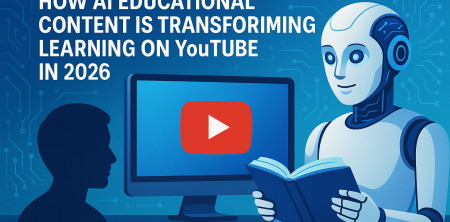
The landscape of education is rapidly changing, especially with the rise of AI educational content. According to recent trends, AI-narrated educational videos and faceless automation channels have emerged as the fastest-growing categories on YouTube for 2025-2026. This evolution signals a remarkable transition in how students access learning materials, showcasing a blend of technology and engagement that traditional classrooms often lack.
1. The Rise of AI-Narrated Content
AI-narrated educational content is not just a trend but a significant revolution in how knowledge is disseminated. These videos use sophisticated algorithms to present information in a manner that is both informative and engaging. Unlike traditional teaching methods, which often rely heavily on direct interaction, AI content can be tailored to meet the diverse learning styles of students. For instance, platforms can analyze viewer engagement, adjusting presentations in real-time to maximize retention and interest.
One of the most appealing aspects of AI educational content is its scalability. With the ability to produce videos at a fraction of the cost of live instruction, this format democratizes access to quality education. Students from various backgrounds can tap into resources that were previously available only in more affluent educational environments. The result is a more equitable learning landscape, where education is less confined by geographical and financial barriers.
2. Faceless Automation Channels: The New YouTube Sensation
Faceless automation channels on YouTube have taken off in recent years, providing a unique twist on the traditional educational format. These channels often rely on AI-generated voices, animation, and visuals to deliver content without the need for a human host. This not only saves on production costs but also allows for a focus on the material itself, free from personal biases or teaching styles.
The success of these channels can be attributed to their ability to produce content quickly and efficiently. As demand for educational resources grows, particularly in the realms of science and technology, automation allows creators to keep pace without sacrificing quality. Moreover, the anonymity associated with faceless channels can sometimes lend an air of intrigue, drawing viewers in who are curious to learn more.
3. Engagement Through Entertainment: The Viral Loop
Interestingly, the trend of AI educational content is closely tied to the entertainment industry, particularly through family vlogs and reaction-style formats that dominate YouTube Shorts. These formats create a viral loop that repackages educational content into more digestible, entertaining bites. This approach not only captures a wider audience but also engages viewers who might not typically seek out educational materials.
The fusion of entertainment and education addresses a growing desire among viewers for content that is both worthwhile and enjoyable. By leveraging humor, storytelling, and relatable scenarios, creators can effectively communicate complex concepts in a manner that keeps viewers coming back for more. This engagement strategy reflects a shift in how educational content is consumed, moving away from purely academic presentations to formats that resonate on an emotional level.
4. Parents and Educators: Navigating the New Normal
The rise of AI educational content has sparked conversations among parents and educators about the future of traditional teaching methods. Many are experiencing a 'fear of missing out' as they witness the effectiveness of these automated formats. This anxiety stems from the realization that traditional instruction methods may soon become obsolete in a world increasingly driven by technology.
Educators are faced with the challenge of adapting their teaching strategies to integrate these new forms of learning. The key lies in blending the strengths of AI with the relational aspects of teaching that only human instructors can provide. As AI educational content becomes more prevalent, the role of the teacher may evolve from a primary knowledge provider to a facilitator of learning, guiding students through a landscape filled with diverse, engaging resources.
5. The Data Behind the Trends: Insights from Viewing Habits
Data from YouTube reveal striking insights into viewing habits that underline the effectiveness of AI educational content. Reports indicate that videos featuring AI narration and automation often see higher retention rates compared to traditional educational videos. This trend suggests that viewers are not only drawn to the novelty of AI but also appreciate its ability to adapt and present material in ways that resonate with them. (See: U.S. Department of Education.) This builds on Transforming Entertainment Resources.
Statistics show that channels specializing in AI educational content have experienced exponential growth in subscribers and views over the past year. This surge reflects a broader societal shift toward embracing technology as a vital educational tool. As these channels continue to innovate, we can expect to see even more sophisticated approaches to engaging audiences and enhancing learning outcomes.
6. Addressing Concerns: The Role of AI in Education
The integration of AI into educational contexts is not without its controversies. Critics argue that reliance on technology may diminish the importance of human interaction in learning. They express valid concerns that AI educational content could lead to a depersonalized experience, where students miss out on the critical thinking and social skills fostered through direct engagement with teachers and peers.
However, proponents of AI educational content argue that it complements rather than replaces traditional education. By providing additional resources and varying learning styles, AI can enhance the overall educational experience. It's essential for educators and technologists to work together to find a balanced approach that retains the human elements of teaching while integrating the efficiencies offered by AI.
7. The Future of Learning: A Collaborative Approach
As we move forward into the future of education, a collaborative approach that incorporates both human instruction and AI educational content may be the most effective path. Teachers can utilize AI-generated resources to supplement their lessons, providing a richer learning experience that thrives on diversity. For instance, integrating videos that explain concepts alongside hands-on activities can deepen understanding and retention.
The key will be to foster an environment where technology and human expertise coexist. Schools and educational institutions can encourage professional development for teachers focused on leveraging AI tools effectively, ensuring that they remain at the forefront of educational advancements. This way, the educational landscape can evolve to meet the needs of students while preserving the essential elements of teaching that promote critical thinking and interpersonal skills.
8. AI Educational Content in Various Subjects
AI educational content is versatile and can be applied across a multitude of subjects, from mathematics and science to humanities and arts. For example, in mathematics, AI can provide personalized problem sets, track student progress, and offer immediate feedback. This instant assessment helps identify areas where students struggle, enabling tailored instruction that addresses specific gaps in knowledge.
In the realm of science, platforms can simulate experiments that might be too costly or dangerous to conduct in a classroom setting. For example, virtual chemistry labs allow students to mix chemicals in a safe, controlled environment, reinforcing theoretical knowledge through practical application. This hands-on experience, albeit virtual, enhances understanding and retention of scientific principles. For more on this, see Mobile Learning for Engagement.
The humanities also benefit from AI educational content. AI can curate resources for history lessons, offering timelines, historical documents, and interactive maps that bring events to life. Students can explore different perspectives and analyze primary sources, fostering critical thinking and a deeper appreciation of historical context. In language learning, AI-driven applications can help students practice pronunciation, vocabulary, and grammar through engaging interactive exercises.
9. Statistics and Impact of AI in Education
To further illustrate the impact of AI educational content, consider the following statistics: A survey conducted by the International Society for Technology in Education found that 65% of teachers believe that AI tools have significantly improved student engagement in learning. Furthermore, 78% of students who used AI-assisted platforms reported feeling more motivated to learn compared to traditional methods.
Additionally, a study published in the Journal of Educational Psychology revealed that students using AI educational content showed a 30% increase in information retention over those who relied solely on conventional teaching methods. These figures underscore the potential of AI to enhance learning outcomes and underscore the growing acceptance of technology in educational settings.
10. Expert Perspectives on AI Educational Content
Experts in the field of education technology have shared their thoughts on the rise of AI educational content. Dr. Jane Holloway, an education technologist, emphasizes that AI should be viewed as a tool that enhances teachers' capabilities rather than replacing them. “AI can take over repetitive tasks and free up educators to focus on personalized learning and building relationships with students,” she explains. (See: New York Times on AI in Education.)
Similarly, Dr. Michael Graves, a psychologist specializing in learning sciences, points out that while AI can assist in delivering content, the emotional and social aspects of learning are irreplaceable. “Teachers play a crucial role in fostering social skills and emotional intelligence, which are pivotal for student success. AI can support this process, but it shouldn't take the place of direct human interaction,” he emphasizes.
11. Challenges and Limitations of AI Educational Content
While the benefits of AI educational content are substantial, there are challenges and limitations that need to be addressed. One significant concern is data privacy. As more students interact with AI-driven platforms, there is an increased risk of personal data being misused. Educational institutions must ensure that AI tools comply with data protection regulations and safeguard students' privacy.
Another limitation is the potential for over-reliance on technology. While AI can provide valuable resources and insights, it is crucial to strike a balance between digital and traditional learning approaches. Education should remain a holistic experience that encompasses emotional, social, and cognitive development—not just information delivery. There's a fuller look at Strategies for E-Learning.
Lastly, the quality of AI educational content can vary widely. Not all AI-generated materials are created equal, and educators need to be discerning about the resources they choose to incorporate into their teaching. It's essential to evaluate the credibility, accuracy, and educational effectiveness of AI content before integrating it into the curriculum.
12. FAQs about AI Educational Content
What is AI educational content?
AI educational content refers to learning materials that are generated, narrated, or enhanced by artificial intelligence technologies. This can include videos, simulations, and personalized learning experiences tailored to the needs of individual students.
How does AI enhance learning?
AI enhances learning by providing personalized resources, immediate feedback, and adaptive learning experiences. It can analyze student performance and adjust the difficulty of content in real time, ensuring that learners remain engaged and challenged.
Are there any risks associated with AI in education?
Yes, there are some risks, including data privacy concerns, potential over-reliance on technology, and the variability in the quality of AI educational content. It's essential to approach AI tools cautiously and ensure they are used in conjunction with effective teaching practices.
Can AI replace teachers?
While AI can assist with many aspects of education, it cannot replace the essential role that teachers play in fostering social skills, emotional intelligence, and critical thinking. AI should be viewed as a complementary tool that enhances the teaching and learning experience.
What subjects can benefit from AI educational content?
AI educational content can benefit a wide range of subjects, including mathematics, science, humanities, and language studies. Each subject can utilize AI tools to create engaging, interactive, and personalized learning experiences for students.
How can educators effectively integrate AI into their teaching?
Educators can integrate AI by using AI-generated resources to supplement lessons, providing professional development opportunities focused on technology, and fostering a collaborative learning environment where both AI and human expertise coexist. (See: Research on AI in Education.)
13. Real-World Applications of AI Educational Content
The practical applications of AI educational content extend far beyond theoretical discussions. For instance, platforms like Khan Academy and Coursera harness AI capabilities to provide personalized learning paths based on a student's strengths and weaknesses. This approach enables learners to progress at their own pace, ensuring that they master concepts before moving on to more advanced material.
In vocational training, AI can simulate real-world scenarios that professionals might encounter. For example, nursing students can engage with AI-driven simulations to practice patient interactions and decision-making in a risk-free environment. These simulations not only enhance practical skills but also prepare students for the complexities of real-world situations they will face in their careers.
14. Impact on Lifelong Learning
AI educational content has also redefined the concept of lifelong learning. With the proliferation of online courses and resources, individuals of all ages can access educational materials anytime and anywhere. This flexibility empowers professionals to upskill or reskill in response to changing job markets, making learning a continuous endeavor. Related reading: Boosting Student Engagement with Edtech.
Statistics from the World Economic Forum indicate that by 2025, over 85 million jobs may be displaced by a shift in labor between humans and machines, while 97 million new roles could emerge. In this context, AI educational content provides the tools necessary for individuals to adapt and thrive in evolving industries.
15. Future Trends in AI Educational Content
As technology continues to advance, we can expect further innovations in AI educational content. One promising trend is the integration of virtual reality (VR) and augmented reality (AR) with AI to create immersive learning experiences. Imagine a history class where students can walk through ancient civilizations or a biology lesson where they can interact with 3D models of complex systems. These technologies have the potential to enhance engagement and understanding significantly.
Another trend is the development of AI tutors capable of offering real-time assistance and support. These intelligent systems can monitor student progress, suggest resources, and even provide encouragement, making them valuable allies in the learning process.
16. Conclusion: Embracing the AI Educational Revolution
The rise of AI educational content reflects a significant shift in how we approach learning in the digital age. By harnessing the power of technology, we can create a more accessible, engaging, and effective educational experience. As educators, students, and parents navigate this evolving landscape, embracing both innovation and collaboration will be crucial in shaping the future of education. The journey ahead promises to be exciting, and with the right balance of AI and human interaction, the possibilities are limitless.
```
Trending Now
Frequently Asked Questions
How is AI changing education on YouTube?
AI is transforming education on YouTube by introducing AI-narrated content and faceless automation channels. These innovations allow for personalized learning experiences, tailored to various student needs, and provide scalable, cost-effective access to quality educational resources.
What are AI-narrated educational videos?
AI-narrated educational videos utilize sophisticated algorithms to present information engagingly and informatively. They adapt to viewer engagement in real-time, catering to diverse learning styles, which enhances knowledge retention and interest.
What are faceless automation channels on YouTube?
Faceless automation channels are YouTube platforms that deliver educational content using AI-generated voices and animations without human hosts. This format reduces production costs and focuses solely on the material, eliminating personal biases.
What are the benefits of AI educational content?
AI educational content offers numerous benefits, including scalability, cost-effectiveness, and equitable access to quality education. It democratizes learning by making resources available to students from various backgrounds, regardless of their geographical or financial limitations.
Why are AI educational videos popular?
AI educational videos are gaining popularity due to their engaging and personalized approach to learning. They cater to different learning styles and can be produced at a lower cost, making quality education more accessible to a broader audience.
What did we miss? Let us know in the comments and join the conversation.

